La Vuelta Femenina 2026 by Carrefour.es will finish on the Alto de l’Angliru for the first time, with the iconic Asturian climb set to crown the race’s strongest climber after a week that increasingly tilts towards the pure climbers.
Presented in Ribeira, Galicia, the seven-stage race runs from May 3rd to May 9th, starting in north-west Spain before heading into Asturias for two decisive summit finishes on Les Praeres and the Angliru itself. The organisers are effectively leaning into a clear identity: relentless terrain early on, then an uncompromising final weekend where any lingering ambiguity in the general classification should be erased.
Galicia does the damage early
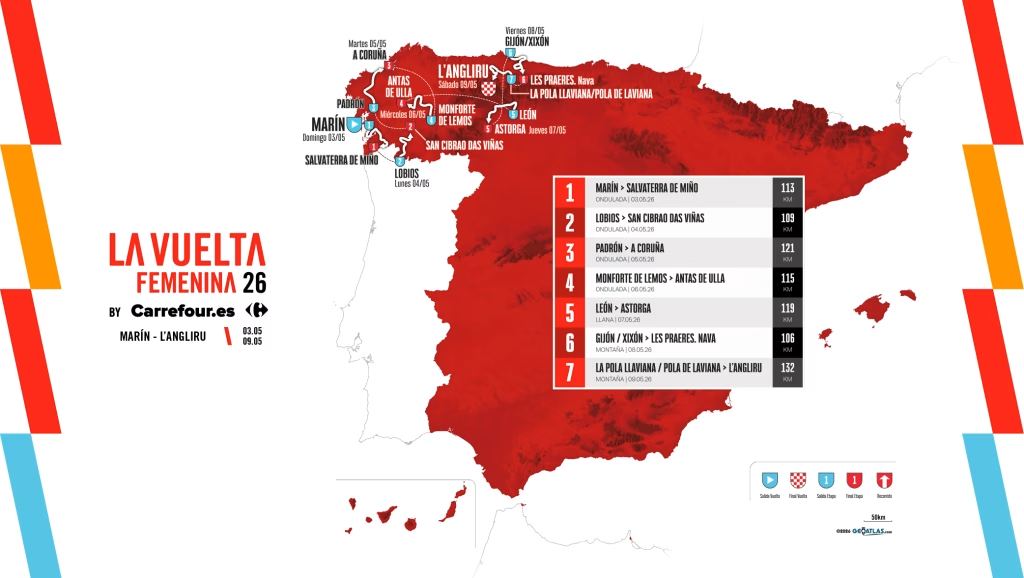
Galicia hosts the opening four stages, and while none of those days finish on a major summit, the message is still clear. The region’s constant up and down roads are being used as a sustained stress test, with the route designed to sap legs and expose teams that arrive undercooked.
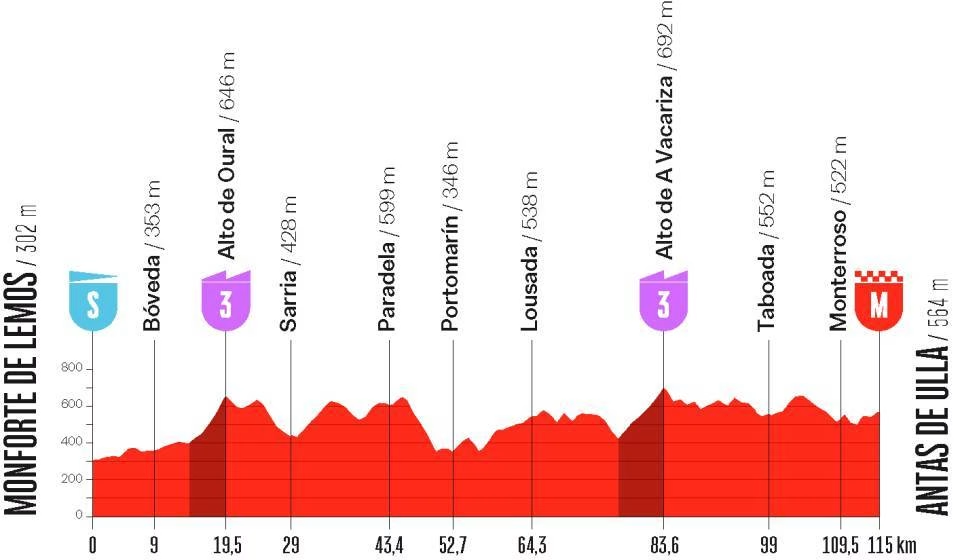
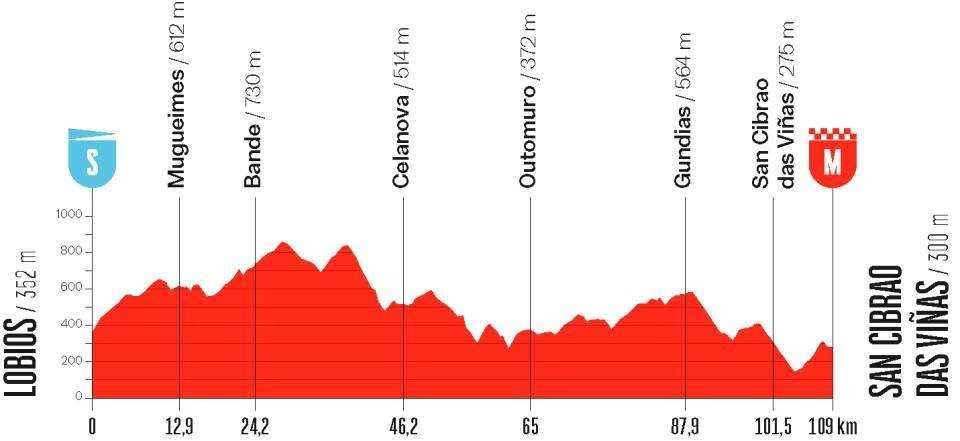
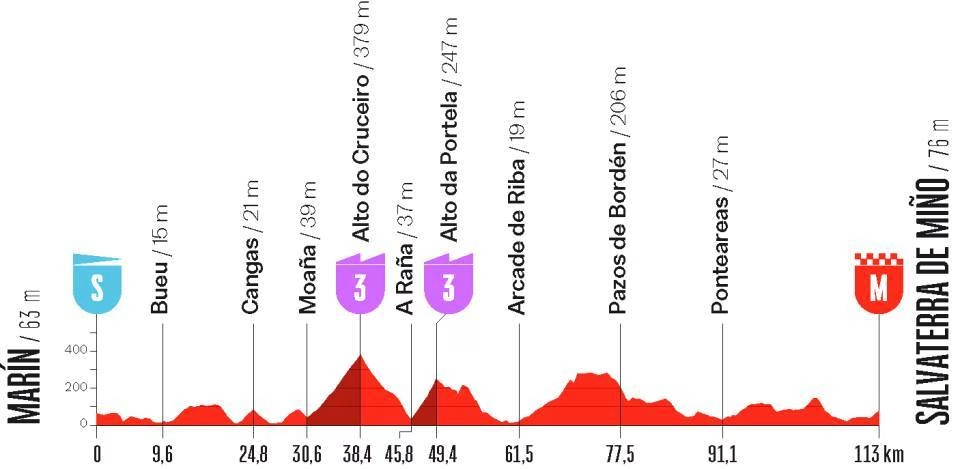
Stage 1 from Marín to Salvaterra de Miño is described as a day with enough late and mid-stage difficulty to discourage a straightforward bunch sprint. Stage 2 from Lobios to San Cibrao das Viñas follows a similar pattern, where the terrain and the placing of the difficulties should keep the race open and the field nervous. Stage 4 from Monforte de Lemos to Antas de Ulla also carries a sting in the finish, with an uphill drag that can punish anyone caught out of position.
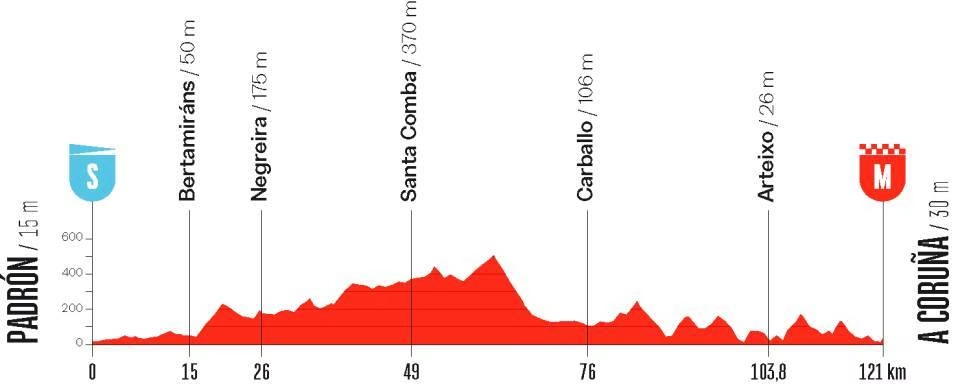
The clearest sprint opportunity in Galicia comes on stage 3, from Padrón to A Coruña, where the finish is flat and, on paper, built for the fast finishers.
León brings the wind back into play
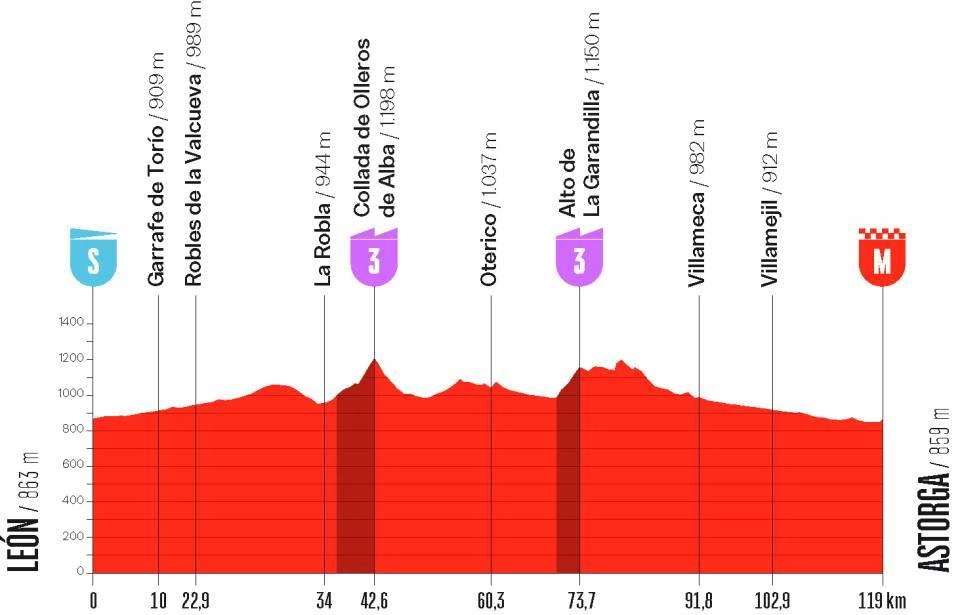
After Galicia, the race heads to León for what looks like the simplest profile of the week on stage 5, from León to Astorga. The organisers have still flagged it as a day with a major caveat: wind.
That is not theoretical. The press notes how the 2025 edition was torn apart by wind on a León stage between Becerril de Campos and Baltanás, a day won by Marianne Vos. Vos is also highlighted as the joint most successful stage winner in the race’s history with six stage wins, level with Demi Vollering, who has won the overall title in each of the last two editions.


Les Praeres and the Angliru should settle the general classification
Asturias hosts the final two stages, and it is hard to read them as anything other than a deliberate one-two punch for the climbers.
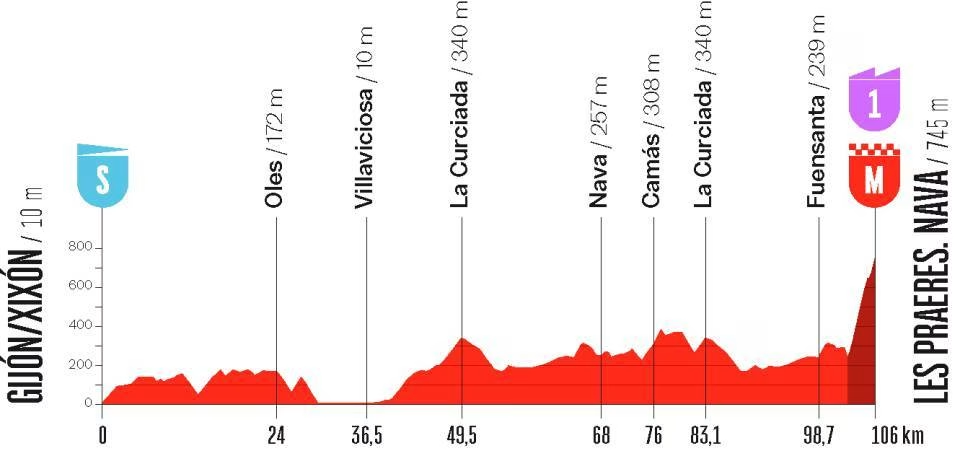
Stage 6 runs from Gijón to Nava, finishing on the Alto de Les Praeres. The climb has been compared to the Angliru before, with Perico Delgado calling it “a mini Angliru” due to its brutal gradients, averaging around 13% over roughly four kilometres with ramps that hit 20%. It is a finish that rewards riders who can produce repeated accelerations on very steep slopes, rather than those who simply grind at threshold.
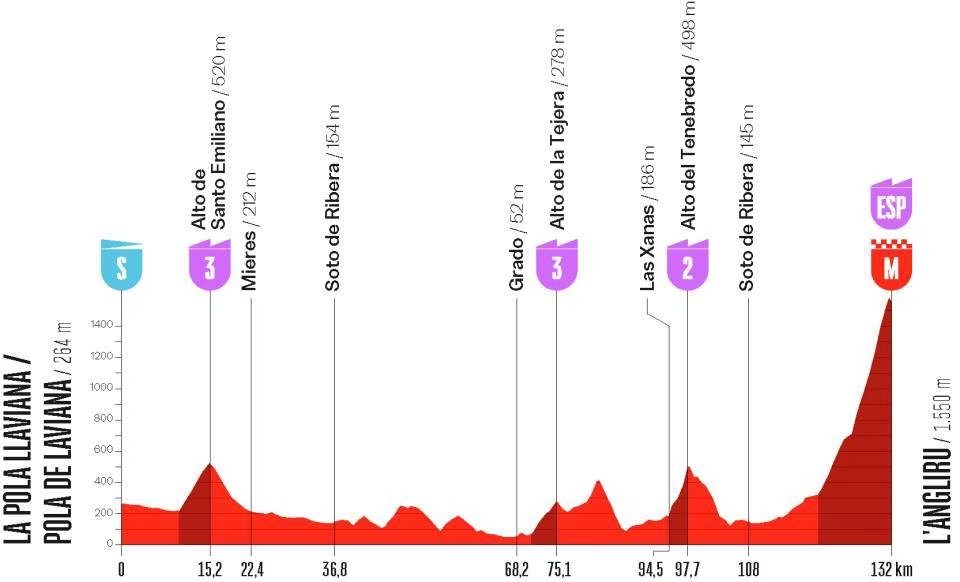
Stage 7 is the headline act: La Pola Llaviana, Pola de Laviana to l’Angliru. The climb is set to make its debut in the women’s race and it arrives with the full weight of its reputation. The route description underlines the scale of the day, pointing to more than 3,200 metres of elevation gain, which would make it the hardest stage in the race’s history, surpassing the 2025 Cotobello finale. On the Angliru itself, the numbers do not soften: 12.4 kilometres at a 9.7% average, with maximum ramps at 23% on a climb where pacing mistakes are usually punished immediately and brutally.
Big names already linked to the start list
The presentation pointed to a field expected to include several of the sport’s headline riders, with Pauline Ferrand-Prévot already confirmed by the organisers. Her presence is framed around her status as the reigning Tour de France Femmes champion and Olympic gold medallist.
The press release also points to Marianne Vos, Lotte Kopecky, Marlen Reusser, plus Spanish riders Mavi García and Paula Blasi as key names expected for the 2026 edition.
Stages of La Vuelta Femenina 2026
- May 3rd, stage 1: Marín to Salvaterra de Miño (113 km)
- May 4th, stage 2: Lobios to San Cibrao das Viñas (109 km)
- May 5th, stage 3: Padrón to A Coruña (121 km)
- May 6th, stage 4: Monforte de Lemos to Antas de Ulla (115 km)
- May 7th, stage 5: León to Astorga (119 km)
- May 8th, stage 6: Gijón to Les Praeres, Nava (106 km)
- May 9th, stage 7: La Pola Llaviana, Pola de Laviana to l’Angliru (132 km)
La Vuelta Femenina 2026 Stage Profiles