
Copenhagen Sprint is one of the newest WorldTour races on the calendar, but its identity is already clear. This is Denmark’s fast, flat, city-centre showcase, built for the sprinters and designed to bring men’s and women’s top-level racing into Copenhagen across one weekend.
The 2026 edition takes place on Saturday, 13th June and Sunday, 14th June. The women race first, on the Saturday, followed by the men on the Sunday. Both races start at Stændertorvet in Roskilde and finish outside the National Gallery of Denmark in Copenhagen, with the final laps run through the heart of the capital.
For newer fans, the easiest way to understand Copenhagen Sprint is this: it is not a mountain race, not a cobbled Classic, and not a Grand Tour stage. It is a one-day race created for speed, positioning and sprint power. The terrain is flat, the roads through Zealand can be exposed, and the final circuit in Copenhagen makes the finish fast, technical and nervous.
What is Copenhagen Sprint?
Copenhagen Sprint is a Danish one-day race with both women’s and men’s WorldTour status. The race was introduced in 2025, giving Denmark a top-level road race that fits naturally with the country’s cycling culture, urban bike identity and long history of producing strong riders for both road and track.
The concept is straightforward. The race starts in Roskilde, heads through Zealand and North Zealand, then finishes with laps in central Copenhagen. The route is designed to favour sprinters, but the race is not just a simple drag race to the line. Open roads, positioning fights, crashes, crosswind risk and a technical city circuit all make it more complicated than the profile might suggest.
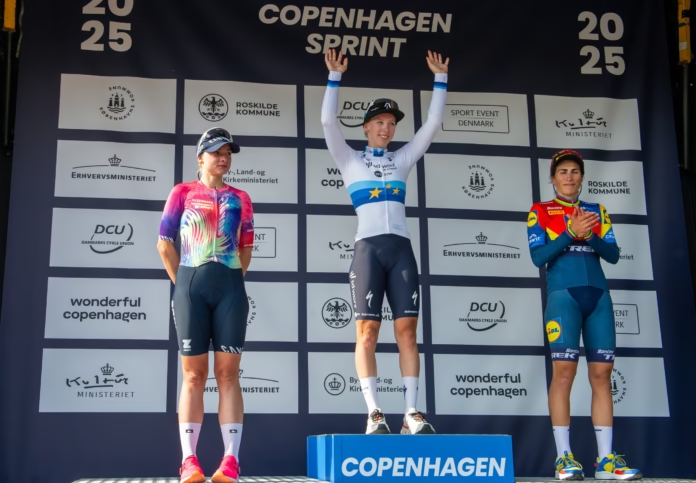
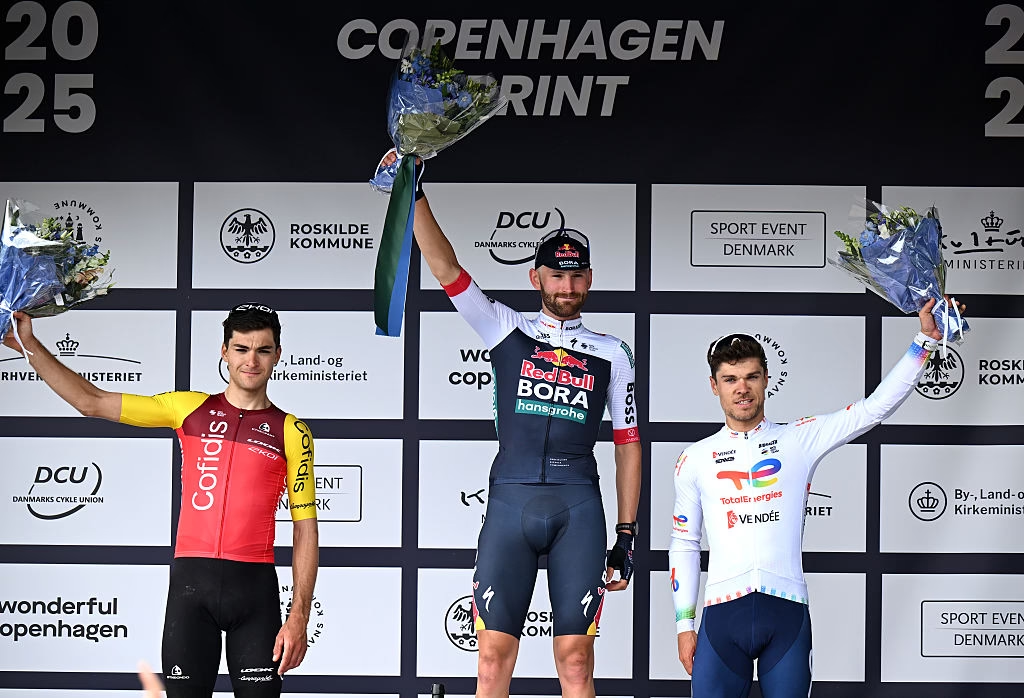
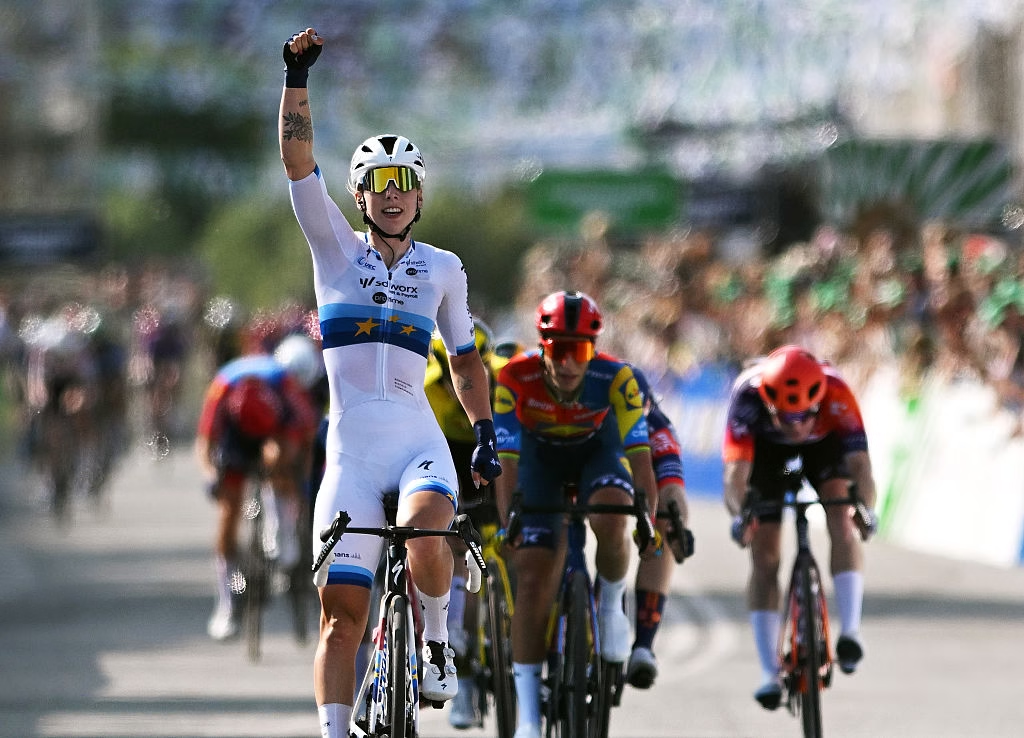
The first editions in 2025 confirmed that identity. Lorena Wiebes won the women’s race in a sprint ahead of Elisa Balsamo and Chiara Consonni, while Jordi Meeus won the men’s race in Copenhagen ahead of Alexis Renard and Emilien Jeannière. Both races underlined the same point: this is a race where fast finishers start as favourites, but only if they survive the chaos before the final straight.
When is Copenhagen Sprint 2026?
Copenhagen Sprint 2026 takes place across the weekend of Saturday, 13th June and Sunday, 14th June.
The women’s race is held on Saturday, 13th June, as part of the Women’s WorldTour. The men’s race follows on Sunday, 14th June, as part of the men’s UCI WorldTour.
That weekend placement is useful. It comes after the main spring Classics and before the deeper summer block of stage racing. For sprinters, it is a rare chance to target a one-day WorldTour race that is openly designed around their strengths. For teams, it is also a useful test of lead-outs, late positioning and sprint organisation.
Where does the race go?
The 2026 route starts in Roskilde and finishes in Copenhagen. The start at Stændertorvet gives the race a historic setting, with Roskilde bringing a very different feel from the modern, urban finish in the Danish capital.
From Roskilde, the route moves through the Zealand landscape, passing areas such as Frederikssund and Hillerød before returning towards Copenhagen. This gives the race a mix of open roads, town passages and stretches where wind and positioning may matter.
Once the peloton reaches Copenhagen, the race enters the city circuit. This is where the atmosphere builds and the tactics tighten. The women complete three laps of the finishing circuit, while the men complete five. That means spectators in the city get several chances to see the race, while the riders face repeated technical positioning battles before the sprint.
The finish is at the National Gallery of Denmark, giving the race a central and recognisable endpoint. It also gives Copenhagen Sprint part of its appeal as a spectator event. The race is built not only for television, but for crowds lining the city streets.
Why is it called a sprint race?
Copenhagen Sprint is designed with sprinters in mind. Denmark does not have the long climbs that define races in the Alps, Pyrenees or Basque Country, and this route uses that flat geography rather than trying to hide it.
The result is a race where the fastest riders have a real chance. That makes it different from many WorldTour one-day races, where climbs, cobbles or repeated hills often reduce the sprint field or remove pure fast finishers altogether.
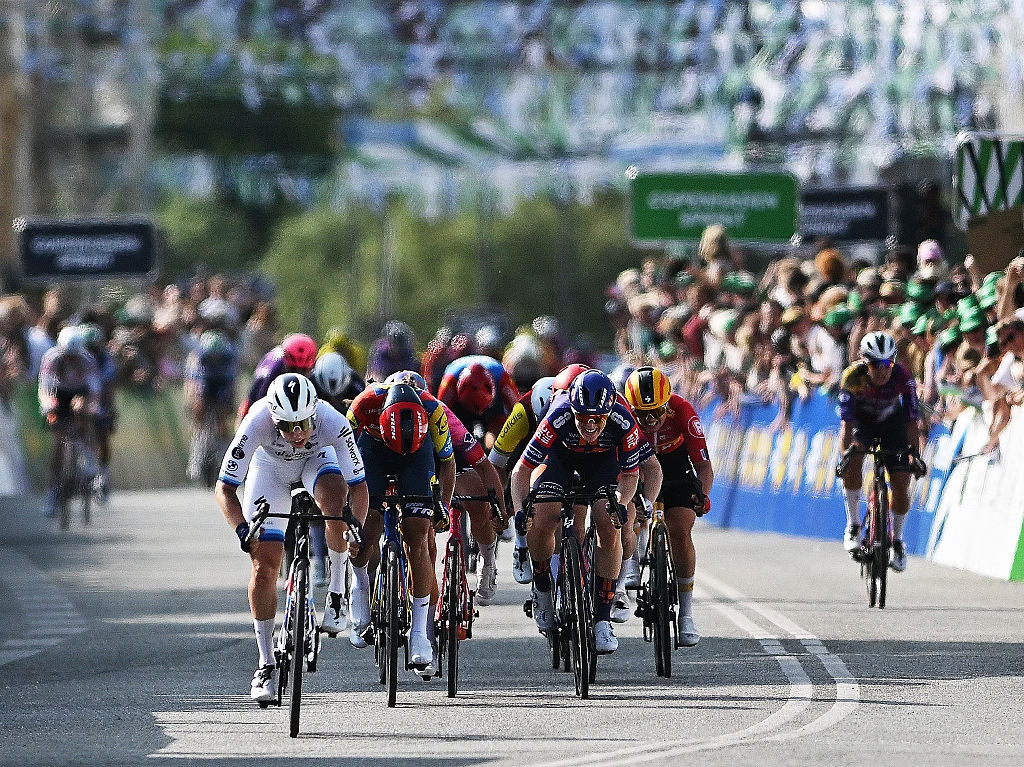
But a sprint race is not easy. In fact, flat races can be some of the most stressful days in the calendar. Everyone knows the finish could come down to positioning, so teams fight for space long before the final kilometre. Lead-out trains have to stay together. Riders have to avoid crashes. Domestiques need to protect their sprinter through the city circuit. One mistake can ruin the race.
That is what makes Copenhagen Sprint interesting. It is built for sprinters, but the strongest sprinter does not automatically win. They need a team, timing, confidence and the nerve to wait until the right moment.
How does the Copenhagen finale work?
The Copenhagen finale is the defining feature of the race. Once the riders reach the city, the road environment changes. The race becomes more technical, more crowded and more tactical.
The circuit gives teams repeated chances to learn the corners, road width and positioning points, but it also increases pressure. Every lap matters because riders and lead-out trains want to be near the front before the final run-in. A sprinter who starts the final lap too far back may never recover position.
For the women, three laps mean enough time for the race to settle into the city rhythm, but not so much that teams can relax. For the men, five laps create a longer final phase where fatigue and repeated positioning fights can wear down teams before the sprint.
The best sprinters are not only fast in the final 200 metres. They also know how to stay calm before that point. Copenhagen Sprint rewards those who can read the race, trust their lead-out and avoid wasting energy too early.
What kind of rider can win Copenhagen Sprint?
The obvious answer is a pure sprinter. Wiebes and Meeus winning the first editions in 2025 made that clear. The race suits riders with high top-end speed, strong positioning and the ability to finish from a large or reduced bunch.
In the women’s race, riders like Wiebes, Balsamo, Consonni, Charlotte Kool and other fast finishers are naturally suited to this type of course. They can survive flat, nervous racing and produce the acceleration needed in a straight sprint.
In the men’s race, the same logic applies. Riders such as Meeus, Olav Kooij, Sam Welsford, Tim Merlier, Jasper Philipsen, Dylan Groenewegen, Arnaud De Lie or Mads Pedersen would all have reason to look at this race depending on their programme and start list. Some are pure sprinters, while others have a little more Classics strength, which can help if wind or late attacks make the race harder.
Pedersen is an interesting type for Copenhagen Sprint because a Danish rider with sprint speed and one-day strength would always bring extra attention to a home WorldTour race. The route may be flat, but if conditions become difficult, a stronger Classics-style sprinter can become more dangerous.
Can attackers win?
It is possible, but difficult. Copenhagen Sprint is designed to give sprinters a proper chance, and the final circuit allows teams to organise a chase if a dangerous move goes clear.
A breakaway might form early, especially on the road from Roskilde through Zealand, but it will need either a big advantage or a lack of cooperation behind. On paper, sprint teams should be motivated to control the race because there are not many WorldTour one-day races where their sprinters start with such a clear opportunity.
Late attacks are more interesting. A rider could try to move on the final circuit if the sprint teams hesitate, if crashes disrupt the chase, or if crosswinds have already reduced the bunch. But the closer the race gets to the finish, the harder it becomes for a lone attacker to hold off organised lead-out teams.
That is why the most likely outcome remains a sprint. The question is not whether the race suits sprinters. It is which sprinter arrives in the best position, with the best support, at the right moment.
Why wind could matter
Even though the route is flat, Denmark’s open roads can still create danger. Wind is the obvious wildcard. If the peloton faces crosswinds on exposed sections of Zealand, the race can split long before Copenhagen.
That would change everything. A bunch sprint with 100 riders is very different from a sprint with 30 or 40 after echelons have formed. Stronger teams can use wind to remove rivals, isolate sprinters or force weaker squads into a chase.
This is one reason flat races are often underestimated by newer fans. No climb appears on the profile, but the race can still become brutally selective if the wind is right. Riders need to be near the front before the exposed sections, not after the split has already happened.
If the weather is calm, Copenhagen Sprint becomes more predictable. If the wind blows, it becomes a much more tactical and nervous race.
Why Copenhagen Sprint matters
Copenhagen Sprint matters because the WorldTour calendar needs different kinds of races. Not every major one-day race should be decided by steep climbs, cobbles or long-distance attrition. Sprinters deserve top-level one-day opportunities too, and Copenhagen Sprint gives them exactly that.
It also matters for Denmark. Danish cycling has a strong modern identity, with elite riders, passionate fans, a deep bike culture and Copenhagen itself often seen as one of the world’s great cycling cities. A WorldTour weekend that brings both women’s and men’s racing into the capital fits that identity naturally.
For the women’s calendar, the race adds another high-profile one-day event after the spring Classics and before the summer stage races. For the men, it gives the sprinters a WorldTour target between the Tour Auvergne – Rhône-Alpes period and the Tour de France build-up.
It also gives fans something easy to understand. The race is fast, visual and direct. Watch the peloton roll from Roskilde, wait for the city circuit to tighten the pressure, then see whether the lead-out teams can deliver their sprinters to the final metres.
How should a new fan watch the race?
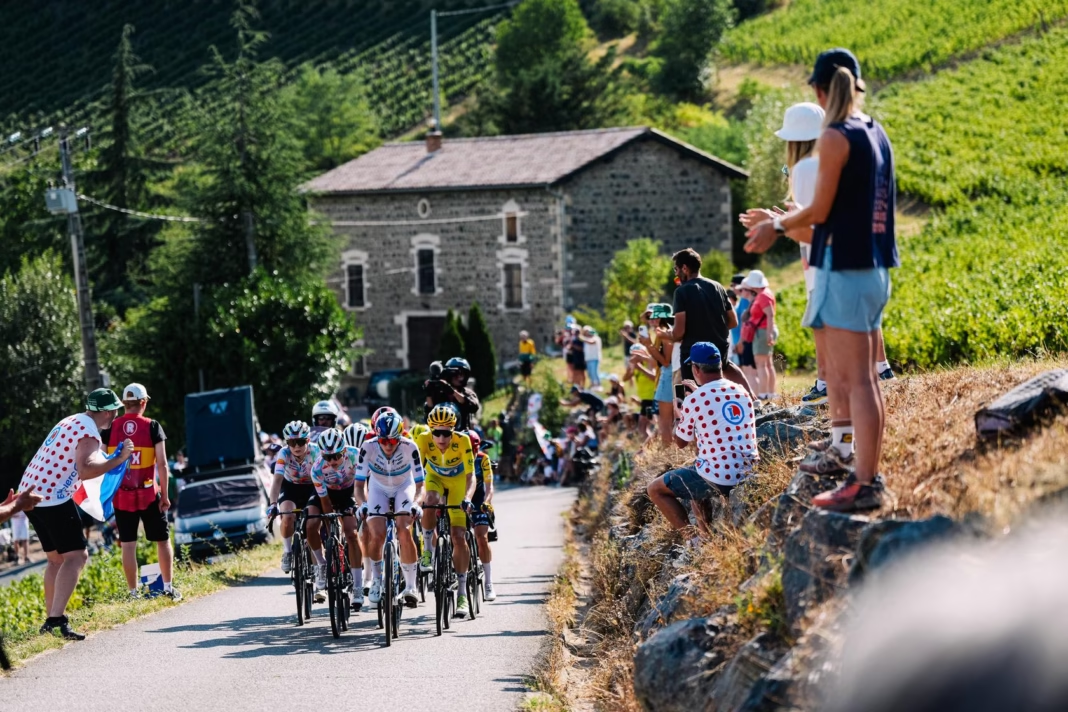
The simplest way to watch Copenhagen Sprint is to treat it as a race of rising tension. The early kilometres are about breakaways, control and weather. The middle section is about whether the peloton stays together across Zealand. The final circuit is where the race truly sharpens.
For new fans, the key details are which sprint teams control the breakaway, whether wind splits the peloton, which sprinters still have teammates with them on the city circuit, where the favourites are positioned with one lap to go, which lead-out train takes control inside the final 3km, and who launches first or waits longest.
The final sprint is only the visible finish of a much longer process. A rider who wins in Copenhagen may have been protected for four hours, guided through corners, moved up before key bends and delivered into the final few hundred metres by teammates who have spent their whole day working for that moment.
-
 Photo Credit: A.S.O./Billy Ceusters
Copenhagen Sprint compared to other races
Copenhagen Sprint is closer in spirit to races like Scheldeprijs, Classic Brugge-De Panne or Hamburg Cyclassics than to the Tour of Flanders, Liège-Bastogne-Liège or the Ardennes Classics. The emphasis is on speed, lead-outs and flat-race control rather than repeated climbing or cobbled endurance.
That does not make it less valuable. It simply makes it different. Sprinting is one of cycling’s most technical disciplines, even if it looks simple from the outside. The best sprinters must judge speed, risk, timing, road position and rival movement in a matter of seconds.
Copenhagen Sprint gives that skill set a WorldTour platform. In a calendar where many of the biggest one-day races are too hard for pure sprinters, this race is deliberately designed to let them take centre stage.
What to expect in 2026
The 2026 race should again favour sprinters, with the route from Roskilde to Copenhagen and the city-centre laps giving the event a clear identity. The women’s race will use three laps of the Copenhagen circuit, while the men will use five, which should make both races especially spectator-friendly once they reach the capital.
The key sporting questions will be familiar. Can the sprint teams control the race? Will wind split the bunch before Copenhagen? Can a late attacker disrupt the lead-outs? Which sprinter has the best combination of speed, support and nerve?
If the race follows the pattern of 2025, expect a fast finish and a high-pressure final lap. But that is the appeal of Copenhagen Sprint. Everyone knows what should happen, yet the route still leaves enough space for mistakes, crashes, wind and tactical hesitation to change the story.
For a beginner, Copenhagen Sprint is one of the easiest WorldTour races to understand and one of the best for learning the detail behind a sprint finish. The profile may be flat, but the racing is anything but simple.

