If you are looking for a women’s race that explains the Flemish Classics without throwing you straight into the full scale of the Tour of Flanders, Dwars door Vlaanderen Women is a very good place to start.
It sits in an ideal part of the calendar. The race comes after the first wave of spring one-day events, but before the biggest cobbled showdown of them all. That gives it a very particular feel. Riders are already deep into Classics mode, form is sharp, teams are testing combinations, and the racing is usually hard enough to matter in its own right while still carrying the tension of what is coming next. In 2026, the race takes place on Wednesday, 1 April and, for the first time, steps up to the Women’s WorldTour.
For a new fan, that makes Dwars door Vlaanderen Women especially useful. It is prestigious enough to attract major names, selective enough to show who is really strong on these roads, and compact enough that the race story is easier to follow than some of the bigger Monuments. If you want a feel for why Belgian one-day racing matters, without starting at the very deepest end, this is one of the best entry points on the 2026 calendar.
You can also read ProCyclingUK’s wider look at the best women’s cycling races in 2026 for new fans, where Dwars door Vlaanderen Women sits just behind the most famous spring Classics as a smart race to learn from.
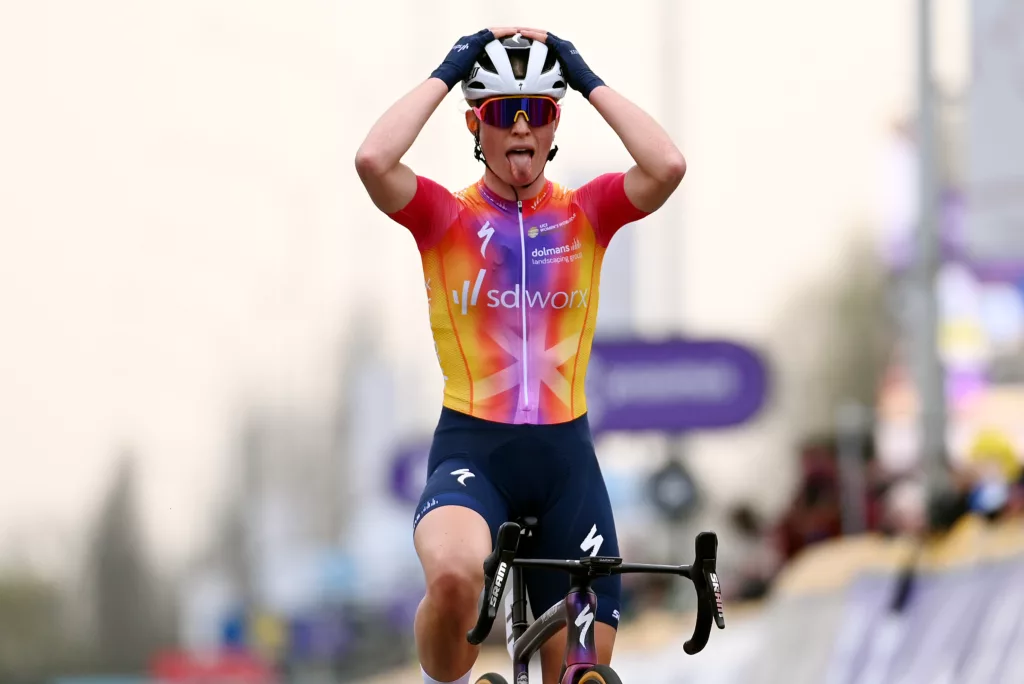 Photo Credit: Getty
What is Dwars door Vlaanderen Women?
Dwars door Vlaanderen Women is a Belgian one-day race held in the heart of the cobbled spring. In 2026 it moves onto the Women’s WorldTour, which is a significant step because it reflects how much the event has grown in importance inside the women’s calendar. It is run by Flanders Classics, the same organisation behind several of the biggest races of the spring, and that shows in the style of the route and the rhythm of the race.
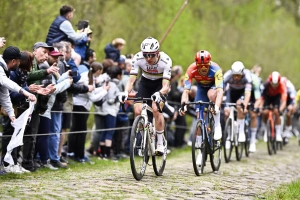
This is not a race built around one giant mountain or one iconic sector that decides everything in a single blow. Instead, it works by pressure. Short climbs, cobbled sectors, narrow roads, repeated changes of direction and a sequence of efforts that gradually strip away control. That is one reason it is so enjoyable for beginners. The race is not usually decided by abstract tactics. It is decided by who can hold position, respond to repeated accelerations and still think clearly when the front of the race becomes small and stressed.
If you want the official race hub, the organisers’ Dwars door Vlaanderen site and the UCI race page are the cleanest starting points.
When is Dwars door Vlaanderen Women 2026 and where does it fit in the season?
The 2026 edition takes place on Wednesday, 1 April. On the Women’s WorldTour calendar, it lands between Gent-Wevelgem Women on 29 March and the Tour of Flanders Women on 5 April, which tells you almost everything you need to know about its role. It is part test, part opportunity, and part warning sign ahead of Sunday.
That timing matters. Riders who are building toward Flanders often use Dwars door Vlaanderen Women to sharpen race instincts under real pressure. Others target it more directly because the route is selective, but slightly less monumental than Flanders itself. The result is usually a field full of strong Classics riders, fast finishers who can survive climbs, and teams keen to see which combinations work best on Belgian roads.
ProCyclingUK covered that broader calendar context in its guide to the 2026 Women’s WorldTour, which places Dwars door Vlaanderen Women exactly where it belongs, as a vital part of the spring run-in.
 Photo Credit: Getty
What does the 2026 route look like?
The women’s race starts from the HippoLoggia site in Waregem at 14:10 and covers 129 km, finishing back in Waregem at around 17:25. The route includes 6 cobbled sectors and 8 climbs, with Hellestraat added as the new feature for 2026. The finale again includes two ascents of Nokereberg and two passages of Herlegemstraat, which is exactly the kind of repeated pressure point that makes this race so interesting.
That shape is worth dwelling on because it explains why Dwars door Vlaanderen Women is often unpredictable. The route is not so extreme that only one rider type can win. At the same time, it is not flat enough or calm enough to guarantee a straightforward sprint. Instead, it creates a band of plausible outcomes.
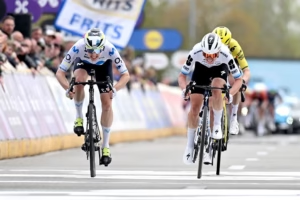
A very strong attacker can win here. A reduced sprint can decide it. A rider who survives the late climbs and then has the best kick from a front group can also take it. That range of possibilities is one of the race’s great strengths.
For a detailed look at this year’s changes, ProCyclingUK’s route analysis of the 2026 edition is the best place to start.
Why is Dwars door Vlaanderen Women such a good race for beginners?
Because it teaches the logic of Flemish racing in a manageable way.
Paris-Roubaix Femmes can be chaotic, almost from reputation alone. The Tour of Flanders Women can feel huge, both visually and tactically. Dwars door Vlaanderen Women sits in a slightly more approachable middle ground. You still get cobbles, climbing, stress and serious riders, but the race is more compressed and easier to read.
There are three main reasons for that.
First, the route gives you repeated visual cues. When riders hit climbs like Nokereberg or dive onto technical cobbled roads, it is obvious that something important is happening. You do not need years of experience to see the danger.
Second, the race usually reveals team strength clearly. Squads that can control positioning before key sectors tend to shape the race. Beginners can follow that without needing deep tactical language. If one team keeps putting riders near the front before every critical point, that matters.
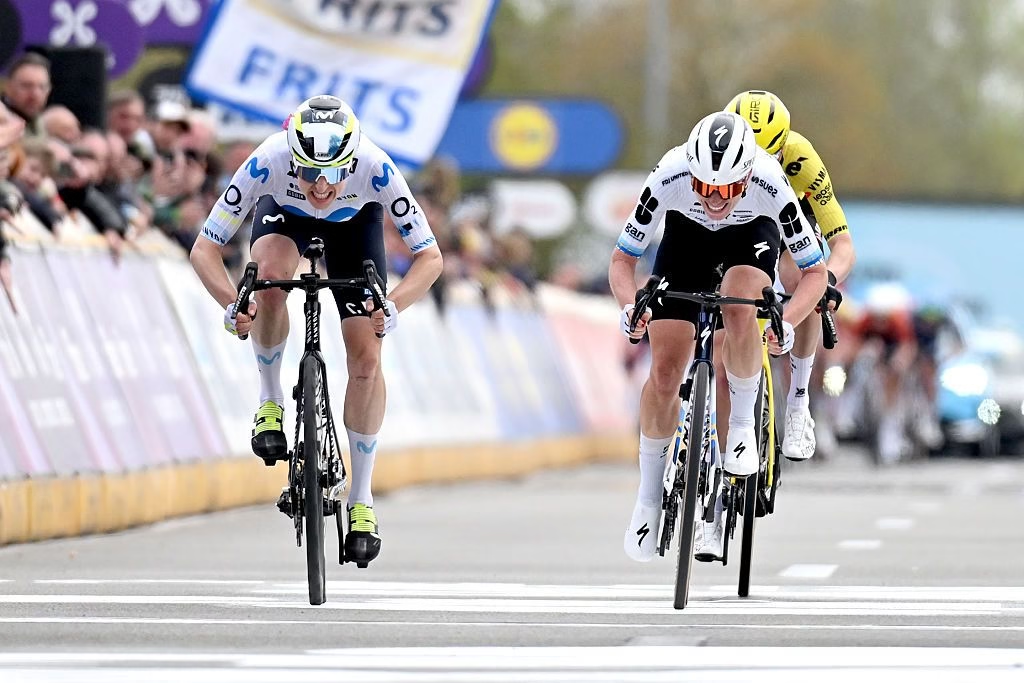
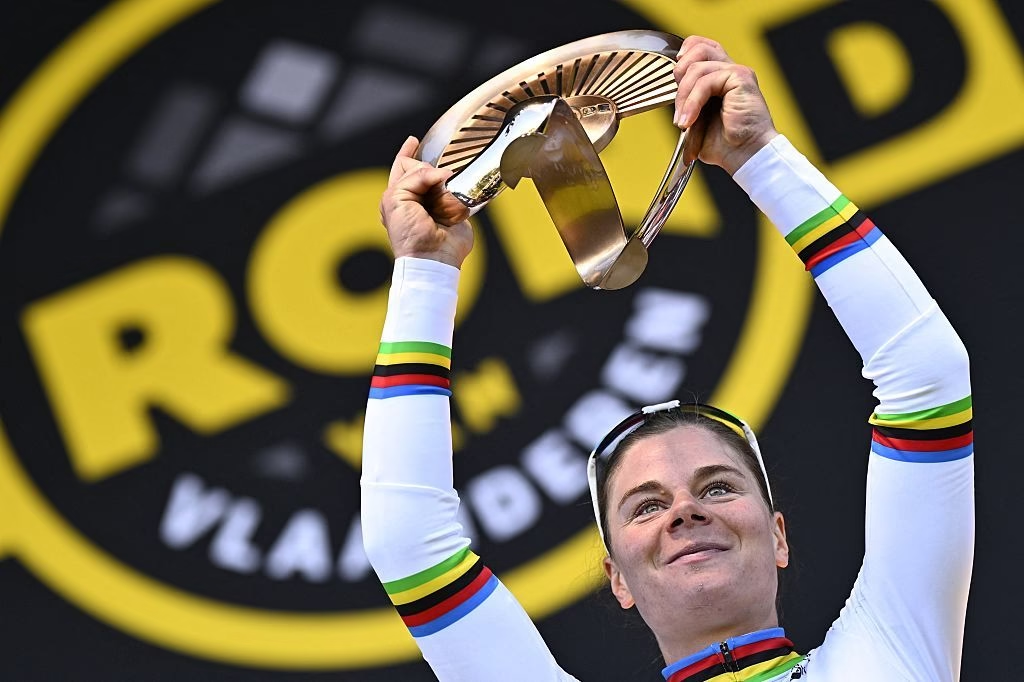
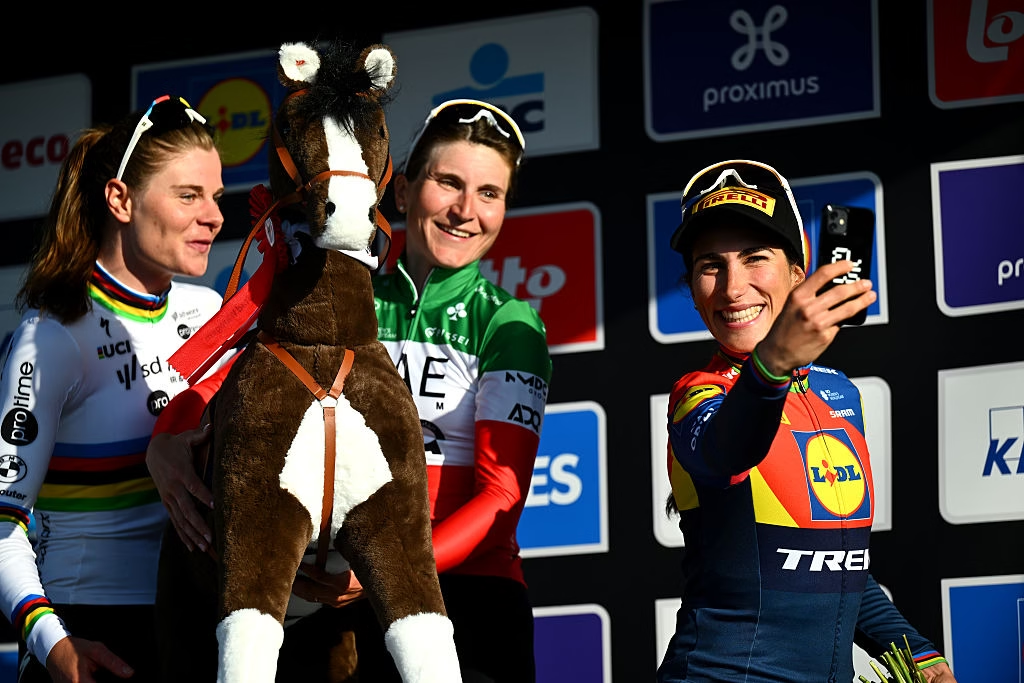
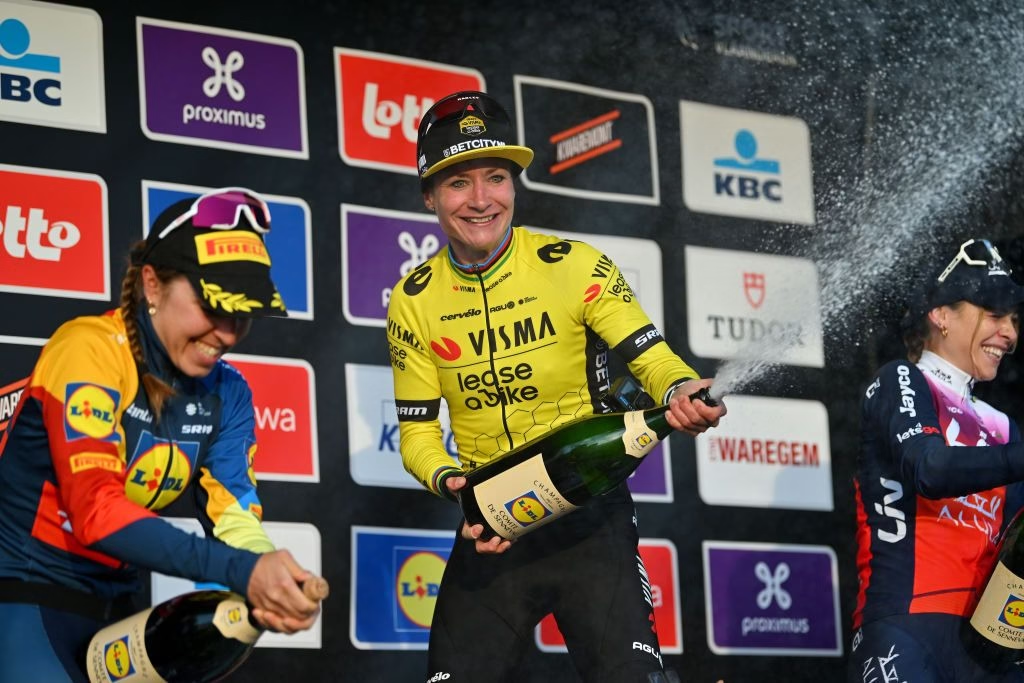
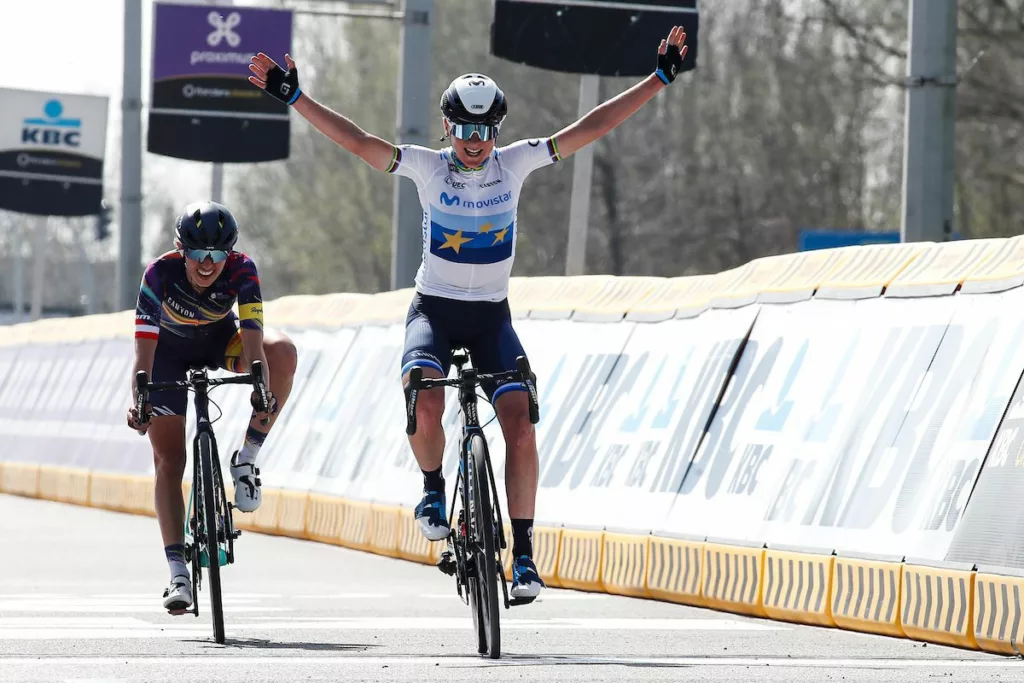
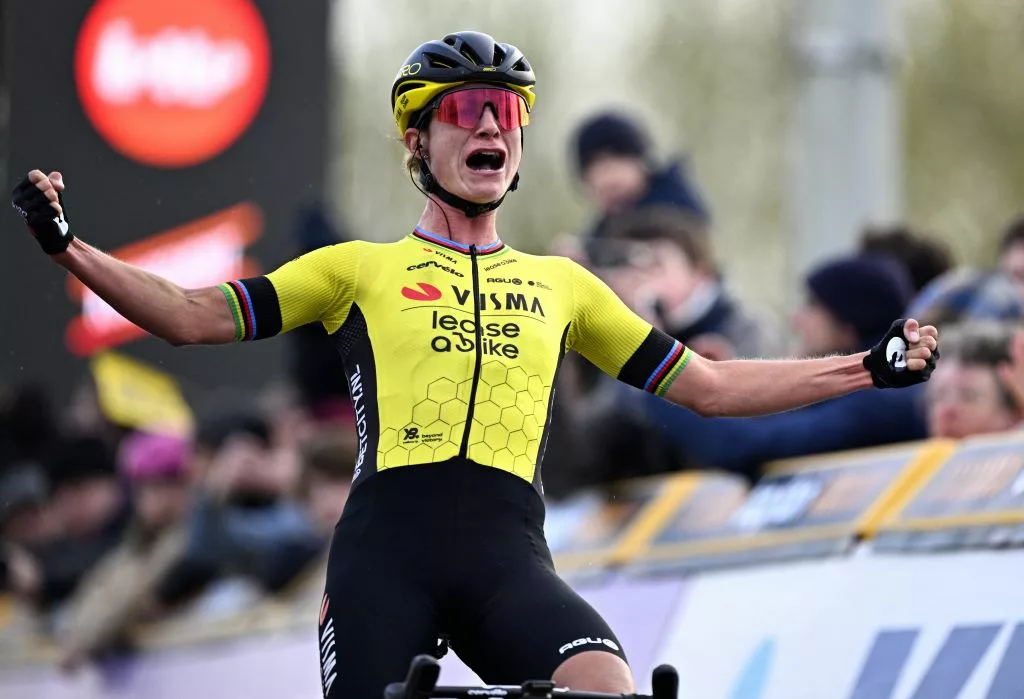
Third, recent editions show that the race does not lock itself into one script. It has produced everything from bunch or reduced-group sprints to long solo wins in recent years, with winners including Marianne Vos, Demi Vollering, Chiara Consonni and Annemiek van Vleuten across the race’s short modern history.
That variety is extremely useful for a new fan. It teaches that one-day racing is not simply about the strongest rider on paper. It is about the strongest rider for that route, that day and that exact race scenario.
What usually decides the race?
The simple answer is accumulation.
Dwars door Vlaanderen Women is rarely about one single moment that wipes out the field completely. More often, the race gets harder in layers. The first accelerations soften the group. The middle sectors reduce the room for error. Then the repeated late efforts force the real selections.
The 2025 edition was a good example. Elisa Longo Borghini won with a long-range solo after the race opened up on the climbs and cobbles, attacking around 30 km from the finish and never coming back. Before that, the peloton had already been thinned and stressed by repeated efforts, which meant the chase behind lacked order and cohesion. You can read more in ProCyclingUK’s 2025 race report.
That is often how this race works. The winning move does not always come on the hardest climb. It often comes after the route has already done enough damage to make cooperation behind difficult. For beginners, that is an important lesson. In races like this, the decisive move is often only possible because of everything that happened beforehand.
What kind of rider wins Dwars door Vlaanderen Women?
This is one of the most interesting parts of the race. There is no single template.
A pure climber is not ideal here because the climbs are too short and the finish too flat. A pure sprinter is also not ideal unless she can survive repeated pressure over cobbles and punchy rises. The sweet spot is usually somewhere in between.
The race tends to reward one of three rider types.
The first is the Classics all-rounder, someone powerful enough to handle cobbles, smart enough to position well, and strong enough to go long if the race opens up.
The second is the punchy finisher who can survive the selective parts and still sprint from a small group.
The third is the opportunist with excellent timing, a rider who senses when the race has become disorganised and attacks before everyone else fully realises the moment has come.
That is why the honour roll from recent editions makes so much sense. Marianne Vos won from a sprint, Demi Vollering won solo, Chiara Consonni took a reduced-group finish, and Annemiek van Vleuten shaped the race with attacking strength. Different names, different tools, same basic truth: this race rewards riders who can read changing circumstances as well as produce raw power.
How is it different from the Tour of Flanders Women?
This is the question most beginners end up asking, and rightly so, because the two races are only a few days apart and both belong to the same cobbled spring world.
The clearest difference is scale. The Tour of Flanders Women feels bigger in every sense. It has more weight, more mythology and, usually, a more brutal overall route. Dwars door Vlaanderen Women is a little shorter, a little more open, and often a little less rigid in how the race must be won.
That openness is what makes it so appealing. Flanders tends to expose the very best riders through sustained brutality. Dwars door Vlaanderen Women still does that to an extent, but it leaves more room for ambiguity. A slightly wider range of riders can realistically win. For a beginner, that makes it easier to watch because the race does not always narrow immediately to the same tiny group of obvious favourites.
In simple terms, if Flanders is the grand final exam of cobbled one-day racing, Dwars door Vlaanderen Women is the fiercely competitive mock test that still matters on its own.
What should a new fan watch for during the race?
Try not to watch it as one long continuous event. Watch it in phases.
The first phase is about calm and positioning. Which teams are already trying to stay near the front? Which riders look tense? Which squads are using numbers to protect a leader?
The second phase is where the route begins to bite. This is when the race stops being theoretical. Once the field hits the more demanding sequence of climbs and cobbles, pay attention to who is spending energy too early and who still looks composed.
The final phase is where Dwars door Vlaanderen Women usually becomes most revealing. Repeated passages of Nokereberg and Herlegemstraat are the sort of features that punish hesitation. If a rider is slightly out of position there, she can lose the race without ever actually cracking in a dramatic way. The best riders here often look calm, not because the race is easy, but because they anticipated the danger before it arrived.
That is one of the things this race teaches brilliantly. In Belgian one-day racing, the most important effort is often the one you make before the television pictures tell you it mattered.

Why does the 2026 edition matter more than usual?
Because of the WorldTour upgrade.
Dwars door Vlaanderen Women stepping onto the Women’s WorldTour for 2026 is not just an administrative change. It is a signal about status. The race now sits officially among the top-tier events of the season, which raises its profile and helps lock it more firmly into the sport’s most important spring sequence.
For new fans, that matters because it makes the race easier to trust as a key date. If you tune in, you are not watching a side event or a curiosity. You are watching one of the top one-day races on the calendar, placed directly in the path of the sport’s biggest spring Classics.
That upgrade also fits the broader professional direction of women’s cycling. Bigger races, stronger calendar structure, more visible hierarchy. Dwars door Vlaanderen Women is not suddenly becoming something completely different in 2026, but the promotion confirms that the race already mattered and now has the official status to match.
Where can you read more before the race?
On ProCyclingUK, the most useful places to start are the 2026 route news story, the 2025 race report, and the wider guide to the 2026 Women’s WorldTour.
If you want the official side, the race website and the UCI event page are the cleanest external references.
So, is Dwars door Vlaanderen Women 2026 worth watching if you are new to women’s cycling?
Absolutely.
It has enough prestige to matter, enough route complexity to teach you something, and enough unpredictability to stay engaging from one edition to the next. It also lands in one of the most exciting parts of the women’s season, when the cobbled Classics are building toward their peak and every race feels connected to the next.
For a new fan, that is ideal. Dwars door Vlaanderen Women 2026 is not just a race to watch. It is a race to learn from. If you come away understanding why positioning matters, why repeated climbs are often more dangerous than one big one, and why a race can be shaped long before the winning move goes, then it has already done its job.
And there is a fair chance it will do something even better than that. It may simply make you want to watch the next race as well.