E3 Saxo Classic 2026 is one of the best races on the calendar for understanding what the cobbled spring really looks like when the road starts asking serious questions.
That is why it matters so much. It is not a Monument, but it is one of the clearest tests of Monument-level form. The route takes in many of the same roads, many of the same sensations and many of the same rider qualities that define the Tour of Flanders: steep cobbled climbs, narrow run-ins, constant pressure and a finale where the strongest riders usually cannot hide for very long. The 2026 edition takes place on Friday 27 March, starts and finishes in Harelbeke, and covers 208.5 km.
For a new fan, that makes E3 unusually useful. The race is selective enough to expose the very best Classics riders clearly, but compact enough that the whole story still feels readable.
If you want to see how the women’s spring races build similar pressure in a slightly different way, ProCyclingUK’s Beginner’s guide to Tour of Flanders Women 2026 and Beginner’s guide to Dwars door Vlaanderen Women 2026 are useful companion reads.
What is E3 Saxo Classic?
E3 Saxo Classic is a men’s WorldTour one-day race in Belgium, held right in the heart of the Flemish spring.
That calendar slot is a huge part of its identity. It comes at the point where teams and riders can no longer pretend they are still feeling their way into form. By the time E3 arrives, the real cobbled specialists should already be moving into shape, and that gives the race a particular sharpness. Results here are never read in isolation. They are immediately measured against what they might mean for the Tour of Flanders and the rest of the northern Classics.
That is why E3 carries more weight than the label of a “lead-up race” might suggest. It is a major race in its own right, but also one of the clearest indicators of the hierarchy above it.
Why is E3 Saxo Classic so important?
Because it tests almost exactly the kind of rider who tends to matter most a week later in Flanders.
The race is often described as a mini Tour of Flanders, and that is useful as far as it goes, but it slightly understates E3’s own character. In some years, E3 can feel even more direct. The route gets to the point quickly once the second half begins, and there is often less room for anyone to survive on reputation alone.
That is especially true in 2026. The route has been made tougher again, with an extra ascent of the Oude Kwaremont and more climbing in the finale. That shifts the race even more toward the very strongest riders and makes it an even better guide to the rest of the cobbled spring.
What does the 2026 route look like?
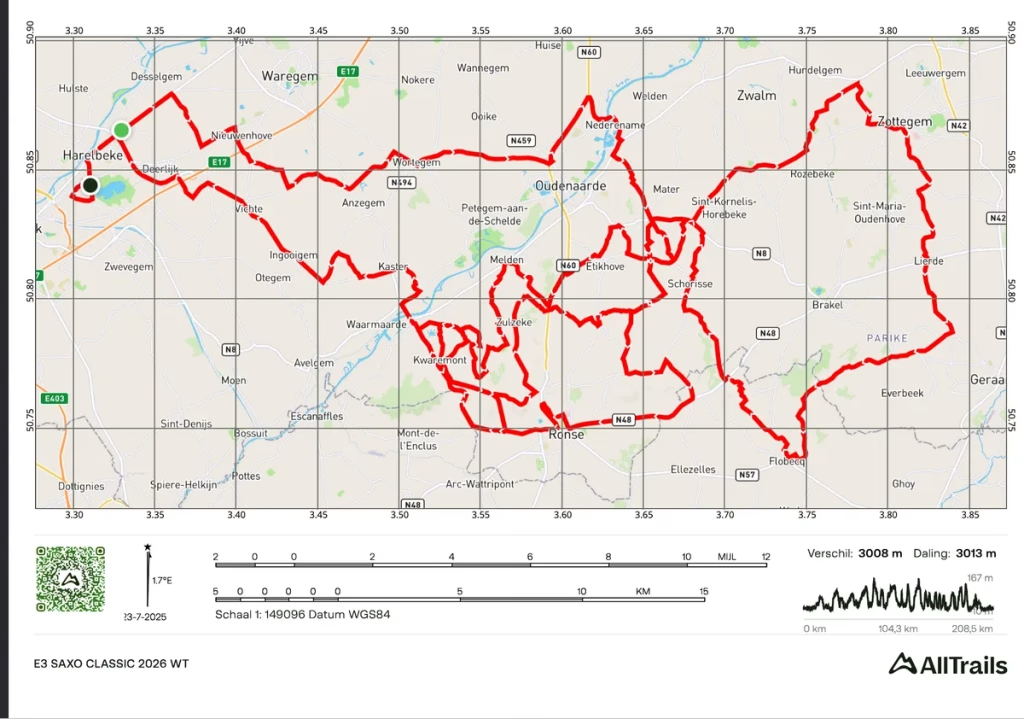
The 2026 route starts and finishes in Harelbeke and is 208.5 km long.
The broad logic remains familiar, but the organisers have refreshed the route in a way that makes the second half even more demanding. The key change is the second ascent of the Oude Kwaremont, which adds more weight to a race that was already one of the more selective tests on the Belgian calendar.
In broad terms, E3 still follows the classic Flemish structure. The opening phase gives the peloton room to settle, but once the race moves into its decisive half the route starts stacking cobbled climbs and narrow pressure points in rapid succession. That is what gives the event its shape. It is not just the bergs themselves. It is the rhythm in which they arrive.
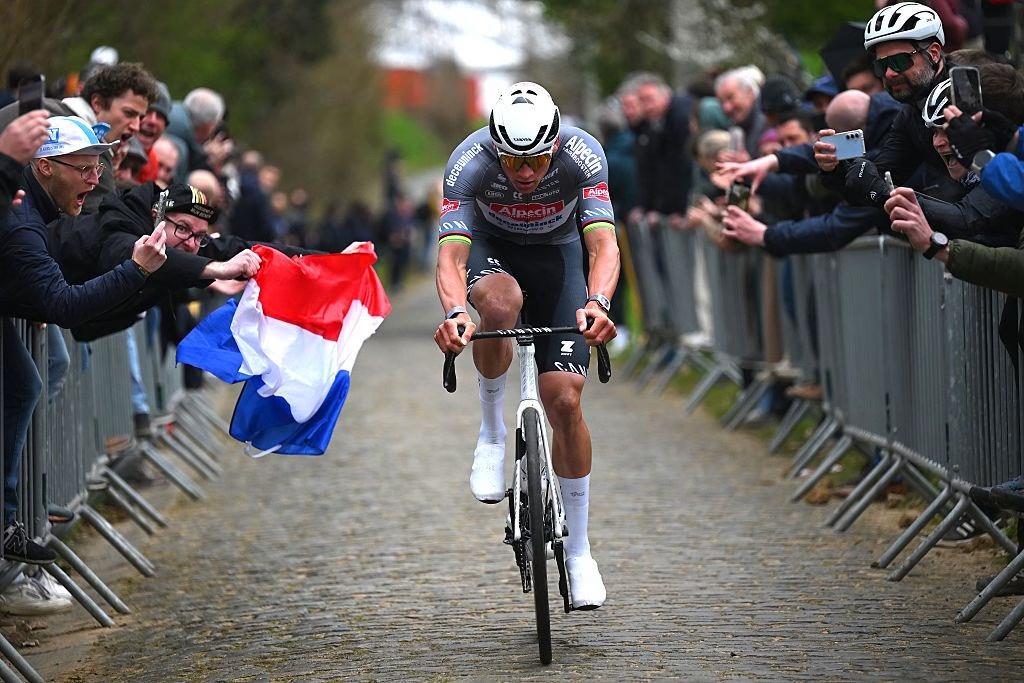
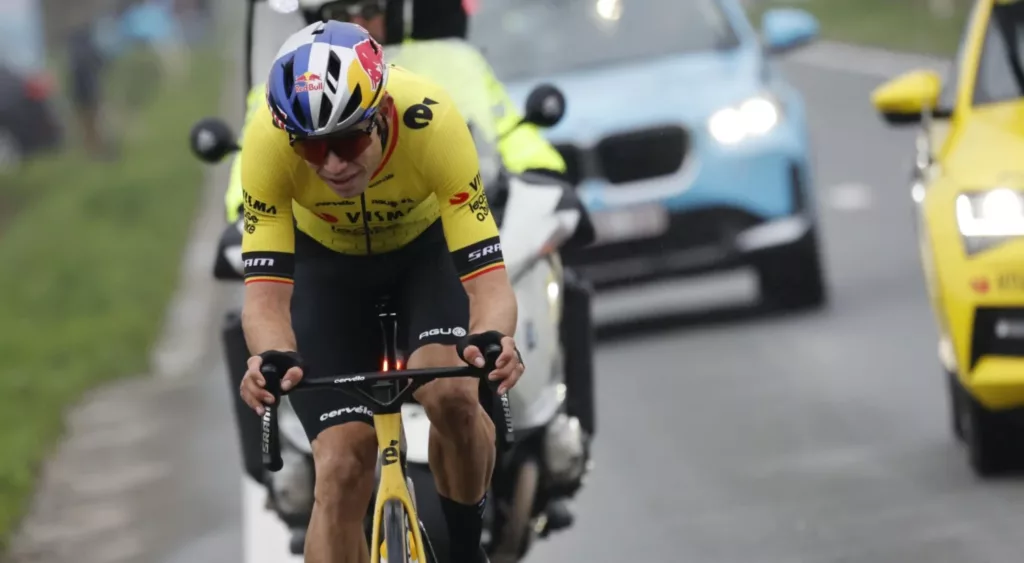 Photo Credit: Cor Vos
Which climbs matter most?
The most important thing to understand about E3 is that it is not usually decided by one climb alone. It is decided by what the sequence of climbs does to the race.
The Taaienberg has long been one of the key pressure points because it often comes at the moment where the race stops being theoretical and starts becoming selective. Then there is the Oude Kwaremont, now climbed twice in 2026, which gives the route even more weight in the final phase. Add in the Paterberg and the repeated cobbled sectors and you have a race designed not just to create attacks, but to keep forcing riders to answer again and again.
That is why E3 is such a revealing spring race. The strongest riders usually do not reveal themselves once. They reveal themselves repeatedly.
Why is the race so selective?
Because everything in E3 compounds.
That is the central lesson of the race. One cobbled climb on its own may not decide very much. One hard acceleration may not break the field. But the route keeps stacking those efforts until the riders who looked comfortable early begin to disappear. Teams lose numbers, favourites start to lose support, and the race turns from a peloton contest into something much smaller and much more severe.
This is also why E3 is such a good race for beginners. You can actually see the process happening. The roads explain the race very clearly.
What kind of rider usually wins E3 Saxo Classic?
A true cobbled Classics rider.
That sounds obvious, but it matters because not every Belgian one-day race is built for exactly the same type. E3 usually favours riders who can climb short, steep bergs at speed, handle cobbles confidently and keep producing efforts after 150 km rather than relying on one perfect move at the end.
That is why the race is so useful as a guide to the spring. If a rider can dominate E3, it usually means he has most of the qualities needed to shape the biggest cobbled races that follow.
-
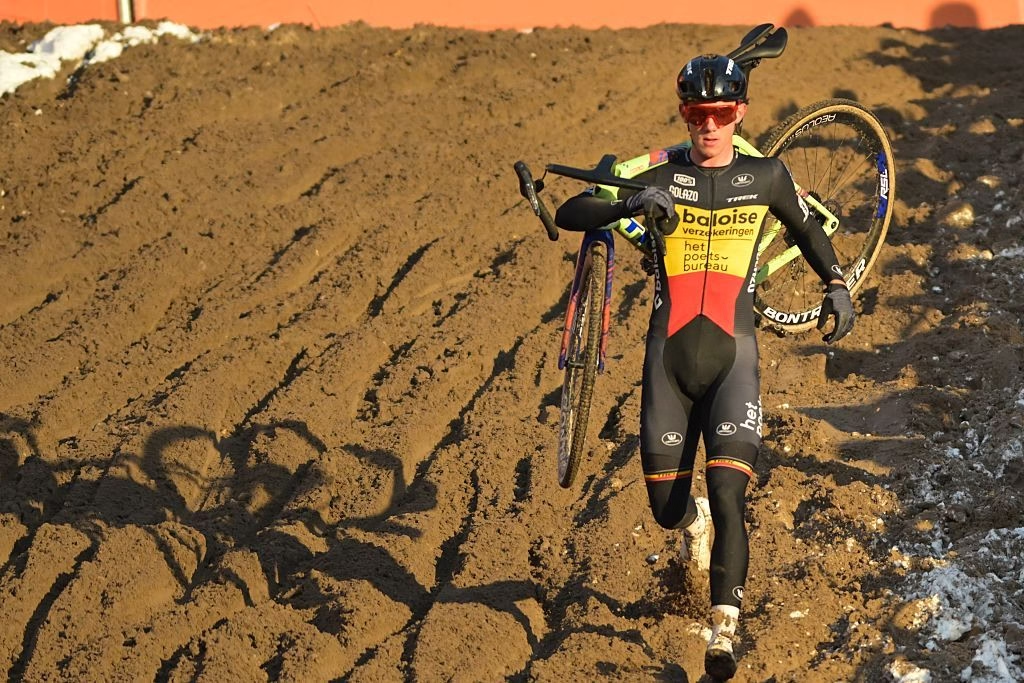
 Photo Credit: Thomas Sisk | PhotoNews

How is E3 different from the Tour of Flanders?
It is slightly shorter, slightly more compressed and often a little more immediately violent.
The Tour of Flanders has more prestige, more mythology and a bigger place in the sport, but E3 can feel every bit as sharp in sporting terms. It throws major bergs and cobbles at the peloton in a way that often makes the real selection come quickly once the race reaches its second half. In that sense, it is not so much the little brother of Flanders as a race that asks many of the same questions with slightly less ceremony.
For a new fan, that is one of its biggest strengths. If you want to understand why the cobbled spring is so difficult, E3 often provides one of the clearest previews.
What should new fans watch for?
Watch the race in two phases.
In the first half, pay attention to which teams are already controlling the front. That often tells you who understands where the danger lies and who is serious about using the race rather than merely surviving it.
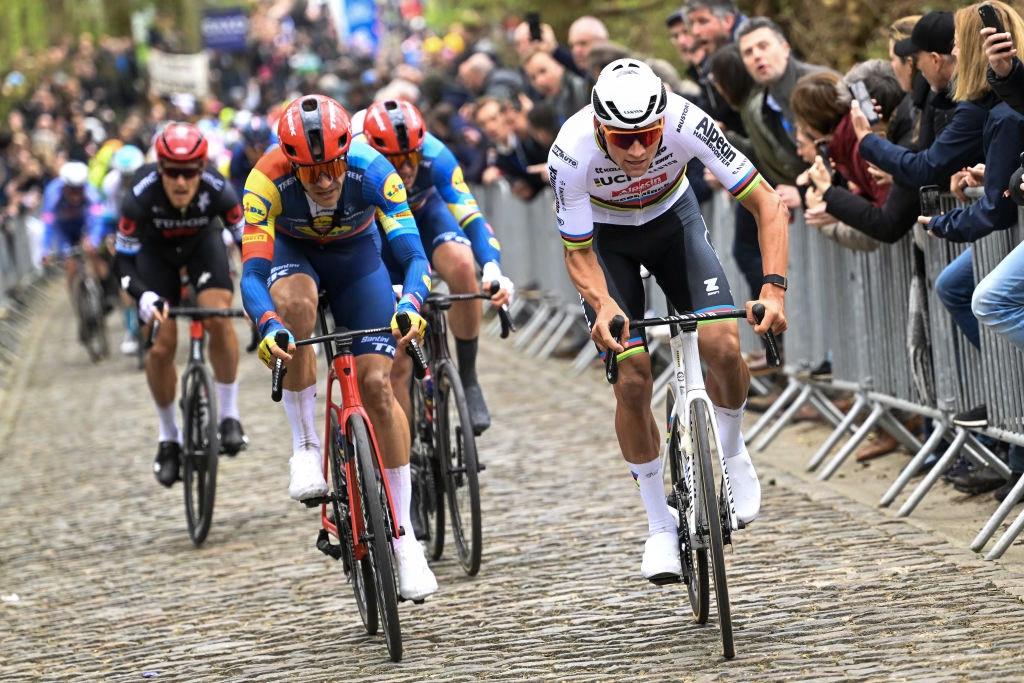
In the second half, once the major bergs begin to arrive, stop watching only for attacks and start watching for composure. Which riders still look in control? Which teams still have numbers? Which favourites are being forced to chase rather than choose their own moment? That is often where E3 begins to reveal its winner long before the finish line.
Why does the 2026 route matter?
Because it pushes the race even closer to being a pure selection test.
The extra ascent of the Oude Kwaremont and the tougher finale are not cosmetic changes. They make the route more demanding and more tilted toward the very strongest riders. That should make the race even more informative in relation to the rest of the cobbled season.
In other words, E3 was already a race that mattered. The 2026 route makes it matter even more.
So what should you expect from E3 Saxo Classic 2026?
Expect a race that gets hard enough, early enough, to expose the real Classics hierarchy.
Expect the second half to matter much more than the first.
Expect the strongest cobbled riders in the world to start showing themselves clearly once the berg sequence begins.
And expect one of the best previews of the Tour of Flanders you can get. E3 Saxo Classic 2026 may not be the biggest race of the spring, but it is one of the clearest races for understanding who is actually ready to win the biggest ones.