
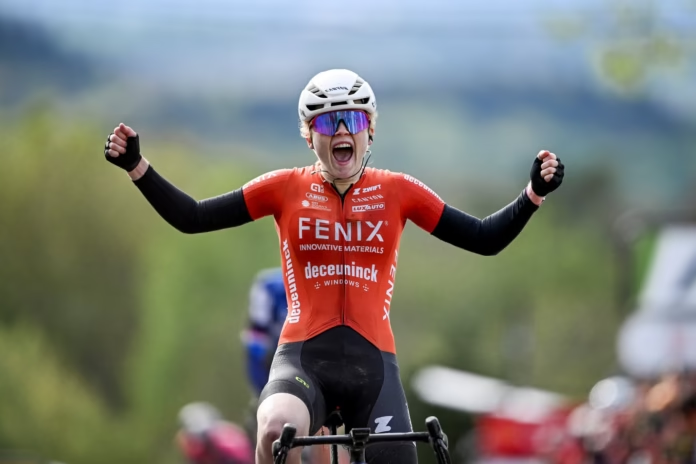
La Flèche Wallonne Femmes 2026 is one of the easiest races on the women’s calendar to understand quickly, and one of the hardest to win. It is built around a single iconic climb, the Mur de Huy, and that gives the race a clarity that many other Classics do not have. If you are new to women’s cycling, this is one of the best races to watch because the route, the tactics and the likely winner profile are all unusually easy to follow.
That does not mean it is simple. The earlier climbs still matter, the race still has to be controlled, and the strongest teams still need to deliver their leaders in the right position. But compared with races such as Tour of Flanders Women or Paris-Roubaix Femmes, La Flèche Wallonne Femmes has a much more concentrated identity. It all builds towards one final effort on one famous wall.
What is La Flèche Wallonne Femmes?
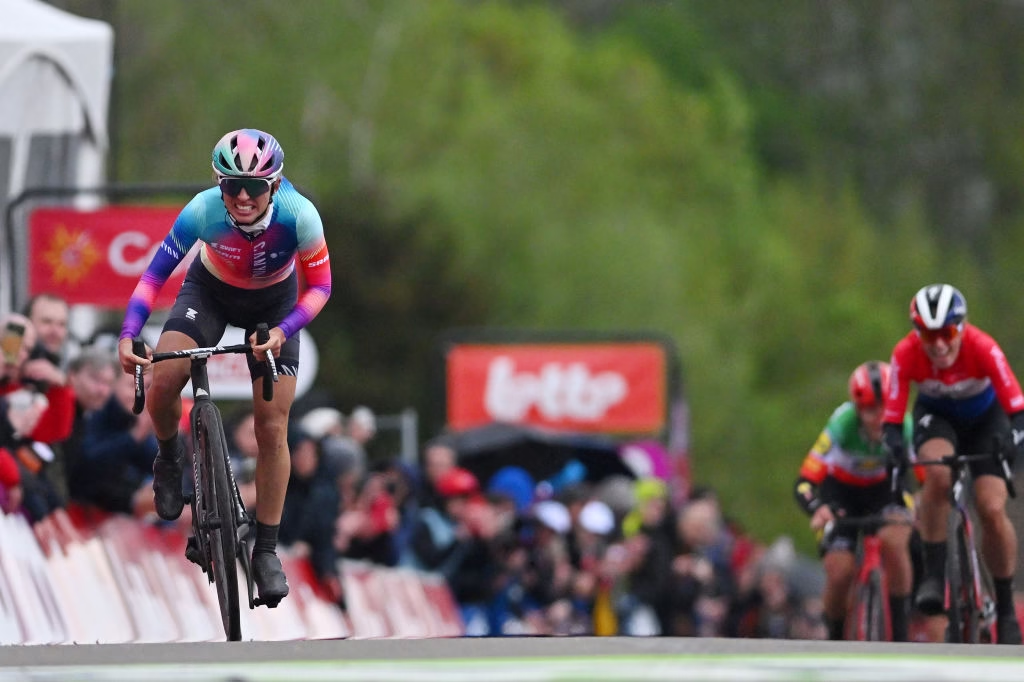
La Flèche Wallonne Femmes is one of the major Ardennes Classics in women’s cycling. It sits between Amstel Gold Race Women and Liège-Bastogne-Liège Femmes in the spring calendar, which makes it one of the key races for puncheurs, climbers and explosive one-day specialists.
That placement in the calendar matters. Amstel is broader and more open in how it can be won. Liège tends to reward deeper endurance and climbing strength. Flèche is the most specialised of the three because it is shaped so heavily by the Mur de Huy. That gives it a very clear role in the season and makes it one of the most distinctive races in the sport.
When is the 2026 race?
La Flèche Wallonne Femmes 2026 takes place on Wednesday the 22nd April. It keeps its usual place in the middle of Ardennes week, following Amstel Gold Race Women and coming before Liège-Bastogne-Liège Femmes.
That timing helps define the race’s importance. Riders who go well here are usually among the strongest uphill puncheurs in the peloton, and the result often sharpens the wider conversation around who is really climbing well during this part of spring.
What does the 2026 route look like?
The race starts and finishes in Huy and is built around the roads and climbs surrounding the town. The early and middle parts of the route help wear the field down, but the decisive section comes later, when the race returns to the local circuit and begins to revolve around the familiar closing sequence.
That final part includes climbs such as Côte d’Ereffe and Côte de Cherave before the riders hit the Mur de Huy for the finish. In simple terms, the first part of the race removes the less suitable riders, the closing circuit increases the pressure, and the final climb decides almost everything.
That is one reason this race is so useful for beginners. The route has enough complexity to make it a real Classic, but enough clarity that you can understand exactly what the race is building towards.
Why is the Mur de Huy so important?
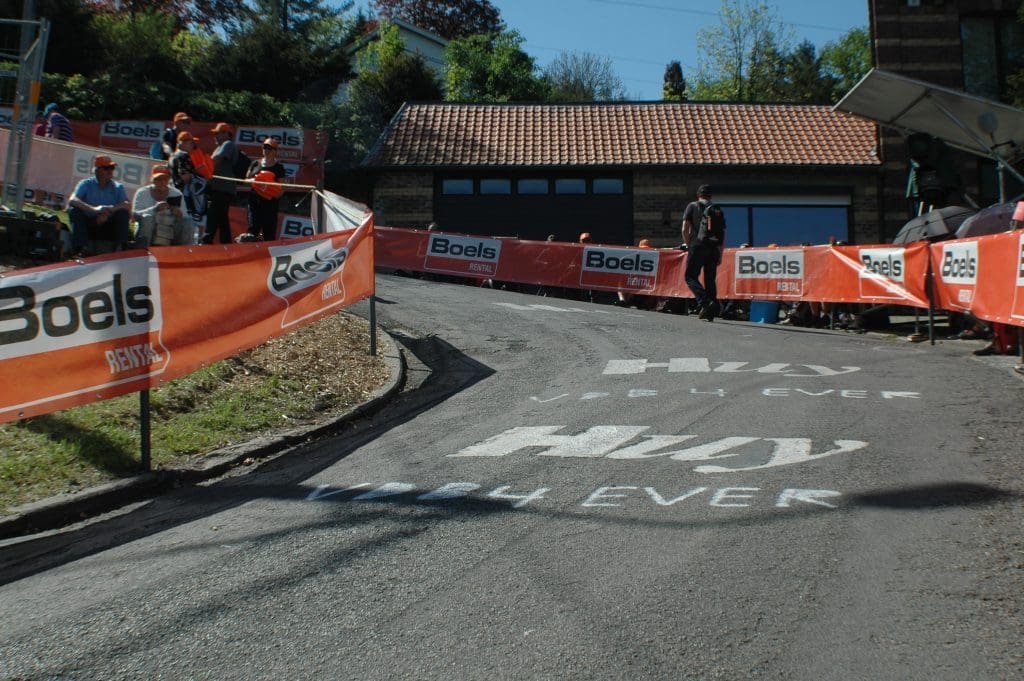
Because it is the finish, and because it is steep enough to decide the race almost on its own.
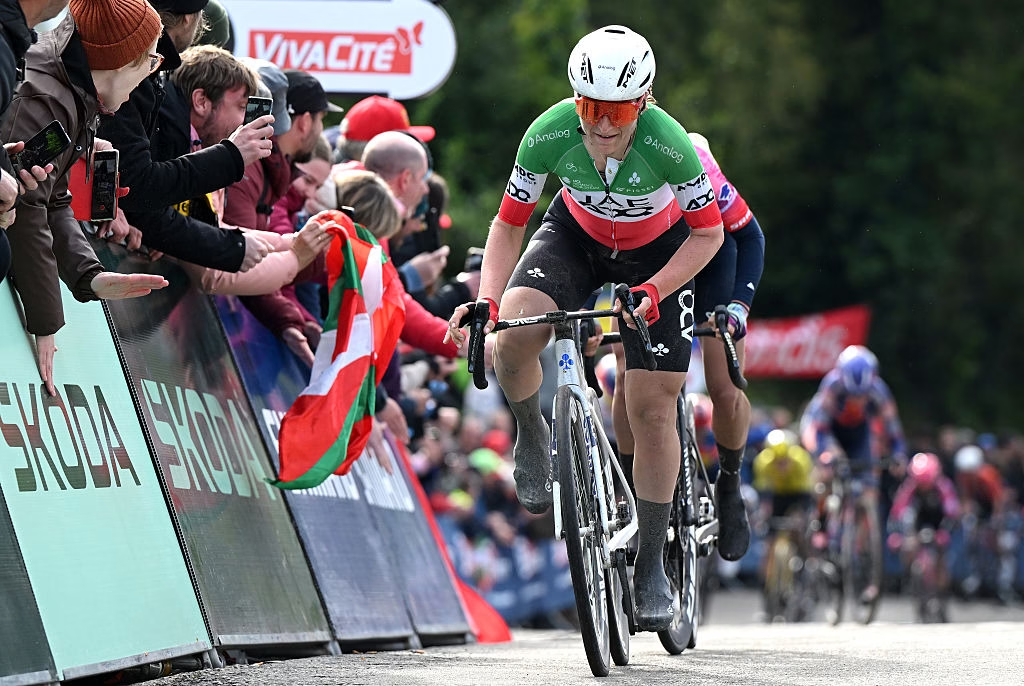
The Mur de Huy is one of the most recognisable climbs in cycling. It is short, steep and brutal. It is not a mountain in the Grand Tour sense. It is a wall, and that changes the type of rider who thrives there. This is not usually a climb for diesel effort alone. It is a climb for explosive riders who can handle repeated pressure and still produce one final acceleration when the gradient bites hardest.
That is why the Mur matters so much. Riders do not hit it fresh. They arrive there after a hard one-day race, and whoever wins usually has to combine climbing punch with timing, positioning and composure. The final result often looks simple, but a lot has to go right before the winning rider even reaches the foot of the climb in the right place.
Is this a climber’s race or a puncheur’s race?
It is much more a puncheur’s race than a pure climber’s race.
Climbing still matters, obviously, but the decisive effort here is short, steep and explosive rather than long and sustained. That favours riders who can accelerate uphill violently rather than those who need a long mountain to wear others down.
That is what gives La Flèche Wallonne Femmes such a specific identity. Some races reward the strongest all-round Classics rider. Some reward the best endurance climber. Flèche usually rewards the rider with the sharpest uphill kick after a hard race. That makes it one of the most specialised one-day races on the women’s calendar.
How much history does the race have?
La Flèche Wallonne Femmes has been part of the women’s calendar since the late 1990s and has grown into one of the defining races of the spring. It may not have the same level of broad public attention as Tour de France Femmes or the same raw cobbled mythology as Paris-Roubaix Femmes, but within women’s one-day racing it carries real weight.
A large part of that comes from the Mur de Huy itself. Great races tend to have a strong visual identity, and Flèche has one of the clearest in the sport. If you see riders climbing the Mur in the final kilometre, you know exactly which race you are watching.
What happened in the last edition?
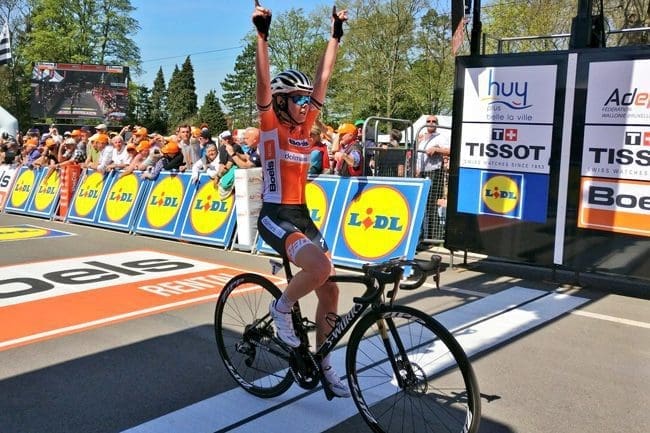
The most recent edition again reinforced what this race usually rewards, explosive climbing power and the ability to hit the final ascent in exactly the right position. That has been the core pattern of La Flèche Wallonne Femmes for years, and it remains true even as the wider balance of power in women’s cycling continues to shift.
That consistency is important. It means new fans can watch this race and quickly understand why certain riders matter more here than they might in flatter Classics or in the cobbled races.
What should beginners watch for during the race?
The easiest way to follow La Flèche Wallonne Femmes is to focus on three things.
First, watch positioning before the closing climbs. Riders who enter the decisive sections too far back often spend precious energy simply moving up.
Second, watch which teams still have multiple riders late in the race. Even in a finish-focused event like this, numbers matter. A team with two or three riders still present can protect a leader, set the rhythm, or close dangerous moves before the Mur.
Third, remember that the final climb really does matter more here than in most other Classics. In some races the key moment can come 20km from the line. In Flèche, the most important moment usually comes exactly where everyone expects it to, on the final rise of the Mur de Huy.
What kind of rider usually wins?
The ideal La Flèche Wallonne Femmes winner is usually a punchy climber or an all-rounder with a very strong uphill acceleration. She needs to survive a selective one-day race, but also to be explosive enough to finish it on the steepest part of the Mur.
That means this is not usually a race for pure sprinters, and not always one for the deepest endurance climbers either. It sits in a very specific middle ground. The rider who wins here normally has a blend of positioning sense, repeated climbing strength and a sharp finishing kick uphill.
Why does La Flèche Wallonne Femmes matter in the season?
It matters because it is one of the biggest one-day races on the women’s calendar and because it gives Ardennes week its most specialised challenge.
A rider who wins here has usually proved she is one of the best explosive climbers in the peloton. A rider who performs well here also becomes immediately more interesting for the rest of the Ardennes block, even if Liège-Bastogne-Liège Femmes asks slightly different questions a few days later.
This race also matters because of how clearly it complements the rest of the spring. Trofeo Alfredo Binda rewards a different kind of tactical one-day racing. Strade Bianche Women asks different questions again. Flèche adds another distinct challenge to the season, and that helps make women’s cycling richer and easier to understand as a whole.
Why is this a good race for beginners?
La Flèche Wallonne Femmes 2026 is a very good race for beginners because it shows a specific type of women’s cycling in a very clear form. It is not about cobbles, not about a flat sprint, and not about a long summit finish. It is about who can survive a hard race and then conquer the Mur de Huy when it matters most.
That clarity is a real strength. For new fans, it makes the race easier to follow. For experienced fans, it makes the tension even sharper because everyone knows what is coming, but that still does not make winning any easier.

