
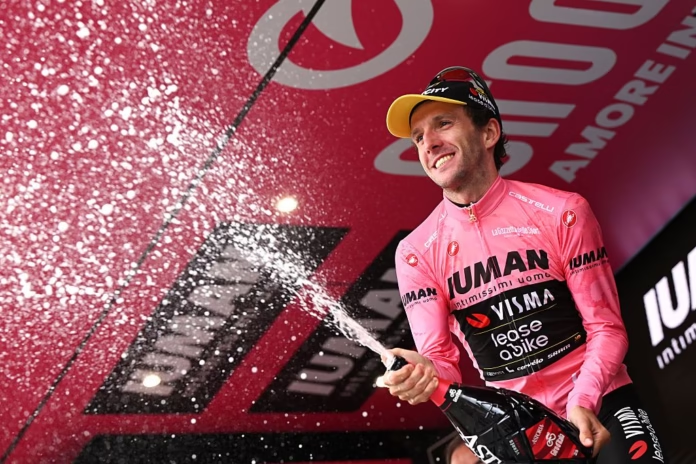
The Men’s Giro d’Italia 2026 begins on Friday 8th May and runs through to Sunday 31st May. This year’s race starts in Bulgaria, finishes in Rome, and brings together the kind of route mix that usually makes the Giro so compelling – a foreign Grande Partenza, sprint opportunities, awkward medium-mountain stages, a major time trial, and a final week with enough climbing to keep the overall battle alive deep into the race.
For newer fans, the easiest way to understand the Giro is this: it is often the most unpredictable of the three men’s Grand Tours. The Tour de France can feel the most controlled. La Vuelta a España can be the most explosive day-to-day. The Giro usually sits somewhere in between, but with more room for weather, route design and ambition to push the race in unexpected directions.
What is the Giro d’Italia?
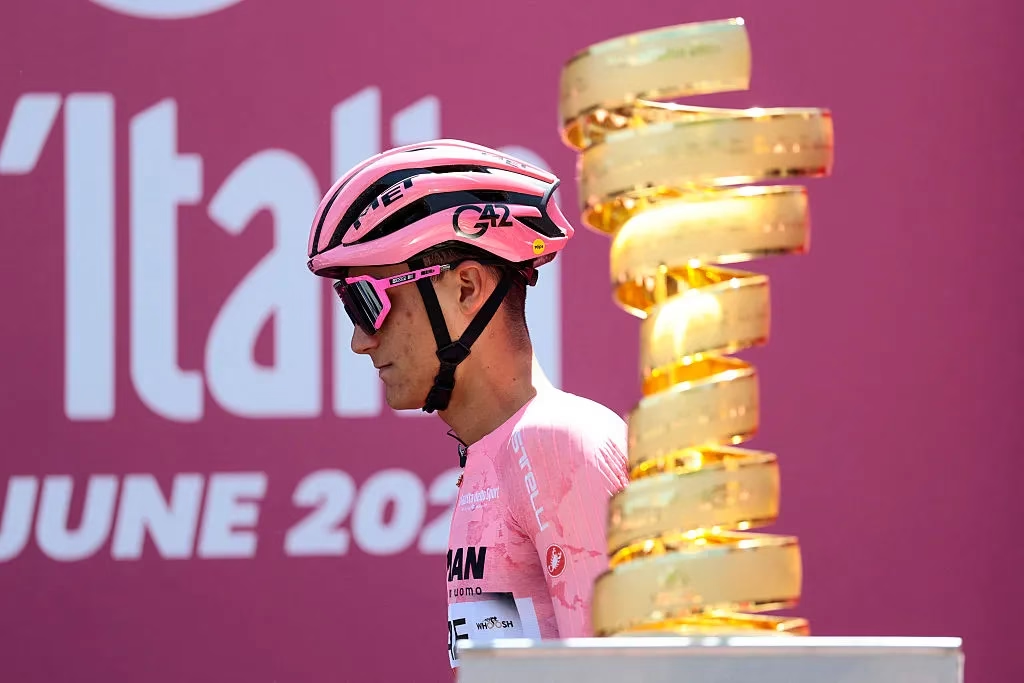
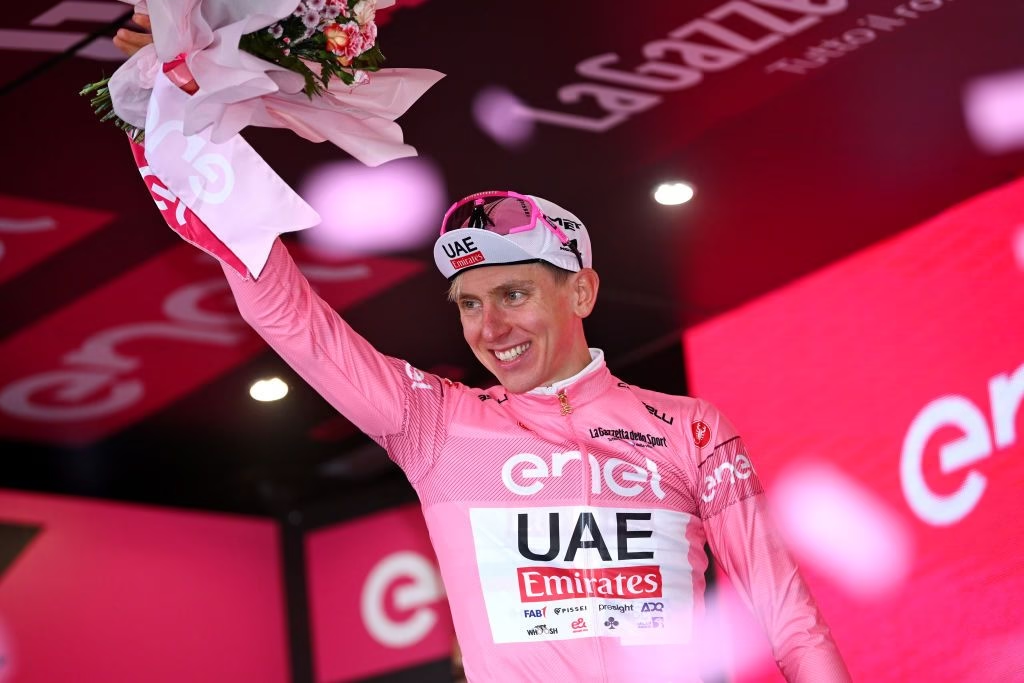
The Giro d’Italia is one of cycling’s three Grand Tours, alongside the Tour de France and La Vuelta a España. It is the biggest stage race in Italian cycling, and the overall leader wears the maglia rosa, the pink jersey.
What makes the Giro distinctive is not just prestige, but character. It usually asks different questions from the Tour. There is often more variety in stage type, more uneven rhythm across the three weeks, and more room for one bad day to do serious damage. That makes it one of the best races for understanding how a Grand Tour can shift gradually rather than all at once.
If you want the wider season context, this guide also sits naturally alongside ProCyclingUK’s guide to the men’s WorldTour races, teams and points and your broader men’s racing coverage.
Why is the 2026 edition interesting?
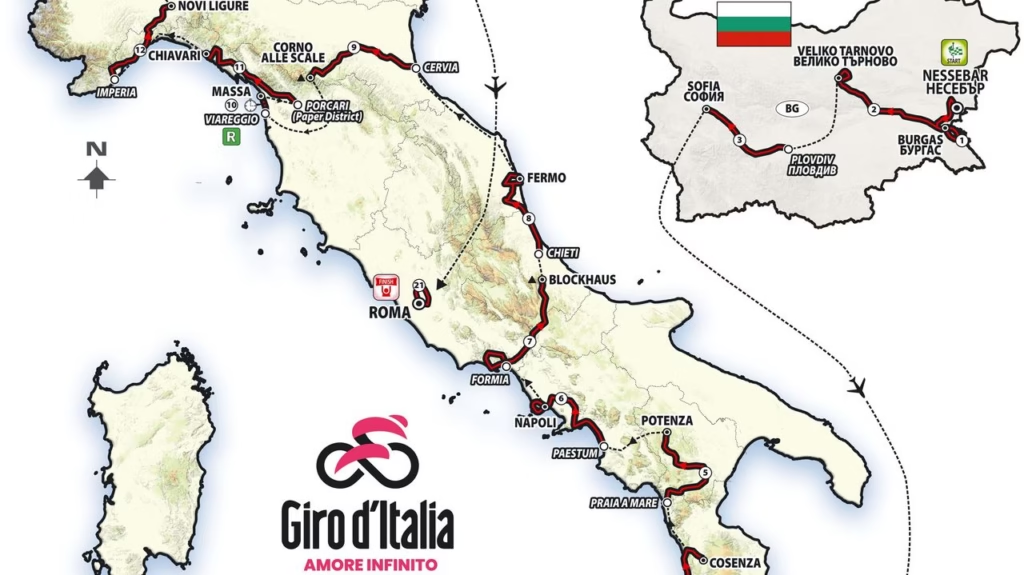
The 2026 route has a bit of everything. There are three opening stages in Bulgaria, a long first summit finish at Blockhaus, a flat 42km individual time trial, several awkward medium-mountain stages, a short but high-altitude day to Carì, and a hard final mountain block that includes Pila, Alleghe and Piancavallo before the traditional closing stage in Rome.
That matters because it should stop the race becoming too one-dimensional. A pure climber can gain time, but not without surviving the time trial and the punchier transition stages. A strong time triallist can build an early platform, but not without handling the longer climbing sequence that follows. The route is varied enough that the best overall rider should still need to prove it in several different ways.
Where does the race start and finish?
The Giro starts in Bulgaria, which immediately gives the opening week a slightly unusual feel. Grand Tours often set their tone in the first few days, and starting abroad can make the race feel more fragmented before it settles fully into its national identity.
From there, the race returns to Italy and gradually builds towards its usual late-race tension. It finishes in Rome on Sunday 31st May, continuing the recent tradition of ending the Giro with a final stage in the capital.
What does the first week look like?
The first week is more dangerous than it might appear at first glance. The three Bulgarian stages are not just ceremonial. They are part of the race’s opening rhythm and can shape how riders settle into the event before the transfer back to Italy.
Once the Giro returns to Italy, the route immediately starts asking more serious questions. There are rolling stages where punchy finishers can matter, likely sprint stages that still need to be controlled properly, and then the first major mountain test to Blockhaus. That stage is especially important because it is long and hard, which means it can create a very different kind of fatigue from a shorter summit finish.
That is often how the Giro works. It does not always wait politely until the final week to reveal the strongest riders. It starts draining them much earlier than that.
Which stages look most important for GC?
There are a few obvious general classification stages, and several others that look dangerous because they could create unexpected losses.
The first big mountain day is the summit finish at Blockhaus. That should be the first major GC reference point. Corno alle Scale is another uphill finish that could deepen any hierarchy already forming. The long flat individual time trial is also crucial because it gives stronger riders against the clock a chance to build real time before the final mountain block.
Then the race heads towards the stages that look most likely to decide the overall. Pila, Carì, Alleghe and Piancavallo all stand out because they arrive late enough in the race to punish anyone already carrying fatigue. That is especially important in the Giro, where tired legs can make even a modest gap suddenly become a large one.
The key thing for newer fans is not to think only in terms of summit finishes. A Giro can also be won or lost on the stages between them, when positioning, descending and repeated smaller climbs can expose weakness before the headline climbs even arrive.
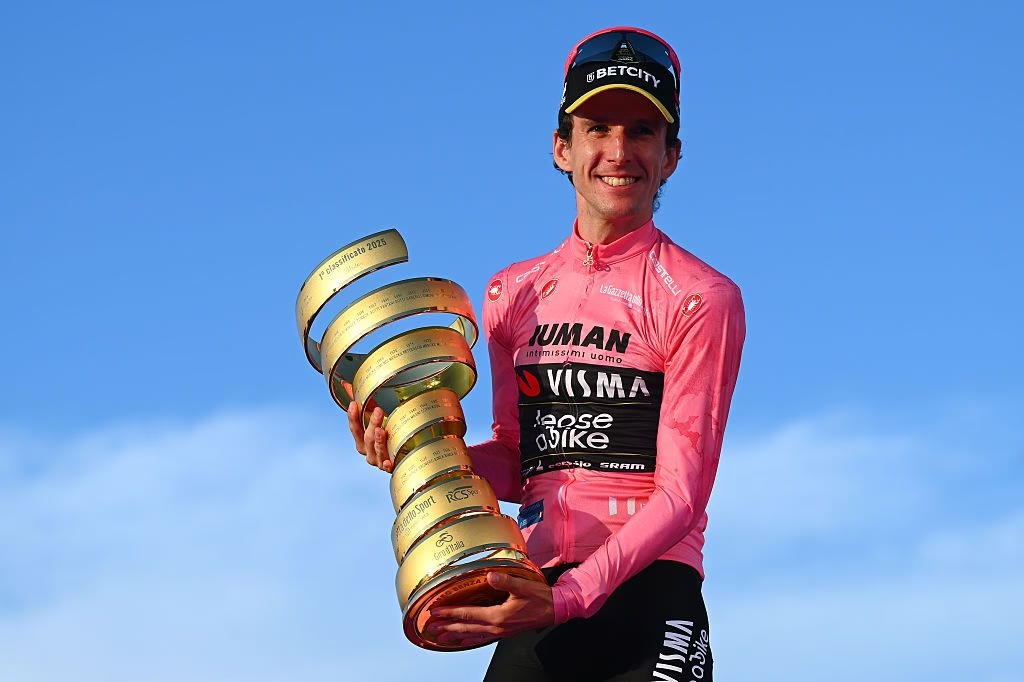 Photo Credit: Getty
Is there a time trial?
Yes, and it is a major one. The 42km individual time trial is flat and long enough to create meaningful time gaps.
That gives the route an important layer of balance. A weaker time triallist may need to attack later in the race to make up ground, while a stronger rider against the clock can use that stage to build a platform before the final week. For a Grand Tour, that kind of contrast is useful because it forces riders to be complete rather than simply excellent at one type of terrain.
What kind of riders usually do well in the Giro?
The Giro generally rewards riders who can climb well, recover well and cope with inconsistency across three weeks. That last point matters. The route is not just hard, it is uneven. There are sprint opportunities, time trial kilometres, awkward medium-mountain stages and major summit finishes.
So the ideal Giro contender is not only a climber. He usually also needs decent time trial ability, calm positioning and the capacity to survive awkward days without wasting energy. Riders who lose concentration or have one poor day can see an otherwise strong race unravel very quickly.
That is one of the reasons the Giro often feels more open than people expect before it starts. The strongest rider on paper is not always the one best equipped to handle every kind of stage the route throws at him.
How many stages are there for sprinters?
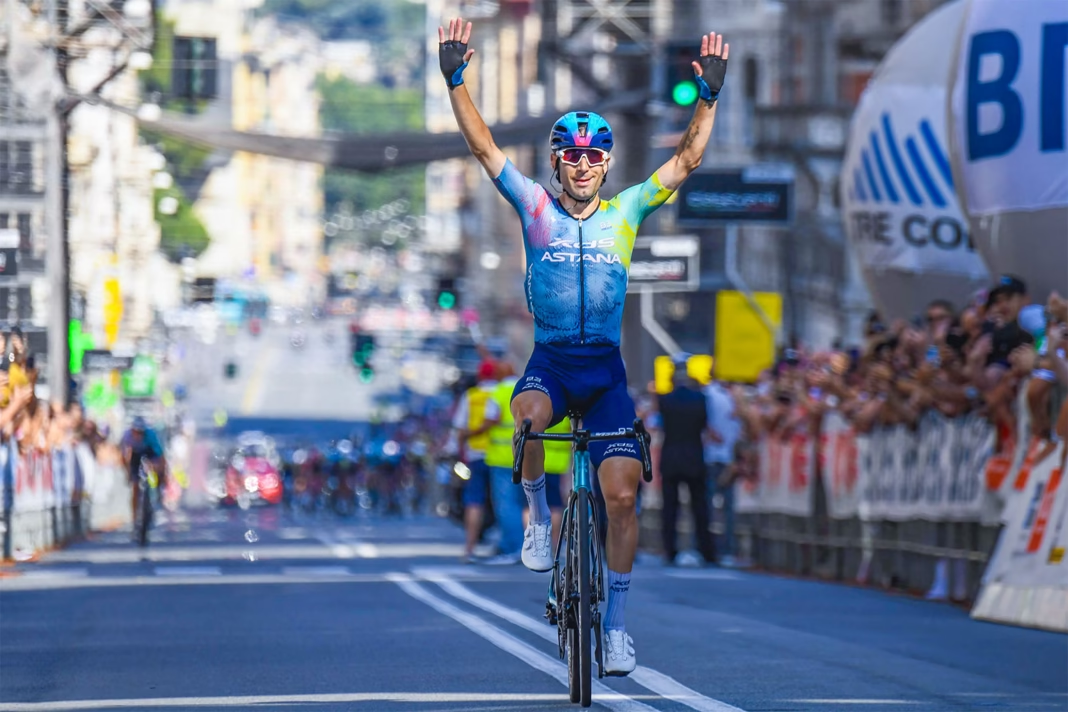
There are enough to keep the fast men interested, but not so many that they dominate the whole race. The opening Bulgarian stage should interest the sprinters, and there are several later days in Italy where a bunch finish looks likely as well, including the final stage in Rome.
That balance is important. The Giro usually gives sprinters meaningful opportunities, but it rarely lets them own the race narrative for long. The overall shape still leans towards climbers and complete GC riders, especially once the race reaches the middle and final weeks.
What route features should newer fans watch for?
There are three especially useful things to watch.
First, watch the transition stages. These are the days that can seem manageable until the final hour becomes selective and tactical. The Giro is full of stages like that, and they often shape the race more than expected.
Second, watch the length of some of the mountain stages. A long mountain day creates a different kind of fatigue from a shorter explosive finish. Riders can crack earlier, teams can lose control earlier, and the stage can become harder to read.
Third, watch the final week carefully. That is where the Giro often becomes most revealing, because tired riders stop racing in theory and start racing on instinct. The strongest legs still matter, but so does judgement.
What could decide the 2026 Giro?
The simplest answer is balance. This route looks built to reward the rider who can handle multiple race shapes well rather than dominate only one stage type.
The long time trial matters. The summit finishes matter. The awkward medium-mountain days matter. The foreign start matters because it makes the opening week less settled than usual. That is why the race should stay interesting. It does not appear to hand everything to one rider type. It asks different questions across the month, and that is usually when the Giro is at its best.
-
 Photo Credit: Billy Ceusters / Getty Images

Why should new fans watch it?
Because the Giro tends to produce a more varied kind of Grand Tour drama. Some races are easiest to understand through one dominant story. The Giro usually gives you several at once. There is the pink jersey battle, the stage wins, the mountain stages, the sprint stages, the breakaways, the jersey competitions, and the way terrain or weather can completely change the tone of a day.
For a new viewer, that makes it a very good race to learn from. You can watch a sprint one day, a time trial the next, a summit finish after that, and by the end of the race you have seen most of what elite stage racing can be.
If you want a wider history and calendar backdrop around the men’s side of the sport, this guide also fits naturally with the men’s cycling history, races, riders and teams hub.
The quick version
Men’s Giro d’Italia 2026 runs from Friday 8th May to Sunday 31st May, starts in Bulgaria, finishes in Rome, and mixes sprint chances with a long flat time trial and a serious mountain programme. Key GC days include Blockhaus, Corno alle Scale, Pila, Carì, Alleghe and Piancavallo, while the time trial is likely to be one of the biggest reference points of the whole race.
That should make this a proper Giro in the best sense – varied, hard to control, and likely to be shaped by whichever rider stays strongest across three different kinds of racing rather than just one.

