
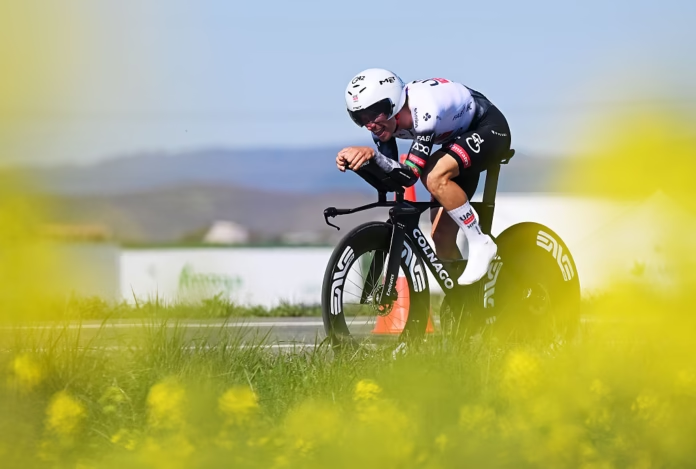
The Men’s Tour de Suisse 2026 takes place from Wednesday, 17th June to Sunday, 21st June, and it arrives with a very different look from the race many fans will remember. Instead of the traditional eight-day format, the 2026 men’s race is now five stages long, running in parallel with the women’s race across the same host towns and broadly similar route design.
That change gives the race a new shape. It is shorter, sharper and more compact, but still unmistakably Swiss in character: hilly circuits, technical roads, a fast individual time trial and a queen stage in Villars-sur-Ollon with more than 4,000 metres of climbing.
For new fans, the Tour de Suisse is best understood as the final major WorldTour stage race before the Tour de France. It is not a Grand Tour, and it does not carry the same weight as July, but it regularly reveals who has form, who is short of rhythm, and which teams are ready for the mountains.
What is the Tour de Suisse?
The Tour de Suisse is Switzerland’s biggest professional road race and one of the most important week-long stage races in men’s cycling. It sits on the UCI WorldTour calendar, which means the top teams are involved, and it usually attracts riders preparing for the Tour de France.
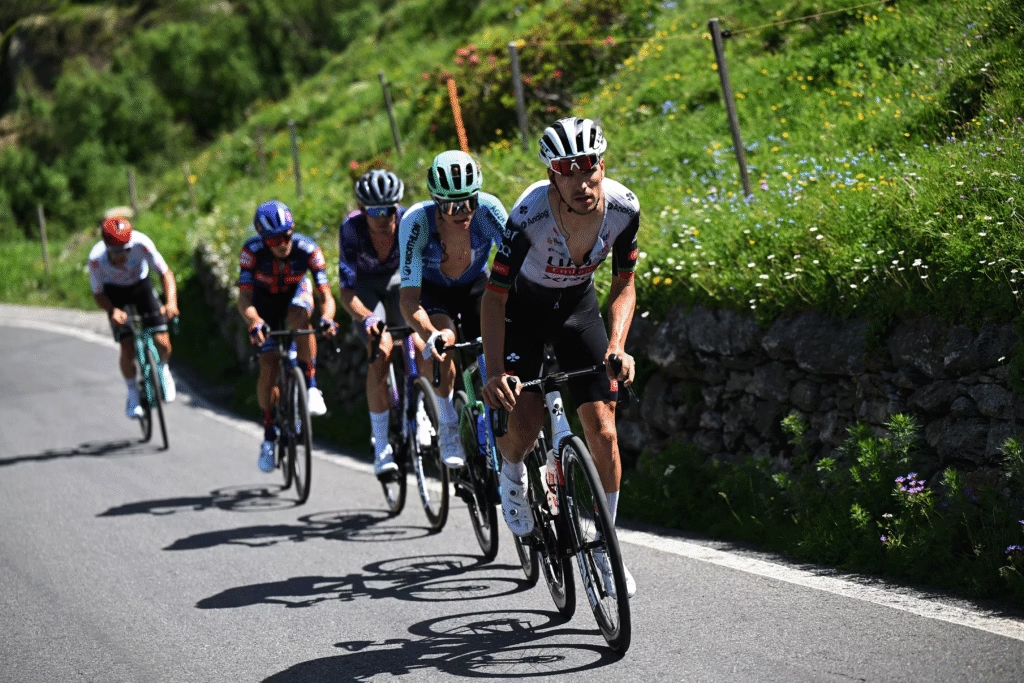
Historically, the race has been known for variety. Switzerland rarely gives riders easy terrain for long. Even stages that are not labelled as mountain stages can include tough climbs, technical descents, narrow roads and rolling circuits that make control difficult.
That makes the race useful for several types of rider. General classification contenders can test their climbing form. Time trial specialists get a proper chance against the clock. Puncheurs can target selective hilly stages. Sprinters sometimes get opportunities, but rarely without having to work for them first.
When is the Men’s Tour de Suisse 2026?
The Men’s Tour de Suisse 2026 runs from Wednesday, 17th June to Sunday, 21st June.
It takes place close enough to the Tour de France to feel important, but far enough away that riders can still recover and adjust their final preparation. That timing is part of the race’s identity. A strong Tour de Suisse does not guarantee Tour de France success, but a poor one can quickly raise questions.
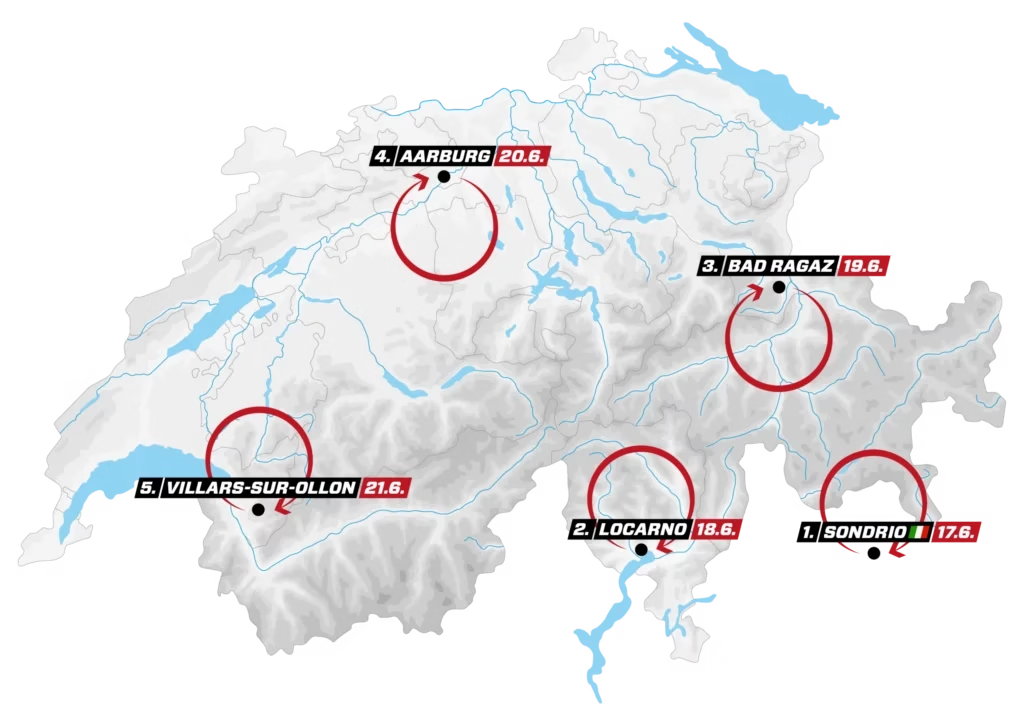
The 2026 edition has five stages:
- Wednesday, 17th June – Sondrio
- Thursday, 18th June – Locarno
- Friday, 19th June – Bad Ragaz
- Saturday, 20th June – Aarburg individual time trial
- Sunday, 21st June – Villars-sur-Ollon
Why has the race changed in 2026?
The big change for 2026 is the new five-day format. The men’s race has been shortened, while the women’s and men’s events now share the same host cities and largely parallel route designs for the first time.
That matters because it changes the rhythm of the race. In an eight-day edition, riders might have more time to recover from a bad day or wait for the right mountain stage. In a five-day race, every stage carries more weight. There is less room for a quiet opening, less time to repair mistakes, and more pressure to be ready immediately.
It also gives the race weekend a clearer combined identity. The men’s and women’s races now feel more connected, not as separate events operating on different timelines, but as two headline races built around the same Swiss cycling platform.
What is the 2026 route like?
The 2026 route is compact but demanding. It begins in Sondrio, Italy, before moving through Locarno, Bad Ragaz, Aarburg and Villars-sur-Ollon. Across the five stages, the race includes hilly days, one realistic sprint chance, an individual time trial and a final mountain stage.
Stage 1 in Sondrio is already demanding, with 144km and 2,455 metres of climbing. The organisers describe it as hilly and technically demanding, with a bunch sprint practically ruled out. That means the race could open immediately with attacks, small groups and an early GC test.
Stage 2 in Locarno is 157.7km with 2,110 metres of climbing. It should suit puncheurs and explosive riders, especially with short, steep climbs close to the finish.
Stage 3 around Bad Ragaz is 157.9km with 2,690 metres of climbing. It includes the St. Luzisteig early and the Schwägalp as the key difficulty, followed by a long flat section back to Bad Ragaz. That makes it the closest thing to a sprinter’s opportunity, but only if the fast men survive the climbing and their teams can bring the race back together.
Stage 4 in Aarburg is a 23.8km individual time trial with only 270 metres of climbing. The official route notes describe it as fast and technical, which should suit specialists and GC riders who can handle speed, position and pacing.
Stage 5 in Villars-sur-Ollon is the queen stage, with 151.1km and 4,226 metres of climbing. The route uses a circuit over the Col de la Croix, with long climbs, fast descents and barely any flat recovery. This is where the general classification should be settled.
How is the race likely to be won?
The Men’s Tour de Suisse 2026 should be won by a rider who can climb well, time trial strongly and stay alert on technical terrain.
The opening stages are too hard for a passive GC rider to hide completely. Stage 1 could create gaps straight away, stage 2 suits explosive climbers, and stage 3 has enough climbing to make even the sprint-style day difficult. Then comes the time trial, where strong specialists can take significant time, before the final mountain stage decides whether that advantage can be defended.
That makes balance crucial. A pure climber who loses too much time in Aarburg may be forced into a long-range attack at Villars-sur-Ollon. A time trial specialist who climbs only moderately well may gain time on stage 4, then spend stage 5 defending. The ideal winner is a complete stage racer: strong uphill, efficient against the clock and calm on technical Swiss roads.
What jerseys are awarded?
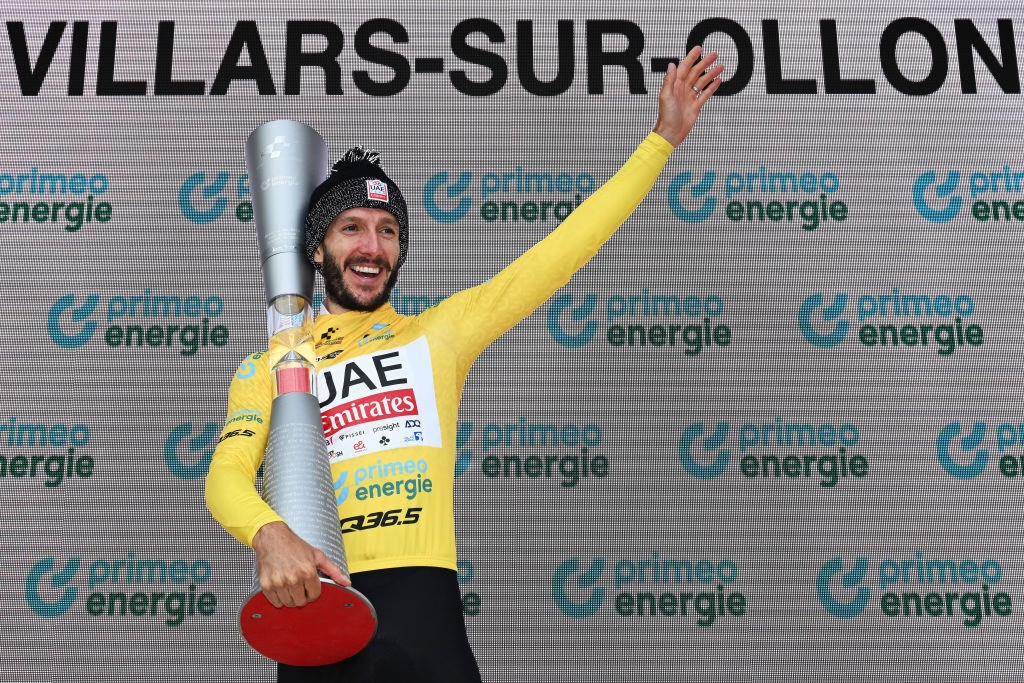
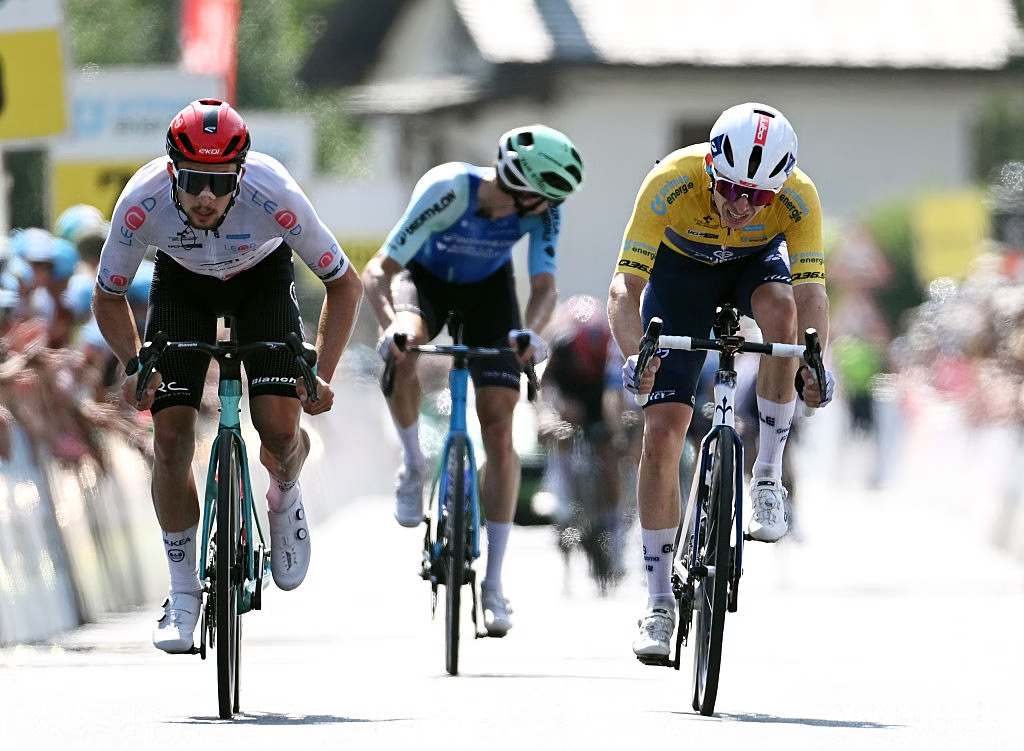
The main jersey is the yellow jersey, worn by the overall race leader. This is the general classification, decided by total time across all five stages.
There is also a points classification, usually shaped by stage finishes and intermediate sprints. In a race this hilly, the points jersey may not be reserved for pure sprinters. Puncheurs and fast finishers who can survive climbs could score heavily.
The mountains classification rewards riders who take points over categorised climbs. With the queen stage at Villars-sur-Ollon and several hilly days before it, this competition could suit breakaway riders as much as GC climbers.
The best young rider classification usually highlights the strongest younger rider on overall time. In a short, hard race, a young rider who handles the opening stages well can quickly become a serious GC name too.
Why does the Tour de Suisse matter before the Tour de France?
The Tour de Suisse matters because it is close to the Tour de France and hard enough to reveal form. Riders can train privately for weeks, but this race puts them under pressure in public.
A GC contender who climbs well here will attract attention. A rider who struggles in the time trial may raise doubts. A team that controls the race confidently will look ready for July. A team that loses riders on hilly circuits or looks disorganised before the queen stage may have work to do.
It is not always a perfect predictor. Some riders arrive slightly undercooked and build afterwards. Others target the Tour de Suisse itself and are less prominent at the Tour. But because the race includes climbing, time trialling and technical stages, it gives a useful snapshot of where the major riders stand in mid-June.
What kind of rider should new fans watch?
New fans should watch three types of rider.
The first is the GC contender. These are the riders trying to win the race overall. They need to stay near the front every day, avoid crashes, limit losses in the time trial and climb well on the final stage.
The second is the puncheur. These riders are explosive on short climbs and can win from small groups. Stages 1 and 2 look especially good for this type of rider.
The third is the time trial specialist. Stage 4 in Aarburg is only one day, but it could reshape the entire race. A rider who gains 30 or 40 seconds there may force the climbers to attack on the final stage.
Sprinters may have a chance on stage 3, but this is not a race built around flat finishes. Any fast rider who wins here will probably need to survive climbing first.
What makes the final stage so important?
The final stage in Villars-sur-Ollon is the queen stage and the most important day of the race. It is 151.1km long, with 4,226 metres of climbing, and the route is built around the Col de la Croix circuit.
This stage comes after four days of racing, including the individual time trial, so the gaps will already exist. The climbers will know what they need to gain. The time triallists will know what they need to defend. Teams will know whether they can ride conservatively or whether they have to attack from distance.
That makes it a proper final exam. The stage is not only about one climb. It is about repeated climbing, descending, recovery, team support and timing. A rider who is slightly below their best could lose the race quickly. A rider with strong legs and a clear tactical plan could overturn the standings in one afternoon.
-
 Photo Credit: Getty

How should beginners follow the race?
The easiest way to follow the Men’s Tour de Suisse 2026 is to treat each stage as a different test.
Stage 1 tells us who is ready immediately. Stage 2 favours explosive riders. Stage 3 is the most likely chance for fast men, but not a guaranteed sprint. Stage 4 gives the time trial specialists their moment. Stage 5 decides the race in the mountains.
Instead of trying to remember every rider at once, follow the changing race leader and the riders within one minute of the yellow jersey. In a five-stage race, those gaps matter quickly. Also watch which teams still have numbers near the front on stages 1, 2 and 5. Team strength often decides whether a leader can defend or gets isolated.
Beginner’s verdict on Men’s Tour de Suisse 2026
The Men’s Tour de Suisse 2026 is shorter than usual, but it should not feel lighter. The five-stage format makes every day important, and the route gives very little room for a slow start.
The race opens with difficult hilly terrain in Sondrio, moves through puncheur and tactical stages in Locarno and Bad Ragaz, then turns sharply towards the GC with the Aarburg time trial and the Villars-sur-Ollon queen stage. That is a compact but serious test.
For beginners, it is one of the best races to watch before the Tour de France because the stakes are clear and the format is easy to follow. Five days, five different tests, and a final weekend that should decide whether the strongest climber, the best time triallist or the most complete stage racer takes the yellow jersey.

