Scheldeprijs Women 2026 is one of the easiest races on the calendar to describe and one of the easiest to get wrong.
The description is simple enough. It is flat, it finishes in Schoten, and it is one of the clearest opportunities of the spring for the fast finishers. But that only tells half the story. Scheldeprijs Women is simple in the same way all fast Belgian one-day races are simple: everyone can see the likely ending, which means the whole day becomes a fight over who is still organised enough to make that ending happen.
For a new fan, that is exactly what makes the race useful. It teaches a lesson quickly. Flat does not mean easy, and a race built for a sprint can still be shaped by wind, speed and repeated pressure long before the finish line comes into view.
If you want the broader context around where races like this sit in the spring, ProCyclingUK’s guide to the best women’s cycling races in 2026 for new fans is a strong starting point.
What is Scheldeprijs Women?
Scheldeprijs Women is the women’s edition of one of Belgium’s best-known spring races, and in 2026 it steps up to the UCI Women’s ProSeries. That promotion matters because it confirms what the race had already started to become: not just a useful sprint date, but a significant part of the spring one-day calendar.
The women’s event is still relatively young, with the 2026 race set to be only its sixth edition. That youth matters because the race is still building its own identity rather than simply borrowing the weight of the men’s event. Even so, the personality is already clear. This is a race for sprinters, but specifically for sprinters who can survive a proper Belgian one-day race first.
 Photo Credit: Getty
When is Scheldeprijs Women 2026?
The 2026 edition takes place on Wednesday 8 April.
That timing is a big part of the race’s appeal. It comes immediately after Tour of Flanders weekend, when much of the spring has already started to reveal who belongs where. For the fastest riders and their teams, Scheldeprijs Women offers one of the clearest targets of the season. The bigger cobbled climbs are gone, the route is flatter, and suddenly the sprint squads have a race that makes complete sense for them.
There is a nice piece of wider history in that too. The 2026 edition marks 100 years of the finish in Schoten, which gives the race a little extra resonance even if the women’s event itself is much newer.
Where does the race finish?
The race finishes in Schoten, and that finishing town is central to the event’s identity.
That matters because Schoten shapes how the race is understood. A finish like this changes the rhythm of the whole day. Teams are not just trying to keep their sprinter fresh, they are trying to keep her safe, sheltered and perfectly placed deep into the final kilometres. In a flat Belgian race, that is often more complicated than it sounds.
For a beginner, that makes Schoten a useful focal point. It is where the race is heading all day, but the real story is about which teams can still impose order by the time they get there.
What does the 2026 route look like?
The 2026 route is 130 km long and begins at 11:40. Early on, the riders head out toward Wuustwezel and Hoogstraten before returning through the Broekstraat and onto the local circuit in and around Schoten, where they complete three laps.
That is a very Scheldeprijs sort of design. The route is flat, but not passive. It gives the race enough space to breathe early, then gradually tightens the focus as the peloton returns to Schoten. By the time the riders reach the final laps, the whole day starts to revolve around one question: which team still has control left?
This is not a race built around a single dramatic obstacle. It works through accumulation of speed, exposure and the constant need to stay near the front. That is what makes the route more interesting than a simple profile line might suggest.
Why is Scheldeprijs Women often called a sprinters’ race?
Because more often than not, it is.
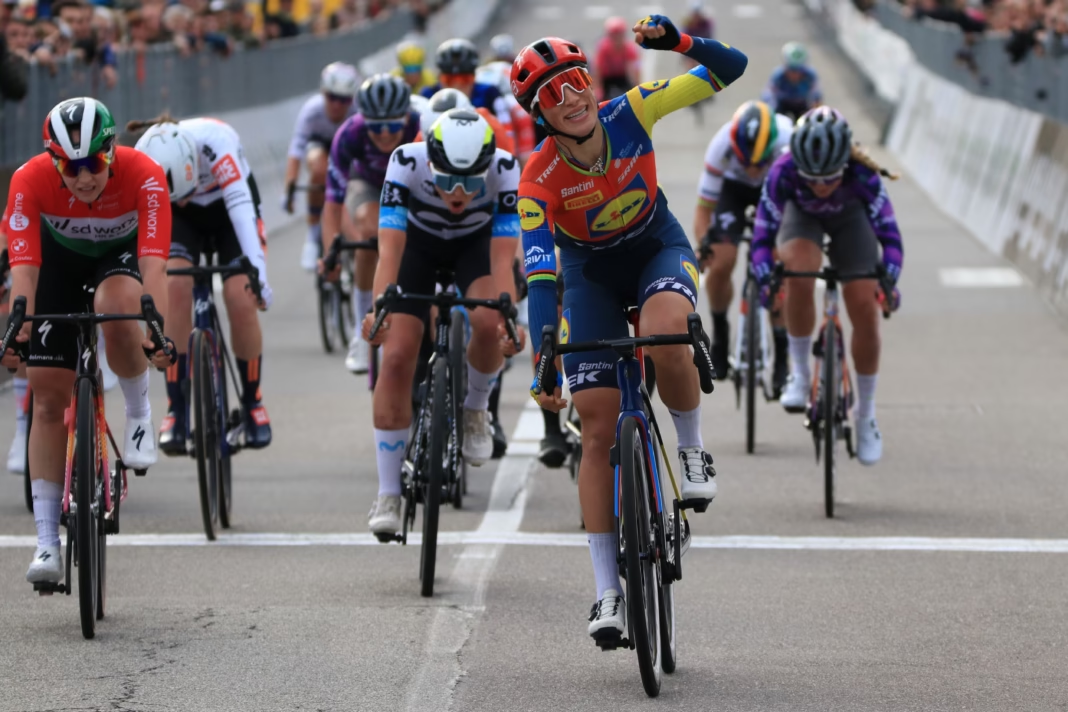
This is one of the clearest sprint opportunities of the northern spring, and that identity is a big part of its appeal. Some Classics are great because they are brutally selective. Scheldeprijs Women is great because it gives the best fast finishers a genuine target while still asking them to survive a stressful day first.
That distinction matters. The fastest rider on paper does not automatically win here. She still needs a team capable of keeping her in position, and she still needs enough resilience to avoid wasting too much energy before the final kilometres. A bunch sprint may be the expected outcome, but bunch sprints are often decided by all the work that happened before the final 300 metres.
If you want a useful contrast, ProCyclingUK’s Beginner’s guide to Tour of Flanders Women 2026 shows what a far more selective cobbled race asks of the peloton. Scheldeprijs Women strips away most of that climbing difficulty, but it leaves the stress.
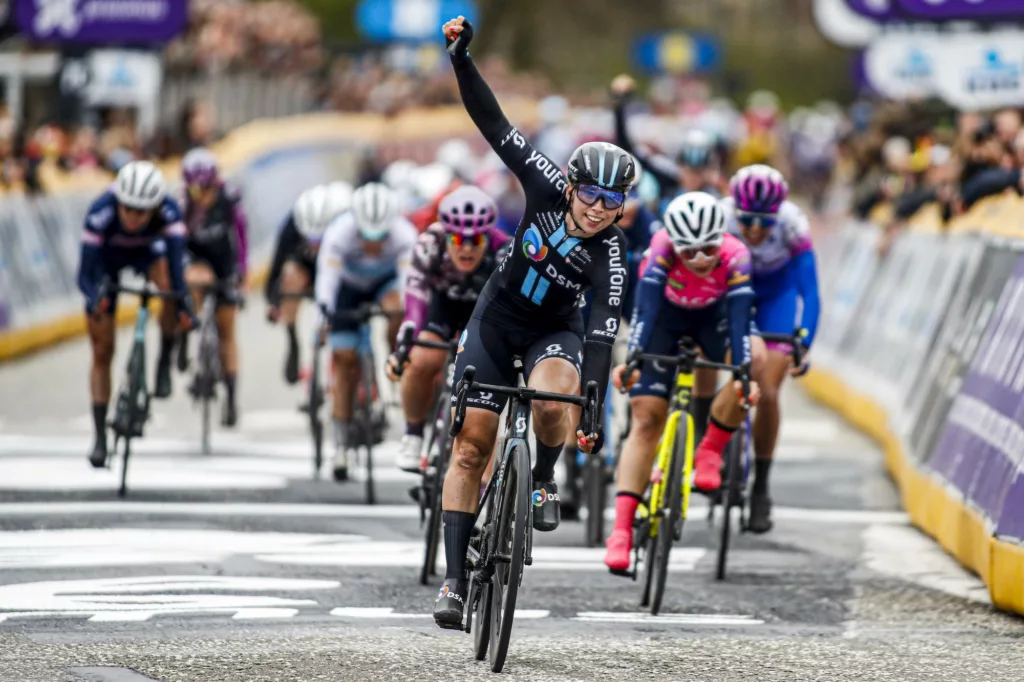 Photo Credit: Rafa Gomez/SCA/Cor Vos
What can still make the race hard?
Three things, mainly: wind, road position and speed.
Wind is the obvious Belgian variable. A flat race can look harmless until exposed roads start stretching the bunch and forcing teams to work far harder than they expected. Even when there are no full echelons, the fear of them can make the race nervous and draining.
Road position matters because a sprint-focused race pulls almost every team toward the same idea of control. Everyone wants to be near the front, which means the peloton spends much of the day fighting for the same bit of road.
Then there is speed. In a race like Scheldeprijs Women, speed is not just about the finish. It is about the cost of every small error. A rider caught too far back at the wrong moment may spend the next several kilometres trying to fix damage that never looks dramatic on television but still empties the legs.
That is why the race can be more selective than its profile suggests. It does not usually drop riders through climbing. It drains them through constant response.
What should new fans watch for?
The easiest way to enjoy Scheldeprijs Women is to watch it through the teams.
Look at which squads keep placing riders at the front through the middle of the race. Look at who still has numbers in the final hour. Look at which sprinters are being delivered calmly and which seem to be improvising.
That is usually where the race starts to reveal itself. In a sprint-focused one-day race, the team that still looks organised late is often more important than the individual rider who seems quickest on paper.
Then, in the final kilometres, watch how the bunch reshapes itself. The lead-out phase is not just about speed. It is about timing, trust and how much energy has already been spent simply staying in contention.
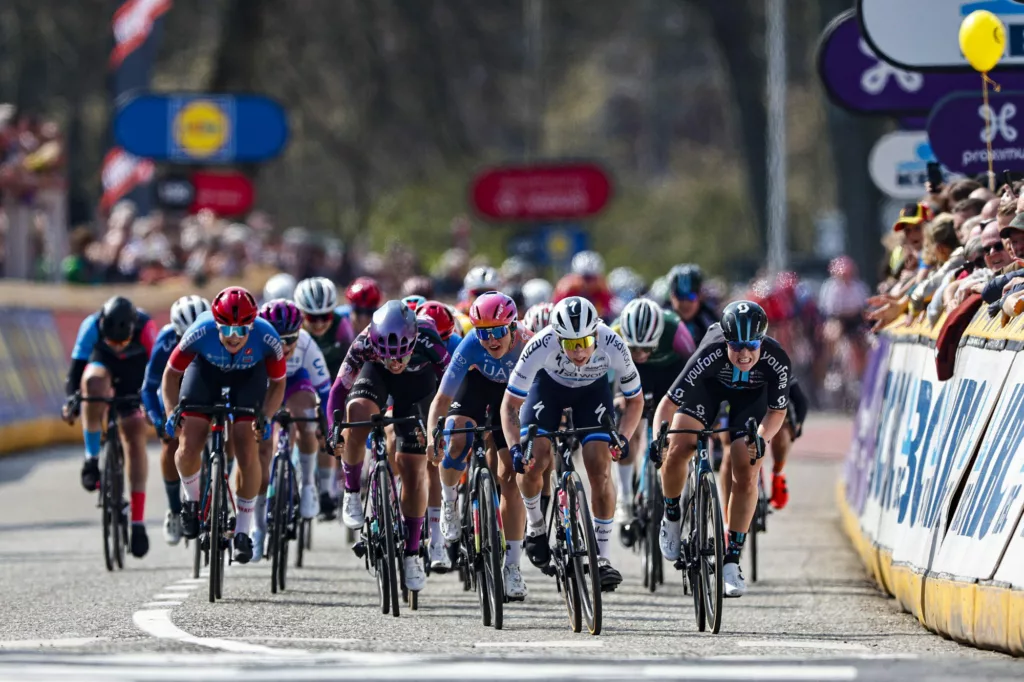 Photo Credit: Getty
How is Scheldeprijs Women different from other Belgian spring races?
It sits at the opposite end of the spectrum from the cobbled hill races, but it still belongs to the same broader world.
Tour of Flanders Women, Dwars door Vlaanderen Women and Gent-Wevelgem all ask more from the climbs or from the selective terrain. Scheldeprijs Women strips much of that away and creates a purer speed test. That gives it a valuable place in the calendar because it rewards a different kind of excellence.
It is not a lesser race because it is flatter. It is simply built around a different skillset. The strongest sprinters and the best sprint teams need races of this sort as well, and Scheldeprijs Women gives them one of the clearest opportunities of the spring.
If you want to see how nearby races create different types of pressure, ProCyclingUK’s A brief history of Dwars door Vlaanderen Women and A brief history of Gent-Wevelgem Women are useful companion reads.
Why does the 2026 edition matter a bit more?
Because of the ProSeries upgrade, and because the race now feels more clearly established.
That new status gives the event a little more weight from the outside. It also reflects a wider pattern in women’s cycling, where races that had already become important in practice are now being recognised more accurately in the official hierarchy.
For Scheldeprijs Women, that feels deserved. The race has a clean identity, a strong calendar slot and a finish style that adds something distinct to the spring rather than simply repeating what other races already do.
So what should you expect from Scheldeprijs Women 2026?
Expect a race that looks straightforward and feels much more tense than that.
Expect the sprinters to sit at the centre of the story, but not in a way that makes the rest of the day irrelevant. Expect teams to spend hours fighting for control of a finish that may only last seconds. And expect the winner to be not just fast, but calm enough and durable enough to still use that speed at exactly the right moment.
Scheldeprijs Women 2026 may not have the cobbled mythology of the biggest Flemish Classics, but it has a very clear role and it plays that role well. For a new fan, that makes it one of the easier races to understand and one of the better ones to learn from.