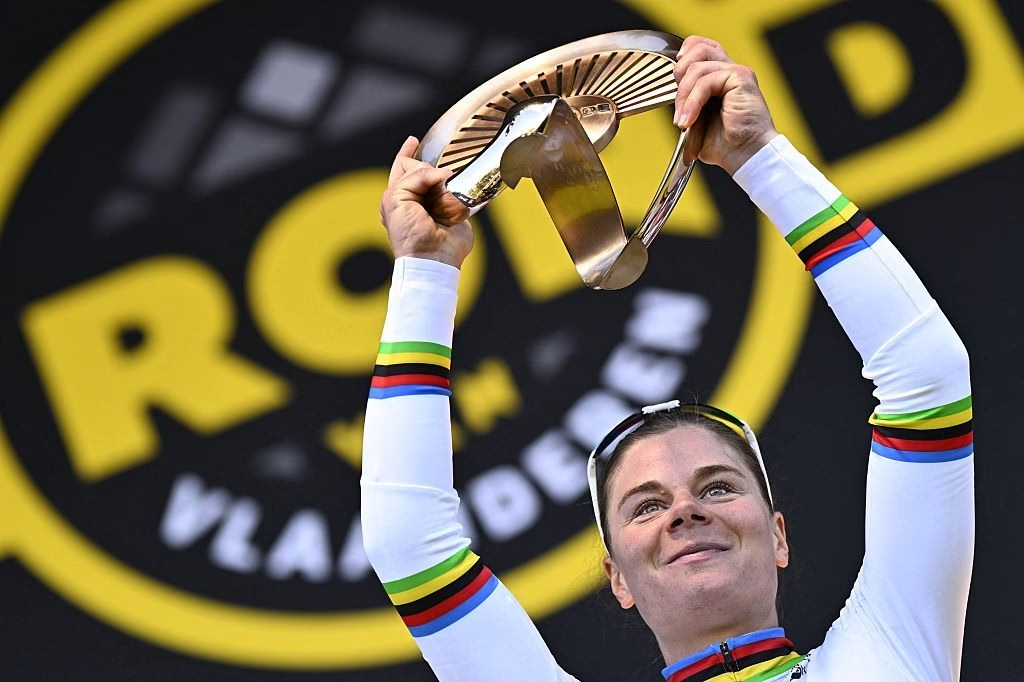
Tour of Flanders Women 2026 is the race that explains the whole spring.
If you only watch one women’s cobbled Classic all year, this is the safest choice. Paris-Roubaix Femmes may be wilder and Strade Bianche may be more visually distinctive, but the Tour of Flanders Women is still the clearest expression of what Belgian one-day racing is supposed to be. Cobbled climbs, constant pressure, repeated selections, and a finale where the strongest riders usually cannot hide for long.
For a new fan, that makes it almost the perfect classroom. The road tells the story. The best riders surface naturally. And the race is difficult enough that every move feels as though it matters. The 2026 edition takes place on Sunday 5 April, starting and finishing in Oudenaarde, with 164.1 km on the programme.
If you want a broader guide to why races like this matter so much, ProCyclingUK’s look at the best women’s cycling races in 2026 for new fans is a useful place to start.
What is the Tour of Flanders Women?
Tour of Flanders Women is one of the biggest one-day races in the sport and one of the centrepieces of the women’s spring calendar. It is the race most fans mean when they talk about the Flemish Classics at their purest.
That matters because not all hard Belgian races are hard in the same way. Gent-Wevelgem is shaped by wind as much as climbing. Paris-Roubaix Femmes is shaped by fear, vibration and survival on the cobbles. Dwars door Vlaanderen often feels more open and slightly more unpredictable. The Tour of Flanders Women is different. It is built around repeated steep climbs and the constant fight to hit them in the right place.
That creates a cleaner hierarchy than many other races. The strongest riders often reveal themselves again and again over the same set of obstacles. A rider might survive one climb out of position. She usually cannot survive several.
Where does the 2026 race start and finish?
The women’s race starts in Oudenaarde and finishes in Oudenaarde too, with the start on the Markt and the finish on Minderbroedersstraat.
That start-finish model suits the race well because it keeps the action focused on the roads that matter most. Unlike the men’s race, which has a much longer run-in before the decisive climbs begin, the women’s route gets to its point more quickly. For a new fan, that is helpful. You still get the full flavour of Flanders, but in a more compact structure.
It also means the race feels increasingly tight rather than sprawling. Once the field moves deeper into the Flemish Ardennes, the route begins to circle around the climbs and cobbled roads that define the event.
What does the 2026 route look like?
The 2026 Tour of Flanders Women route follows a familiar logic. It is not trying to reinvent the race. It is trying to preserve what already makes it work.
The route covers 164.1 km and includes the core obstacles that give Flanders its identity. The key shaping features remain the same broad set of climbs and sectors that have defined recent editions, with the finale again built around the decisive sequence that ends with the Oude Kwaremont and Paterberg.
That is the important point. This is not a race where the route profile tells you very much by itself. The real difficulty lies in how the climbs are arranged, how often the bunch has to fight for position, and how little recovery the riders get once the race reaches its final phase.
For newer fans, the best way to think about the route is this: the race does not usually explode in one moment. It hardens repeatedly until only the best riders are still answering the road’s questions.

Which climbs matter most?
The 2026 race again includes the famous Flanders landmarks that shape the women’s event: the Koppenberg, Taaienberg, Oude Kruisberg/Hotond, Oude Kwaremont and Paterberg.
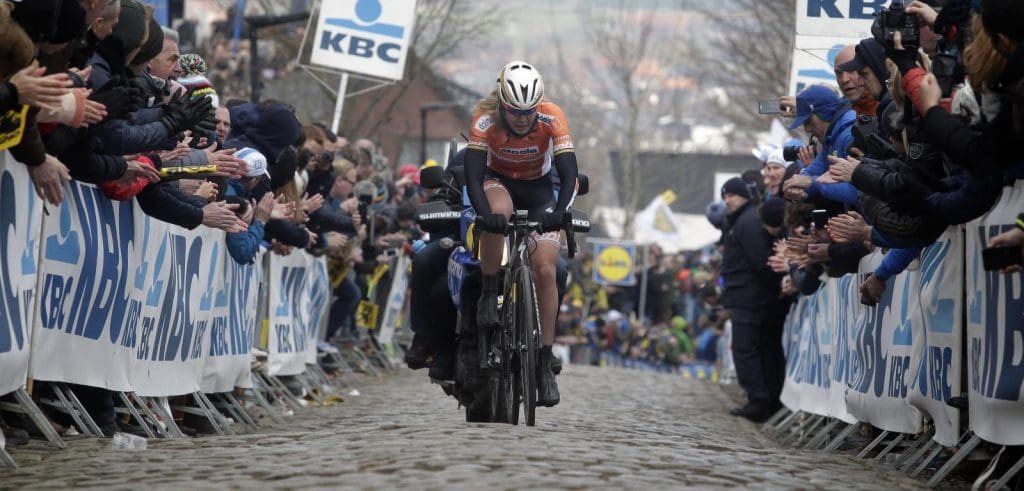
The Koppenberg is often where the race begins to feel truly serious. It is steep, cobbled and narrow enough that position matters almost as much as strength. A rider can lose the race there without actually cracking, simply by reaching the foot too far back.
Then comes the broader middle of the finale, where the route refuses to let the field reset properly. Taaienberg and Oude Kruisberg/Hotond are the sort of climbs that keep forcing decisions. Teams that are running short of support riders often start to look vulnerable there.
But the soul of modern Flanders is still the Oude Kwaremont and Paterberg pairing. That duo is the race’s great argument. Oude Kwaremont is long, rough and draining. Paterberg is short, steep and savage. Together they force a very specific kind of selection. The strongest all-rounders can attack there, but they also have to survive what came before.
The top of the final Paterberg comes with 13 km to go. That is why it matters so much. It is late enough to be decisive, but early enough that a rider still needs the strength and nerve to finish the job.
Why is the route so selective?
Because everything in Flanders compounds.
That is the real answer. One climb on its own may not decide the race. One cobbled stretch on its own may not break the field. One position fight on its own may not seem catastrophic. But the route keeps stacking those demands, and the accumulation is what makes the race so selective.
This is why the Tour of Flanders Women is such a good race for beginners. You can actually see that process happen. Riders who look comfortable early begin to disappear. Teams that once had four riders at the front suddenly have one. A favourite can look fine on one climb and then crack on the next because the route has already taken so much from her.
Flanders does not reward only power. It rewards repeated power, calm decision-making and the ability to stay near the front before the road tells you that you needed to be there.
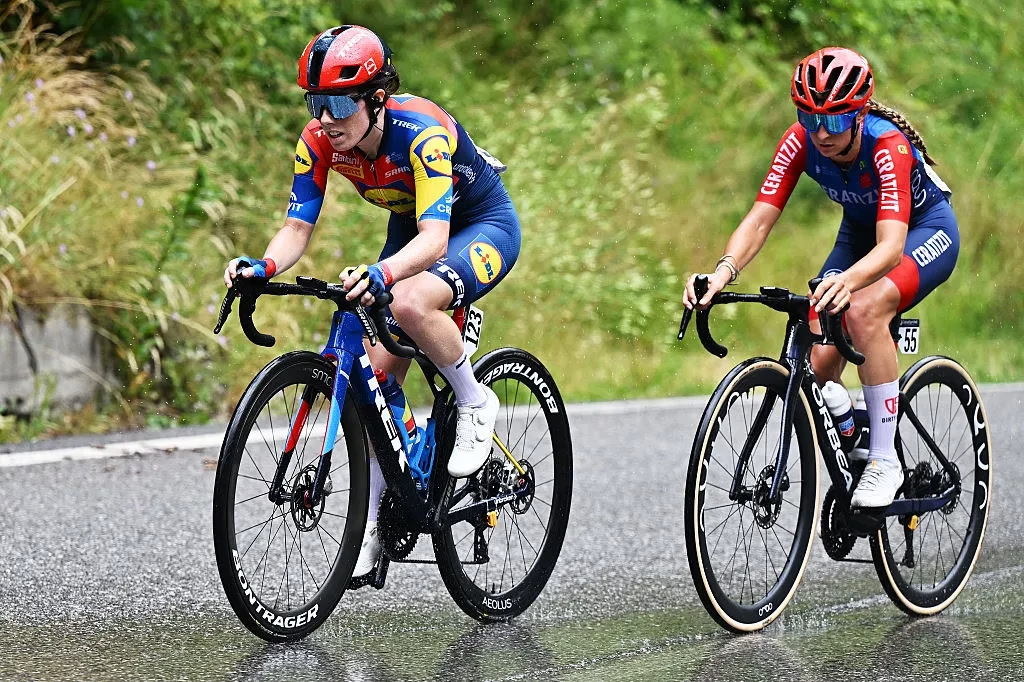
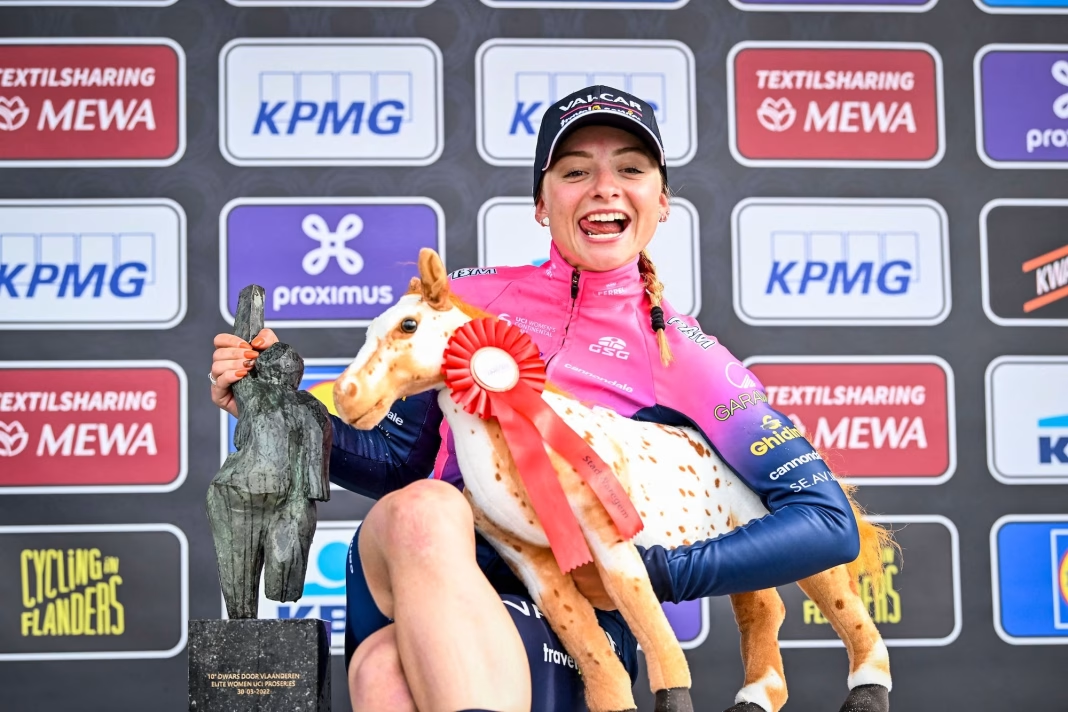
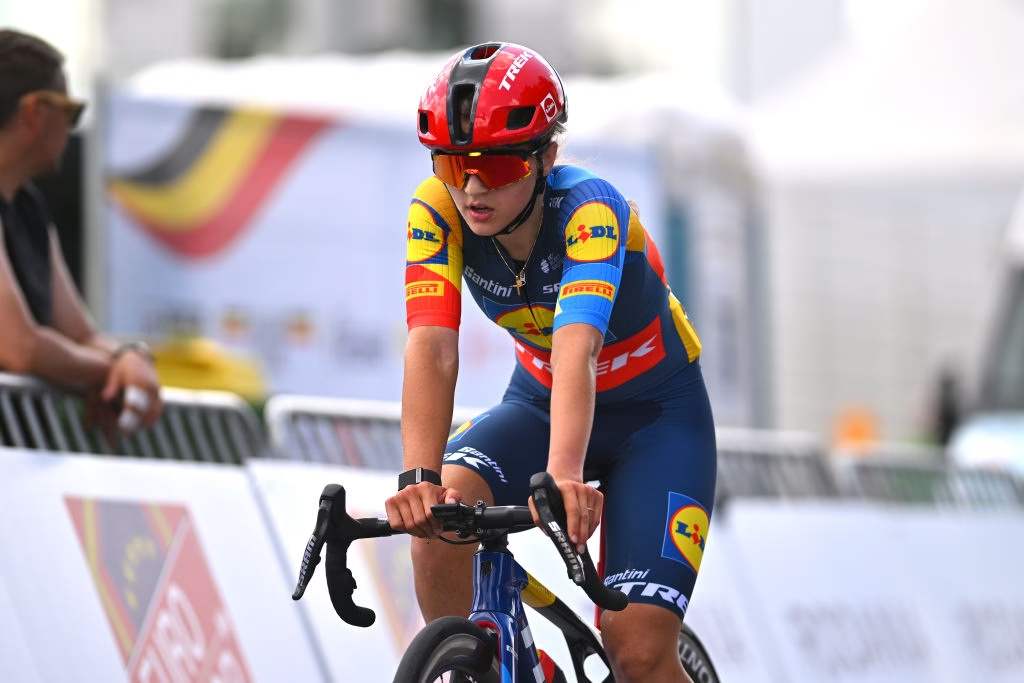
How is Tour of Flanders Women different from other spring Classics?
It sits at the point where the spring stops being open-ended and starts becoming brutally honest.
That is what makes it different. Some races leave a little more room for ambiguity. Gent-Wevelgem can still be shaped by wind or a reduced sprint. Dwars door Vlaanderen can leave a slightly wider band of possible winners. Even Amstel Gold Race can become more tactical and fluid. The Tour of Flanders Women tends to be less forgiving than that.
The route usually forces the best riders into view. That does not mean the strongest rider always wins, because cycling is never that simple. But it does mean the winner is usually someone who has been answering the race correctly for a long time.
If you want a useful companion read, ProCyclingUK’s Beginner’s guide to Dwars door Vlaanderen Women 2026 helps explain the race that often acts as the last major stepping stone into Flanders weekend.
What should new fans watch for during the race?
Watch the race in stages rather than waiting only for the final climbs.
Early on, focus on which teams are already guarding the front. In Flanders, that usually tells you who understands where the danger lies.
As the race moves toward the major climbs, pay attention to how much energy riders are spending before the actual ascent begins. The fight for position is often as revealing as the climb itself. A rider making repeated efforts just to stay in place is already paying a price.
Once the race reaches the Koppenberg and then starts moving through the later climbs, the key thing to watch is not simply who attacks. It is who still looks composed. Flanders often rewards riders who make the race look slightly calmer than it really is, because they anticipated the danger before it arrived.
Then, of course, watch the final Oude Kwaremont and Paterberg sequence. That is where the race usually stops pretending and starts naming its winner.
Why does the 2026 route matter?
Because the route keeps faith with the identity of the race.
There is always a temptation in modern cycling to tweak or refresh everything. Tour of Flanders Women does not need that. Its strength lies in the fact that the race already knows what it is. The organisers have kept the key architecture in place, with the finale again opening on the Koppenberg and closing through the Oude Kwaremont-Paterberg pairing.
That matters because some races are memorable for novelty, while others are memorable because the same roads keep producing slightly different answers. Flanders belongs firmly in the second category. The climbs do not change much. The riders, tactics and outcomes do.
That is why the route guide itself becomes part of the appeal. Once you understand where the danger points are, you start to see how each edition is written differently on the same roads.
Why Tour of Flanders Women is such a good race for new fans
Because it is hard in ways that are visible.
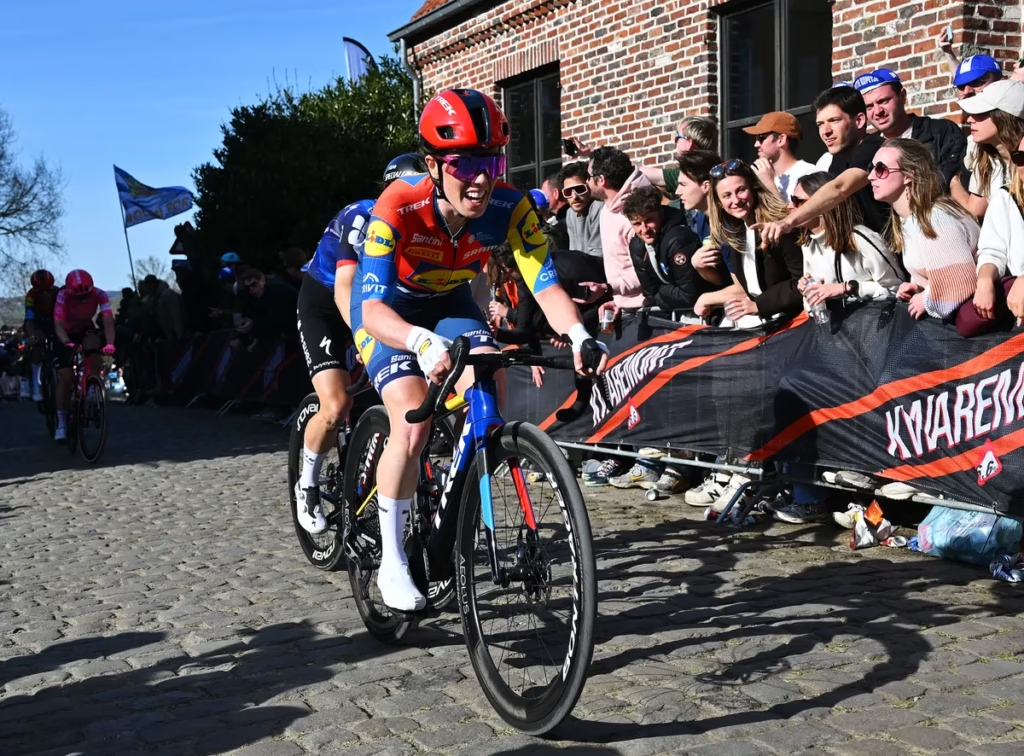
A new fan does not have to understand every tactical nuance to enjoy Flanders. You can see the gradient. You can see the cobbles. You can see riders fighting for position before every decisive point. You can see the race thinning out in front of you.
That is not true of every one-day event. Some races become more satisfying the more you already know. The Tour of Flanders Women works on both levels. It is rich enough for experienced followers and legible enough for newcomers.
It also helps that the race has prestige you can feel immediately. Even a first-time viewer understands that this is one of the races everyone wants to win. The roads, the crowds and the tension all carry that weight.
If you want to place it in the bigger spring sequence, ProCyclingUK’s Nokere Koerse Women 2026 route guide and brief history of Gent-Wevelgem Women help show how the different Belgian one-day races build toward Flanders in different ways.
So what should you expect from Tour of Flanders Women 2026?
Expect a race that gets harder and harder to fake.
Expect the first half to set the tension, the middle of the race to begin stripping away support, and the final sequence of climbs to reveal who is really strongest.
Expect the Koppenberg to start the real damage, and the Oude Kwaremont-Paterberg combination to turn that damage into a result.
And expect one of the best women’s races of the year. Tour of Flanders Women 2026 is not just a major Classic. It is one of the clearest lessons in how one-day racing works when the road itself is good enough to expose everything.