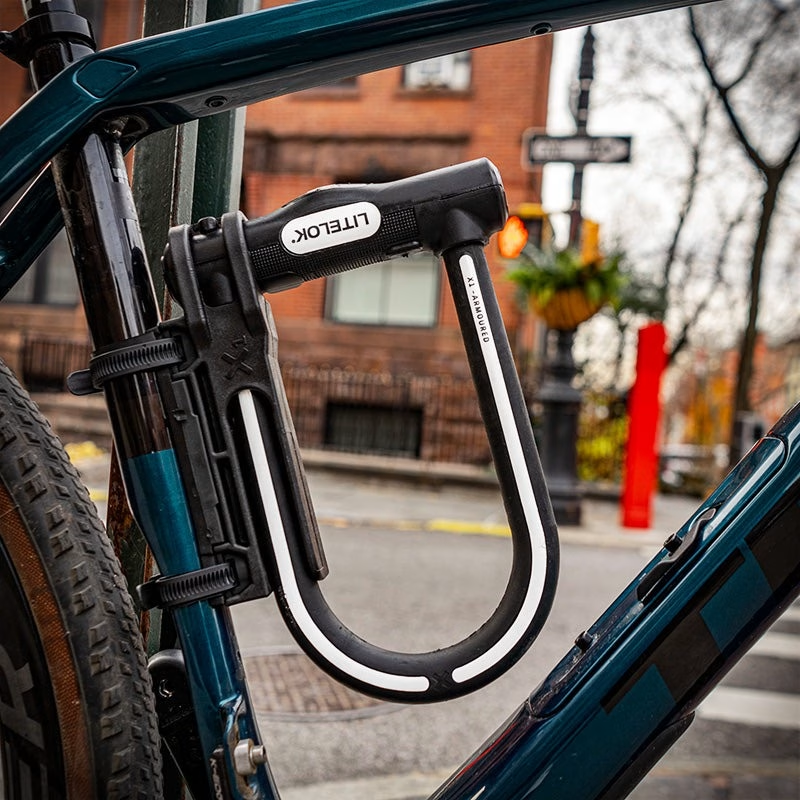
I spent weeks carrying, testing, and attempting to destroy the locks that matter most to daily riders. Here’s what actually survived the commute, and the thief.
Let me be honest with you: the lock conversation is the one most commuters have too late. You buy the bike, you ride the bike, and then, somewhere around week three, you find yourself locking it to a lamp post outside a Pret with a cable from Halfords that cost you a fiver. The thieves in your city know that lamp post. They know that cable. They’ve probably already clocked your bike.
The good news is that a proper commuter lock doesn’t have to be the heaviest thing in your bag, and it doesn’t have to cost you a month’s rail fare either. What it needs to do is make a thief look at your bike, look at your lock, and move on. Every second counts when you’re talking about a determined opportunist with a pair of bolt croppers, and every extra second you buy is another second they’re at risk of getting caught.
I’ve been testing these locks hard, both on daily commutes around a city that has no shortage of bike thieves, and through a series of deliberate attacks, including crowbar, drill, and angle grinder. What follows is an honest account of what held up, what surprised me, and what I’d actually carry on my bike every morning.
The best bike locks for commuting 2026: the shortlist
- Litelok X1 (Editor’s Pick) £149.99
- Kryptonite Evolution Mini-5 (Best everyday carry) ~£48
- Abus Granit XPlus 540 (Most refined) from £67.99
- OnGuard RockSolid 8590 (Best value) £149.99
- Hiplok DX (Best wearable) ~£79.99
- Oxford Shackle 14 Pro (Budget winner) ~£45
The best lock is the one you actually bring with you. Security you leave at home because it’s too heavy or awkward is no security at all.
What is Sold Secure and why does it matter?
You’ll see the Sold Secure logo on most serious bike locks, and it’s worth understanding what it means before you spend any money. The rating system, owned by the Master Locksmiths Association and originally established with the Home Office and UK police forces, runs from Bronze through Silver and Gold up to Diamond. Gold is the minimum I’d recommend for any bike left unattended in an urban area, and Diamond is what you want if your bike is worth more than a few hundred pounds or if you’re in a high-theft area. Every lock in this guide carries at least a Gold rating.
Litelok X1 (Our Pick)
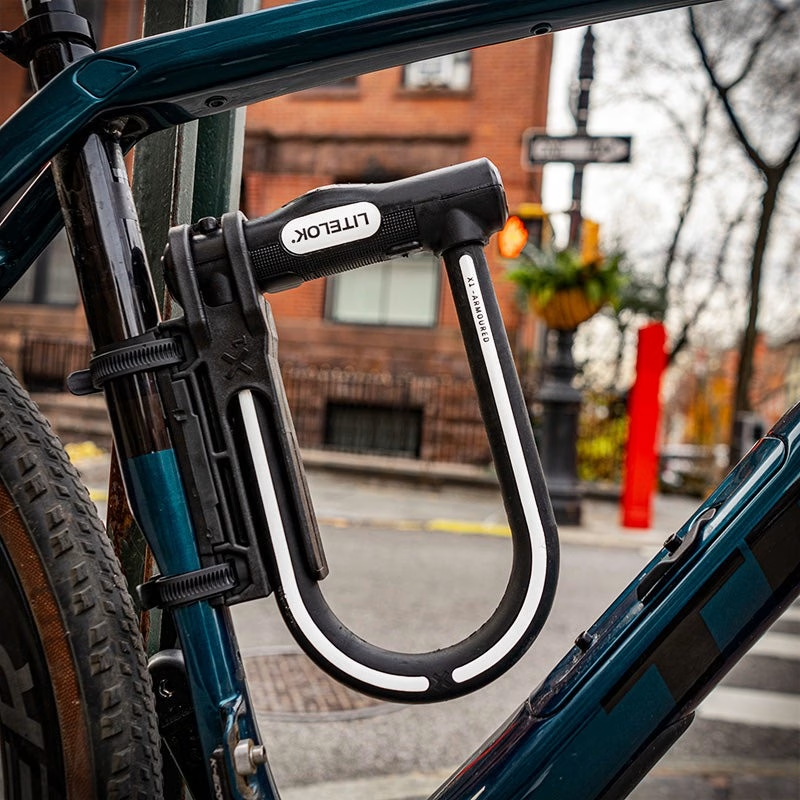
Price: £149.99 | Weight: 1.7 kg | Sold Secure: Diamond | Buy from Litelok
The lock that changed how I think about commuter security. On paper, the X1 looks like any other standard-size D-lock. It’s not excessively heavy. It doesn’t have some outlandish industrial design. You wouldn’t look at it and assume it was doing anything particularly special. And that, as it turns out, is rather the point.
The magic is in Barronium, a ceramic composite material fused permanently onto the hardened steel shackle. When an angle grinder disc hits it, the disc loses. Not slowly, either. The grinder blade gets destroyed before it can make meaningful progress through the lock. In real-world terms, a thief burns through disc after disc on the pavement, accumulating attention, accumulating time. They won’t stick around for that.
Day-to-day, the X1 earns its commuter credentials through its Twist and Go frame mount, which is genuinely quick and genuinely quiet. I’ve had locks that rattle themselves loose inside a mile. This one doesn’t move. At 1.7 kg it’s not a featherweight, but it’s lighter than you’d expect for Diamond-rated security, and the reflective strips along the shackle improve your visibility at night in a way that most locks don’t even attempt.
If I could carry one lock on my commute every day, this is it. Made in Britain, Sold Secure Diamond, angle grinder resistant, and at £149.99, considerably less expensive than replacing your bike.
Pros
- Barronium coating destroys grinder discs
- Sold Secure Diamond for bikes and e-bikes
- Twist and Go frame mount included
- Reflective strips for night riding
- Made in the UK in a solar-powered factory
Cons
- Not the cheapest on test
- Standard shackle size limits some locking options
Kryptonite Evolution Mini-5 (Best Everyday Carry)
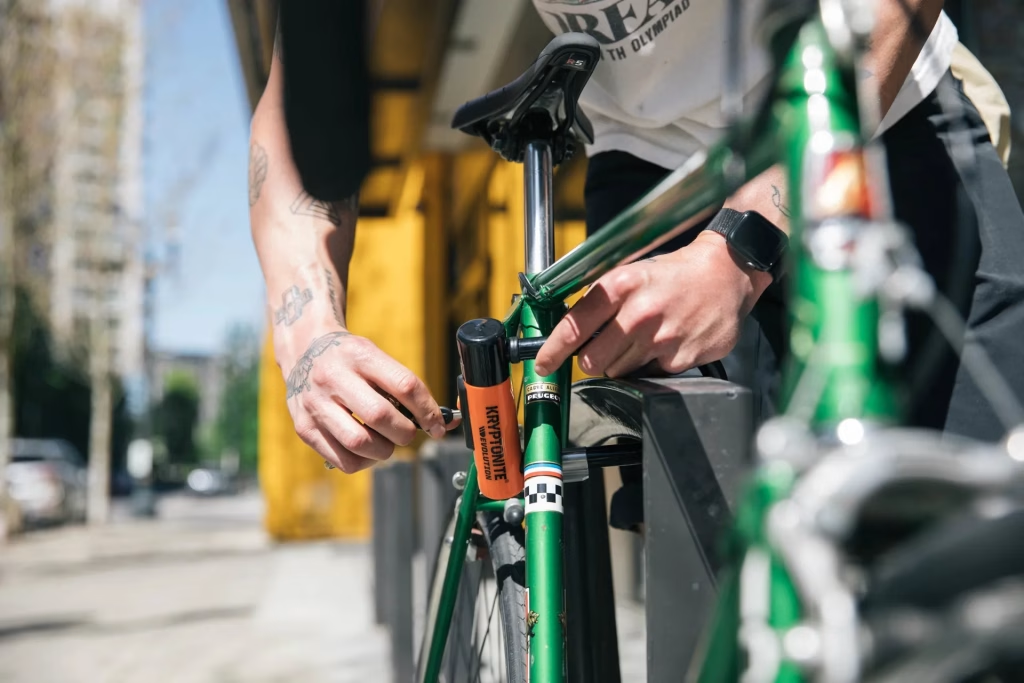
Price: ~£48 | Weight: ~1.0 kg | Sold Secure: Gold | Buy from Halfords
There’s a reason you’ll see this lock tucked into the back pockets of bike messengers across every major city in Britain. The Kryptonite Evolution Mini-5 is the lock that has quietly been getting commuters home safely for years, and it remains one of the cleverest pieces of security kit at this price point.
The 13 mm hardened steel shackle resists bolt croppers through sheer steel quality rather than sheer bulk, and the double deadbolt design protects against twist attacks in a way that a single locking point simply cannot. What genuinely surprised me in testing was the cylinder. The disc-style design is significantly tougher to drill and pick than the more common tubular barrels, and the sliding dust cover actually works rather than rattling around uselessly after a few weeks of riding.
The FlexFrame bracket is a bit of a lottery depending on your frame geometry, and more than one commuter has found it incompatible with their bike. But if it fits, it works well. And if it doesn’t, the Mini-5 is small enough to slide into a jersey pocket or the top of a rucksack without much complaint. At around a kilogram, you won’t forget it’s there, but you also won’t resent carrying it. For a Gold-rated lock at this price, that’s a genuinely hard combination to beat.
Pros
- Excellent value for Sold Secure Gold
- Genuinely compact and commuter-friendly
- Double deadbolt resists twist attacks
- Pick and drill resistant disc cylinder
- Three keys included, one with LED
Cons
- FlexFrame bracket won’t suit every frame
- Mini shackle limits reach on wider railings
- Not angle grinder resistant at this price
Abus Granit XPlus 540 (Most Refined)
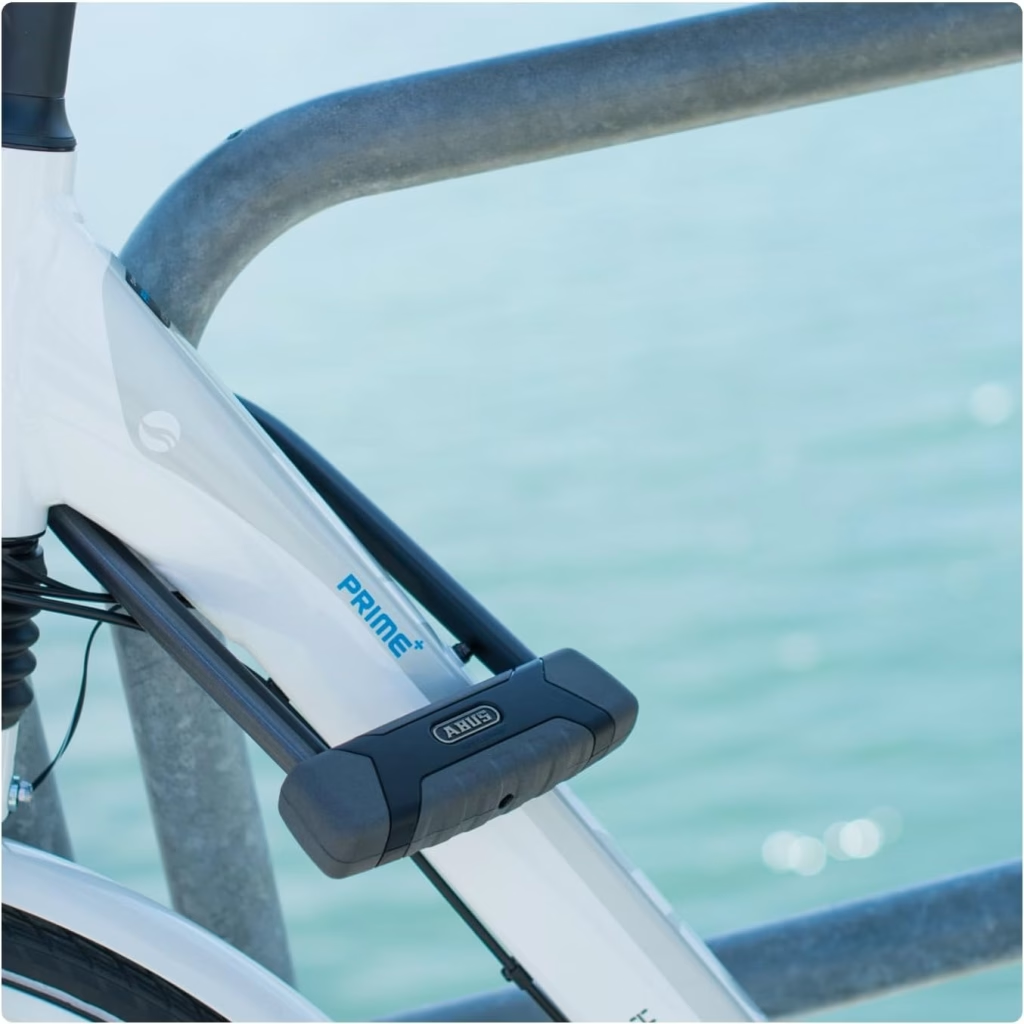
Price: from £67.99 | Weight: ~1.49 kg | Sold Secure: Diamond | Find on Amazon UK
The Granit XPlus 540 is the lock that German engineering built for people who consider precision a virtue. It looks serious. It feels serious. And it is serious, even if the wider market has moved on somewhat from the era when this was simply the best D-lock money could buy.
That 13 mm shackle is parabolic and square in cross-section, which matters more than it sounds. A round shackle gives an angle grinder blade a natural bite point. A square parabolic shackle denies it that grip, making any cutting attempt considerably more awkward and time-consuming. Abus claims resistance to over 13 tonnes of cutting force, which is sufficient to defeat any bolt cropper currently on the market.
The XPlus cylinder is, frankly, a joy. It’s recessed deeply into the shackle body to block picking attempts, and the keys are long, which feels odd the first time you use it but makes perfect sense once you understand the pick resistance it delivers in return. One of the keys has an integrated LED, which sounds gimmicky until you’re fumbling around at a dark bike rack at 7am in February. The lock doesn’t resist angle grinders the way the Litelok does, but for commuters in lower-risk areas who want Diamond security with daily ease of use, this remains one of the most polished packages available.
Pros
- Parabolic square shackle defeats bolt croppers
- XPlus cylinder is genuinely pick-resistant
- Lighter than many Diamond-rated rivals
- LED key is more useful than it sounds
Cons
- Not angle grinder resistant
- Long keys are awkward in a tight pocket
- Pricier than it once was relative to rivals
OnGuard RockSolid 8590 (Best Value)
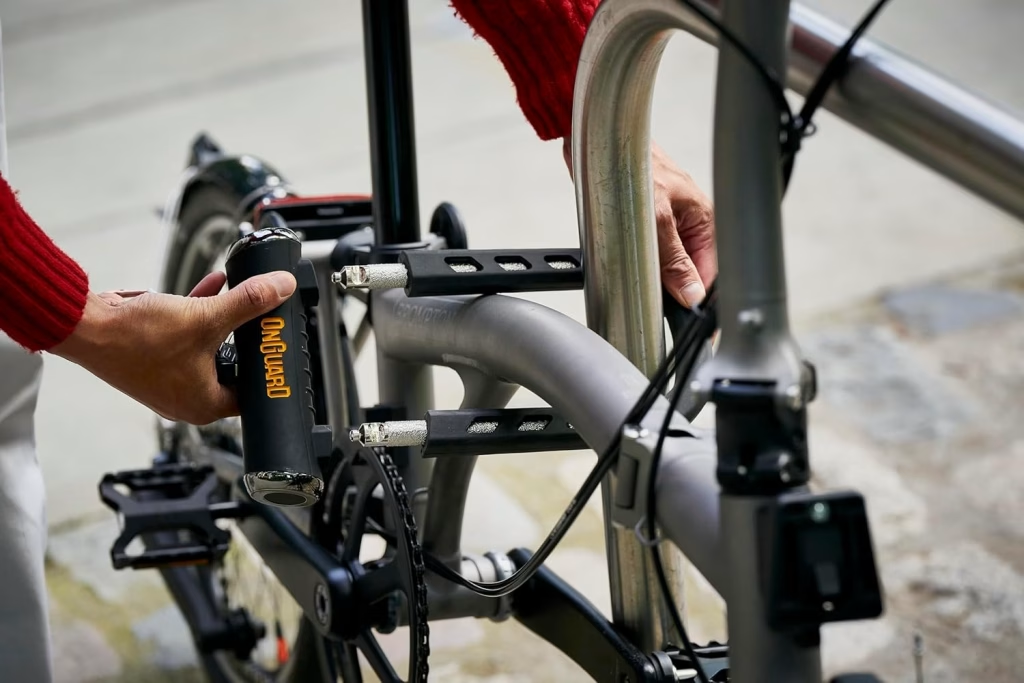
Price: £149.99 | Weight: 1.4 kg | Sold Secure: Diamond | Find on Amazon UK
I wasn’t expecting much from the RockSolid. It’s small, it’s not particularly intimidating to look at, and at 1.4 kg it’s lighter than anything else near this security level. Those facts, taken together, made me think I’d be through it fairly quickly. I was wrong.
The dimpled surface texture of the shackle is the thing that gets me. When you take an angle grinder blade to it, the surface doesn’t let the disc get any purchase. It’s almost as though the blade can’t decide where to start. After a sustained attack I checked for progress and could barely believe what I wasn’t seeing: the blade had worn down considerably and the lock looked barely touched. A four-way internal security system, designed to resist pulling, prying, and twisting simultaneously, goes a long way to explaining why my levering attempts got precisely nowhere.
The compact size is genuinely useful for commuting, fitting comfortably on a belt loop or into a pannier without taking up the whole bag. The trade-off is reach. If you need to lock to something wider than a standard Sheffield stand, the smaller shackle may work against you. But for riders who commute to a workplace or station with decent bike infrastructure, this is an exceptional lock for the money.
Pros
- Dimpled shackle denied the grinder any grip
- Lightest Diamond-rated lock on test
- Small and genuinely easy to carry daily
- Four-way security system resists multiple attacks
Cons
- Compact shackle limits locking options
- Less suitable for locking to wider infrastructure
Hiplok DX (Best Wearable Lock)
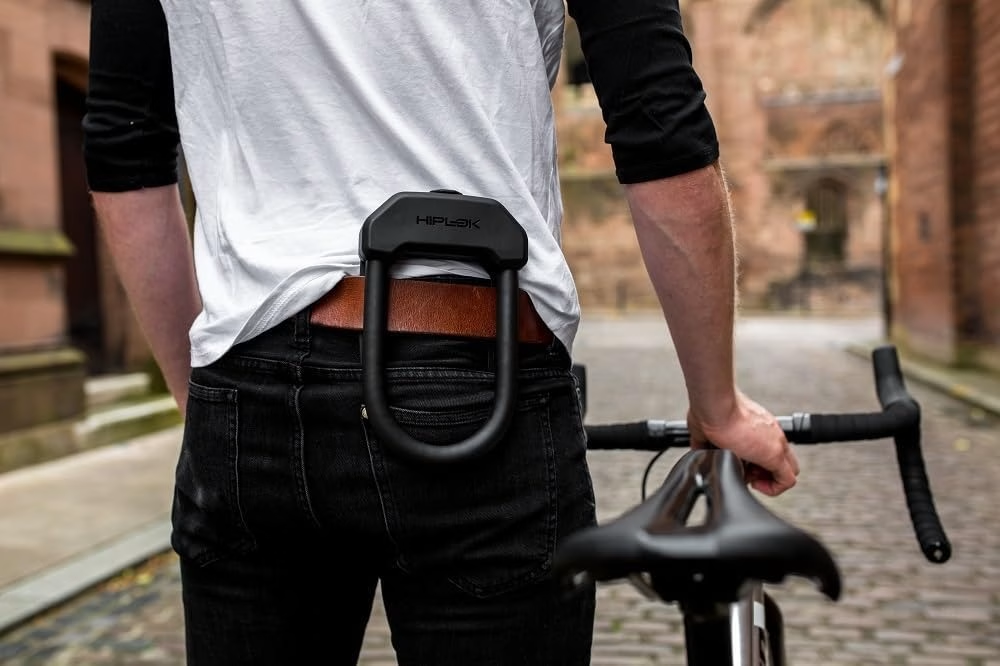
Price: ~£79.99 | Weight: 1.25 kg | Sold Secure: Gold | Find on Amazon UK
The problem with most D-locks is that you have to want to carry them. They’re heavy, they’re awkward, and when you’re already kitted up and clipped in, the last thing you want is a 1.5 kg steel shackle bouncing around in your bag. Hiplok had a genuinely good idea when they designed a lock you wear as a belt, and the Hiplok DX is their best execution of it.
At 1.25 kg, with an integrated waist-clip system, the DX sits flat on your hip during the ride and stays there without any of the rattling that plagues frame-mounted alternatives. You don’t need brackets. You don’t need to check whether your bottle cage position is compatible. You just wear it. For anyone who commutes in cycling kit or carries a messenger bag, this turns a chore into a non-issue.
The shackle earns Sold Secure Gold, which is more than adequate for most commuting scenarios, particularly if your bike isn’t sitting unattended for hours at a time. It’s not the most visually intimidating lock, but it performs reliably and the hardened steel gives a good account of itself against conventional attacks. Where the Hiplok family really earns its place, though, is on the carrying question. The best lock is the one you actually bring with you, and the DX makes that genuinely easy.
Pros
- Wearable design solves the carrying problem
- Sold Secure Gold for everyday commuting
- No frame bracket needed
- Stays quiet and secure during the ride
Cons
- Gold rather than Diamond, not ideal for all-day locking in high-theft areas
- Wearing a lock round your waist isn’t for everyone
Oxford Products Shackle 14 Pro (Budget Winner)
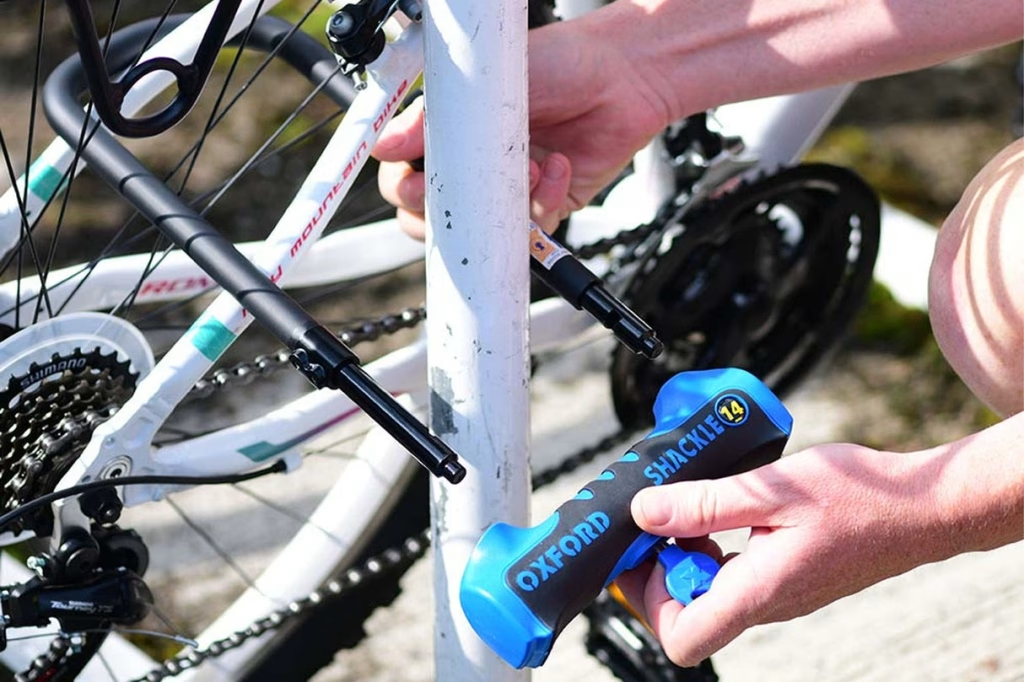
Price: ~£45 | Weight: ~1.8 kg | Sold Secure: Diamond | Find on Amazon UK
I’ll be straight with you: I went into the Oxford test expecting to be a bit underwhelmed. It’s the cheapest lock on this list by some margin. It’s slender. It doesn’t have the visual heft of more expensive rivals. But then I tried to drill it, and it had me reconsidering my assumptions fairly quickly.
The rotating collar inside the key barrel entrance is the star of the show. I brought a large drill bit to it and got nowhere. I went smaller, thinking a thinner bit might sneak past the collar’s edge, and within seconds, the internals had jammed and snapped the drill bit clean off. Remarkably, after all of that, the barrel still worked. I have tested locks twice the price that fared considerably worse against a drill.
The angle grinder test was close, but after more than four and a half minutes of sustained attack with no shortage of flying sparks, I ran out of usable blade before I ran out of lock. That is a genuine achievement for a sub-£50 D-lock. The vinyl coating is thin, so be careful when locking near painted frame surfaces, but as a secondary lock, or as a primary for a bike in a lower-risk environment, the Shackle 14 Pro is an extraordinary piece of kit for the money. The included flexi cable loop for securing a wheel is a thoughtful addition at any price, let alone this one.
Pros
- Remarkable value for Diamond-rated security
- Anti-drill collar snapped the drill bit
- Angle grinder ran out of blade before breaking through
- Flexi cable loop for wheel security included
- Deep shackle fits wider infrastructure
Cons
- Thin vinyl coating offers little frame protection
- Less visually intimidating than pricier rivals
Frequently asked questions
Do I really need to spend a lot on a commuter lock?
Not necessarily, but you should spend relative to the value of your bike. The old rule of thumb is to spend around 10% of your bike’s value on security. Don’t go below Sold Secure Gold for anything left unattended in an urban area. The Oxford on this list proves you don’t always need to spend big to get real security, but cable locks and cheap combination locks are simply not worth the false confidence they provide.
Should I use two locks?
Yes, if you can manage it. Two locks means a thief needs two different sets of tools, which dramatically increases their risk and their time spent in the open. Use your strongest D-lock through the frame and rear wheel, and a secondary cable or smaller D-lock for the front wheel. Even a modest secondary lock adds real deterrence when combined with a good primary.
What’s the best way to lock a bike on a commute?
Lock through the frame and rear wheel to a solid, immovable object. Try to fill as much of the D-lock’s internal space as possible, because a tight fit leaves less room for a bottle jack or pry bar to get leverage. Avoid locking to wooden posts, thin railings, or anything that could be cut or removed. A Sheffield stand or dedicated bike anchor is ideal. Lock in well-lit, busy areas where a thief would be visible and exposed.
Are angle grinder-resistant locks worth the extra money for commuting?
In most UK cities, yes. Professional thieves have been using cordless angle grinders for several years now, and in high-theft urban areas they’re the tool of choice. If your bike is worth upwards of £500, an angle grinder-resistant lock like the Litelok X1 isn’t extravagant; it’s proportionate. If you’re locking a more modest bike for short stops in lower-risk areas, a good Gold-rated lock is likely sufficient.
Does the Cycle to Work scheme cover bike locks?
In most cases, yes. Locks are classed as cycling accessories and are eligible for purchase through the government’s Cycle to Work scheme, letting you buy them tax-efficiently through your employer. This effectively reduces the cost by your marginal tax rate, which makes even the pricier options on this list considerably more palatable. Check with your employer’s scheme provider for the specifics.