If you ride regularly in the UK, sooner or later, you will need to lock your bike somewhere that makes you nervous. It might be outside a shop for two minutes, on a town-centre rack while you’re at work or at a station overnight. The uncomfortable truth is that most cheap locks don’t slow a determined thief at all, and even mid-range ones offer only a brief window of protection.
The goal is not to find a mythical unbreakable lock. It is to use the right kind of lock, in the right way, so that your bike becomes a much less attractive target than the one next to it. With a bit of understanding, you can reduce your risk dramatically.
Why thieves break locks so easily
A thief’s real advantage is speed and confidence. With the right tool and a quiet corner, many locks fail in seconds. The most common methods used in UK cities are:
- Bolt croppers, which slice through cable locks and cheap chains instantly
- Angle grinders, now widely used and often battery-powered
- Leverage attacks, where a thief wedges a tool into a lock and uses bodyweight to snap it
- Cutting weak fixings, like thin racks or signposts, instead of the lock itself
Knowing this makes it easier to understand what actually works in the real world: locks that resist the common tools long enough to make a thief move on.
What actually stops thieves: the hierarchy of locks
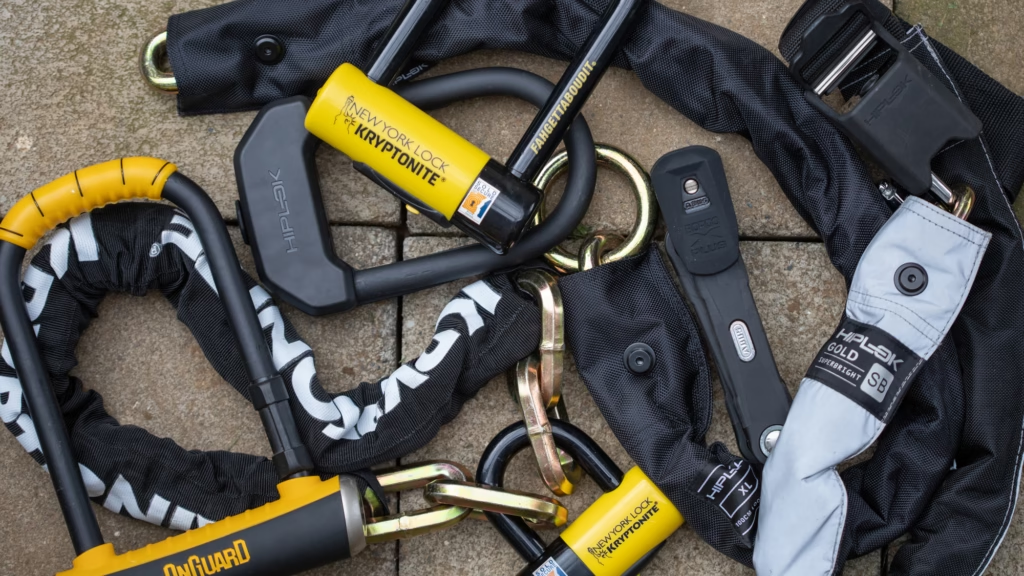
Not all locks are created equal. For everyday use, a simple hierarchy helps you choose what is worth your money and what isn’t.
1. D-locks (U-locks) – your main line of defence
A quality D-lock forces the thief to take out heavier tools. Bolt croppers won’t touch it. A grinder will get through eventually, but a good D-lock buys time, creates noise and draws attention. This is why D-locks are at the core of almost every recommended setup.
Look for:
- Sold Secure Gold or Diamond rating
- A shackle thickness of 13 mm or more
- A crossbar that protects the shackle ends
- A size that is small enough to limit leverage gaps but large enough for your locking point
A tighter fit around the frame makes it far harder for thieves to insert tools.
2. Heavy-duty chains – ideal for higher-risk parking
Chains are harder to cut cleanly and allow more flexibility in where and how you lock your bike. However, the ones that actually resist thieves are heavy. There is no getting around physics here.
For everyday commuting, you may not want to carry a 3 kg chain, but for leaving a bike in predictable locations, like a workplace or home, a proper chain lock is one of the safest options.
3. Folding locks – useful but not invincible
Folding locks are compact and convenient, and high-end models have improved security. Still, the joints can be weak points and they rarely match a good D-lock for resistance.
They make sense when:
- You need portability
- Your bike is mid-range
- You are parking in lower-risk areas
But they should not be your only lock in high-theft cities.
4. Cable locks – good for accessories only
Never rely on a cable lock as your main security. They can be cut in seconds with basic tools. They are useful only for securing wheels or accessories once a solid primary lock is already in place.
The two-lock strategy: simple, effective, widely recommended
Most experienced commuters use two different types of lock because thieves rarely carry tools for every scenario. A D-lock plus a secondary lock creates enough hassle that most opportunists simply move on.
A typical setup looks like:
- Primary lock: A high-quality D-lock securing the frame to a solid object
- Secondary lock: A chain or cable securing the wheels and reducing easy grab-and-go theft
This approach forces a thief to work twice, with two tool types, in a public space. That risk rarely appeals.

What about angle grinders?
Angle grinders can defeat almost any lock given time. But context matters. Thieves using grinders rely on:
- Quick cuts
- Low attention
- Soft targets
A Sold Secure Gold or Diamond-rated D-lock takes significantly longer to grind through than cheap alternatives. Every extra second increases noise, sparks and visibility. That alone stops many grinder attacks before they start.
Your aim isn’t invincibility. It is deterrence.
How to lock your bike properly
The best lock fails if used badly. A few basic habits make a huge difference:
- Lock through the frame, not just the wheel
- Make the lock fit tight to the bike to reduce usable leverage space
- Choose fixed metal objects that cannot be lifted, cut or rotated
- Keep locks away from the ground when possible to prevent hammer attacks
- Remove anything quick-release or easy to take in seconds
If parking regularly in one place, scout the environment. Well-lit, high-footfall areas reduce theft risk dramatically.
A few high-quality locks worth considering in the UK
Here are examples of locks that meet strong security standards and are reliable for daily use:
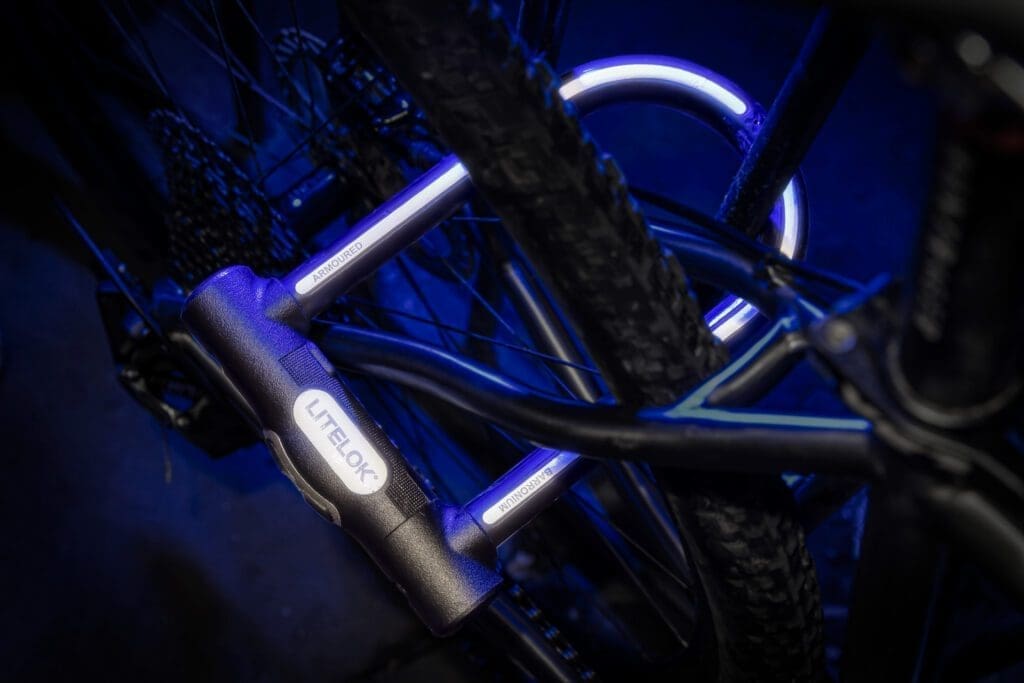
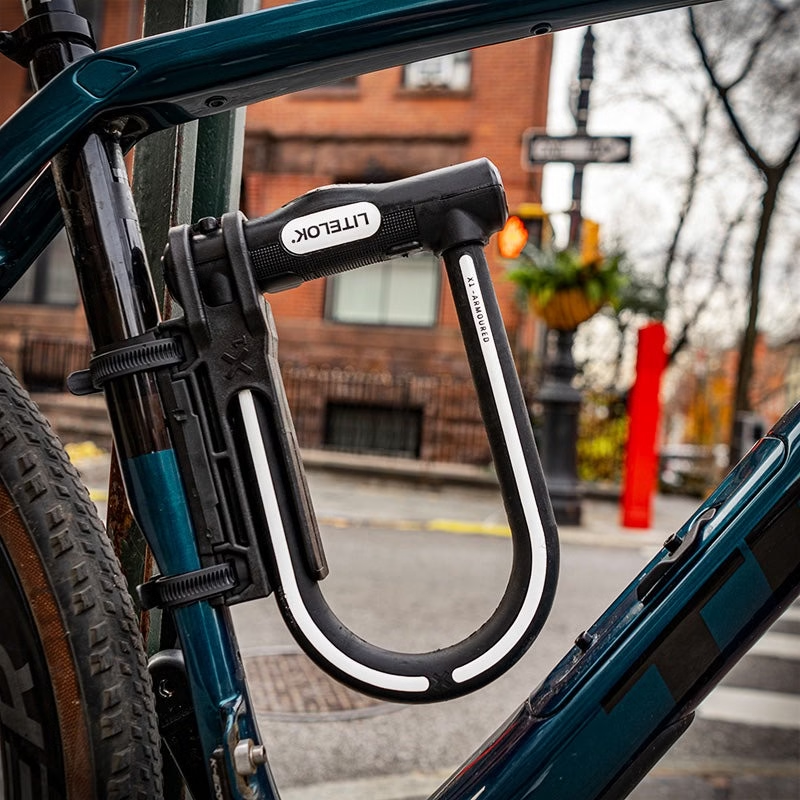
Litelok X1
A benchmark lock for high-risk areas, extremely resistant to cutting and leverage.
Kryptonite New York Fahgettaboudit Mini
Famously tough, compact and ideal for locking tightly to racks. A favourite in big cities.
Hiplok Gold Chain Lock
A wearable chain that hits the sweet spot between practicality and real security.
Abus Bordo Granit 6500 Folding Lock
Great portability with genuinely high security for a folding design.
These are not the only good locks available, but they represent the tier where cutting becomes loud, slow and frustrating for thieves.
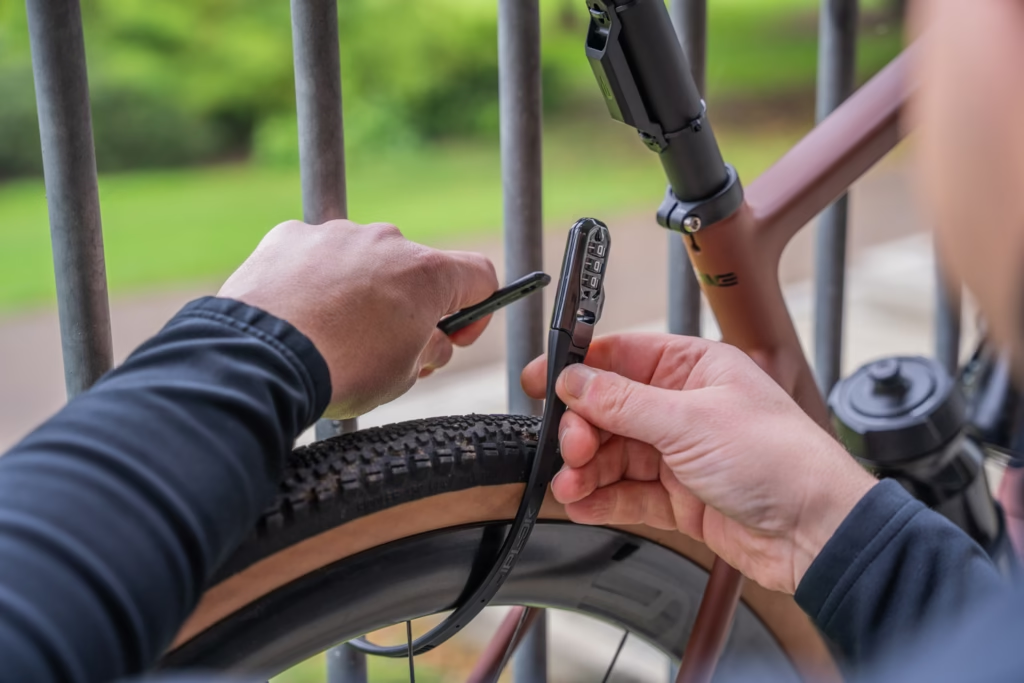
Insurance, registration and backup measures
A lock is one part of a wider approach. For bikes you rely on daily:
- Insure your bike, either through home insurance or a specialist policy
- Register it with services like BikeRegister
- Add a discreet GPS tracker if leaving it in predictable locations
- Photograph and record serial numbers
These steps won’t stop theft, but they make recovery far more likely and replacement much easier.
The bottom line
Stopping bike theft isn’t about owning the biggest chunk of metal possible. It’s about using the right lock, in the right way, in the right place. A tough D-lock, a sensible secondary lock and good locking habits will protect you far more effectively than a heavy chain used badly or a cheap cable used optimistically.
In everyday UK riding, the bikes that survive longest are not necessarily the ones with the strongest lock. They are the ones that take the most effort to steal. Make your bike that one, and most thieves will simply walk past.