Bomerano sits apart from the Amalfi Coast you think you know. Not on the edge of the sea, not framed by postcard traffic or day-tripper itineraries, but lifted into the hills where the air cools, the pace slows, and the coast reveals itself only when it chooses to. Arriving here feels less like reaching a destination and more like stepping out of time. It’s a wholly different experience to cycling in northern Italy with the Stelvio.
The village has a calm that settles quickly. Streets are narrow and practical rather than charming by design, houses painted in colours that have softened with age rather than been refreshed for visitors. There is little here that asks for attention, and that is precisely the point.
Life in the hills above the coast
Bomerano’s position shapes everything about it. Perched high above the coastline, it feels removed from the rhythm of the Amalfi towns below, yet never isolated. From certain corners of the village, the Tyrrhenian Sea appears suddenly, framed between buildings or glimpsed beyond a line of trees, a reminder of how close the coast still is.
Life moves at a measured pace. Mornings begin quietly, shutters opening, conversations unfolding without urgency. Locals greet one another by name, and visitors are acknowledged without ceremony. There is no performance of hospitality here, just an easy acceptance of people passing through.
The appeal lies in that normality. Bomerano does not feel curated or preserved. It feels lived in.
Food shaped by place, not presentation
Meals in Bomerano are grounded and unpretentious. The cooking reflects the village’s inland setting, shaped more by hills and seasons than by the sea below. Dishes are simple, built around local produce, and served without embellishment.
There is a sense that food here exists to nourish rather than impress. Portions are generous, flavours clear, and recipes rooted in repetition rather than reinvention. Eating in Bomerano feels like being invited into someone’s routine rather than handed a menu designed for outsiders.
That honesty carries weight. It makes meals memorable not because they are elaborate, but because they feel sincere.
Walking through history and landscape
Bomerano rewards exploration at walking pace. Churches and small religious buildings appear almost unexpectedly, woven into the fabric of the village rather than set apart from it. The Church of Santa Maria a Castro, dating back to the 12th century, stands as a quiet reminder of how long people have made a life in these hills.
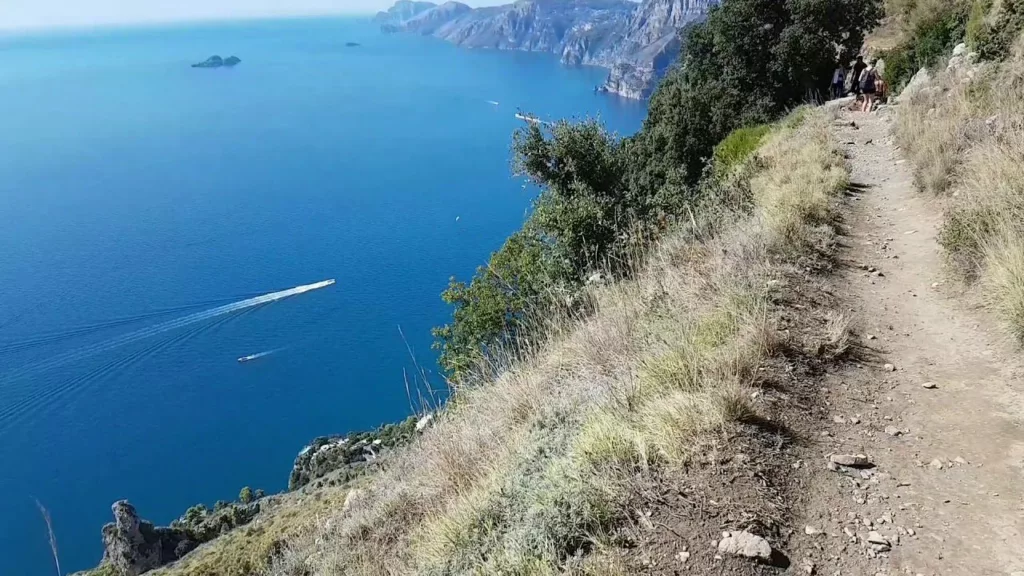
Beyond the village, the landscape opens up. Paths lead out into the countryside, climbing gently at first before revealing broader views of the coast and the mountains beyond. The most famous of these is the Path of the Gods, which begins near Bomerano and traces a route high above the sea. Despite its reputation, the trail retains a sense of intimacy, particularly in the quieter hours, when the sound of footsteps carries further than voices.
Here, movement feels purposeful rather than recreational. Walking is a way of understanding the land rather than consuming it.
Why Bomerano stays with you
Bomerano does not compete for attention. It does not promise transformation or spectacle. What it offers instead is clarity. A sense of place that has not been reshaped to meet expectations, and a rhythm of life that has resisted urgency.
For travellers seeking authenticity without performance, Bomerano delivers quietly. It allows you to observe, to slow down, and to exist alongside daily life rather than stepping around it. The views are impressive, the food deeply satisfying, and the history woven subtly into everyday surroundings.
You leave with the feeling that you were not entertained here, but accommodated. And that distinction matters.
Bomerano is not a destination that demands to be seen. It simply rewards those who arrive willing to look past other areas like the Sella Ronda.
Want more Italian ride ideas like this? Head to our Cycling in Italy hub for the best bases, iconic passes, and practical trip planning tips across the Dolomites, Tuscany, the lakes, and beyond.