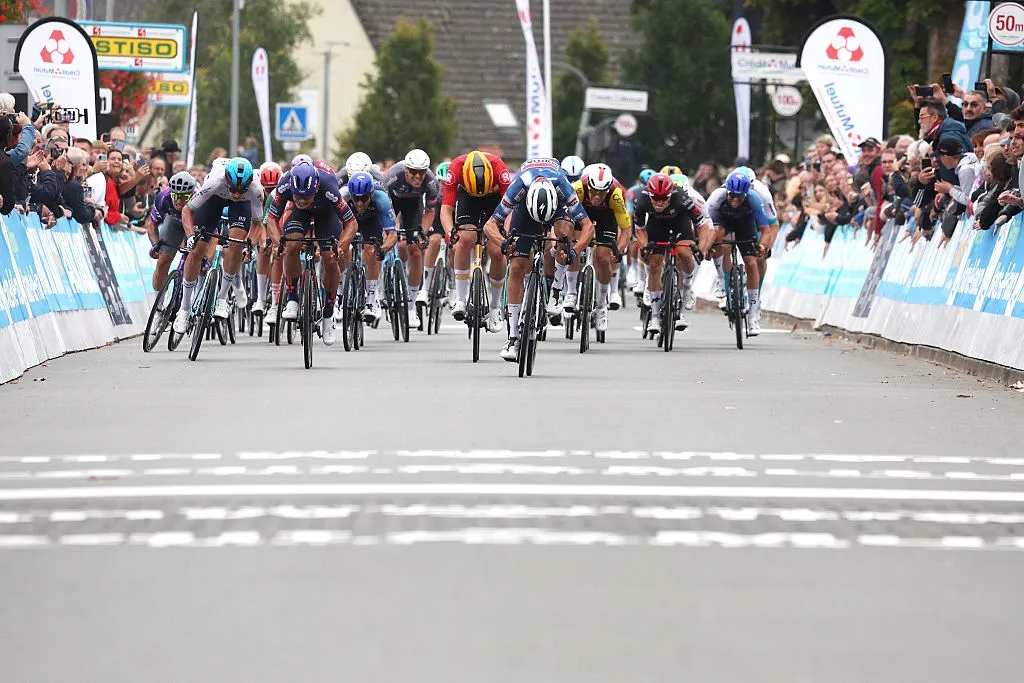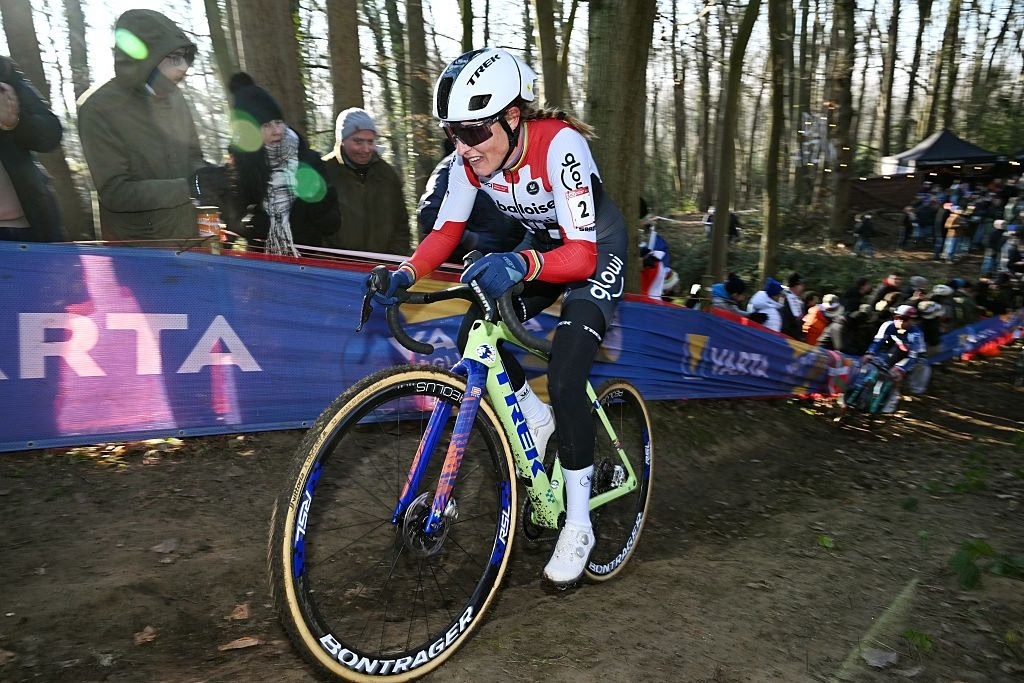
Adelaide greets you gently. The light is softer than expected, filtered through eucalyptus leaves and wide skies, and the city feels calm in the early morning, as if it knows the day will demand something of you later. There is a dryness to the air, even when it is cool, and a sense of space that makes the bike feel like the right way to move through it.
Rolling out before traffic builds, the streets are quiet and forgiving. Suburbs slip past without friction, and soon the city loosens its grip altogether. Vineyards, scrubland and low hills begin to appear, the landscape opening up in a way that feels both welcoming and faintly intimidating. These are familiar roads to anyone who follows the Tour Down Under, but riding them yourself carries a different weight. What looks manageable on television reveals its character only once the legs are involved.
Leaving the city behind
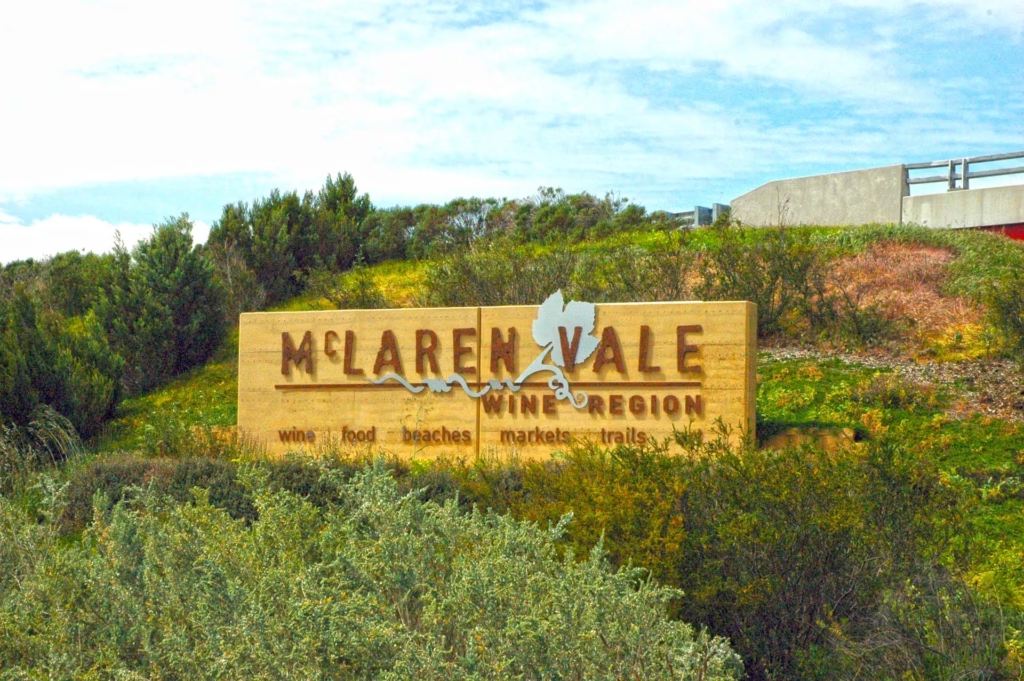
The transition south towards McLaren Vale is subtle rather than dramatic. The road begins to tilt almost without notice, gradients creeping in while the scenery shifts from urban edges to open country. There is a rhythm to the riding here, long stretches where you can settle into a steady pace, interrupted by rises that ask you to pay attention.
Traffic is present but rarely oppressive, particularly earlier in the day. The roads are wide, the sightlines long, and there is a sense that drivers are accustomed to cyclists, especially on these well-known race routes. The surface is mostly smooth, sun-baked and reliable, though the occasional rough patch or scatter of gravel in corners keeps you honest.
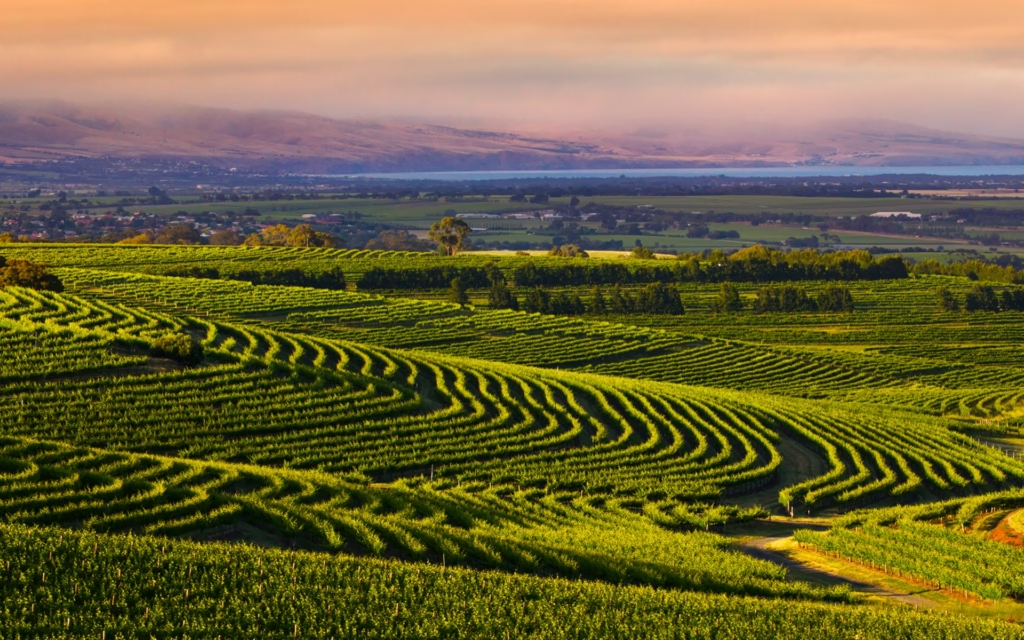
The smell of dry grass mixes with the faint sweetness of vines as McLaren Vale approaches. Rows of vineyards line the road with quiet order, broken up by gum trees and low stone walls. It is easy to forget how much work the legs are doing when the landscape offers so much distraction.
Willunga Hill and the heart of the Tour Down Under
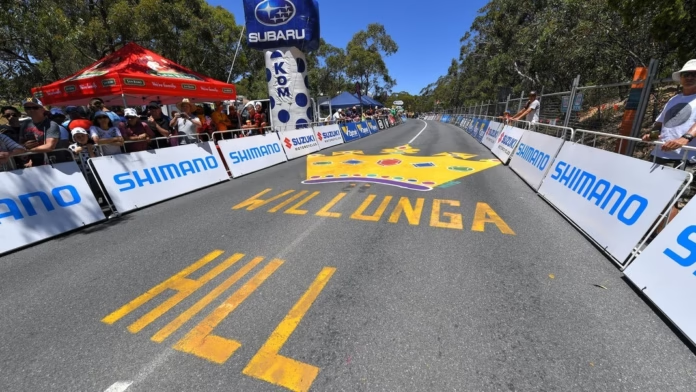
Everything in this region ultimately points towards Willunga Hill. It has become the defining climb of the modern Tour Down Under, returning time and again as the race’s most reliable test of form. It is not the longest ascent, nor the steepest in isolation, but it is perfectly judged. Long enough to demand commitment, steady enough to punish poor pacing, and exposed enough for heat and wind to amplify every mistake.
The approach feels almost ceremonial. The road narrows, vineyards give way to open slopes, and the noise of the valley drops away. Once on the climb, there is nowhere to hide. The gradient holds firm, hovering at a level that never quite relents, inviting you to settle into a rhythm while quietly eroding strength.
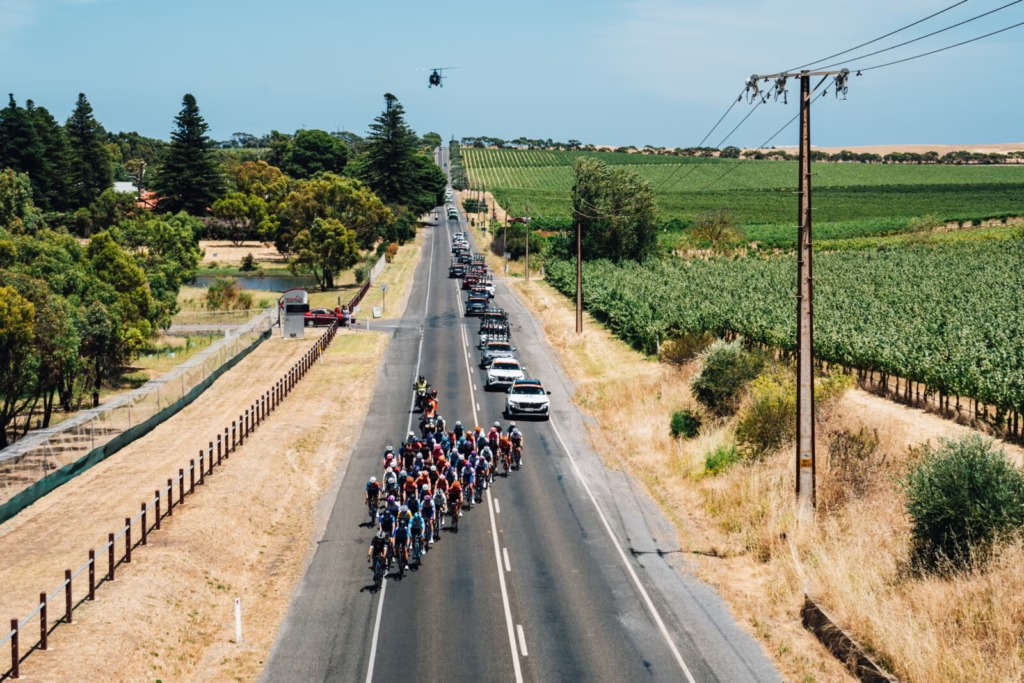
Riding it outside race week strips away the spectacle but leaves the essence intact. Each bend feels familiar from television coverage, yet more intimate in person. You notice the texture of the road, the way the sun reflects off pale tarmac, the silence broken only by breathing and the occasional passing car.
It is impossible not to think of the riders who have defined this climb. Richie Porte’s repeated, race-shaping performances have made Willunga Hill synonymous with his name, while Sarah Gigante’s benchmark ascent underlines its importance in the women’s race. Knowing those reference points does not diminish the experience. If anything, it sharpens it. Your effort exists on the same strip of road, even if the scale is wildly different.
On familiar Tour Down Under roads
Beyond Willunga, the ride continues across roads shaped by racing but lived in daily by locals. These climbs and descents have hosted the world’s best riders, yet on an ordinary day they feel approachable, even intimate. There are no barriers, no crowds, just tarmac winding through a landscape that feels unconcerned with spectacle.
The descents are fast without being reckless. Corners flow naturally, visibility is generally good, and the road invites confidence rather than demanding bravery. Speed builds smoothly, the wind pressing against your chest, heat rising as altitude is lost. It becomes clear why these roads lend themselves so well to racing. They reward flow and punish lapses in concentration, but never feel unfair.
Between climbs, the riding settles into a gentle cadence. Small towns pass quietly, cafés preparing for the day, the occasional nod exchanged with another rider heading in the opposite direction. There is a shared understanding here, a recognition that this is a place where riding matters.
The pull of McLaren Vale
McLaren Vale has a softness to it that contrasts with the effort required to reach it. The roads flatten, the pace eases, and the vineyards return in earnest, greener and more ordered than the scrubland above. Cellar doors appear with increasing frequency, their presence a reminder that this is as much a destination as a thoroughfare.
Stopping here feels earned. The body begins to relax, the tightness in the legs giving way to that familiar post-effort heaviness. Sitting still, even briefly, you become aware of how warm the day has become, how much water you have drained, how far you have travelled without quite realising it.
There is always the temptation to linger, but the ride is not finished yet. Turning back towards Adelaide carries its own demands, particularly if the wind has picked up, as it often does in the afternoon.
Riding back with tired legs
The return journey asks different questions. Climbs that felt manageable earlier now require more negotiation, legs responding more slowly, cadence harder to hold. The heat lingers, radiating off the road, and the effort becomes less about speed and more about persistence.
Yet there is something deeply satisfying about this part of the ride. The knowledge that the hardest work is behind you sharpens focus. Each kilometre covered is one less to go. Descents are enjoyed rather than attacked, climbs taken at face value, without expectation.
As Adelaide comes back into view, the city feels almost intrusive after the openness of the hills. Traffic noise returns, the pace becomes fractured, and the ride gradually releases you back into everyday life.
Why Adelaide and McLaren Vale work so well on a bike
What makes riding here special is not a single climb alone, even one as storied as Willunga Hill, but the balance around it. Adelaide offers immediate access to varied terrain, while McLaren Vale provides both challenge and reward in equal measure. The roads are good, the drivers are mostly patient, and the landscape is constantly shifting.
These Tour Down Under roads carry history, but they do not trade on it. They remain working roads first and foremost, shaped by weather, agriculture and daily life. Riding them feels grounded, honest, and quietly demanding. It is the kind of riding that stays with you, not because it overwhelms, but because it fits together so well.
Practical information
Location
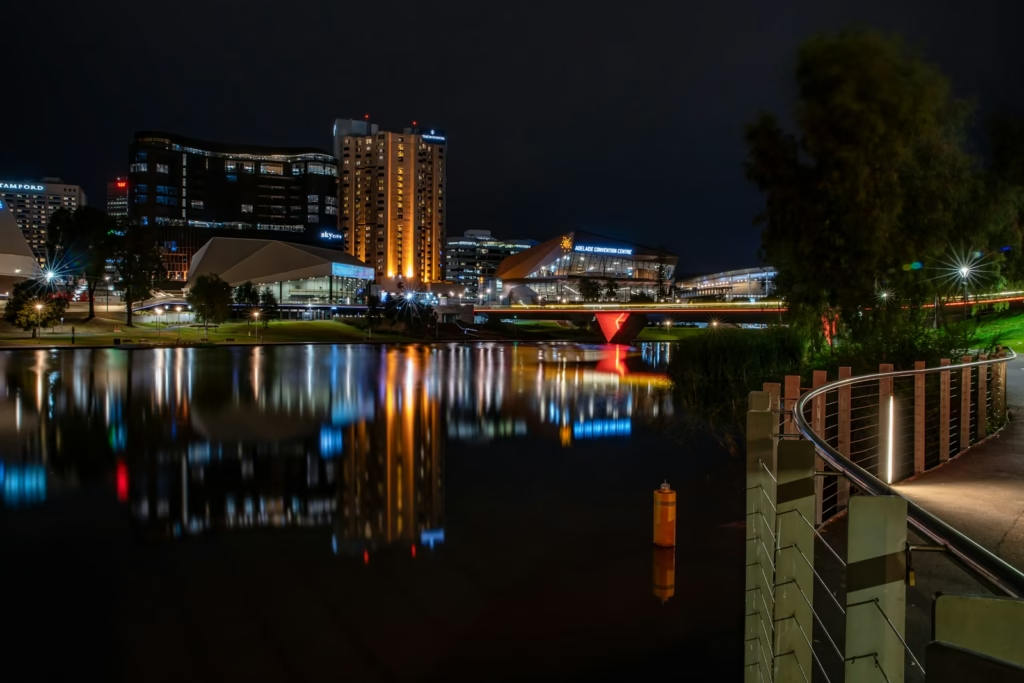
Adelaide sits on South Australia’s coast, with the McLaren Vale wine region immediately to the south. The area combines urban riding, rolling hills and vineyard-lined roads, all within easy reach of the city centre.
Riding
Popular routes follow Tour Down Under race roads towards McLaren Vale and Willunga Hill, then link into surrounding hills and valley roads. Climbs are generally steady rather than extreme, but exposure to heat and wind can significantly affect difficulty. Road surfaces are mostly good, though riders should stay alert for debris, particularly in rural sections.
When to go
Late spring through early autumn offers warm, dry conditions, though summer temperatures can be high. Early starts are recommended to avoid heat and traffic. Winter riding is possible, with cooler temperatures and quieter roads.
Accommodation
Adelaide offers a wide range of cyclist-friendly accommodation options, from central city hotels to quieter stays closer to the southern suburbs. Staying south of the city allows quicker access to McLaren Vale and Willunga Hill, reducing time spent navigating urban traffic before reaching open roads.