Bormio feels built for cyclists long before you start riding. The valley sits high enough for the air to feel cool and purposeful, even in summer, and the mountains crowd close, offering no illusion of ease. From the centre of town, every road seems to point uphill. Some do so politely. Others make no such effort.
There is a particular stillness in the early morning here. Café doors open quietly, shutters lift, and bikes click and tick as riders make final adjustments. Bormio has long been a spa town as well as a mountain hub, and there is a sense of routine to these mornings, as if effort and recovery have always coexisted here. Stelvio, Gavia and Mortirolo sit heavy in the imagination long before they appear on the road, and from this valley they feel not just famous, but inevitable. They make for a fascinating alternative to the Dolomite climbs around the Sella Ronda.
Rolling out of Bormio
The first kilometres out of town can feel misleading. Roads are smooth, gradients manageable, the river running alongside as if offering company. The town slips away quickly, replaced by forest and open pasture, and the sense of enclosure tightens. Everything funnels towards a climb here, even when it does not yet look like it.
Restraint matters from the start. Altitude and accumulation are the quiet adversaries in this part of Lombardy. Ride too hard early and the consequences arrive later, usually on a stretch of road where the mountain offers no room for compromise.

The Stelvio from Bormio
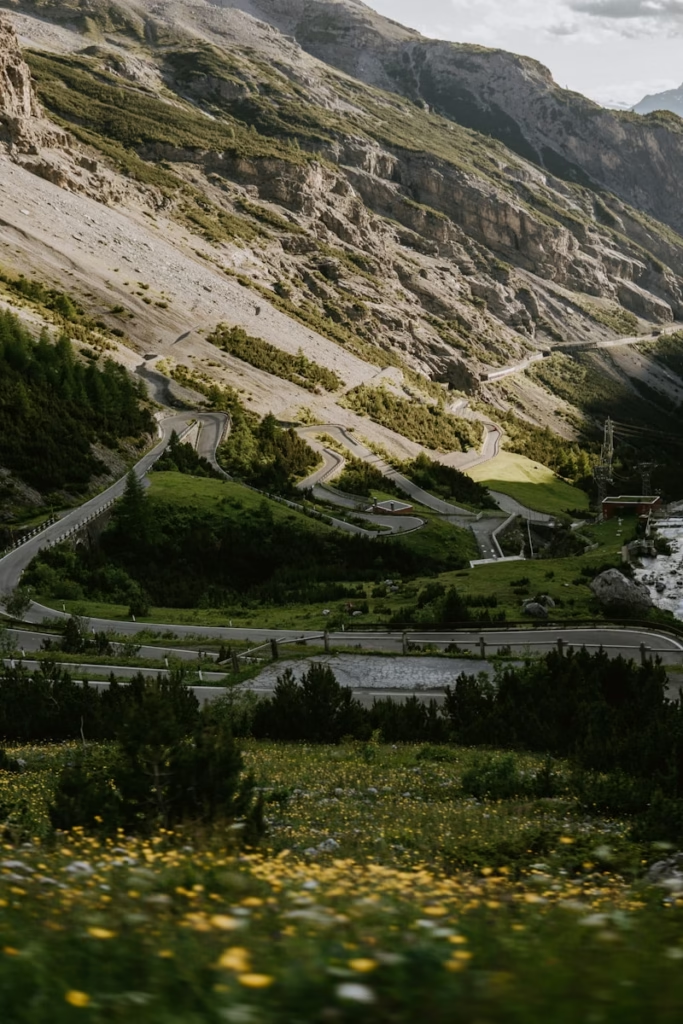
The Stelvio from Bormio is long, sustained and methodical, a test of patience rather than bravado. Compared with the more frenetic Prato side, this ascent encourages rhythm. The lower slopes wind steadily through forest, gradients consistent enough to settle into a cadence without feeling as though survival is the only goal.
Higher up, the character shifts. Trees thin, temperatures drop and the road begins to fold back on itself. Hairpins stack one above another, revealing the geometry that has made the Stelvio iconic. Effort becomes deliberate and economical. Standing is a choice, not a necessity.
What numbers never quite explain is the sense of expansion as you climb. Each switchback opens the mountain further, the road etched improbably into the slope. The summit delivers relief before celebration. The air is sharp, the view vast, and the body keenly aware of the distance already travelled.
The Gavia and its quieter menace
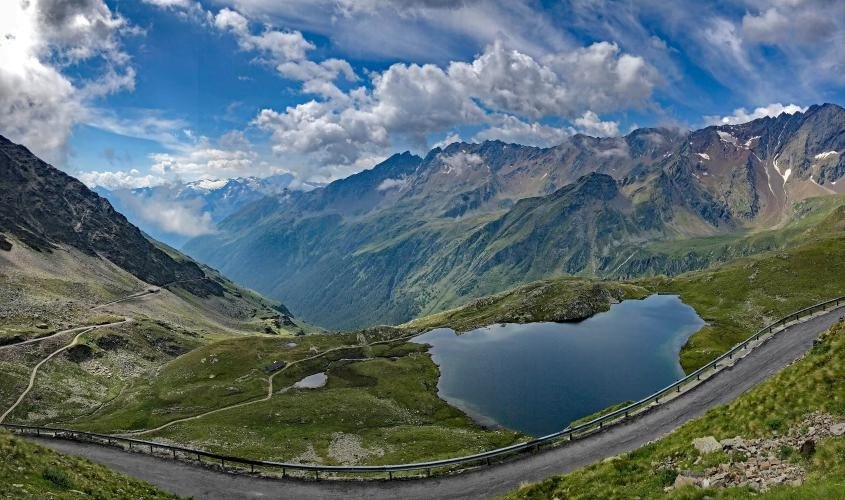
If the Stelvio is theatrical, the Gavia is introspective. From Bormio, the route typically leads through Santa Caterina Valfurva, and it is here that the climb begins to assert itself properly. The early kilometres allow a false sense of control before the road narrows and the effort becomes more irregular.
The hardest sections arrive beyond Santa Caterina, where gradients stiffen, and the surroundings grow more austere. Forest gives way to open slopes, the weather becomes more unpredictable, and the sense of exposure increases. Even on a calm day, the Gavia carries tension. Snowbanks can linger late into the season, and the descent demands full attention.
Reaching the summit feels earned in a different way to the Stelvio. There is no spectacle, no sense of theatre, just quiet satisfaction and the understanding that this road’s reputation is well deserved. It is a climb defined by patience and respect rather than drama.
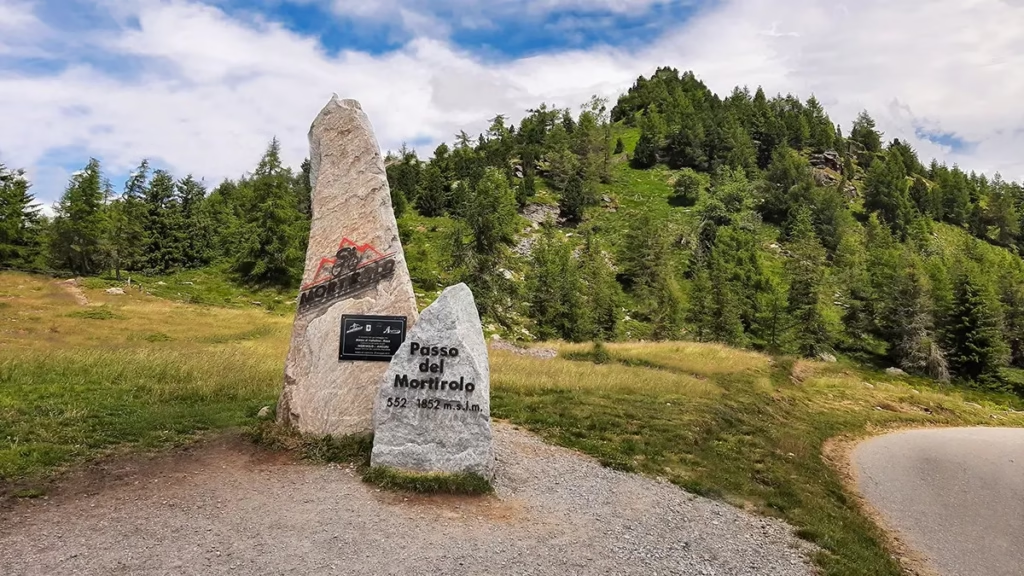
Mortirolo and the reckoning
The Mortirolo is not on Bormio’s immediate doorstep, but it sits close enough within the wider Valtellina to make it a realistic objective from this base, often tackled as a dedicated day rather than part of a neat loop. Approached from Mazzo di Valtellina, it wastes no time on formalities.
The road kicks steeply almost from the outset, narrow and enclosed, gradients biting immediately. There is little chance to ease in or find comfort. Breathing becomes loud, cadence inconsistent, and the bike feels heavy beneath you. The surface can be patchy, the road hemmed in by trees, and the climb offers few visual cues for progress.
Pantani’s name lingers here, not as nostalgia but as gravity. The Mortirolo does not invite comparison or bravado. It asks a simple question and waits for an honest answer. Cresting the top brings a deep, quiet satisfaction that has little to do with celebration and everything to do with having endured.
Linking giants in a single valley
What makes Bormio exceptional is its concentration. Stelvio and Gavia rise directly from the valley, while the Mortirolo sits close enough to complete a trio that defines a cycling trip. In practice, most riders choose one major climb per day, allowing the effort and recovery each ascent demands.
The descents matter as much as the climbs. Stelvio rewards patience with long, flowing switchbacks. Gavia feels narrower and more shaped by weather, demanding constant focus. Mortirolo offers little comfort in either direction. Each road asks for a different mindset, and each leaves a different residue in the legs.
Why Bormio stays with you
There is no gentle riding here, and that is the point. Bormio offers cycling stripped of compromise. Long climbs, thin air, unpredictable weather and roads that tell the truth.
The satisfaction comes not from conquering these mountains, but from moving through them with care. Effort is constant, reward measured in clarity rather than spectacle. It is riding that demands humility and gives back perspective.
Practical information
Location
Bormio sits in northern Italy’s Lombardy region, high in the Alps and surrounded by some of cycling’s most famous climbs. The Stelvio, the Gavia and the Mortirolo all lie within reach, making the town one of Europe’s most concentrated bases for serious mountain road cycling.
Riding
Riding from Bormio centres on long, sustained Alpine climbs. The Stelvio from Bormio offers a steady, rhythm-based ascent, less abrupt than the Prato side but no less demanding. The Gavia, reached via Santa Caterina Valfurva, is narrower, more exposed and highly weather-dependent, with its hardest sections coming later in the climb. The Mortirolo, typically approached from Mazzo di Valtellina, is steep, enclosed and unrelenting. Most riders spread these efforts across several days rather than attempting them in a single ride.
When to go
Late spring to early autumn is the main riding season, though snow can linger on the Gavia and Stelvio well into June. Summer offers the most reliable access, but early starts are recommended to avoid heat lower down and heavier traffic on popular routes. Weather can change quickly at altitude at any time of year.
Accommodation
Bike Mountain Design Hotel Alù in Bormio is a dedicated bike hotel designed with cyclists firmly in mind. Positioned for easy roll-outs towards the Stelvio and valley roads leading to the Gavia, it provides a practical, bike-first base rather than a luxury-led Alpine stay.
Facilities include secure bike storage, a bike washing area, a small workshop for basic repairs, route information, cycling laundry and access to recovery services. For riders planning multi-day efforts on the region’s major climbs, it is the kind of place that understands early starts, tired legs and the demands of riding at altitude.

Want more Italian ride ideas like this? Head to our Cycling in Italy hub for the best bases, iconic passes, and practical trip planning tips across the Dolomites, Tuscany, the lakes, and beyond.