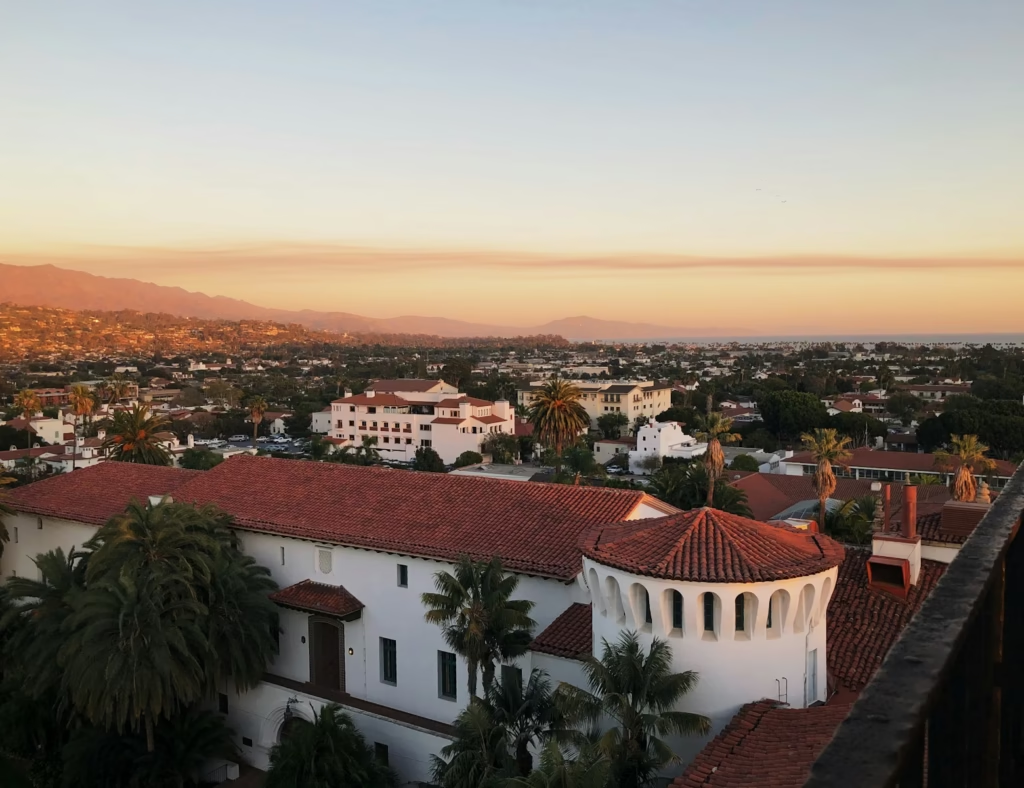
California’s coast has a softness to it that only reveals its depth once you start riding. The light is bright but rarely harsh, the air carries a trace of salt even inland, and the terrain unfolds in layers rather than extremes. From the saddle, the landscape feels expansive without being overwhelming. The Pacific never feels far away, even when the road turns decisively uphill.
This is riding shaped by contrast rather than continuity. Santa Barbara’s mountains rise straight out of the coast, while further south, the Santa Monica Mountains offer a sharper, drier kind of challenge. They are not part of a single neat riding zone, but together they define a style of Californian riding built on restraint, rhythm and repetition.
Leaving Santa Barbara and turning uphill
Rolling out from the Santa Barbara area, the transition is immediate. One moment you are skirting the ocean, the next the road begins to lift, suburbs thinning as canyon walls close in. Traffic fades quickly once you turn inland, replaced by quiet roads that feel designed for movement rather than access.
The early kilometres are deceptive. Gradients build gently at first, encouraging rhythm, but there is always the sense that something more serious waits higher up. This is riding where pacing matters. Go too hard early, and the hills have a way of reminding you later.
Gibraltar Road and the pull of the mountains
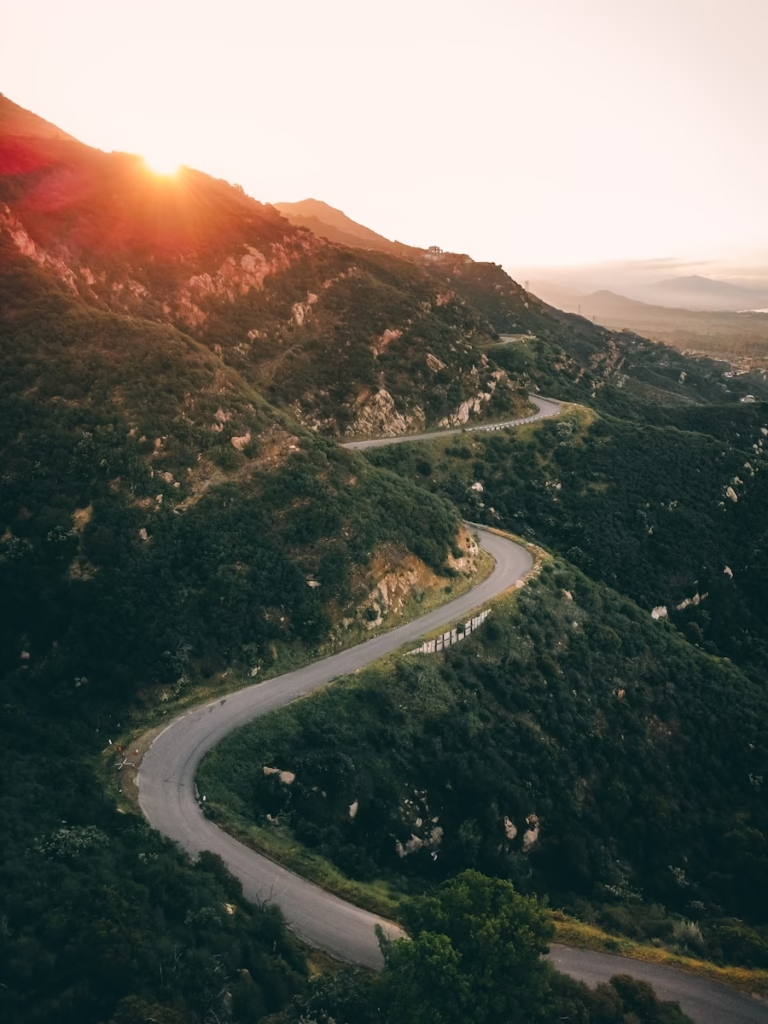
Gibraltar Road is the defining climb above Santa Barbara, and it earns that status without theatrics. The road winds steadily upward, gaining height methodically as it cuts into the mountains. The surface is generally good, the gradient consistent enough to find a rhythm, but long enough to demand patience.
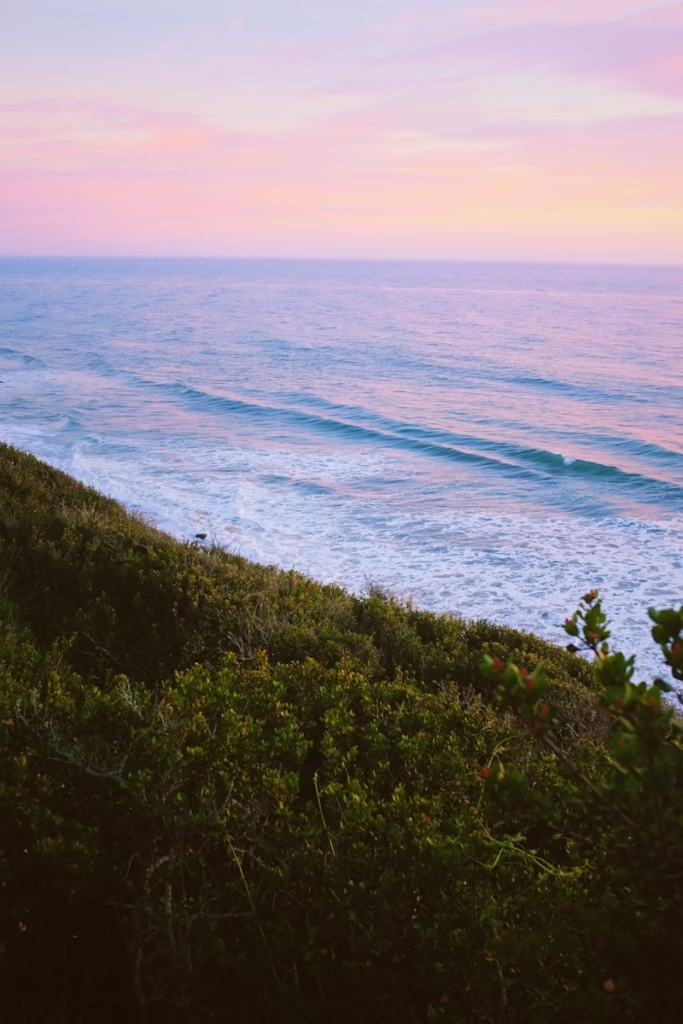
As you climb, views open out over the city and coastline, the Pacific stretching wide and calm below. Switchbacks arrive without drama, each one offering a slightly broader perspective. The air cools with altitude, the effort becoming more deliberate as the climb unfolds.
What makes Gibraltar memorable is not its steepest moments, but its sense of scale. It feels earned rather than imposed, a climb that rewards steady commitment rather than short bursts of strength.
Painted Cave, Camino Cielo and quiet upper roads
Above Gibraltar, the riding becomes more introspective. Roads narrow, traffic thins further, and the landscape feels removed from the coast despite its proximity. Painted Cave Road and stretches of East Camino Cielo add texture rather than severity, rolling along the ridgeline with repeated changes of effort.
Here, the riding is about attention. Light shifts under trees, road surfaces vary, and exposure increases. These are roads that work best as part of a longer loop rather than a single headline climb, accumulating fatigue quietly while offering expansive views back towards the ocean.
Further south: the Santa Monica Mountains
Several hours down the coast, the Santa Monica Mountains present a different rhythm altogether. This is firmly Southern California, not the Central Coast, and the riding reflects that shift. The terrain is drier, the climbs shorter, and the gradients often sharper.
Roads like Mulholland Highway and Latigo Canyon are best treated as a separate riding chapter rather than an extension of Santa Barbara. Latigo, in particular, makes its intentions clear early. Tight switchbacks, changing gradients and narrow sections demand focus, offering little chance to settle fully.
The reward comes quickly on the descent. Corners link together naturally, visibility opening just enough to encourage flow without inviting recklessness. It is riding that feels alert and immediate, shaped more by concentration than endurance.
A landscape built on balance
Across both areas, what stands out is balance. These climbs are challenging without being brutal, scenic without being distracting. They reward planning, restraint and a willingness to ride within yourself.
Unlike higher alpine passes, Colorado mountains or Sierra giants, this part of California does not rely on altitude or notoriety. Its appeal lies in how seamlessly coast, canyon and climb fit together, even when those experiences are spread across different regions.
Why this riding stays with you
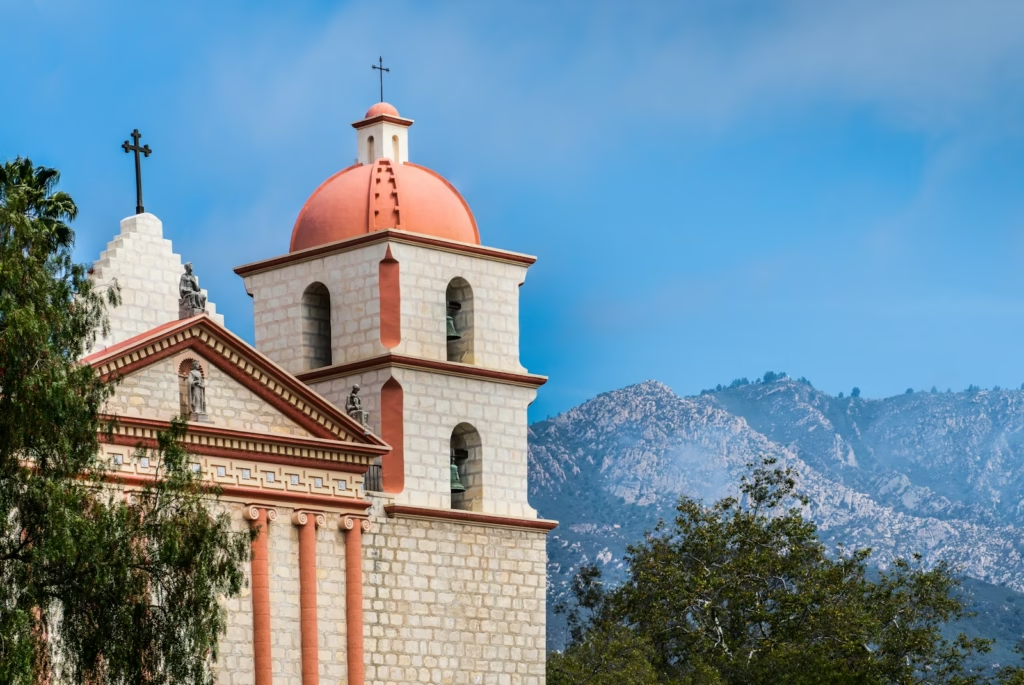
Santa Barbara and the Santa Monica Mountains offer seriousness without severity. You can climb for hours without committing to extremes. You can ride hard without feeling exposed. The weather is generally kind, the roads vary, and the scenery is constantly shifting.
It is not iconic in the alpine or Sierra sense, but it is quietly compelling. Riding here feels complete rather than spectacular, the kind of experience that draws you back because it never tries too hard to impress.
Practical information
Location
Santa Barbara sits on California’s south coast, backed immediately by steep mountain roads that rise from the city. The Santa Ynez Valley offers access to quieter roads north of Santa Barbara. The Santa Monica Mountains lie further south, closer to Los Angeles, and are best treated as a separate riding area.
Riding
Key climbs near Santa Barbara include Gibraltar Road, often combined with Painted Cave Road and sections of East Camino Cielo to form longer mountain loops with coastal views. Further south, the Santa Monica Mountains offer sharper, more technical climbs such as Latigo Canyon and rolling routes along Mulholland Highway. These regions are typically ridden on separate days rather than as a single continuous route.
When to go
Late autumn through spring offers the most comfortable riding conditions, with mild temperatures and clear skies. Summers can be hot inland, making early starts essential. Coastal fog is common in the mornings but usually burns off by mid-morning.
Accommodation
Hotel Hygge in Buellton provides a calm, cyclist-friendly base in the Santa Ynez Valley. Its location suits riders looking to avoid the busier coastal strip while remaining within easy reach of Santa Barbara’s mountain roads. Comfortable, understated and well-suited to early starts and recovery-focused evenings, it works best as a base for thoughtful, terrain-led riding rather than box-ticking mileage.

Want more North American ride ideas like this? Head to our USA and Canada hub for the best bases, iconic routes, and practical trip planning tips from the Rockies to coastal California and New England.