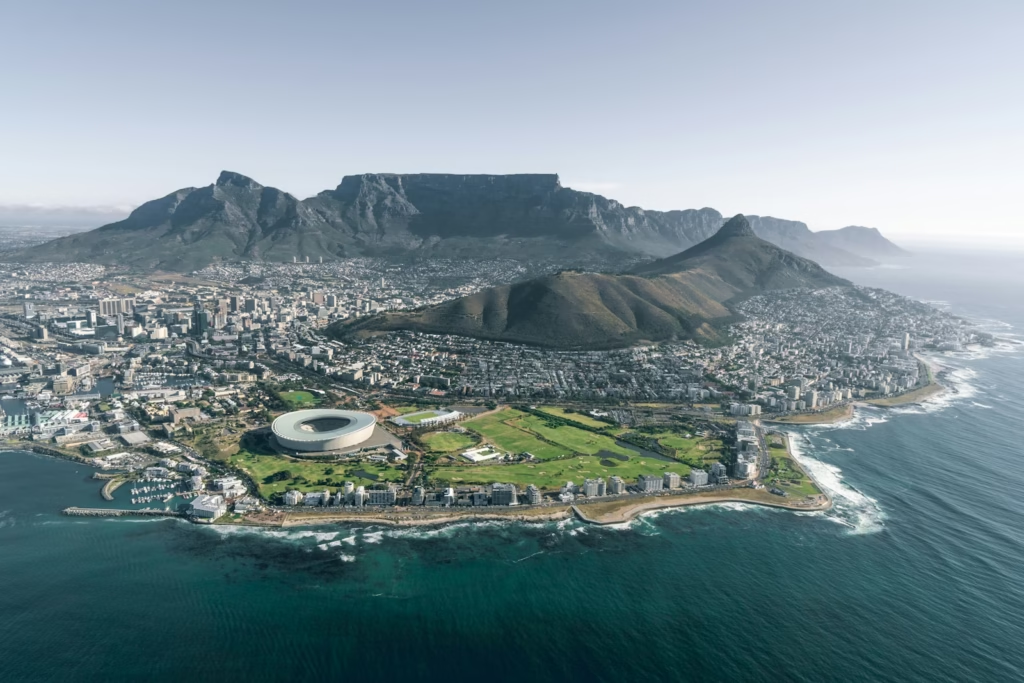
Cape Town feels expansive from the first pedal stroke. The light is bright without being harsh, the air carrying a salt edge from the ocean even when you are miles inland. Mountains frame everything. They do not sit politely in the distance, but press in from all sides, shaping routes, weather and mood in equal measure. This is a city where riding a bike feels both natural and consequential.
Early mornings matter here. The city is quieter, the heat still held at bay, and the wind has yet to make its presence known. Rolling out while the streets are still half-asleep, it is easy to forget just how much terrain lies ahead. But the outline of the mountains gives nothing away. They wait.
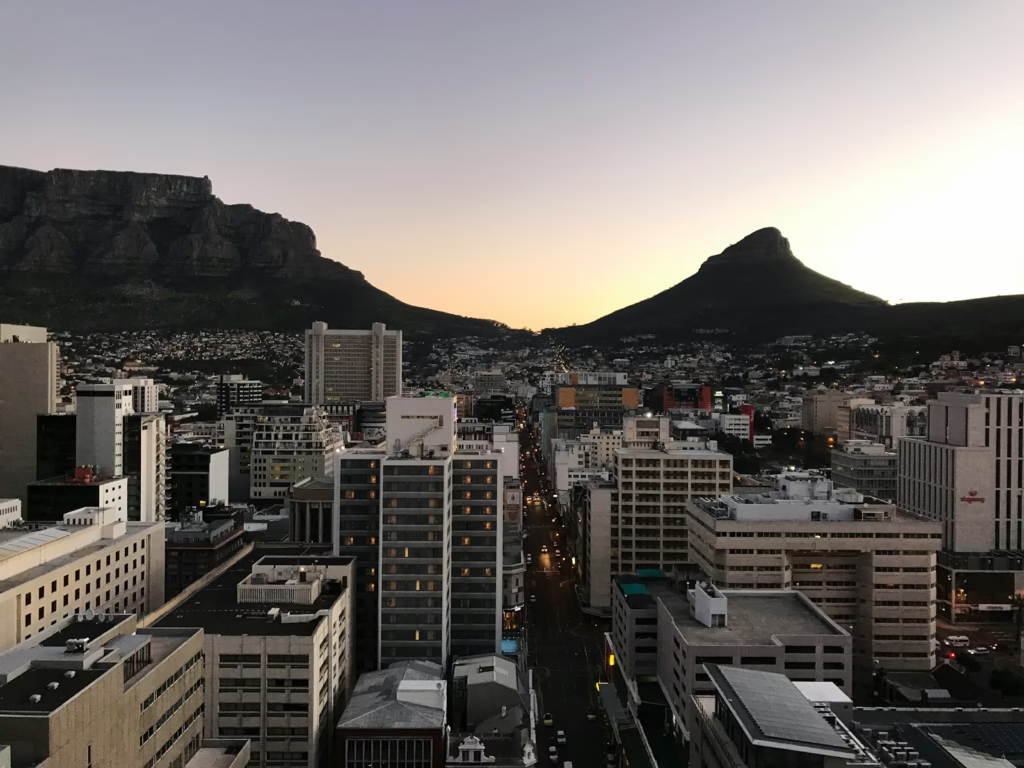
Leaving Cape Town and turning inland
The first kilometres out of the city are forgiving. Roads are smooth, gradients gentle, the effort measured. Table Mountain looms overhead, its flat summit catching the early light, a constant reference point even as the road begins to turn away from the coast.
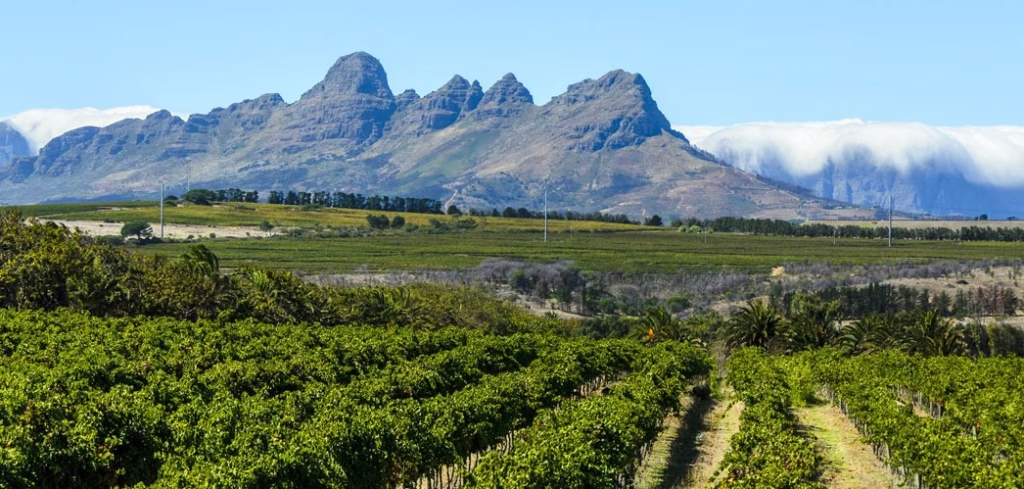
As suburbs thin, vineyards and open land take over. The shift is gradual but unmistakable. Traffic drops, the air warms in the valleys, and the sense of space increases. Riding inland towards the Winelands feels like crossing an invisible threshold. The scenery becomes more ordered, more agricultural, but no less dramatic, with mountain walls rising abruptly at the edges of the landscape.
Franschhoek Pass and the shape of the Winelands
Franschhoek Pass announces itself with confidence. The road begins to climb in earnest, winding its way between steep rock faces and dense vegetation. It is a long, steady ascent rather than a violent one, but it asks for patience. The gradient rarely gives you reason to stop pedalling, and the length of the climb encourages rhythm over aggression.
The surface here is excellent, the corners flowing naturally, the road engineered with intent. As altitude increases, the air cools noticeably, offering relief from the heat that builds lower down in the valley. Views open gradually, vineyards shrinking below, the Franschhoek valley stretching back in layered shades of green and gold.
At the top, the sense of transition is immediate. The landscape shifts, the light feels different, and the effort suddenly makes sense. Franschhoek Pass is not just a climb, but a gateway, linking regions, climates and moods in a single, continuous effort.

Deeper into the mountains
Beyond Franschhoek, the riding becomes quieter and more introspective, depending on route choice. Roads narrow, surfaces remain generally good but demand attention, and the climbs arrive with less warning. This is where the Winelands begin to feel less curated and more raw.
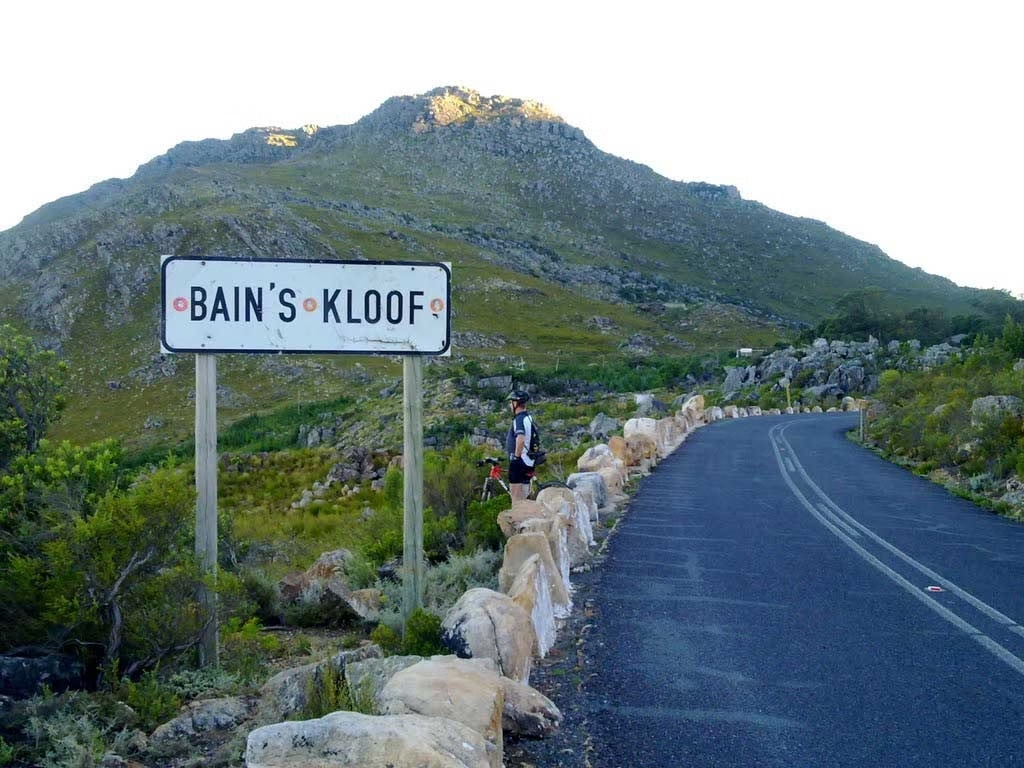
Bainskloof Pass sits further north and is often tackled as part of a longer point-to-point ride or spread across multiple days rather than a single neat loop. It represents a clear shift in character. Steeper, more irregular, and edged with history, it feels like a mountain road that has been accepted rather than refined. The gradient shifts constantly, sections biting harder than expected, others offering brief moments of respite.
The climb carries weight. Rock faces rise sharply, the road clinging to the landscape rather than shaping it. Water cuts across the tarmac in places, shadows linger under thick tree cover, and the sense of isolation grows with every metre gained. This is not a climb to rush. It rewards restraint, punishing impatience quickly and thoroughly.
Descents that demand respect
Descending these mountain passes is exhilarating, but never casual. Franschhoek Pass flows, encouraging speed and confidence, while Bainskloof demands focus. Corners tighten unexpectedly, light shifts under trees, and the road surface can change without warning.
The wind builds as speed increases, the temperature climbing again as altitude is lost. It is the kind of descending that clears the mind entirely. Nothing exists beyond the next corner, the next braking point, the next stretch of road opening out ahead.
These descents do not offer spectacle for its own sake. They reward control rather than bravado, delivering satisfaction through precision and restraint.
The long road back
Turning back towards Cape Town, fatigue settles in quietly. The sun sits higher now, the air thicker in the valleys, and the climbs less forgiving than they were earlier in the day. What once felt manageable now requires negotiation. Cadence drops, effort becomes deliberate, and progress is measured more in persistence than speed.
The return is never a mirror of the outward journey. Wind direction shifts, light changes, and the body carries the weight of everything already done. Yet this is where the ride takes on its final shape. Each kilometre brings closure. Each familiar landmark signals progress.
As the city comes back into view, the contrast is stark. Traffic noise returns, the rhythm fractures, and the vastness of the Winelands recedes behind you. The ride ends not with a flourish, but with a quiet sense of completion.
Why Cape Town and the Winelands reward effort
What makes cycling here exceptional is the variety layered with consequence. Long valley roads, exposed climbs, and mountain passes that demand respect sit side by side within a relatively compact region. Few places offer such a range within reach of a single city.
Cape Town and the surrounding Winelands do not flatter the rider. Heat, wind and terrain all play their part. But for those willing to plan carefully and ride with restraint, the rewards are substantial. Perspective, space, and the satisfaction of having earned every metre.
Practical information
Location
Cape Town sits on South Africa’s south-western coast, with the Cape Winelands stretching inland through Stellenbosch, Franschhoek and beyond. Mountain passes such as Franschhoek Pass and Bainskloof Pass link valleys and regions, forming some of the most rewarding and demanding road cycling terrain in the country.
Riding
Riding in the region combines smooth valley roads with sustained climbs and challenging mountain passes. Franschhoek Pass offers a long, steady ascent with flowing descents, while Bainskloof Pass is steeper, more irregular and physically demanding. Wind and heat significantly affect perceived difficulty, and early starts are strongly advised. Many riders choose to link these climbs across multiple days rather than in a single ride.
When to go
Late spring through early autumn provides the most reliable riding conditions. Summer temperatures can be high, particularly inland, making dawn starts essential. Winter offers cooler air and quieter roads, but brings an increased risk of rain, especially in the mountains.
Accommodation
Trail’s End Bike Hotel in Grabouw, south-east of Cape Town, is a standout base for cyclists. Founded in 2015 by Pieter Silberbauer and Johannes Matthewson, the hotel was inspired by bike hotels in Europe and Japan and designed specifically for outdoor enthusiasts exploring the Overberg, the Winelands and surrounding mountain roads.
While best known among mountain bikers and gravel riders, Trail’s End also works well for road cyclists tackling Franschhoek Pass, Bainskloof Pass and longer Winelands routes. Facilities include secure bike storage, a pump track, training pool, climbing wall, gym and Pilates studio, alongside in-house masseurs for post-ride recovery. The hotel is also home to what is billed as the first bicycle museum in Africa, adding a distinctive layer of cycling culture to the stay.