
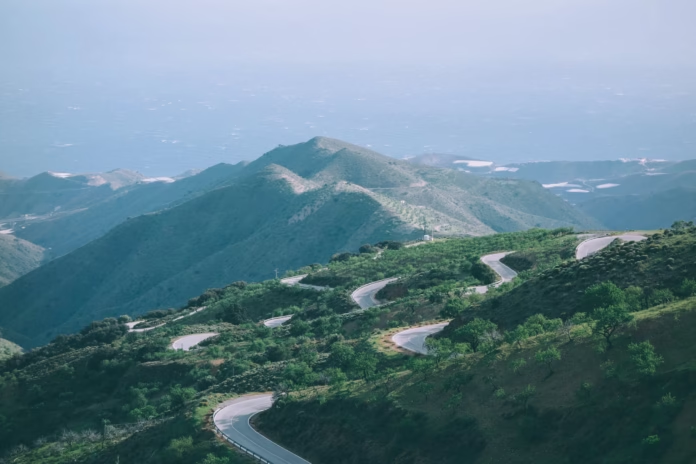
Some riding destinations win you over with one famous climb. Sierra Nevada and Granada work differently. They give you a city that feels alive at all hours, roads that begin almost as soon as you leave the urban edge, and then a mountain range that seems to keep unfolding long after your legs have started asking serious questions.
What stays with me about the place is the contrast. You can start the morning under soft city light, pass cafés pulling shutters open and the scent of coffee drifting into the street, then within an hour find yourself on long, exposed mountain roads where the air has thinned, the colour has drained from the landscape, and every bend seems to widen the view. Sierra Nevada is not a cycling destination built around convenience alone. It is built around scale.
For readers building a wider mountain riding shortlist, this sits naturally alongside ProCyclingUK’s travel features on Cycling in Andermatt & central Swiss passes, Why Annecy & Lake Annecy area works so well for a cycling trip and Why Queenstown & Central Otago work so well for a cycling trip, even if Sierra Nevada feels drier, harsher and more southern than any of them.
Why Granada makes the trip work
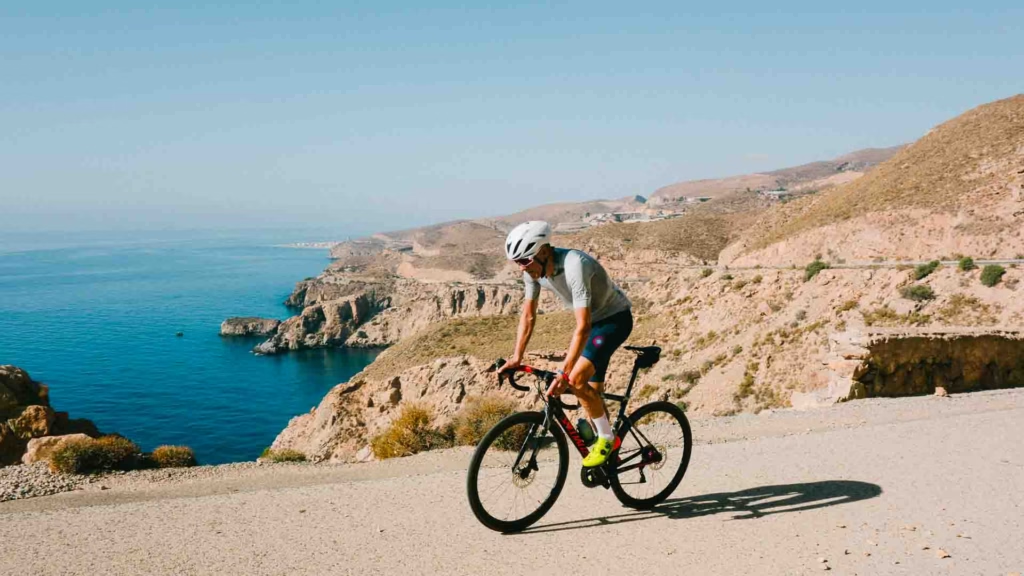
Granada is a large part of the answer to why this trip deserves a place on your riding list. Plenty of mountain destinations give you hard roads. Fewer give you a city with real depth when the ride is over. Granada is not merely somewhere to sleep before a climb. It is somewhere that gives the whole trip shape.
That changes the rhythm of a cycling trip. I like mountain bases that feel purposeful, but I also like places that feel generous when I am off the bike. Granada has that generosity. The day can begin cool and quiet, with a slightly nervous sense of purpose as you roll through the outskirts, but it ends in a city that rewards slowness. The food lands differently after a long climb. The first cold drink feels earned in a way it only does after several hours of climbing in dry southern air. Even walking back through the city in the evening, with tired legs and sun still clinging to the walls, feels like part of the same experience.
Granada also helps because it does not make the riding feel remote. The mountains are close enough that the transition is fast. You do not spend half the day driving towards your ride. You leave the city, settle into the first gradients, and the trip’s central idea becomes clear very quickly: this is one of those rare places where a proper city break and a proper climbing trip genuinely fit together.
The climb that defines the place
The road to the Veleta is the route that hangs over every Sierra Nevada cycling conversation, and with good reason.
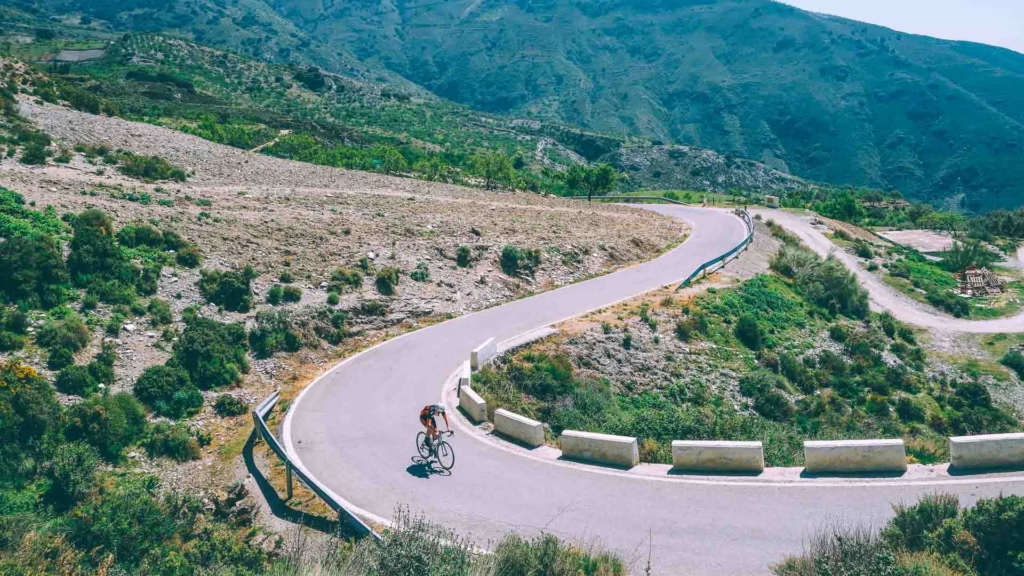
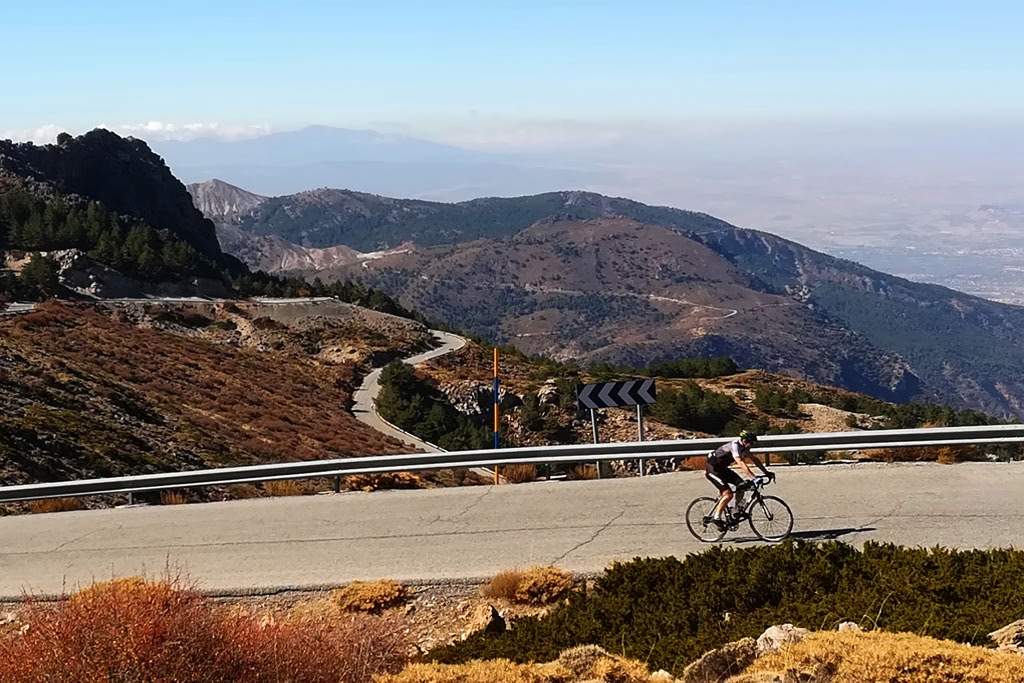
This is not just a good climb. It is one of those roads that changes the emotional scale of a trip. The ascent from Granada towards the ski station and beyond keeps unfolding for so long that it stops feeling like a single effort and starts feeling like a journey through altitude, weather and landscape. Lower down, the road moves through the drier outer edge of the city and the wooded approach roads. Higher up, the vegetation thins, the air cools and the whole ride starts to take on that stripped-back alpine feeling that makes Sierra Nevada so unusual in southern Europe.
The appeal is not only that it is hard, though it is. It is the sense of progression. Each section has its own texture. There are long steady ramps where you can settle into a rhythm and start imagining a glorious day. Then there are more exposed sections where the mountain suddenly feels much bigger, the horizon much wider and your effort much smaller. By the time you are high enough to feel the landscape opening fully, there is a real sense of crossing from one world into another.
That is what makes Sierra Nevada special. It is not a climb built purely around savage gradients and a dramatic last three kilometres. It is built around accumulation, altitude and atmosphere. It keeps asking the same question for a very long time: how much mountain do you really want today?
The roads feel bigger than the map suggests
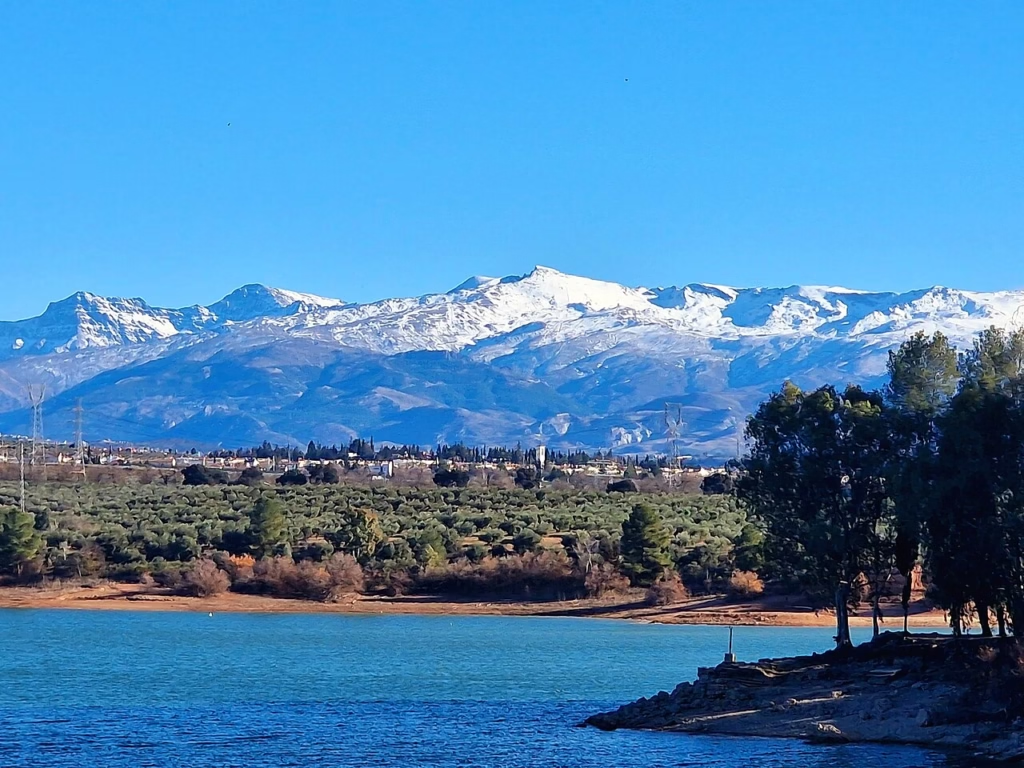
One of the pleasures of riding here is that the roads do not feel pinched or apologetic. They have that big-road mountain character that lets you look ahead, read the line of the climb and understand the shape of the effort. That matters. Some climbs feel dramatic because they are enclosed. Sierra Nevada feels dramatic because it is open.
You see long sections of road ahead. You see the mountain carrying on. You see light change across the slopes. Sometimes that openness is inspiring, and sometimes it is slightly cruel. Both responses are part of the appeal. It is a destination for riders who enjoy the psychological side of climbing as much as the numbers.
That broad-road mountain feel is one of the reasons Sierra Nevada sits comfortably beside places like Andermatt. The mood is completely different, but both work because the roads let the landscape speak rather than hide it.
What the riding feels like day to day
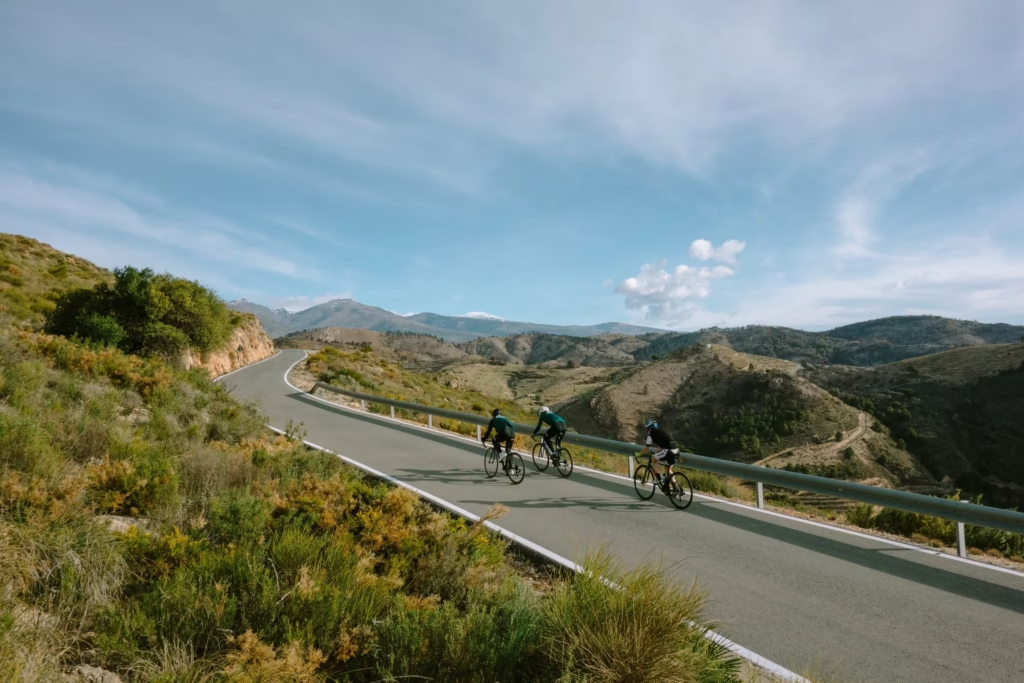
This is where Sierra Nevada and Granada become more than a single-climb destination. The obvious headline is the Veleta, but the wider appeal is the variety of mood you can create around it. You can do the big mountain day and spend yourself properly. You can also ride shorter roads, climb into the foothills, or simply use Granada as a base for long rolling days that carry the mountains in and out of view.
That matters on a multi-day trip. Destinations built around one heroic effort can become oddly narrow after day two. Sierra Nevada avoids that because even when the great climb is always there in the background, you still have enough room to change tone. One day can be a full altitude pilgrimage. The next can be a steadier ride through lower roads and villages, with more time to look around, more room to stop and less pressure to turn the ride into a test.
I like that balance. It keeps the trip from feeling performative. Not every ride needs to end in self-congratulation at three thousand metres. Sometimes the right day is one where the road tilts up steadily, the city falls away behind you, and you spend more time listening to the tyres and the wind than thinking about average gradient.
Granada after the ride
Granada matters even more once the ride is over. It gives the whole trip warmth and depth. A lot of mountain cycling trips end with the same slightly functional evening: shower, food, sleep, repeat. Granada is richer than that.
There is also something satisfying about the sensory contrast. The Sierra Nevada roads can feel dry, bright and severe, especially higher up where the landscape becomes more barren. Granada, by comparison, feels denser and more human. You come back from long hours of mountain silence into streets, bars, conversation, light bouncing off old walls, and food that feels built for appetite rather than restraint.
That urban-mountain contrast is one reason the trip stays with people. It is not just a hard place to ride. It is a place where the riding changes how the city feels, and the city changes how the riding is remembered.
That same city-and-landscape combination is what makes some of the best cycling trips feel complete rather than one-note. It is there in Annecy in a softer, lake-focused way, and in Granada in a hotter, drier and more dramatic one.
When to go and why timing matters
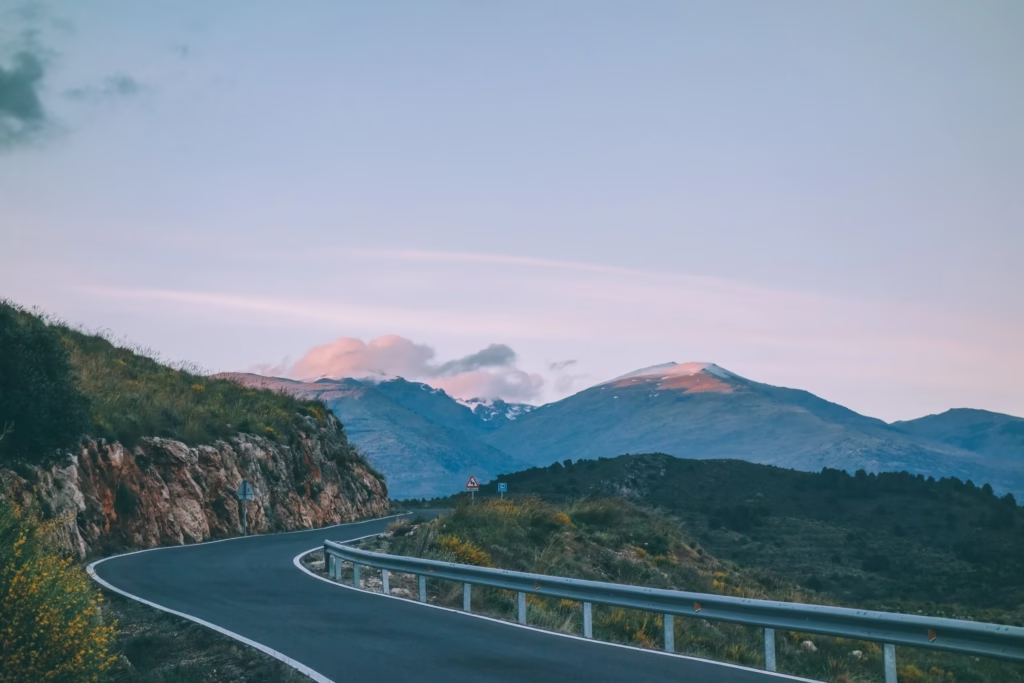
Timing is more important here than some riders first assume. Sierra Nevada is a proper high mountain area, and the higher roads are governed by snow, access and mountain weather rather than simple sunshine.
That seasonal edge is actually part of the appeal. A Sierra Nevada trip feels like something you time and commit to, not just somewhere you drift through. Go too early and the mountain can still feel half asleep. Go at the right point and you get that rare combination of reliable light, open high roads and the faintly unreal experience of finding true altitude so far south.
The shoulder months can be especially appealing if you like slightly cooler starts and a little more contrast between city warmth and mountain air. High summer has its own appeal too, especially if you want the full open-road version of the trip and long evenings back in Granada.

Why it deserves a place on your riding list
It deserves a place on your riding list because it gives you more than one thing at a high level. The climbing is serious. The roads are memorable. The city base is strong. The scenery changes dramatically as you gain height. The atmosphere is not only sporting. It is cultural and geographical too.
There are climbs elsewhere that are more famous. There are mountain towns elsewhere that are more purely cycling-focused. There are cities elsewhere that are easier, flatter or more obviously touristic. Sierra Nevada and Granada do not need to win every category in isolation. Their strength is in the combination.
This is a place for riders who like their trips to feel expansive rather than narrow. You come for the climbing, but you stay alert to the light, the history, the dry air, the changing texture of the mountain and the shift in mood between city and summit road. It is a place that makes you feel the geography in a very direct way.
That is why I would put it on the list. Not because it gives you one box to tick, but because it gives you a fuller kind of cycling trip. Granada provides the life around the ride. Sierra Nevada provides the scale above it. Together they make something harder to forget than either would on its own.

