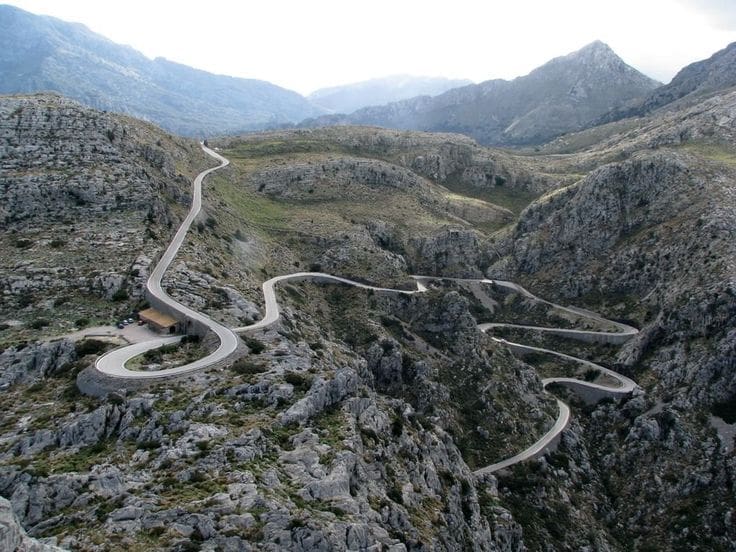
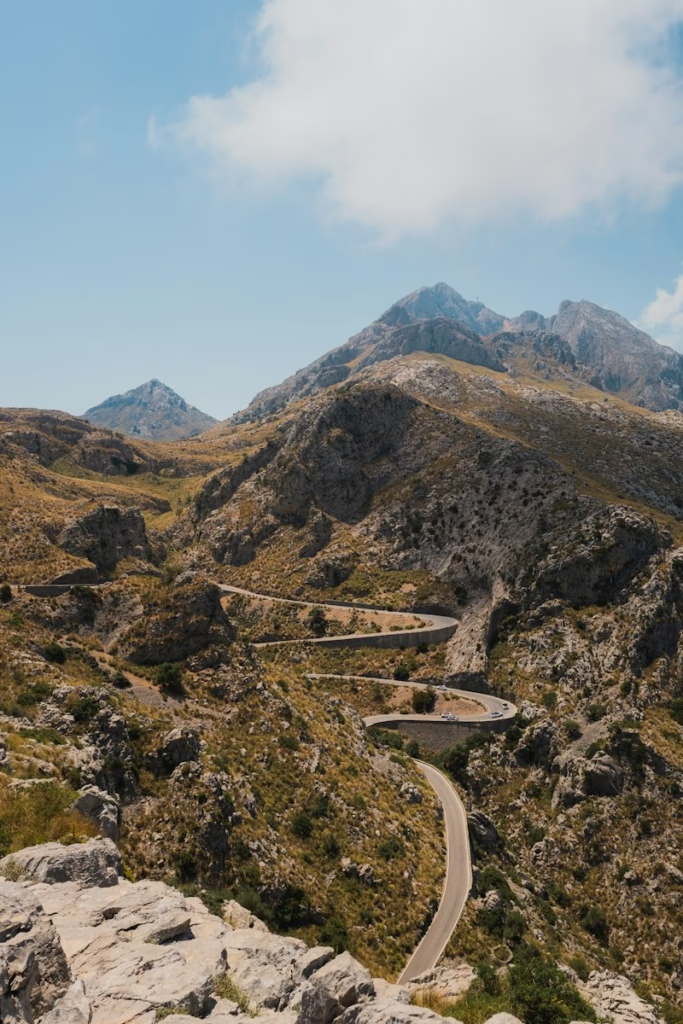
Sa Calobra is one of Mallorca’s best-known road climbs: roughly 9.4km at an average gradient of about 7%, rising from the north-west coast to the Coll dels Reis through a sequence of hairpins cut into the Serra de Tramuntana. The famous road and its corkscrew bridge make it instantly recognisable, but the real challenge is simpler: nearly 10km of sustained climbing with very little chance to switch off.
There is one important detail for anyone planning to ride it. Unless you arrive by boat, you normally descend the road first and then climb back out. That makes Sa Calobra unusual: the descent is the commitment, and the climb is how you get home.
Sa Calobra climb at a glance
| Detail | Sa Calobra |
|---|---|
| Location | Serra de Tramuntana, Mallorca |
| Road | Ma-2141 |
| Climb | Sa Calobra to Coll dels Reis |
| Distance | About 9.4km |
| Average gradient | Around 7% |
| Elevation gain | Roughly 670 metres |
| Best known for | Hairpins, Nus de sa Corbata corkscrew and dramatic mountain scenery |
| Difficulty | Long, sustained climb rather than repeated extreme gradients |
How hard is Sa Calobra?
The headline gradient is not outrageous by mountain standards, but the length changes the effort. Seven per cent for almost 10km is very different from a short British climb at the same gradient. The best approach for a first attempt is to settle into a pace you know you can hold and resist the temptation to chase other riders in the opening kilometres.
Most recreational riders will spend somewhere between roughly 40 minutes and well over an hour on the climb, depending on fitness, gearing, weather and how much riding they have already done before reaching the coast. A fast time is optional. Getting the pacing right is not.
Your full route matters too. Starting from Lluc or Port de Pollença adds climbing before you even begin the Sa Calobra ascent. If you are building the climb into several days of riding, our guide to training for a multi-day cycling holiday is a better preparation reference than treating Sa Calobra as an isolated 9.4km effort.
The descent comes first
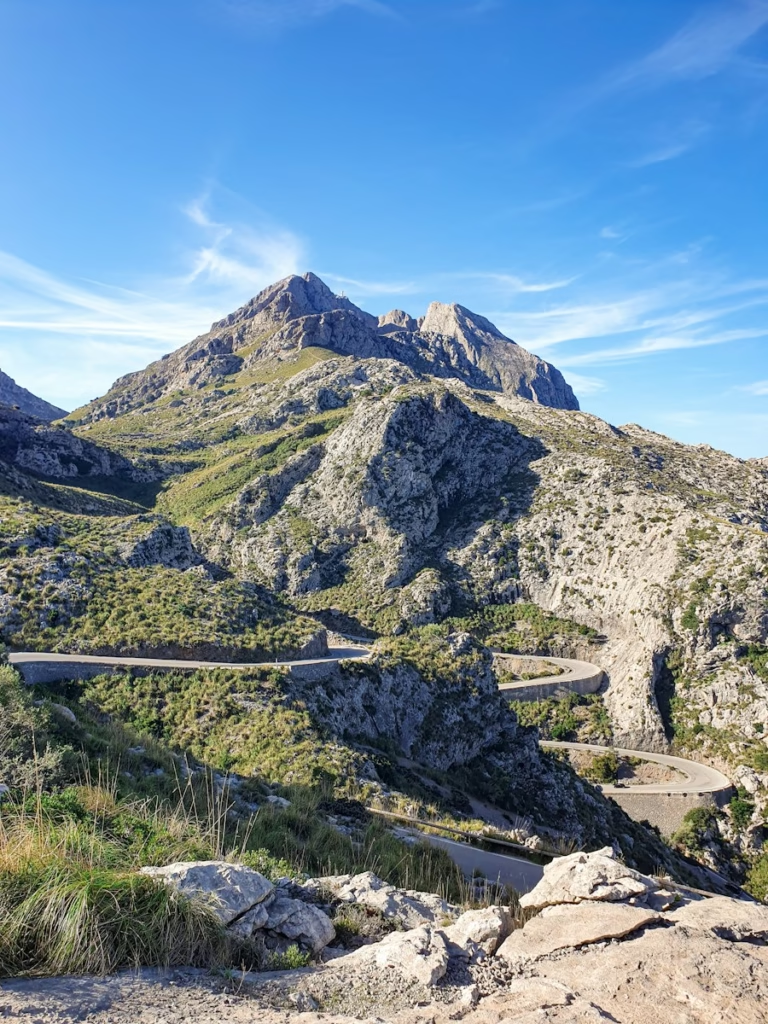
The Ma-2141 drops from the Coll dels Reis towards Sa Calobra in a sequence of tight turns, exposed sections and changing sight lines. It is a spectacular descent, but it is not a road to treat casually. Coaches, hire cars, cyclists and motorbikes can all share a road that feels narrow once traffic increases.
Use the descent to learn the climb. You will see the hairpins, the narrow rock passage and the sections where the gradient eases or bites. Keep within your lane, brake early and expect something to be coming uphill even when the road seems quiet.
What the climb feels like
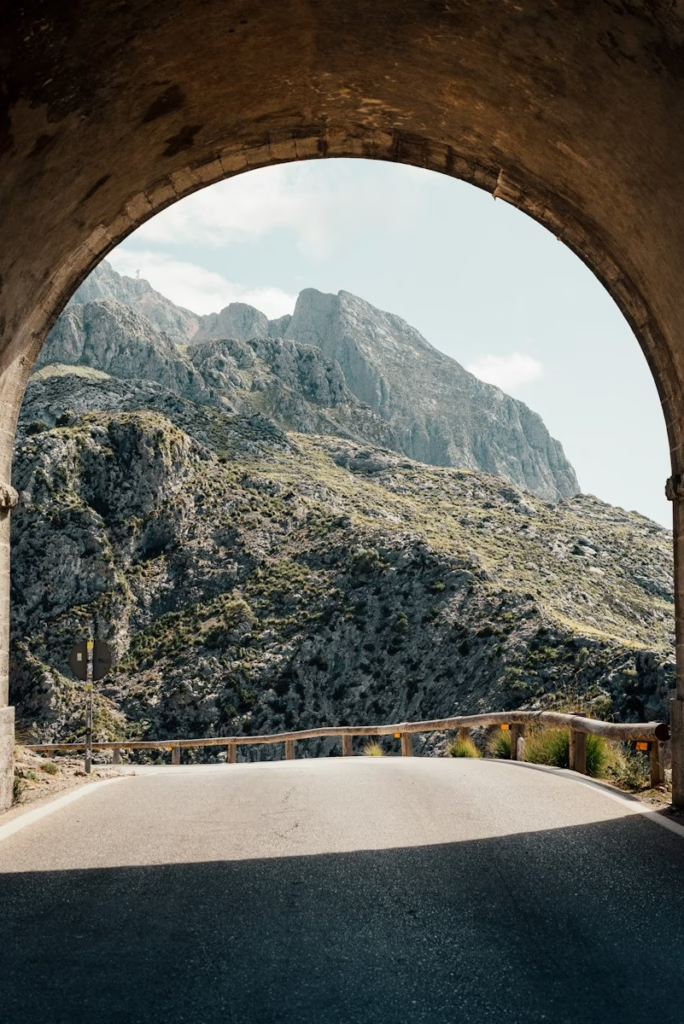
The opening kilometres are the place to be conservative. The gradient is already enough to punish an over-enthusiastic start, and the road ahead is long enough that small surges add up. Once the climb settles into its rhythm, the best tactic is usually to find a comfortable cadence and let the road come to you.
The middle section feels more open, with wider views across the valley and a clearer sense of how far the road still has to climb. The hairpins help break the effort into smaller pieces, but the climb never really stops asking for power.
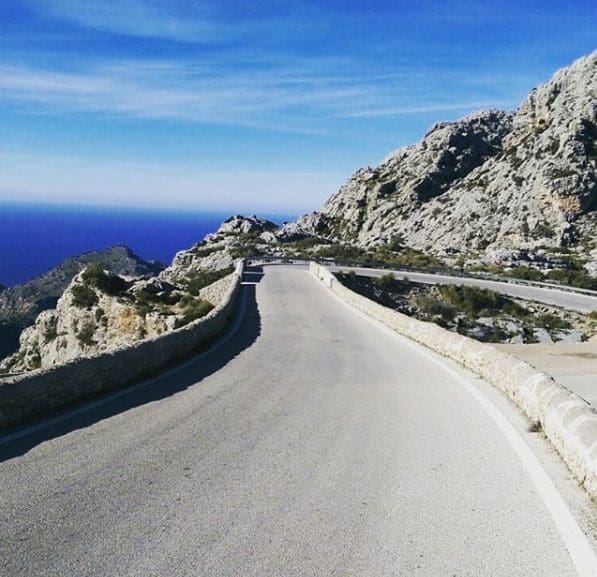
Near the top, the road reaches the feature most riders recognise from photographs: the Nus de sa Corbata, the “tie knot” where the road loops through a 270-degree bend beneath itself. It is visually dramatic, but by this point the legs are usually more interested in the final few minutes to the pass.
What gearing do you need for Sa Calobra?
For most visiting riders, a compact or semi-compact road setup with a suitably wide cassette is the sensible choice. There is no prize for dragging a bigger gear than necessary, especially if Sa Calobra sits in the middle of a longer mountain ride.
If you are hiring a bike, ask for the actual chainring and cassette sizes rather than relying on the groupset name. A 34-tooth inner chainring paired with a 30, 32 or 34-tooth largest sprocket gives many riders useful room to settle into a sustainable cadence. Stronger climbers may want less, but low gearing is rarely something people regret on a long ascent.
When is the best time to ride Sa Calobra?
Spring and autumn are popular because temperatures are usually more manageable than in high summer, while winter can provide very quiet roads on good-weather days. Conditions in the Tramuntana can change quickly, however, and the temperature at the pass can feel very different from the coast.
Summer creates the biggest traffic issue. The road is a tourist attraction as well as a cycling route, so buses and cars can remove much of the appeal of the descent. Starting early is one of the simplest ways to improve the experience during busier months.
In winter, the opposite problem can appear: cafés and cycling businesses may have shorter opening hours or close entirely. Carry enough food and drink to complete the route without depending on a stop at the bottom.
Riding Sa Calobra from Lluc
Starting from Lluc is one of the more manageable ways to include Sa Calobra in a shorter ride. You still climb on the approach to the Coll dels Reis, but it removes some of the extra distance and climbing involved in starting from Port de Pollença or elsewhere on the coast.
On my own January visit, we started from Lluc, crossed the pass, descended to Sa Calobra and stopped briefly at the bottom before climbing back out. My ascent took 45 minutes and 39 seconds. That is useful only as one reference point, not as a target. The more important lesson was that starting conservatively left enough in reserve for the upper hairpins and the rest of the ride back.
What to take
- Two bottles in warmer conditions, or enough capacity for your full route
- Food for the entire ride rather than assuming cafés will be open
- A light layer or gilet for the descent
- Spare tube or repair kit, pump or CO2 and basic tools
- Sunscreen outside winter and lights if your route could extend towards dusk
Is Sa Calobra worth riding?
Yes, particularly if you like sustained mountain climbs rather than very steep ramps. Sa Calobra is hard enough to feel like a proper target but consistent enough for most prepared road cyclists to ride at their own pace. The road design, scenery and unusual descend-first format give it a character that is difficult to replicate elsewhere.
If Sa Calobra is part of a wider Mallorca trip, the ProCyclingUK cycling in Spain hub brings together more route and travel guides for the country.