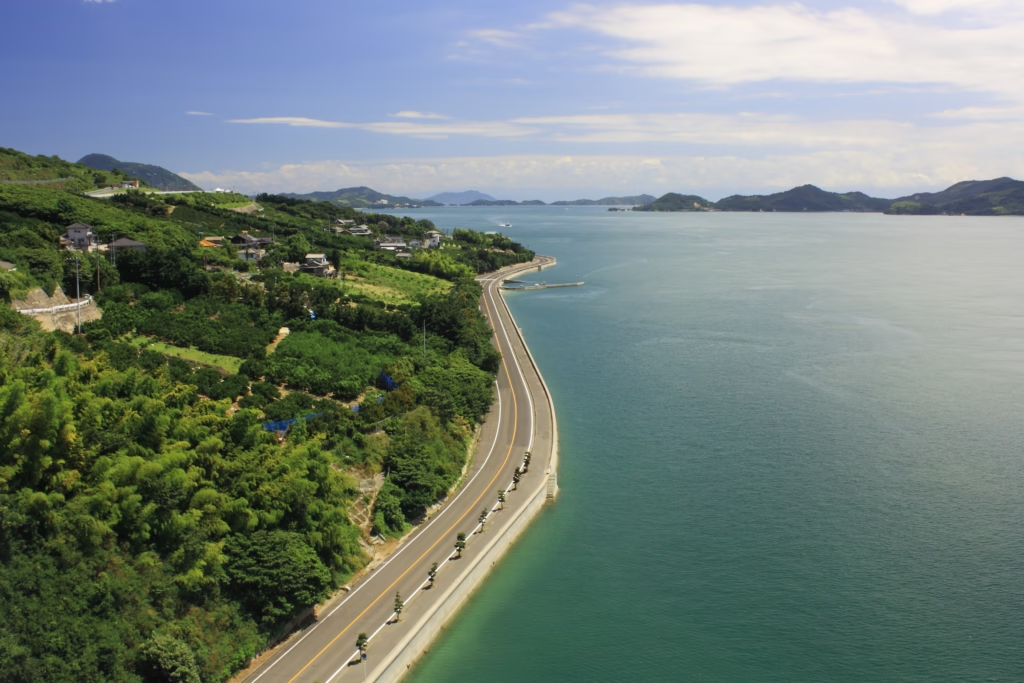
The Shimanami Kaido, a 70-kilometre cycling route unfurling across the Seto Inland Sea, connecting Honshu to Shikoku, stands as a jewel in Japan’s cycling crown. Far more than just a transit path, it is a meticulously crafted experience, immersing cyclists in a tapestry of coastal vistas, charming island communities, and engineering marvels. For those who view cycling not merely as means of locomotion but as a profound exploration, the Shimanami Kaido offers an unparalleled journey, a pedal-powered pilgrimage resonating with both the rhythm of the sea and the spirit of adventure.
Much like exploring cycling destinations across Asia and beyond, the Shimanami Kaido represents a travel-led cycling experience where the bike becomes the perfect tool for understanding terrain at human speed, rich in detail and cultural immersion.
A Monument to Modern Engineering
The concept of linking the main island of Honshu with the island of Shikoku across the often-treacherous Seto Inland Sea had long been a dream for regional development and improved transportation. The Shimanami Kaido, officially designated as National Route 317 (also known as the Nishiseto Expressway), is the culmination of decades of planning and engineering prowess, a testament to Japan’s ability to conquer geographical challenges.
Route Specifics:
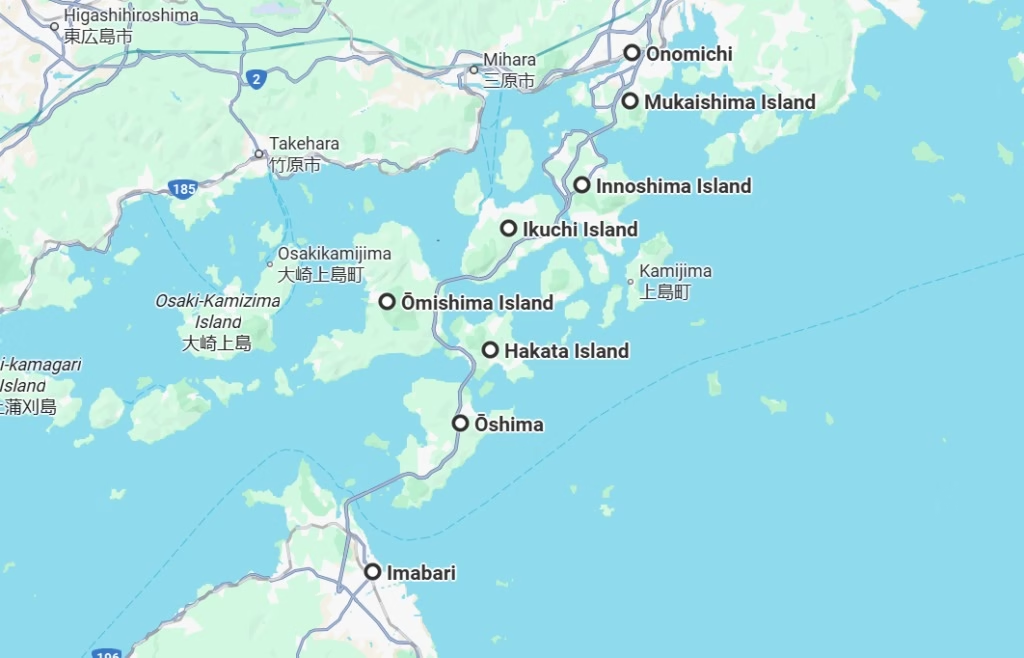
- Total distance: 70 kilometres (43 miles) from Onomichi to Imabari
- Islands traversed: 6 islands (Mukaishima, Innoshima, Ikuchijima, Ōmishima, Hakatajima, Ōshima)
- Bridges crossed: 6 major bridges plus connecting spans
- Total elevation gain: Approximately 300 metres
- Average completion time: 4-6 hours for experienced cyclists, 6-8 hours leisurely
- Difficulty level: Moderate, suitable for most fitness levels
- Year opened: 1999
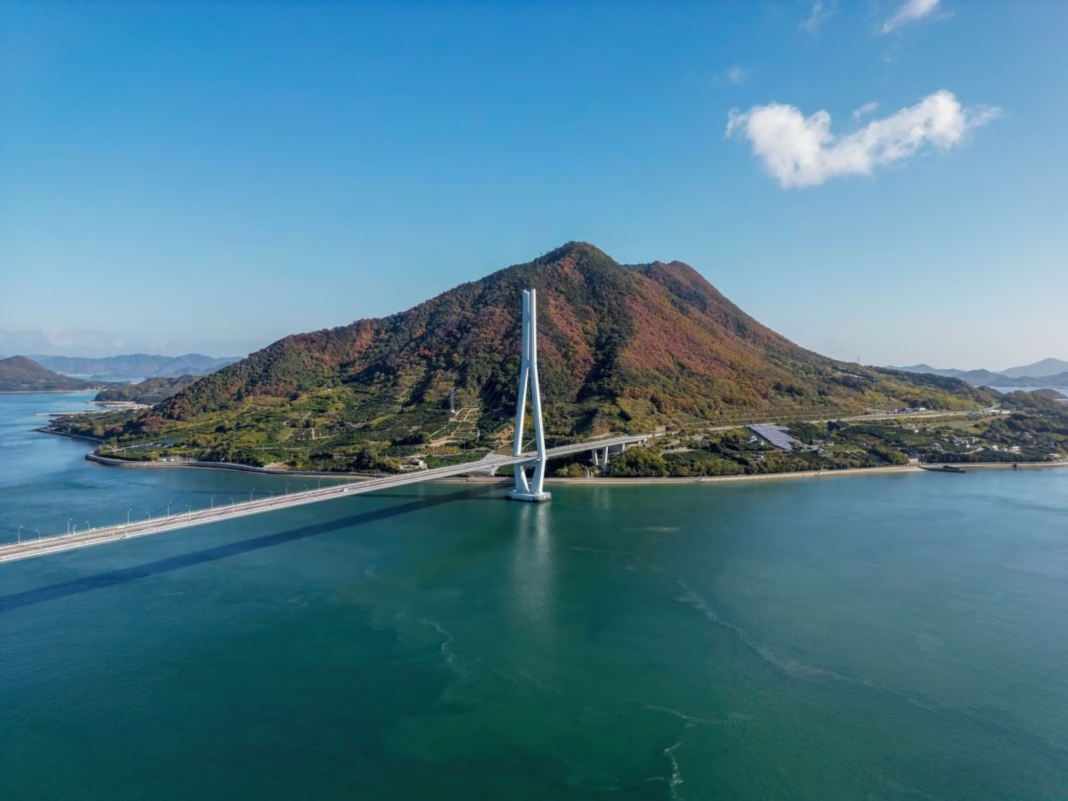
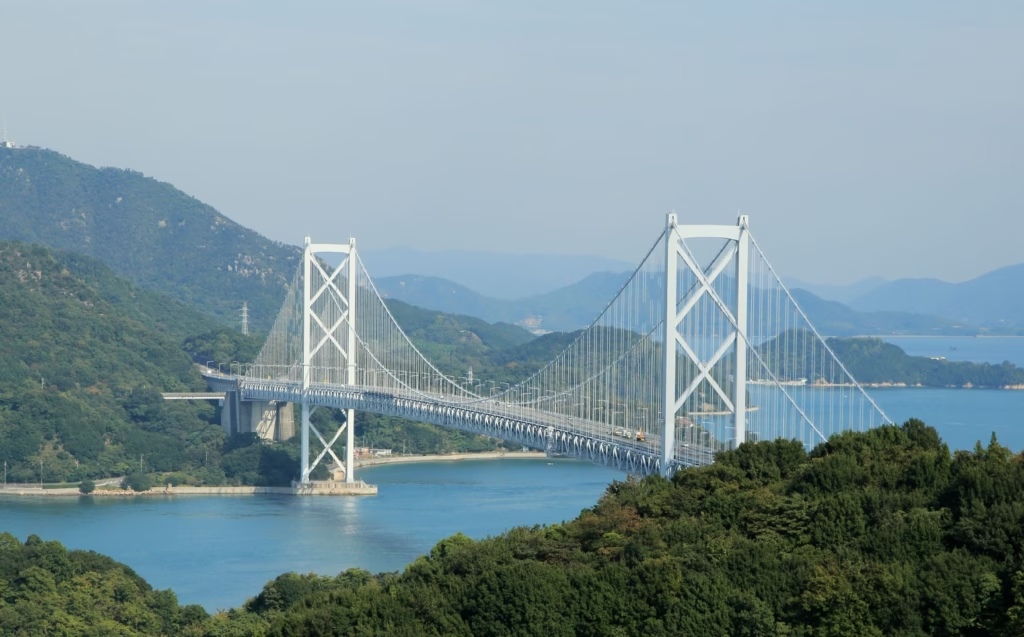
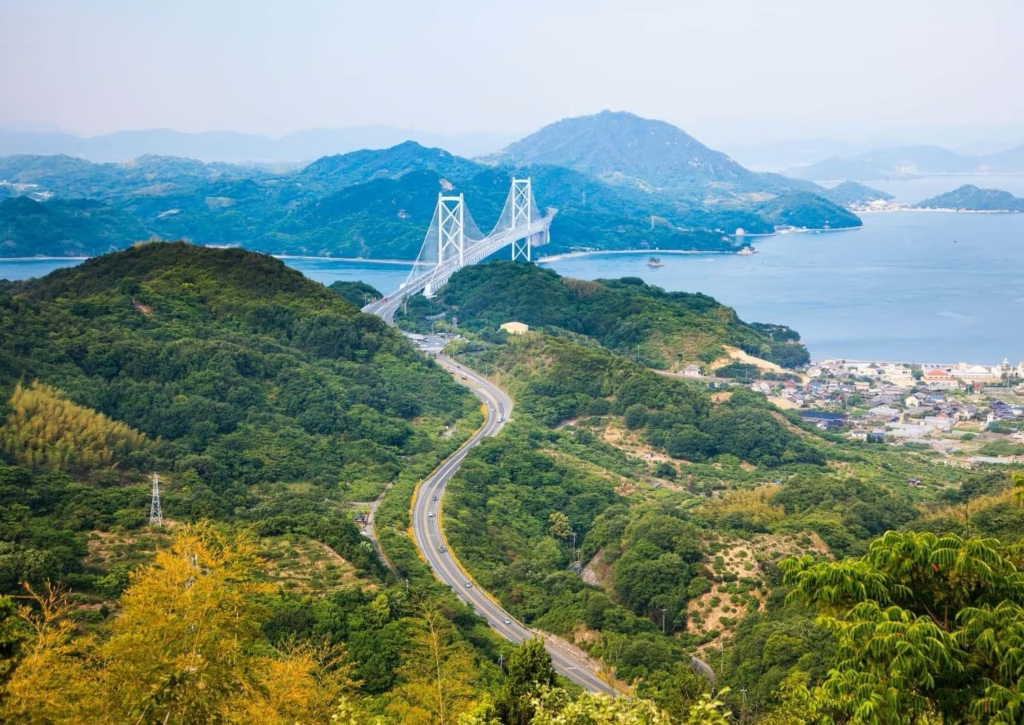
The sheer scale of the undertaking is staggering. Each bridge presents its own unique engineering challenge and visual splendour, from the elegant curves of the 1,480-metre Tatara Bridge (once the world’s longest cable-stayed bridge) to the robust triple suspension span of the Kurushima-Kaikyō Bridge.
The Strategic Route Design
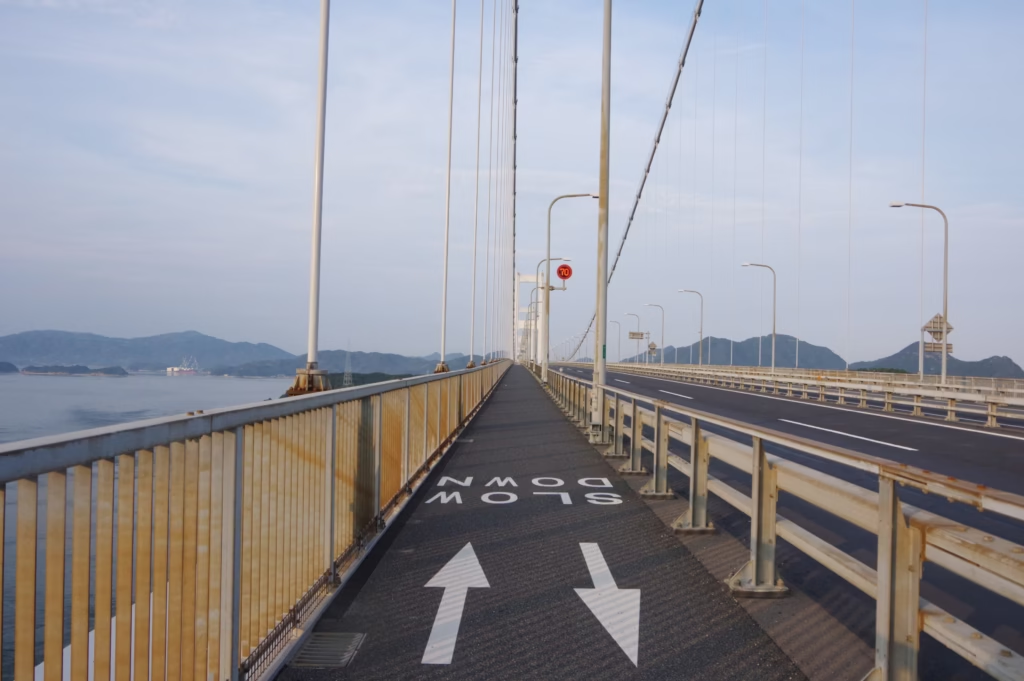
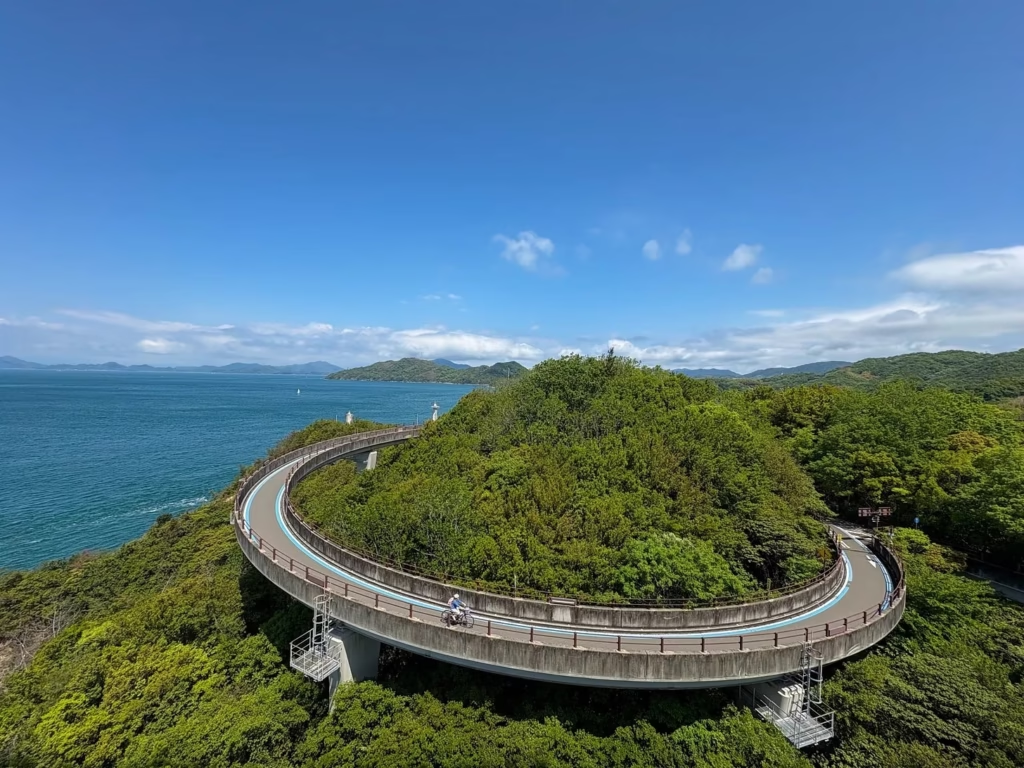
Crucially, the Shimanami Kaido was conceived with cyclists in mind from its inception. The cycle path, painted in a distinctive blue stripe and marked with clear signage counting down kilometres to Imabari, is integrated into the bridge infrastructure, providing safe and scenic passage separate from motorised traffic. This foresight has transformed a functional transportation corridor into a world-renowned cycling destination, attracting over 300,000 riders annually.
The route’s planning acknowledges the diverse needs of cyclists, from those seeking a leisurely day trip to those embarking on multi-day expeditions. CNN named it one of the world’s seven best cycling routes, whilst Lonely Planet consistently ranks it amongst Asia’s top cycling experiences.
Setting Forth: Gateway to the Islands
Your journey along the Shimanami Kaido typically begins at Onomichi City on the Honshu mainland, a picturesque port town with rich history. This city serves as the ideal launchpad, offering necessary amenities and a tangible sense of stepping off the beaten path into the maritime embrace of the Seto Inland Sea.
Onomichi: A Cyclist’s Overture
Onomichi itself is a destination worthy of exploration. Known for its steep hills lined with 25 temples forming the Temple Walk, narrow alleyways, and a preserved retro shopping arcade, it offers a rewarding prelude to the main event. The town has served as a filming location for numerous Japanese films, lending it a nostalgic, cinematic quality.
Many cyclists choose to spend a night here, acclimatising to the change of pace and enjoying local cuisine. The city’s charm lies in its traditional architecture, the panoramic views offered from elevated vantage points like Senkō-ji Temple, and the thriving Cat Alley (Neko no Hosomichi), lined with cat-themed objects.
Key Onomichi Attractions:
- Senkō-ji Temple and park with ropeway access
- Temple Walk (25 historic temples)
- Retro shopping arcade
- Cat Alley
- Onomichi City Museum of Art (designed by Tadao Ando)
Starting Point: Onomichi U2 Complex
The modern starting point for most Shimanami Kaido cyclists is Onomichi U2, a brilliantly renovated warehouse complex positioned directly on the waterfront, just 5 minutes’ walk from JR Onomichi Station.
This purpose-built cycling hub features:
- Hotel Cycle: Japan’s first hotel where you can check in whilst still on your bicycle, with 28 rooms featuring in-room bike racks
- Giant Store: High-quality bike rental and expert service
- Restaurants and cafés: Including Butti Bakery (exceptional artisan bread), Yard Café (cycle-through service), and full-service restaurant
- Shima Shop: Lifestyle boutique with local artisan goods and cycling accessories
- Coin showers and facilities: Available for non-guests
The complex embodies the “small town within a city” concept, creating a vibrant meeting point for local residents and international cyclists alike.

Essential Preparation and Logistics
As a discerning cyclist, preparation extends beyond usual cycling accoutrements. The Shimanami Kaido’s unique characteristics demand specific considerations.
Bicycle Choice and Rental Options
Whilst bringing your own well-maintained bicycle offers comfort and familiarity, the Shimanami Kaido’s exceptional rental infrastructure makes travelling without a bike entirely viable.
Premium Rental: Giant Store
Giant Store Onomichi and Giant Store Imabari offer high-quality rental options:
Bike types and pricing:
- Aluminium road bikes: ¥4,000-6,000/day
- Carbon road bikes: ¥8,000-17,000/day
- E-bikes: ¥6,000-8,000/day
- Cross bikes: ¥4,000-5,000/day
One-way service: Available for road bikes only between Onomichi and Imabari locations (additional ¥3,300 fee, advance reservation required)
Additional services:
- Shower facilities at Imabari location
- Locker storage
- Repair kits and tools
- Expert staff with English capability
- Online booking available
Public Rental: Shimanami Japan
Shimanami Japan operates the largest public rental system with 10 terminals along the route:
Bike types and pricing:
- City bikes: ¥2,000/day
- Cross bikes: ¥2,000/day
- E-bikes: ¥2,500/day (limited availability)
- Sports E-bikes: ¥4,000/day (newer long-range models)
- Children’s bikes: Available at all terminals
Key advantages:
- Return at any of 10 terminals along route
- Multi-day rental available for standard bikes
- Most affordable option
- Helmet rental included free
- Battery replacement stations for E-bikes at major terminals
Important note: Bridge tolls are temporarily waived for cyclists until March 31, 2026 (normally ¥500 total). Always check current status before riding.
Independent Rental Shops
- Aluminium road bikes and E-bikes
- ¥3,800-4,800/day
- Multi-day rental available
- English-speaking staff
- Weather cancellation policy (no riding in rain)
Better Bicycles Onomichi:
- Road bikes and E-bikes
- ¥3,800-4,500/day
- Reserve online in English
- Closed Wednesdays and Thursdays
Gearing Recommendations
The Shimanami Kaido features gentle gradients compared to mountain climbs, but the bridge approaches require appropriate gearing:
- Compact chainrings (50/34) sufficient for most riders
- Wide-range cassette (11-28 or 11-32) recommended
- E-bikes eliminate gearing concerns entirely
Navigation and Route Following
Navigation on the Shimanami Kaido is remarkably straightforward:
- Blue Line: Painted blue stripe marks the entire recommended route from Onomichi to Imabari
- Kilometre markers: Signs count down remaining distance to Imabari
- Approach roads: Gentle spiral ramps lead up to bridge cycle paths
- Signage: Clear directional signs in Japanese and English at key junctions
Maps are available free at rental terminals and tourist information centres. GPS devices are optional but can enhance exploration of island detours.
Luggage Transport Services
For multi-day exploration without luggage burden, reliable transport services exist:
- Sagawa Express: Offers same-day luggage delivery between selected hotels in Onomichi and Imabari
- WAKKA service: Provides luggage forwarding for guests staying at island accommodation
- Cost typically ¥1,000-2,000 per bag
This service allows unencumbered cycling, transforming a multi-day touring experience into seamless progression.
Nutrition and Hydration
The sun over the Seto Inland Sea can be potent, particularly during the summer months. Ample water and energy-rich snacks are crucial.
Resupply points:
- Convenience stores (Family Mart, Lawson, Seven-Eleven) scattered throughout islands
- Cafés and restaurants at major stops (Setoda, Ōmishima)
- Vending machines ubiquitous
- Water fountains at some rest areas
Hydration strategy:
- Carry minimum 2 bottles
- Convenience stores will refill bottles free (ask politely: “mizu o kudasai”)
- Budget ¥500-1,000 for drinks and snacks
The Island Chain: A Rhythmic Progression
The Shimanami Kaido is not a monolithic entity; it is a series of distinct experiences. Each island offers a unique character and changing backdrop, with bridges acting as dramatic connectors between these maritime stepping stones.
Mukaishima: The Threshold Island (8km from Onomichi)
Your maiden island, reached via short ferry from Onomichi (¥110 including bicycle, 5 minutes), or by cycling via the connecting route. Mukaishima serves as a gentle introduction to island life.
Highlights:
- Stunning views back toward Onomichi’s hillside temples
- Relatively quiet roads winding through residential areas
- First taste of Seto Inland Sea cycling
Innoshima: Industrial Heritage Meets Rural Beauty (23km from Onomichi)
Crossed via the Innoshima Bridge, this island blends rural tranquillity with hints of its shipbuilding past.
Key attractions:
- Innoshima Suigun Castle: Reconstructed castle museum showcasing pirate (suigun) history
- Innoshima Flower Centre: Seasonal blooms and sculptures
- Shimanami Beach: Popular swimming spot during summer
- Hassaku orange groves: Local citrus variety, featured in regional sweets
The island offers numerous convenience stores and small restaurants for refuelling.
Ikuchijima: Art, Citrus, and Culinary Delights (36km from Onomichi)
Accessed via the Ikuchi Bridge, Ikuchijima is arguably the most culturally rich island, a place where art and agriculture intertwine. The island is renowned for the production of citrus fruits, particularly lemons, and its commitment to fostering a vibrant artistic community.
Unmissable attractions:
- Hirayama Ikuo Museum of Art: Dedicated to renowned Japanese painter Ikuo Hirayama (b. 1930), whose Silk Road-inspired landscapes provide fascinating counterpoint to maritime views
- Kōsan-ji Temple: Extraordinary eclectic temple complex built in 1936 by businessman Kōzō Kōnoike in honour of his mother, featuring recreations of famous temples and cave art
- Setoda Town: Charming hub with excellent accommodation options and numerous eateries
- Lemon farming: Ubiquitous lemon groves define Ikuchijima’s cultivated landscape
Culinary specialities:
- Lemon gelato and soft serve (numerous shops)
- Lemon ramen (unique local creation)
- Fresh seafood with lemon accents
- Lemon-infused desserts and beverages
Ikuchijima is an ideal overnight stop, positioned at the route’s midpoint with abundant accommodation.
Ōmishima: Spiritual and Historical Nexus (50km from Onomichi)
Reached via the spectacular Tatara Bridge (1,480 metres, once the world’s longest cable-stayed bridge), Ōmishima is a larger island significant for its historical and religious importance.
Major attractions:
- Ōyamazumi Shrine: Ancient shrine dedicated to deity of mountains and sea, housing designated National Treasures including samurai armour collection (over 80% of Japan’s designated national treasure armour held here)
- Ken Iwata Mother and Child Museum: Featuring sculptures by Ken Iwata
- Toyo Ito Museum of Architecture: Designed by Pritzker Prize-winning architect Toyo Ito
- Rolling hills and traditional villages: Picturesque rural landscapes
The island offers a quieter, more contemplative cycling experience with fewer tourists than Ikuchijima.
Hakatajima and Ōshima: The Final Island Connections (60-70km from Onomichi)
As you progress towards Shikoku, these islands offer a more sparsely populated and introspective cycling experience, serving as seamless conduits toward the journey’s end.
Hakatajima highlights:
- Historical salt production heritage
- Hakata Beach for rest stops
- Quieter roads with local atmosphere
Ōshima highlights:
- Views of approaching Imabari
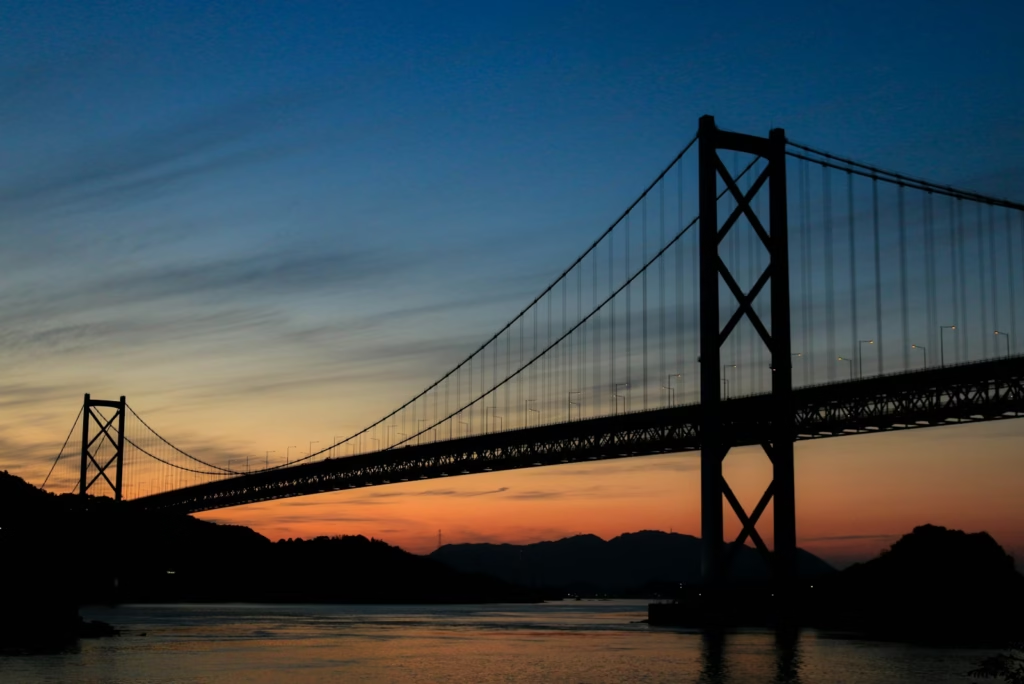
- Kurushima-Kaikyō Bridge (spectacular triple suspension bridge, longest of its kind)
- Yoshiumi Rose Park
- Kirosan Observatory for panoramic island views
Imabari: Journey’s End on Shikoku (70km from Onomichi)
The route culminates in Imabari City, Shikoku’s gateway to the Shimanami Kaido. Whilst less scenic than Onomichi, Imabari offers:
- Excellent hotel selection
- Giant Store with shower facilities and locker storage
- Famous towel industry (Imabari towels renowned across Japan)
- Imabari Castle
- Onward transport connections to Matsuyama and beyond
Culinary Explorations: A Taste of the Seto Inland Sea
The Shimanami Kaido is not only a feast for the eyes but a delight for the palate. The islands’ proximity to the sea ensures an abundance of fresh seafood, whilst local produce, particularly citrus fruits, adds a vibrant flavour profile to regional cuisine.
Seafood is King
The Seto Inland Sea is renowned for its aquaculture, translating directly to exceptional dining experiences.
Must-try dishes:
- Tai (sea bream): Often served as sashimi or grilled, considered the Seto Inland Sea’s signature fish
- Anago (conger eel): Prepared grilled, in tempura, or as sushi
- Oysters: During season (October-March), served raw or grilled
- Octopus: Particularly from Onomichi area
- Medai (Japanese butterfish): Rich, flavourful regional speciality
Citrus Delights
Ikuchijima’s lemon production dominates local culinary landscape.
Lemon-based specialities:
- Lemon ramen (surprisingly harmonious combination)
- Lemon gelato and soft serve (numerous shops along route)
- Lemon marinades and dressings
- Lemon cakes and desserts
- Hassaku oranges (from Innoshima)
Island Specialities and Unique Treats
Beyond seafood and citrus, each island offers specific culinary treasures.
Regional favourites:
- Shimanami gelato: Creative flavours incorporating local ingredients (matcha, citrus, regional fruits)
- Onomichi ramen: Local style featuring flat noodles, pork back fat, and rich soy-based broth
- Takoyaki and okonomiyaki: Available at street stalls and casual eateries
- Fresh mochi and traditional sweets: From local confectioners
Budget-friendly options:
- Convenience store bentos (¥400-800)
- Local bakeries (¥200-500 per item)
- Udon and soba shops (¥600-1,000)
Mid-range dining:
- Family restaurants (¥1,000-2,000 per meal)
- Seafood restaurants (¥1,500-3,000)
- Hotel restaurant dinners (¥2,000-4,000)

Accommodation: Resting Your Pedals Amidst Island Hospitality
The Shimanami Kaido offers a spectrum of accommodation options catering to diverse preferences and budgets. Choosing resting places wisely significantly enhances the overall experience.
Onomichi Accommodation
Premium: Onomichi U2 – Hotel Cycle
The Hotel Cycle at Onomichi U2 represents ultimate cyclist accommodation, Japan’s first hotel where guests can check in whilst still on their bicycle.
Room categories:
- Standard Twin: ¥18,000-22,000
- Superior Twin: ¥24,000-28,000
- Deluxe Twin: ¥30,000-36,000
Cyclist amenities:
- In-room bike racks in most rooms
- Direct access from waterfront cycle path
- On-site Giant Store for rentals and service
- Repair area in public spaces
- Bike shipping and holding service
- Modern minimalist design with local textile elements (Bingo Gasuri cotton)
Additional facilities:
- Restaurant with local Setouchi ingredients
- Butti Bakery (exceptional artisan bread)
- Yard Café with cycle-through service
- Shima Shop lifestyle boutique
- Coin showers for non-guests (¥100/5 minutes)
Mid-Range Options
- Green Hill Hotel Onomichi: ¥8,000-15,000, traditional business hotel near station
- Onomichi Royal Hotel: ¥7,000-12,000, good breakfast, bike storage available
- Various guesthouses and hostels: ¥3,000-6,000, shared facilities, social atmosphere
Island Accommodation
Ikuchijima: Setoda Town
Minshuku (traditional guesthouses):
- Ryokan Tsutaya: ¥8,000-12,000 including meals, traditional tatami rooms
- Minshuku Shimahana: ¥7,000-10,000 including meals, family-run hospitality
- Home-cooked dinners featuring fresh local seafood
- Communal bathing facilities
- Authentic cultural immersion
Hotels:
- Setoda Sunset Beach Hotel: ¥10,000-18,000, beachfront location
- Business hotels: ¥6,000-9,000, practical Western-style amenities
Ōmishima Accommodation
- ¥12,000-20,000 per person including meals
- Cyclist-focused hotel and café
- Bike rental and delivery services
- Luggage forwarding arrangements
- Positioned mid-route, ideal overnight stop
Minshuku and guesthouses:
- Various options ¥6,000-10,000 including meals
- Traditional hospitality
- Often family-run with home-cooked dinners
Imabari Accommodation
Hotels near JR Imabari Station:
- Imabari Kokusai Hotel: ¥8,000-15,000, convenient location
- Hotel Route-Inn Imabari: ¥7,000-11,000, reliable chain hotel
- Business hotels: ¥5,000-9,000, practical for journey’s end
Ryokan (traditional inns):
- Various options ¥15,000-30,000 including kaiseki meals
- Onsen facilities at select properties
- Traditional tatami rooms with futons
Camping Options
For budget-conscious or adventurous cyclists:
- Setoda Sunset Beach Campground (Ikuchijima): Basic facilities, beachfront location
- Various island camping grounds: Check local tourist information
- Wild camping generally not permitted
When to Visit: Optimising Your Cycling Experience
The Seto Inland Sea’s climate presents distinct seasonality significantly impacting cycling experience. Whilst riding is possible year-round, certain periods offer optimal conditions.
Spring (March – May): Peak Season
Widely considered prime season for Shimanami Kaido cycling, similar to optimal periods for cycling destinations worldwide.
Temperatures:
- March: 12-18°C, occasional cool days
- April: 15-22°C, ideal conditions
- May: 18-25°C, warming into early summer
Advantages:
- Cherry blossoms (sakura) bloom early April
- Comfortable temperatures for sustained riding
- Clear skies and excellent visibility
- Wildflowers across islands
Crowds:
- Popular period, expect more cyclists weekends
- Book accommodation well in advance
- Rental bikes may require reservation
Summer (June – August): Heat and Humidity
Summer presents challenges due to heat and humidity, particularly during tsuyu (rainy season, early-mid June).
Temperatures:
- June: 22-28°C, high humidity during rainy season
- July-August: 26-33°C, hot and humid
Considerations:
- Start early (6-7am) to avoid peak heat
- Carry extra water, hydration critical
- Expect afternoon thunderstorms July-August
- UV protection essential
- Beaches and swimming spots accessible
Advantages:
- Longer daylight hours
- Fewer international tourists (domestic tourists increase)
- Vibrant summer atmosphere
Autumn (September – November): Second Peak
Another excellent window offering comfortable conditions and spectacular scenery.
Temperatures:
- September: 23-29°C, still warm early month
- October: 17-24°C, ideal cycling conditions
- November: 12-19°C, cooling toward winter
Advantages:
- Comfortable temperatures with low humidity
- Autumn colours on islands late November
- Clear skies and excellent visibility
- Fewer crowds than spring
Events:
- Cycling events and festivals often held October-November
Winter (December – February): Quiet Season
Winter offers mild conditions compared to northern Japan, though colder than peak seasons.
Temperatures:
- December-February: 5-12°C daytime
- Occasional cold snaps, rarely below freezing at sea level
- Winds can be strong across bridges
Considerations:
- Quietest period, minimal crowds
- Some accommodation may close or reduce hours
- Shorter daylight hours (sunset around 5pm)
- Layered clothing essential
- Excellent visibility on clear days
Advantages:
- Lowest accommodation rates
- Peaceful, contemplative riding experience
- Oyster season (October-March)
- Practical Cycling Considerations
Safety and Road Etiquette
The Shimanami Kaido is exceptionally safe and well-maintained, but awareness remains essential.
Key safety factors:
- Traffic separation: Dedicated cycle paths on all bridges, separate from vehicles
- Blue Line guidance: Follow painted blue line to stay on recommended route
- Island roads: Generally quiet, but remain vigilant for vehicles
- Bridge winds: Can be strong, particularly on Tatara and Kurushima-Kaikyō bridges
- Helmet requirement: Helmets should be worn (available free with rentals)
- Night riding: Strongly discouraged, limited lighting on island sections
Local cycling culture:
- Japanese drivers extremely courteous toward cyclists
- Bow or wave to acknowledge motorists who yield
- Ride on left side of road (Japan drives on left)
- Signal turns and stops clearly
- Don’t block narrow pathways or pavements when stopped
Training and Fitness Preparation
The Shimanami Kaido’s moderate difficulty makes it accessible to most cyclists with basic fitness.
Recommended preparation:
- Ability to ride 4-6 hours at steady pace
- Comfortable with occasional 5-7% gradients
- Basic bike handling skills for descents
- E-bikes eliminate most fitness concerns
Pacing strategy:
- Maintain conversational pace first 40km
- Save energy for bridge approaches (gentle but sustained climbs)
- Plan regular stops (10-15 minutes every 20-25km)
- Allow 6-8 hours including stops for first-time riders
Combining with Wider Japan Exploration
The Shimanami Kaido integrates beautifully into broader Japan itineraries:
- Hiroshima: 1.5 hours by train from Onomichi (visit Peace Memorial, Miyajima Island)
- Matsuyama: 1 hour from Imabari (famous for Dōgo Onsen, oldest hot spring in Japan)
- Kyoto: 3-4 hours via Shinkansen from Onomichi
- Osaka: 2.5 hours via Shinkansen
Consider the route as the centrepiece of a broader exploration of Japan’s cycling opportunities.
Comparing the Shimanami Kaido to Other Cycling Routes
The Shimanami Kaido occupies unique space amongst world-class cycling routes:
vs. European coastal routes:
- Similar coastal beauty to Mediterranean routes but with distinctly Japanese cultural elements
- Better cycling infrastructure than many European equivalents
- More gentle gradients than Italian or French coastal climbs
- Exceptional engineering of bridges adds unique dimension
vs. Other Japanese routes:
- More accessible than mountainous routes (Mount Fuji area, Japanese Alps)
- Better English signage than most rural Japanese cycling
- More developed tourist infrastructure than remote Hokkaido routes
- Less traffic than Tokyo/Osaka urban cycling routes
vs. Other Asian destinations:
- More developed infrastructure than most Southeast Asian routes
- Cooler and drier than tropical destinations
- Higher costs but exceptional quality
- Cultural immersion rivals Vietnam, Taiwan cycling experiences
Conclusion: The Shimanami Kaido Experience
The Shimanami Kaido transcends typical cycling routes. It is a carefully orchestrated symphony of natural beauty, human ingenuity, and cultural richness. By understanding the nuances of its construction, preparing diligently, and embracing the unique character of each island and its offerings, you can embark on cycling expedition that resonates long after your tyres leave the asphalt.
This is a journey promising not just miles covered, but horizons broadened and memories forged in gentle, sun-drenched embrace of the Seto Inland Sea. The combination of engineering magnificence (six bridges spanning 70 kilometres of island-dotted seascape), cultural treasures (from ancient shrines to contemporary art museums), and culinary delights (fresh seafood and ubiquitous citrus) creates a multi-sensory experience unlike any other cycling route worldwide.
Whether you’re an experienced cyclist seeking new terrain, cultural enthusiast craving authentic Japanese island life, or simply someone who appreciates beauty of well-designed infrastructure harmonising with the natural landscape, the Shimanami Kaido delivers an unforgettable experience. The question isn’t whether you should ride it, but when you’ll begin planning your pilgrimage to Japan’s cycling crown jewel.
For more inspiration exploring cycling destinations beyond traditional European circuits, visit our guide to cycling around the world.
Frequently Asked Questions
What is the Shimanami Kaido, and why is it famous for cycling?
The Shimanami Kaido is a 70-kilometre scenic cycling route connecting Honshu (Japan’s main island) to Shikoku across the Seto Inland Sea via six smaller islands and six major bridges. It’s famous because it was purpose-built with dedicated cycle paths separate from vehicle traffic, features spectacular coastal scenery, and was named by CNN as one of the world’s seven best cycling routes. The route opened in 1999 and attracts over 300,000 cyclists annually, offering a unique combination of engineering marvel, natural beauty, and cultural immersion.
How long does it take to cycle the entire Shimanami Kaido?
Cycling the entire 70-kilometre route typically takes 4-6 hours for experienced cyclists riding at a steady pace with minimal stops, whilst more leisurely riders should allow 6-8 hour,s including time for sightseeing, meals, and rest breaks. Many cyclists choose to split the route across two days, staying overnight on Ikuchijima (at approximately the midpoint), which allows more time to explore temples, museums, and local cuisine. E-bikes can reduce riding time whilst maintaining energy for exploration.
Is the Shimanami Kaido suitable for beginner cyclists?
Yes, the route is generally suitable for cyclists of all levels, including beginners. The path is well-maintained and mostly flat with gentle gradients averaging 3-5%, though bridge approaches feature sustained climbs. The dedicated blue line markings, clear signage, and separation from vehicle traffic make navigation straightforward. E-bikes are widely available and eliminate most fitness concerns, whilst the extensive rental network with 10 public terminals means you can shorten your ride at any point. However, the 70-kilometre distance requires basic endurance, suitable for anyone who can ride 4-6 hours at a comfortable pace.
Where can I rent a bicycle for the Shimanami Kaido and can I do a one-way trip?
Multiple rental options exist at both Onomichi (start) and Imabari (finish). Giant Store offers high-quality road bikes and e-bikes (¥4,000-17,000/day) with one-way service available for road bikes only (additional ¥3,300). Shimanami Japan operates the largest public system with 10 terminals, offering city bikes, cross bikes, and e-bikes (¥2,000-4,000/day) that can be returned at any terminal. Independent shops like The Red Bicycles and Better Bicycles offer road bikes (¥3,800-4,800/day). Advance reservation strongly recommended, especially during peak seasons (March-May, September-November) and weekends.
What are the must-see highlights along the Shimanami Kaido route?
Essential highlights include: (1) Onomichi’s Temple Walk and historic streets before departing, (2) Innoshima Suigun Castle showcasing pirate history, (3) Ikuchijima’s Hirayama Ikuo Museum of Art and extraordinary Kōsan-ji Temple, plus ubiquitous lemon products, (4) Tatara Bridge crossing (spectacular 1,480-metre cable-stayed bridge), (5) Ōyamazumi Shrine on Ōmishima housing 80% of Japan’s national treasure samurai armour, (6) Kurushima-Kaikyō Bridge triple suspension span near journey’s end. Additionally, stop for fresh seafood meals, lemon gelato, and scenic viewpoints along the coastal roads. The journey itself, pedalling across bridges with Seto Inland Sea spreading beneath you, constitutes the ultimate highlight.