A noise is a clue, not a diagnosis. A click that seems to come from the bottom bracket may start at a pedal or saddle, while a rubbing wheel can sound like a drivetrain problem. Before replacing parts, note when the noise happens: pedalling, coasting, braking, turning or riding over bumps.
Stop riding if a noise comes with loose steering, an insecure wheel, reduced braking, a visible crack or a tyre losing pressure. Check those faults before trying to reproduce the sound. For other noises, change one thing at a time and test somewhere quiet and safe.
1. Clicking or creaking when you pedal

Start with the chain. If it is dirty or dry, clean it and apply a suitable chain lubricant as directed, then wipe off excess. Keep lubricant away from brake rotors, pads and rim braking surfaces. More oil is not a cure for every noise, and spraying it across the bike can create a braking problem.
Notice whether the sound repeats once per pedal revolution and whether it changes when you briefly stand up. A noise that disappears out of the saddle points you towards the saddle or seatpost, although sound travels through a frame and this is only a clue. Pedals, cleats, crank interfaces and chainring fasteners are other possibilities.
Check parts using their specified assembly method and torque, not by tightening everything as hard as possible. Carbon components and different seatpost materials may need particular assembly products. If you cannot identify the correct procedure, a workshop inspection is cheaper than damaging a clamp or frame. Our SPD and SPD-SL guide helps identify the pedal and cleat system before you investigate it.
2. Rattling, scraping or skipping gears
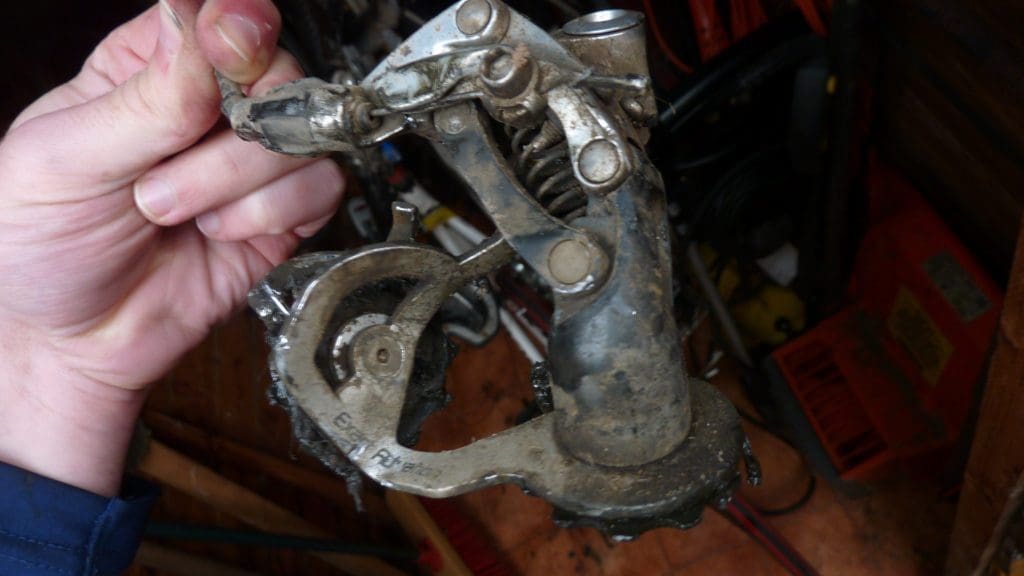
First establish whether the noise appears in one gear or across the whole cassette. Check for a chain touching the front derailleur, damaged cable housing, debris around the jockey wheels or a derailleur that has taken a knock. Avoid forcing the shifter while the chain is jammed.
A chain that skips under load can indicate wear, poor adjustment or damage. Measure chain wear with a suitable tool and inspect the cassette and chainrings before deciding which parts need replacement. A new chain will not necessarily run well on a worn cassette.
Indexing is not the same as adjusting the derailleur’s limit screws. Those screws restrict travel; moving them indiscriminately can allow the chain to run off the cassette. A visibly bent hanger needs proper assessment. For electronic shifting, check charge and the correct adjustment procedure for the model. The Shimano 105 guide explains why generation and shifting type matter when buying parts.
3. Hissing or a tyre that keeps going soft
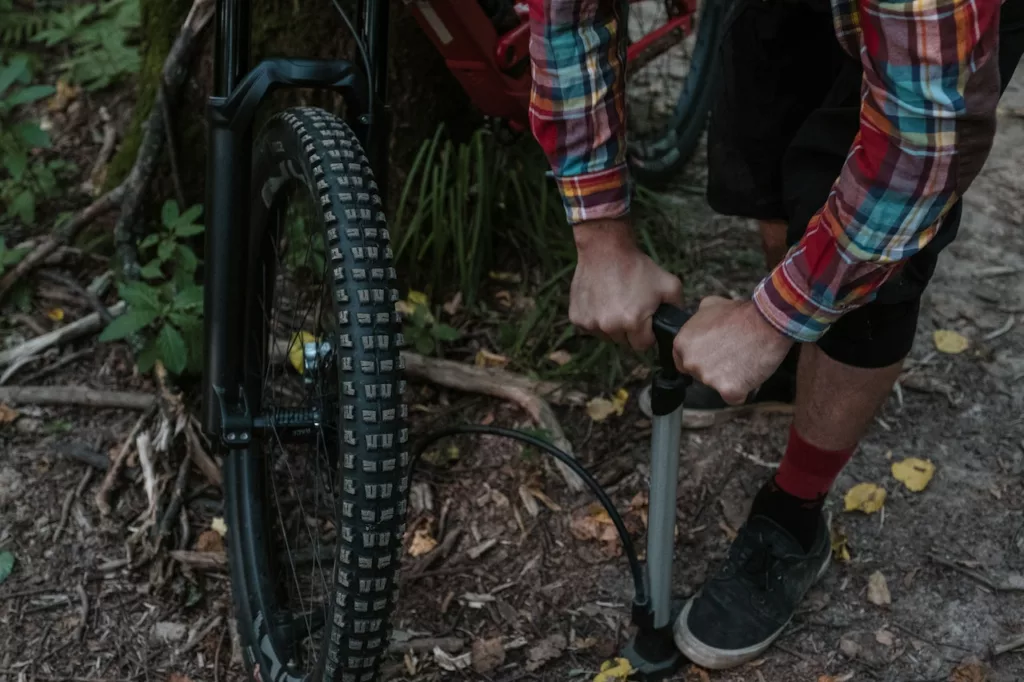
A hiss accompanied by falling pressure means air is escaping. It may come from a puncture, valve, valve core, rim tape or a tubeless bead seal. Low pressure itself is not the source of a hiss. Stop, locate the leak and choose a repair appropriate to the tyre and tube system.
Check the tyre for cuts and embedded debris before fitting another tube. With tubeless tyres, inspect the valve and rim tape as well as the tread; adding sealant will not fix every failure. Do not keep inflating beyond the tyre or rim limit to chase a leak. Our tyre inflation and valve guide explains how to connect a pump without damaging the valve.
4. Squealing brakes or a scrape with each wheel revolution
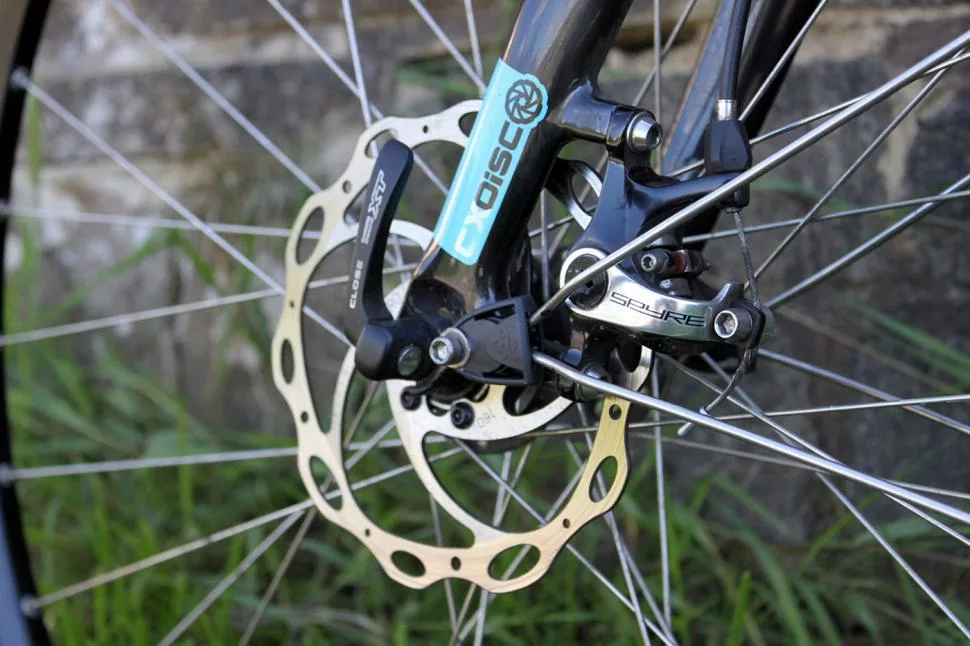
Brake squeal can have several causes, including contamination, surface condition and bedding-in. A regular scrape as the wheel turns can come from a rotor touching a pad, a wheel seating problem or a rim-brake pad touching the rim or tyre incorrectly. Check wheel security first.
Never lubricate a brake rotor, pad or rim braking surface. Use the brake manufacturer’s cleaning instructions; contaminated pads may need replacement. If a disc brake rubs, check alignment and rotor condition using the correct procedure. Do not bend a rotor casually or touch it while it is hot after braking.
If a brake lever pulls unusually far, feels different, leaks or no longer stops the bike reliably, stop riding and get the brake checked. A popping or cracking noise under braking also deserves inspection of the wheel, fork, headset and brake mounting rather than a squirt of lubricant.
5. Rattles over bumps or clicks from the front of the bike
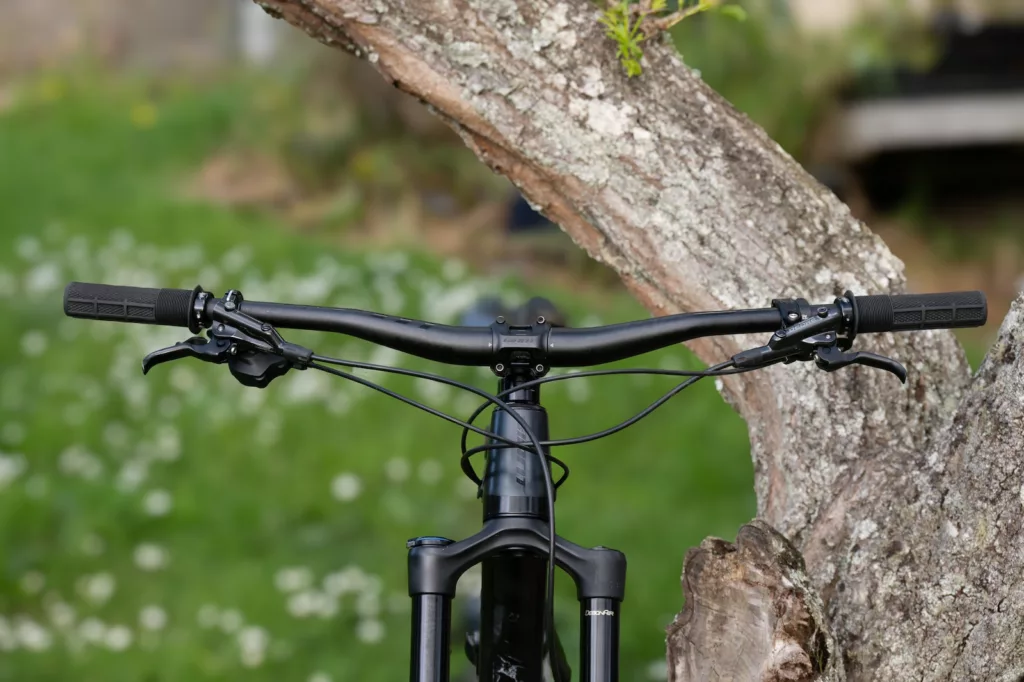
Check simple items first: bottle cages, pump mounts, luggage straps, mudguards and loose cables. A small rattle can come from an accessory touching the frame, but make sure nothing can swing into a wheel. Inspect the handlebar and stem for damage and movement.
Rocking the bike with the front brake applied can help reveal movement, but brake-pad movement can also produce a knock. Do not assume every knock proves the headset is loose. Headset preload and stem clamp bolts have different jobs, so follow the fork and headset instructions or ask a mechanic.
If the noise remains unexplained, record when it happens and which checks changed it. That gives a mechanic something useful to reproduce. Continue only when the bike is safe; a sound becoming quieter is not proof that a damaged component has repaired itself.
-
 Photo Credit: Luc Claessen/ISPA
 -
 Photo Credit: Unsplash / Chris Linnett