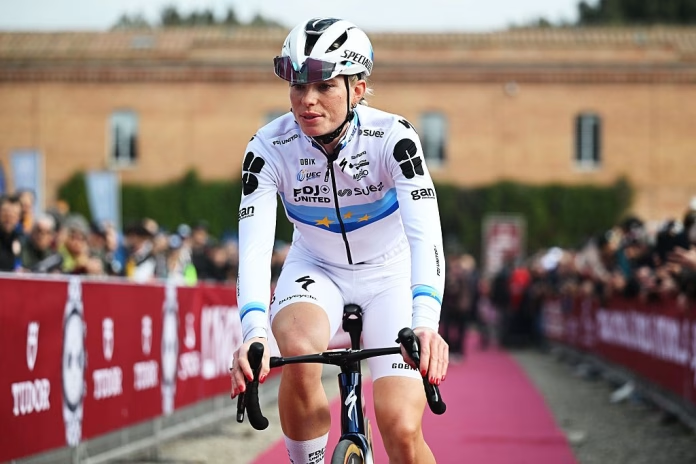
Demi Vollering’s 2026 calendar is not subtle. It is the programme of a rider and a team aiming at the biggest one-day races of spring, the most important stage races of summer, and the single biggest one-day target at the end of the season.
That is what stands out immediately. There is no soft shaping of form here, no clutter, and very little compromise. FDJ United-Suez have built a season around the races that matter most for a rider of Vollering’s level. Some of them suit her naturally. Some of them ask different questions. All of them are big enough to define a year.
Demi Vollering’s 2026 programme
Vollering is set to race:
- Omloop Het Nieuwsblad Women
- Strade Bianche
- Dwars door Vlaanderen
- Tour of Flanders
- Amstel Gold Race
- Flèche Wallonne
- Liège-Bastogne-Liège
- Giro d’Italia Women
- Tour de Suisse Women
- Tour de France Femmes
- World Championships
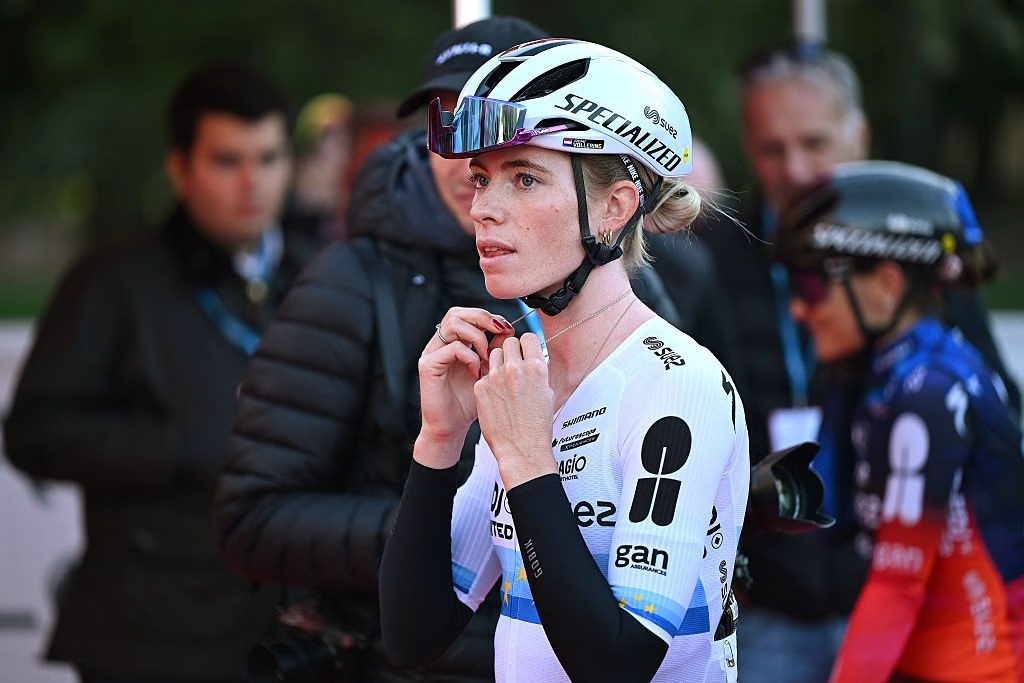 Photo Credit: Getty
What this schedule tells us
The simplest reading is the correct one: FDJ United-Suez are building around a rider expected to win the biggest races, not just animate them.
The spring is split into two clear halves. The first is northern and semi-northern, starting with Omloop Het Nieuwsblad and running through Strade Bianche, Dwars door Vlaanderen and the Tour of Flanders. Then the second half turns fully toward the Ardennes, where Amstel Gold Race, Flèche Wallonne and Liège-Bastogne-Liège form the more natural home for Vollering’s strengths.
After that, the season pivots into a sequence of stage races that says just as much about intent as the spring does. Giro d’Italia Women, Tour de Suisse Women and Tour de France Femmes is not the schedule of a rider still choosing which Grand Tour matters most. It is the schedule of a rider aiming to dominate the major climbing races of the year.
Then comes the World Championships, the kind of final target that can turn an excellent season into a historic one.
The spring classics block
There is a lot going on in the spring section, but not every race carries the same meaning.
Omloop Het Nieuwsblad Women is an opener that gives her a hard race day without needing to be the perfect fit. She can absolutely be strong there, but it is more revealing as a condition test than as the race that defines her spring.
Strade Bianche is different. That is a race she can win, and a race that suits the way she rides when she is already in rhythm. The repeated strain, the climbing punch and the need to stay composed over a changing race suit her very well.
Dwars door Vlaanderen and the Tour of Flanders sit a little differently. Vollering has already shown she can win on this terrain, but these races are less about pure climbing strength and more about whether she can take control before the race reaches its most technical and positional moments. They are major targets, but not in quite the same natural way as what follows.
Then the calendar reaches the races where her profile becomes much more obvious. Amstel Gold Race, Flèche Wallonne and Liège-Bastogne-Liège form a block that has Demi Vollering written all over it. Repeated climbs, selective finales, and races that reward riders who can still attack after the rest of the field has already been softened up. That is where she has built a huge part of her reputation, and that is still where the programme looks most dangerous.
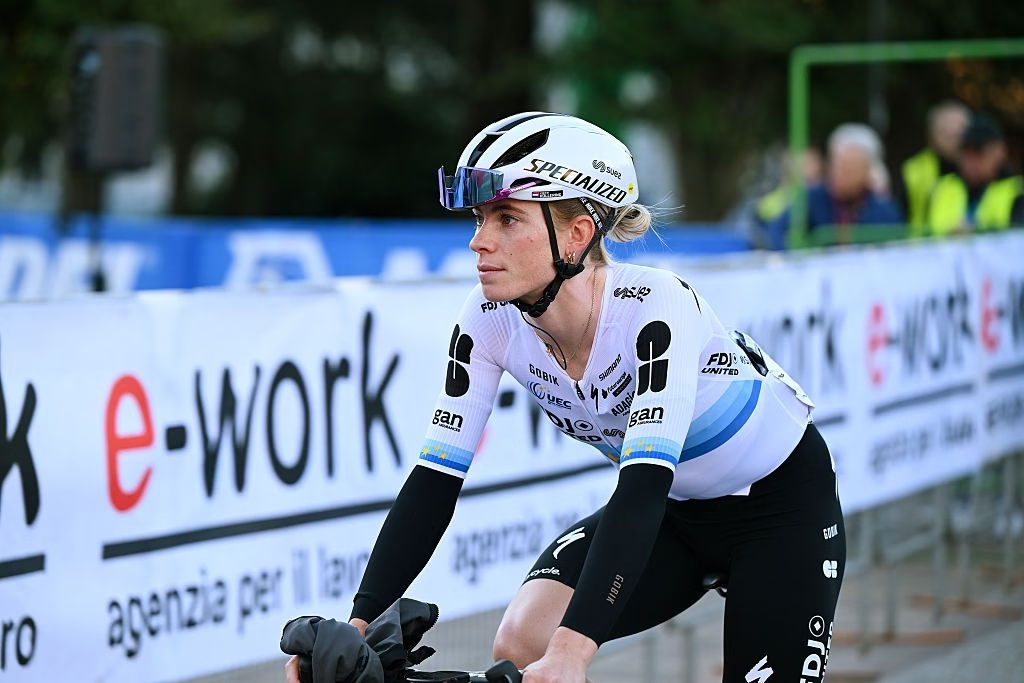
The biggest one-day opportunities
Flèche Wallonne and Liège-Bastogne-Liège stand out immediately.
Flèche is the more specific race, but that works in Vollering’s favour when she is sharp. It strips the finish down to one decisive effort on the Mur de Huy, which means there is very little room for bluffing. If her legs are there, she should be one of the defining riders in that race.
Liège is broader, and in some ways even more important. It is a race for riders who can survive a long, demanding day and still make winning moves late. That has been one of Vollering’s clearest strengths for years. She does not just rely on one perfect acceleration. She can make the race difficult in layers, and Liège rewards exactly that.
Amstel sits somewhere between them. It is more tactical, more open, and more vulnerable to chaos. But that also means it can reward a rider of Vollering’s intelligence as much as her climbing level. If the race becomes awkward rather than clean, she can still be the strongest answer.
What the stage races reveal
Once the spring classics end, the calendar becomes just as revealing.
Giro d’Italia Women, Tour de Suisse Women and Tour de France Femmes is a heavy sequence, but it is a sequence that makes sense for Vollering because all three races reward the same broad qualities: climbing authority, consistency, recovery and the ability to carry leadership over multiple days.
The Giro gives her an early major stage-race target in summer. Tour de Suisse then works as both a high-level race in its own right and an ideal final sharpening race before the Tour. And the Tour de France Femmes remains the central point around which the rest of that block turns.
That is the key. You do not schedule Giro, Suisse and Tour together unless the rider is expected to carry real weight through all three. This looks like a plan built around arriving in France with both race depth and authority already established.
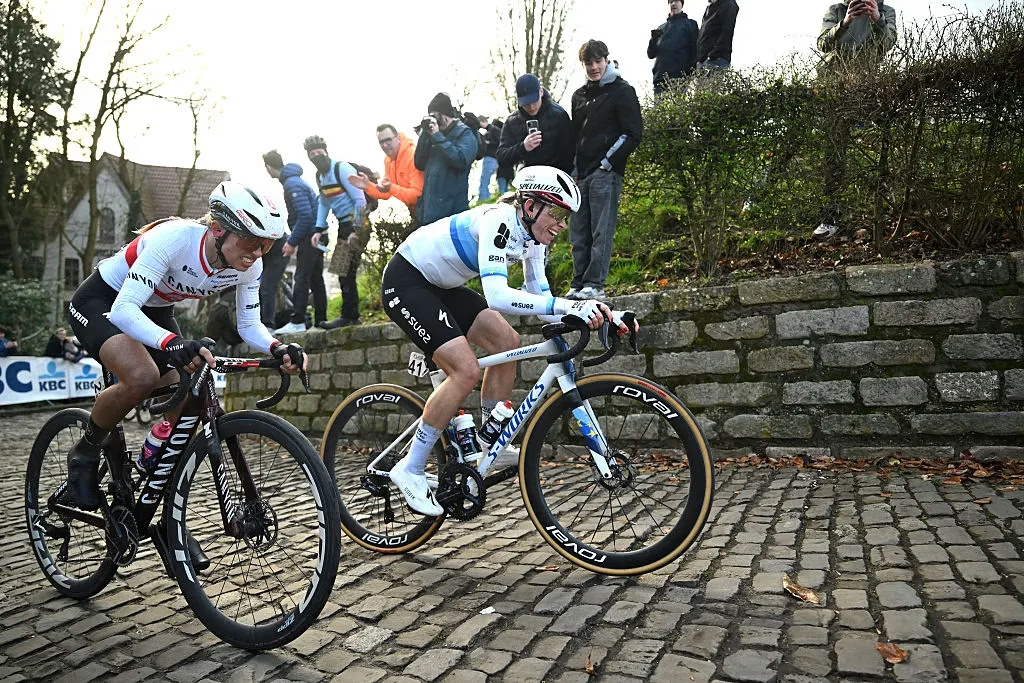
Why the World Championships matter so much
The final line of the programme may be the most significant of all.
World Championships are always important, but for a rider like Vollering they mean more because they sit above a season already loaded with elite opportunities. If she arrives there after a spring full of major classics and a summer of climbing stage races, she should be carrying exactly the kind of condition that can make her dangerous on the right course.
It also changes how the rest of the calendar reads. This is not just a sequence of disconnected targets. It is a season with a final summit. Everything before the Worlds has value on its own, but it also helps build toward the one jersey that can redefine how a year is remembered.
What to watch for
The most interesting part of Vollering’s 2026 programme is not whether she will be competitive. That is the baseline.
The real question is where she turns competitiveness into control. In the Ardennes and the major stage races, the expectation is not simply that she will be there. It is that she will dictate terms. In the northern races, the question is slightly different. There, it is more about whether she can bend the terrain to her strengths strongly enough to win against riders for whom those roads are even more natural.
That tension is what makes the programme so compelling. It gives her races she should be expected to win, races where she will still need to solve a harder problem, and one final championship target that could elevate the whole season.
For FDJ United-Suez, this is the calendar of a leader. For Vollering, it is the calendar of a rider expected to shape 2026 rather than simply be part of it.