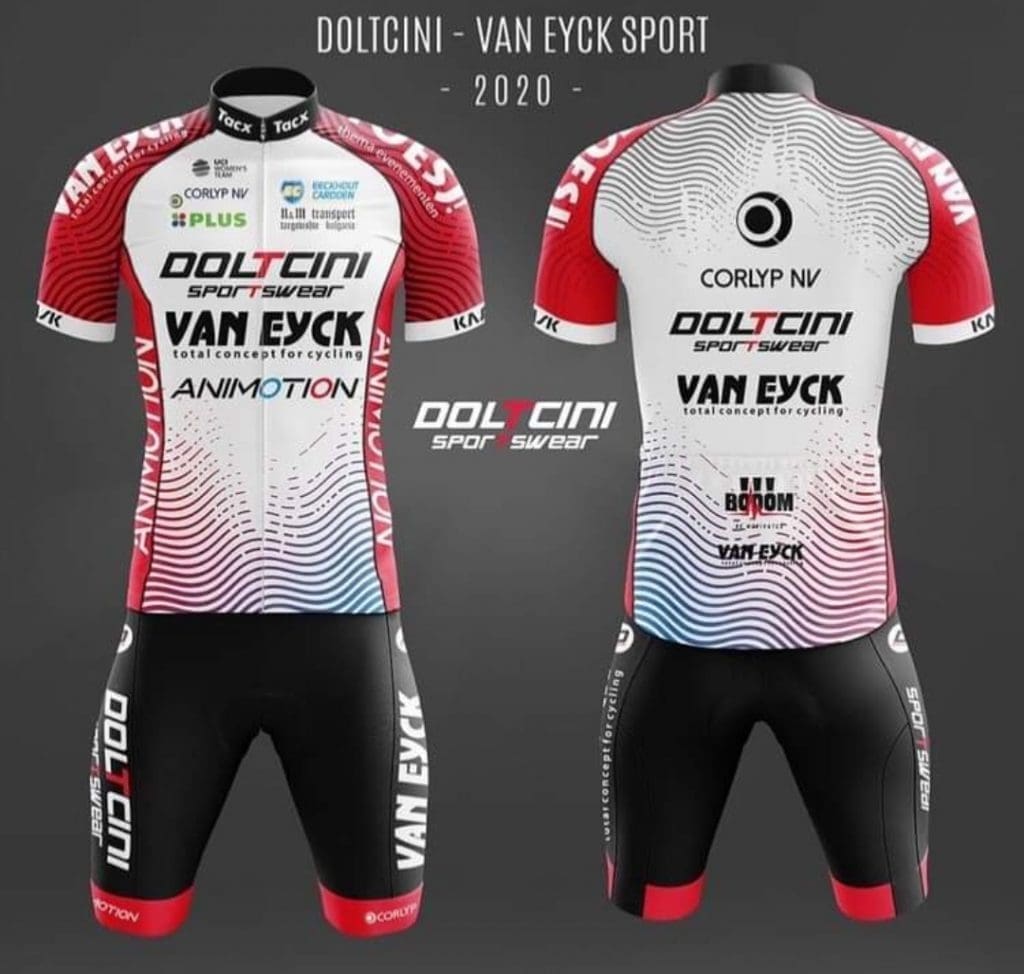
Late May brought two very different race days for Doltcini-Van Eyck Sport. Durango-Durango gave the team a demanding climbing test on one of the more selective one-day courses in the women’s calendar, while the Chabany Race in Ukraine offered a much flatter scenario and a bunch sprint finish. Neither race produced a headline result for the team, but together they showed the range of demands the squad was dealing with across that part of the season.
Durango-Durango – a demanding climbing test in Spain
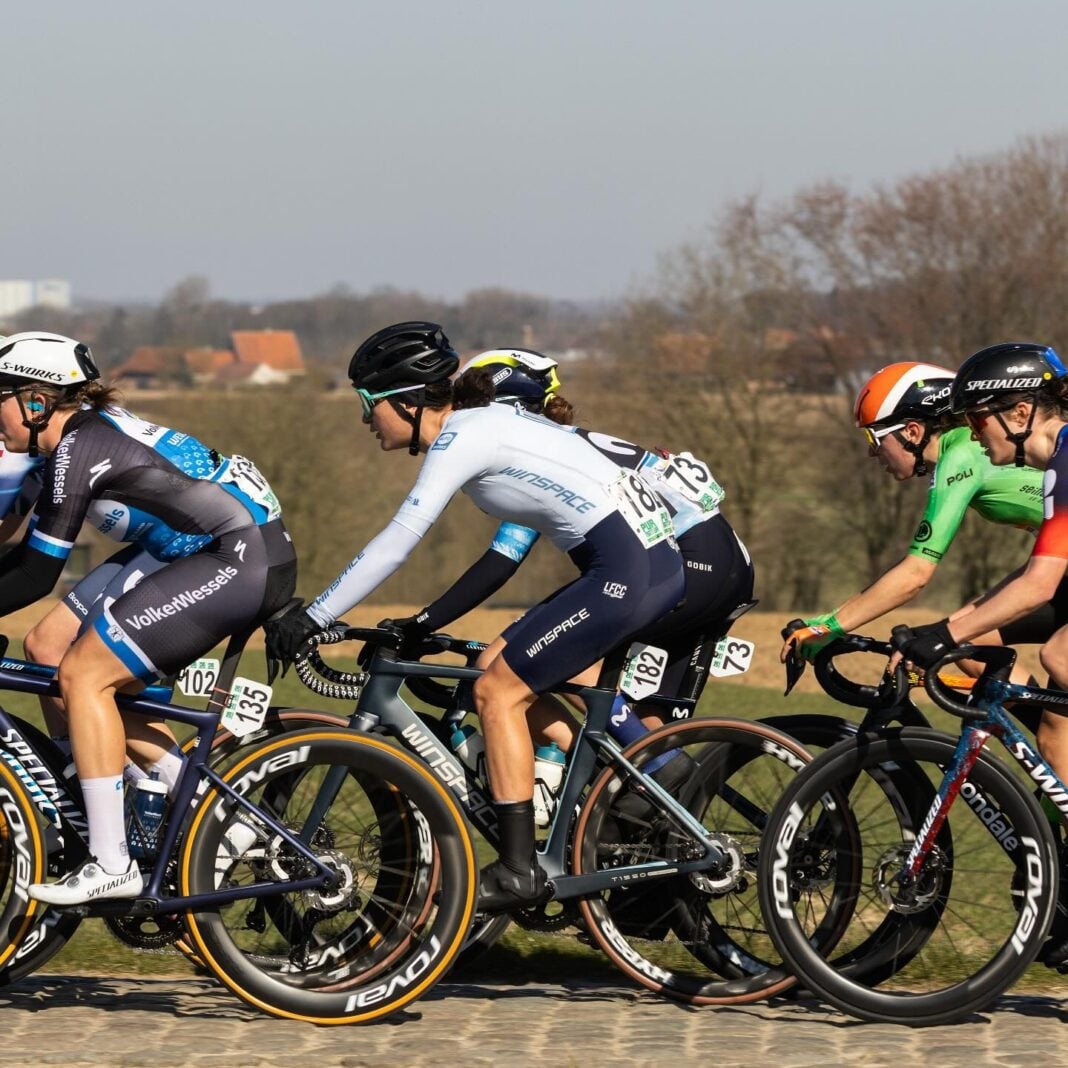
Durango-Durango is rarely a race that leaves much room for hiding. The Basque course is built to expose weaknesses, with repeated climbing and a rhythm that steadily strips riders away from contention. It is the kind of race where pure sprinters are quickly out of the picture and where teams need riders who can cope with repeated efforts on steep terrain.
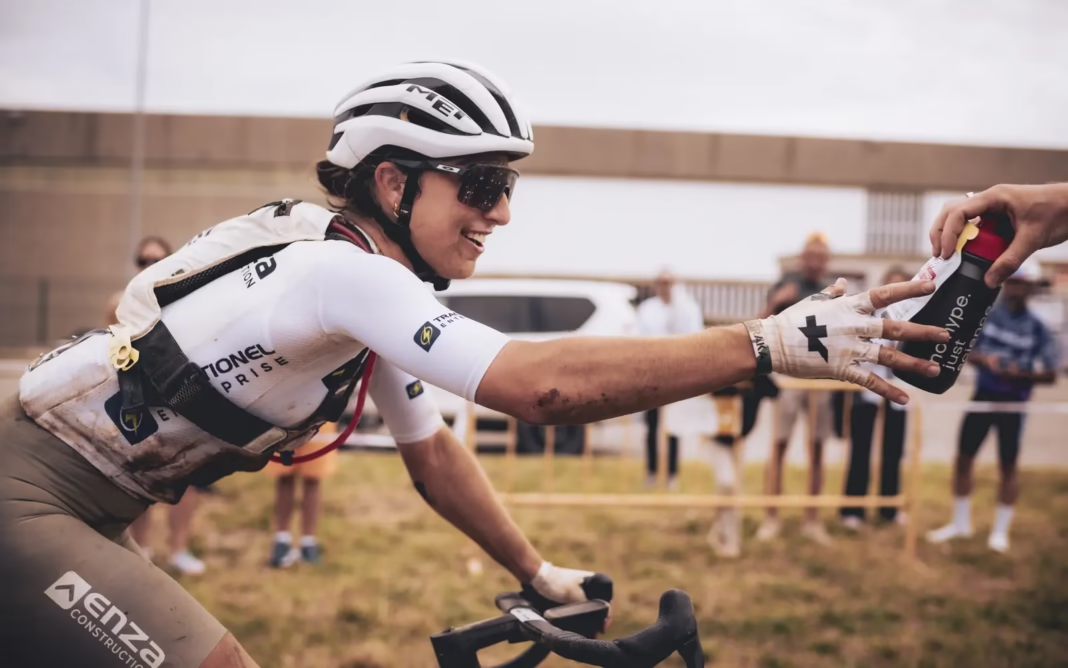
For Doltcini-Van Eyck Sport, the race was more about endurance and damage limitation than a fight for the front places. Mieke Docx was the team’s first rider home in 38th, with Marion Sicot close behind in 44th. Daniela Reis finished 52nd and Pascale Jeuland 71st, while Anisha Vekemans did not finish.
Those results reflected the nature of the race. Durango-Durango tends to reward climbers and puncheurs with a higher ceiling on this kind of terrain, so the challenge for teams like Doltcini-Van Eyck Sport was often to stay as close to the front as possible for as long as possible and come away with a solid collective showing. That is more or less what happened here. They were not a decisive factor in the race, but they got several riders through a hard day on a course that offers few easy kilometres.
Why Durango-Durango mattered
Even when the result is not spectacular, races like Durango-Durango can still be revealing. They show which riders can survive on harder terrain, who can keep fighting once the race starts to split, and how a team handles an event that is shaped more by climbing strength than tactical control.
For Doltcini-Van Eyck Sport, the main positive was simply getting multiple riders to the finish in a race that naturally suits a more climbing-oriented field. Docx leading the team home suggested a decent level of resilience on a course that asks plenty of every rider. Just as importantly, the team gained another hard day of racing in a part of the season where exposure to this sort of terrain mattered.
Results powered by FirstCycling.com
Chabany Race – a very different kind of challenge
Three days later, the focus shifted completely. The Chabany Race in Ukraine brought a flatter, faster and more controlled scenario, ending in a bunch sprint rather than a climbing-based selection. That immediately changed the demands of the race. Instead of asking who could survive the hardest gradients, it asked who could stay positioned, conserve energy and deliver in a speed-based finish.
Tetiana took on that race on home roads and crossed the line in 20th place in the bunch sprint. It was not a podium result, but it did at least put the team into the result sheet in a race decided by speed rather than attrition.
The contrast with Durango-Durango was obvious. In Spain, the challenge was to endure a hard hilly course and hold on as the race selected itself. In Ukraine, the challenge was to navigate a sprint finish where small positional differences often decide whether a rider finishes in the top 10 or somewhere deeper in the bunch.
Results powered by FirstCycling.com
Two races, two different lessons
Taken together, these two races offered a useful snapshot of the team’s position at that stage of the season. Durango-Durango showed the limits of the squad against a demanding climbing field, but also underlined their ability to get several riders through a hard race. The Chabany Race was less punishing physically, but no less competitive in its own way, and it gave Tetiana a solid, if unspectacular, 20th place in a bunch sprint.
There was no single big result to lift either race into a standout week, but there was still value in the contrast. One race tested climbing resilience, the other sprint positioning. One stretched the team on selective terrain, the other asked for speed and timing in a flatter finish.
A steady rather than spectacular few days
That probably sums up this block of racing best. It was steady rather than spectacular. Doltcini-Van Eyck Sport did not leave with a defining result, but they did come through two very different race situations and continued to build experience across a range of terrain.
In a long season, that still had value. Not every race produces a breakthrough or a podium. Some simply add another layer to a team’s understanding of where its strengths lie, and where it still needs to improve.
-
 Photo Credit: quentinphotographiebe
 -
 Photo Credit: Getty