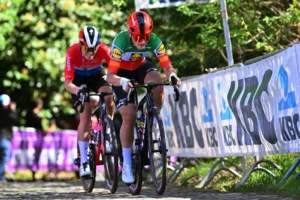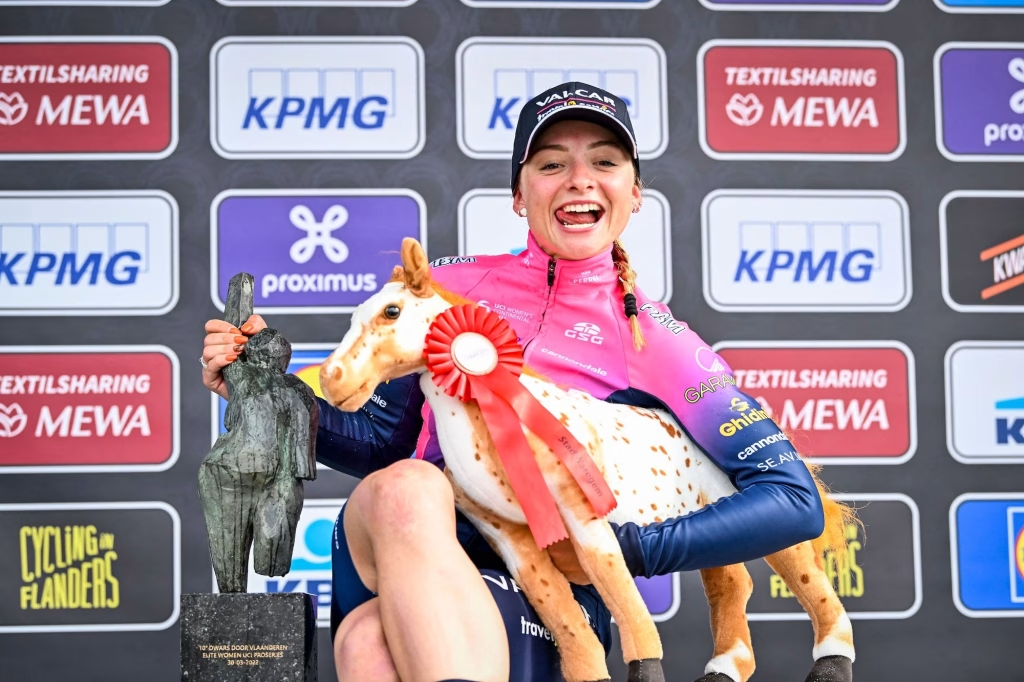
Dwars door Vlaanderen Women 2026 takes place on the 1st April and, for the first time, does so as a Women’s WorldTour race. That matters because it shifts the event from being an important midweek Flemish Classic to a fully top-level target in its own right. The race starts and finishes in Waregem, covers 128.8km, and should once again sit in that awkward and fascinating space between opportunity and prestige, close enough to the Tour of Flanders to attract many of the same riders, but different enough to create its own tactical shape.
That change in status should be felt in the racing as much as in the calendar listing. Dwars door Vlaanderen has long been a useful race for reading form in the middle of cobbled week, but with Women’s WorldTour points and prestige now attached to it, there is even less reason for teams to treat it as merely a stepping stone to Sunday.
If you want the broader race context first, ProCyclingUK’s Beginner’s guide to Dwars door Vlaanderen Women 2026 explains where the race sits in the cobbled week, while the Tour of Flanders Women 2026 route guide helps show how different the weekend Monument will feel a few days later.
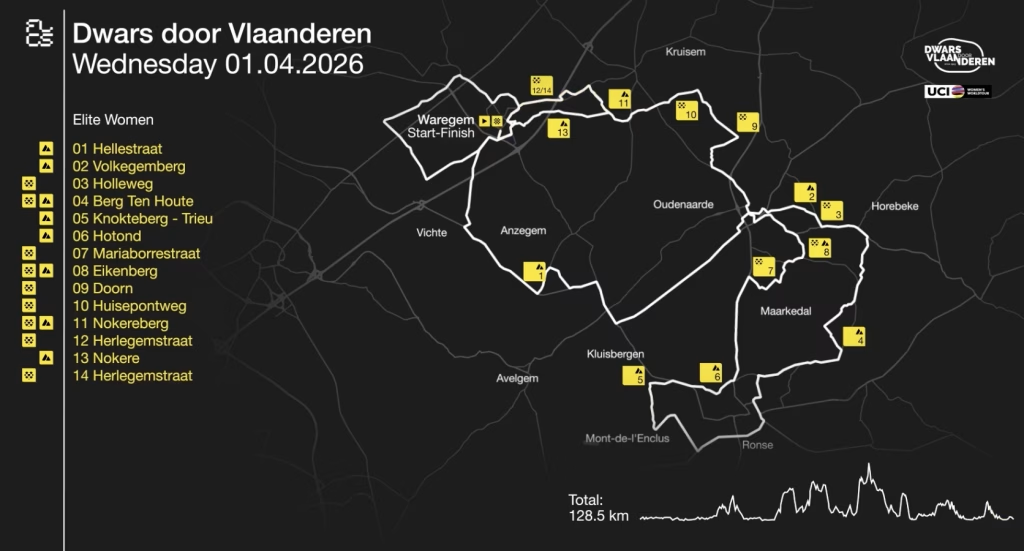
What stands out about the 2026 route?
The basics are straightforward enough. This is a 128.8km race from Waregem to Waregem with a hill-heavy character and a flatter finish. That already tells you something important about how the day may play out. It should be selective enough to shed the pure sprinters, but not so brutally decisive that every edition has to end with a lone survivor.
That balance is one of the reasons Dwars door Vlaanderen Women is such a useful race to analyse. It is clearly Flemish, with the usual ingredients of short climbs, cobbles and constant positioning stress, but it rarely feels as locked into one inevitable script as the Tour of Flanders. It tends to reward aggression a little earlier and hesitation a little less kindly.
The 2026 route also comes with a broader refresh to the event, which should keep that identity intact rather than soften it. The route is not trying to become a smaller copy of the Tour of Flanders. It is still Dwars door Vlaanderen, still a race where repeated pressure matters more than one single headline moment.
Start and finish in Waregem
The women’s race starts from the HippoLoggia site in Waregem and returns to Waregem for the finish. That looped structure gives the race a slightly different feel from the bigger point-to-point Classics. Instead of one long journey into a decisive finale, the route gradually builds tension before throwing the field into the more selective roads deeper into the day.
A Waregem finish also helps explain why this race remains tactically open. The hardest damage is usually done before the run-in rather than in the final kilometre itself. That leaves several outcomes in play. A solo rider can stay away, a very small group can fight for the win, or a reduced sprint can still happen if the strongest attackers neutralise one another.
 Photo Credit: Flanders Classics
The roads that should shape the race
One of the challenges with Dwars door Vlaanderen Women is that the route is not always presented with the same level of sector-by-sector public detail as the men’s race, but the race identity remains very clear. It is built around the familiar Flemish pattern of short climbs, narrow roads, rhythm changes and repeated positioning fights.
That means the route is usually decided less by one single iconic climb than by accumulation. Riders are asked to fight for space over and over again, respond to sharp changes in pace, and keep doing it when the terrain shifts from open road to climb to cobbles and back again. That repeated pressure, rather than one monumental final wall, is what gives the race its particular character.
Knokteberg is one of the named moments on the route and should be one of the points where the race begins to feel more serious, but the wider truth of Dwars door Vlaanderen is that it rarely depends on one location alone. It depends on how the whole sequence is raced.
Why this route suits aggressive riders
Dwars door Vlaanderen Women has long been a race that invites commitment. At 128.8km it is long enough for strength to matter, but not so long that every team gets endless time to repair mistakes. Once the race enters the more selective phase, a small gap can become dangerous very quickly, especially if the chase behind is split between teams with different interests.
That is why the route often feels more open than the prestige hierarchy of the week might suggest. The team with the strongest finisher does not always get to organise a neat chase. The team with multiple options can make the race awkward. A rider who can accelerate over a climb, hold speed across flatter roads and still handle the technical demands of Flemish racing can turn a modest advantage into a winning move.
It also helps that the race comes where it does in the calendar. With the Tour of Flanders only a few days away, some teams arrive wanting a result immediately, while others are balancing present opportunity with the bigger Monument still to come. That tension can produce a more unusual tactical race than the route alone suggests.
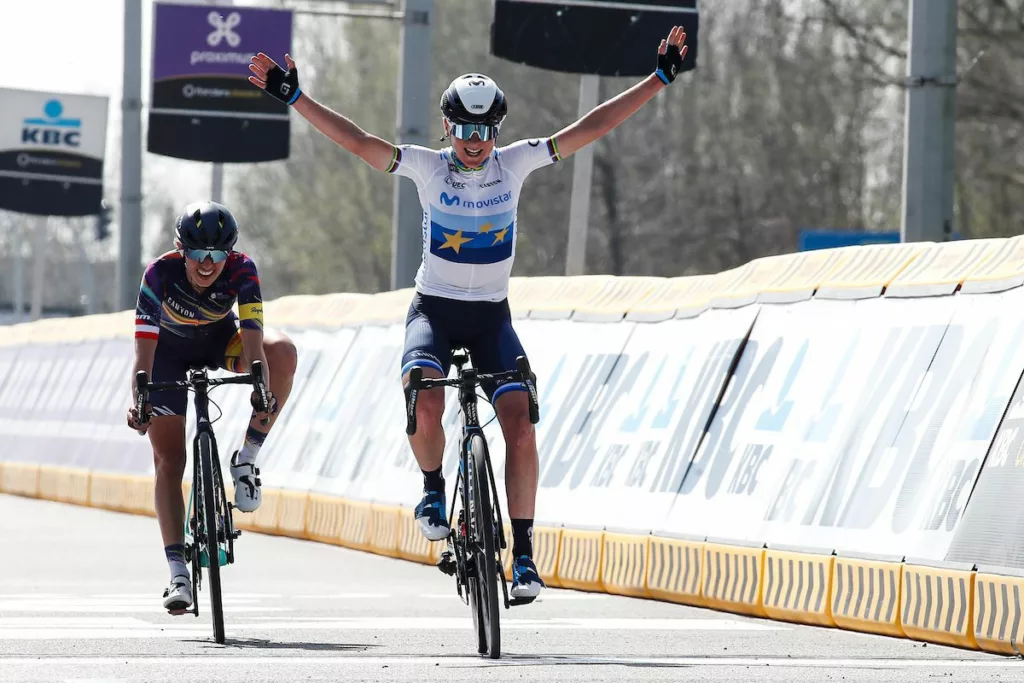
Will it end in a solo or a reduced sprint?
The likeliest outcome is still a selective finish rather than a full bunch sprint. The climbing, the repeated changes of rhythm and the race’s broader character all point towards a front group that has already been reduced before Waregem.
But that does not automatically mean a solo winner. In fact, one of the more interesting things about this route is that it leaves room for both endings. If one rider times their attack well on the climbs or cobbled stretches, they can stay clear. If the strongest riders keep looking at one another and the groups behind never fully organise, a reduced sprint from a select group remains entirely plausible.
That is one reason Dwars door Vlaanderen is such a useful race to watch in the wider Flemish week. It does not just reveal who is strong. It reveals how they are strong. Some riders win here by attacking. Others by surviving. Others by reading the finale better than everyone else.

What the Women’s WorldTour promotion means
The move into the Women’s WorldTour from 2026 through 2028 is not just an administrative footnote. It should sharpen the race’s standing in the calendar and change the way teams approach it. Bigger status usually means stronger start lists, clearer team commitment and less tactical half-measuring.
On a route like this, that should make the race more intense rather than more controlled. There is now even more value attached to winning, and that matters in a race where hesitation has often been punished. A route that was already good at creating tension may now be raced with a little more urgency from the start.
Final verdict on the Dwars door Vlaanderen Women 2026 route
Dwars door Vlaanderen Women 2026 looks like a route built to preserve what already makes the race interesting. It is not as long or as monumental as the Tour of Flanders, but it is hard enough to reward genuine classics strength. The Waregem start and finish, the 128.8km distance, and the hill-heavy, rhythm-breaking nature of the course should again create a race where positioning, repeated accelerations and tactical nerve matter just as much as raw power.
In practice, that means an aggressive and fragmented race remains the most likely scenario. Not chaos for the sake of it, but a route that keeps offering chances to attack and very few genuine opportunities to settle. That has long been the appeal of Dwars door Vlaanderen Women, and the move into the Women’s WorldTour should only make that identity sharper.