E3 Saxo Classic 2026 is one of the clearest route guides to the cobbled spring you will get all year.
That is why the race matters so much. It is not just another Belgian one-day event, and it is not only a dress rehearsal for the Tour of Flanders. E3 has its own authority because it asks many of the same questions as Flanders, but in a slightly tighter and often even more direct format. The climbs are steep, the cobbles come in repeated waves, and once the race turns serious there is very little room to hide.
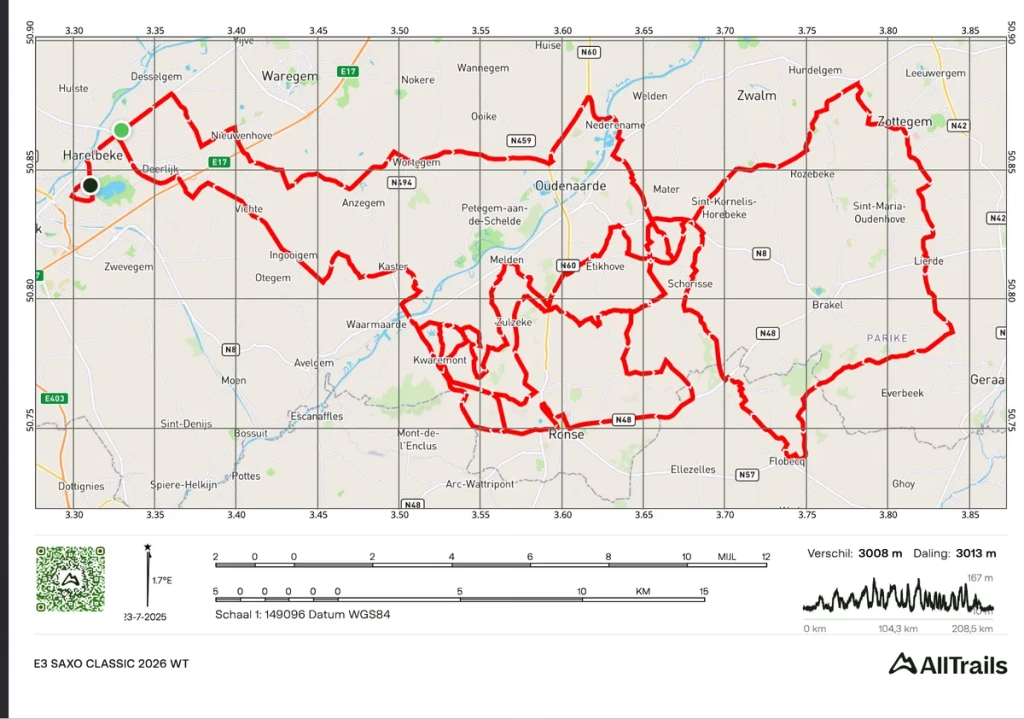
In 2026, the race takes place on Friday 27 March, starts and finishes in Harelbeke, and covers 208.5 km. The most important story is the route refresh. The organisers have made the second half tougher, most notably by adding a second ascent of the Oude Kwaremont and doubling up the Karnemelkbeekstraat, often referred to as the E3-Col. That gives the race an even more selective, relentless shape than before.
If you want the broader overview first, ProCyclingUK’s Beginner’s guide to E3 Saxo Classic 2026 explains why this race has become such an important spring marker.
What is new in the 2026 route?
The key change is simple enough: the second half is harder and more layered than before.
The 2026 race adds another trip over the Oude Kwaremont, first by using the steep but non-cobbled Keuzelingsstraat approach, before the race later returns to the more familiar side of the climb. The Karnemelkbeekstraat is also climbed twice in the finale. Altogether, the route now carries more than 3,000 metres of climbing, roughly 200 metres more than before.
That matters because E3 was already one of the more selective races of the cobbled spring. It did not need much to become even more tilted toward the very strongest riders. These changes do exactly that. They make the race a little longer, a little more demanding, and more likely to reward riders who can keep answering repeated efforts deep into the final hour.
Where does the race start and finish?
E3 Saxo Classic starts and finishes in Harelbeke.
That continuity matters because Harelbeke has been central to the race for decades. E3 has always felt tied to this part of Flanders and to the roads that surround it. The route heads out across the region, gradually tightening toward the bergs and cobbled sectors that give the race its identity, before returning to Harelbeke for the finish.
In practical terms, that means the race does not waste much time pretending to be something it is not. It is a Flemish Classics race from the moment it leaves the start line, and the route is designed to make that increasingly obvious as the kilometres tick down.
What does the route actually ask of the riders?
The easiest way to understand E3 is to think of it as a race of accumulation.
It is not usually won by one huge move on one huge climb. It is won because the route keeps stacking short, sharp demands until only the best riders are still answering them properly. That is what makes it so good to watch and so revealing as a route guide to the rest of the spring.
The first half lays the groundwork, but the real damage comes once the peloton reaches the succession of bergs and sectors that define the second half. The race starts to harden, then it starts to splinter, and by the time the final sequence arrives the strongest riders are often already visible.
That is why E3 can feel so unforgiving. The route does not just create one selective moment. It creates a whole chain of them.
Which climbs matter most?
The route includes sixteen climbs in total, which already tells you how little room there is for recovery once the race reaches its serious phase.
The Taaienberg remains one of the key landmarks because it often comes at the point where the race starts to feel genuinely selective. Then there is the Karnemelkbeekstraat, the E3-Col, which now appears twice and takes on even greater importance in the final structure of the race. Most significant of all is the Oude Kwaremont, also tackled twice, which gives the route more weight and brings it even closer to the sort of repeated pressure riders face in the Tour of Flanders itself.
The Paterberg is still there too, short, violent and exactly the sort of climb that can rip a race apart when the front group is already under stress. In combination, those climbs create the real shape of the race. No single one needs to decide it alone. They work because they keep forcing riders to respond.
Why does the second Kwaremont matter so much?
Because the Oude Kwaremont is not just another climb. It is one of the defining roads of the cobbled spring.
Adding a second ascent means the race now asks riders to deal with that specific effort twice. The first time, via the Keuzelingsstraat approach, adds a new tactical wrinkle. The second time brings the race back into more familiar territory, but by then the riders will already have spent far more than they would have in earlier versions of the route.
That is what makes the change important. It does not just add another climb on paper. It adds another layer of fatigue before the race reaches its closing phase. That usually benefits the strongest classics riders, the ones who can keep turning the screw rather than waiting for a single perfect moment.
What sort of rider does the route suit?
A true cobbled Classics rider.
That sounds obvious, but E3 is quite specific in the type of rider it rewards. This is not a race for a pure sprinter hoping to survive. It is not really a race for a pure climber either. The rider who wins here usually needs explosive power on steep bergs, confidence on cobbles, strong bike handling, and the ability to keep repeating efforts over 200 km.
That is why the race is so informative. If someone wins E3 in dominant fashion, it usually means they already have most of the tools needed to win much bigger races as well.
This is one reason E3 sits so neatly alongside the other key Belgian one-day races. ProCyclingUK’s Beginner’s guide to Tour of Flanders Women 2026 and Beginner’s guide to Dwars door Vlaanderen Women 2026 show the same broad spring logic at work in slightly different forms.
How is E3 different from the Tour of Flanders?
E3 is slightly shorter, slightly more compressed and often more immediately sharp.
The Tour of Flanders carries more prestige and more mythology, but E3 can feel almost as selective because it reaches its hardest terrain in a way that gives the peloton very little time to settle. That is what makes it such a good route guide to the bigger races that follow. It asks many of the same questions, just with a slightly faster rhythm and slightly less ceremony.
That does not make it lesser. It makes it brutally efficient.
For a new fan, that is useful. If you want to understand why the cobbled spring is so difficult, E3 often gives one of the clearest and most concentrated answers.
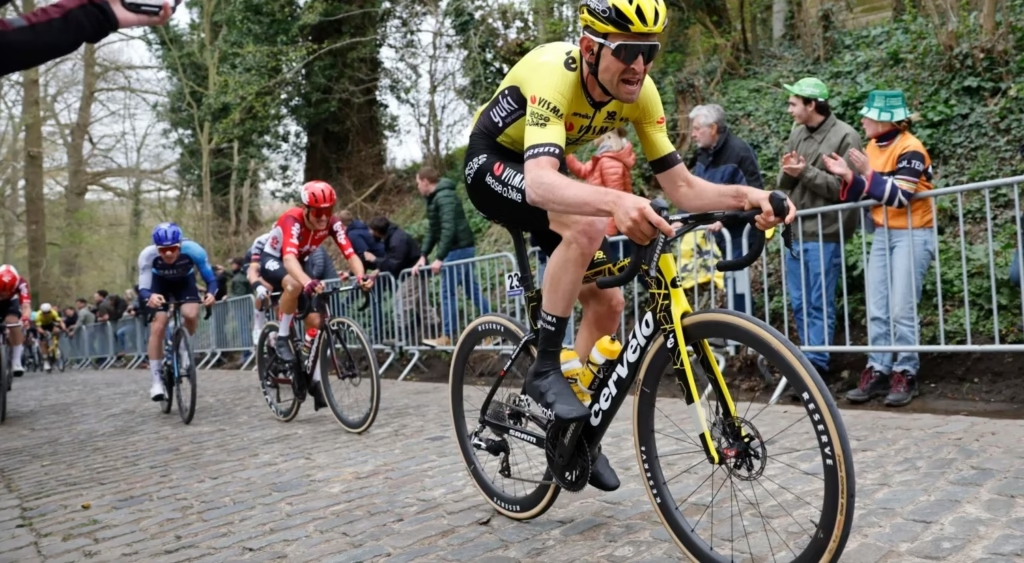 Photo Credit: Cor Vos
What should new fans watch for?
Watch the race in two parts.
In the first half, pay attention to which teams already look serious about the front. The peloton may still be large, but the strongest squads usually start positioning for the second half long before the biggest climbs arrive.
In the second half, once the major berg sequence begins, stop watching only for attacks and start watching for composure. Which riders still look in control? Which teams still have numbers? Which favourites are being forced to chase instead of choosing their own moment? That is usually where E3 starts to reveal who can really win it.
The revised 2026 route should make that even clearer because there is even less room for anyone to bluff their way through the final phase.
So what should you expect from E3 Saxo Classic 2026?
Expect a race that gets hard enough, early enough, to expose the real Classics hierarchy.
Expect the second half to matter much more than the first.
Expect the extra Oude Kwaremont and the doubled Karnemelkbeekstraat to make the finale more selective than before.
And expect one of the best route previews of the Tour of Flanders you can get. E3 Saxo Classic 2026 may not be the biggest race of the spring, but it is one of the clearest races for understanding who is actually ready to win the biggest ones.