Eli Iserbyt has announced his retirement from professional cycling at the age of 28, saying doctors have told him it is “medically no longer responsible” for him to continue – not recreationally, not competitively, and not at the highest level. The Belgian shared the news in an Instagram video, describing it as a difficult update after years of posting only the highlights.
“Over the past weeks I’ve received the news from several doctors that it’s actually medically no longer responsible for me to cycle,” Iserbyt said. “Recreationally, sportively, at a high level… and I’ve always shared the beautiful moments with you. But now I wanted to share this news too.”
For a rider who has spent most of the last decade as a constant presence in the sport’s winter hierarchy, it is a stark ending – and one framed not by form or motivation, but by health.
 Photo Credit: Getty
A medical conclusion after seasons shaped by pain
Iserbyt’s statement arrives after a period in which he has been open about racing through heavy discomfort. Last season, he revealed he had been riding with severe pain, yet still managed to win four races and secure the overall title in the X2O Trofee, a typical example of his ability to extract results even when his body was pushing back.
In February 2025, he underwent surgery to an artery in the groin region. His retirement message now suggests that, despite attempts to manage and treat the underlying issues, the medical advice has moved from “manage it” to “stop”.
A career built on relentless consistency
At 28, Iserbyt leaves with a record that places him firmly among the defining riders of his era. He was not simply a winner on good days. He was a rider who accumulated seasons – stacking podiums, classifications and series campaigns with a level of regularity that shaped how races were ridden.
Among his standout elite achievements:
- European champion (elite) in 2020
- Belgian champion (elite) in 2024
- World Cup overall winner in multiple seasons
- Two World Championship bronze medals at elite level
His wider palmarès underlines the same theme: not one spike of dominance, but repeated relevance across different series – World Cup, Superprestige and the Trofee – over multiple winters.
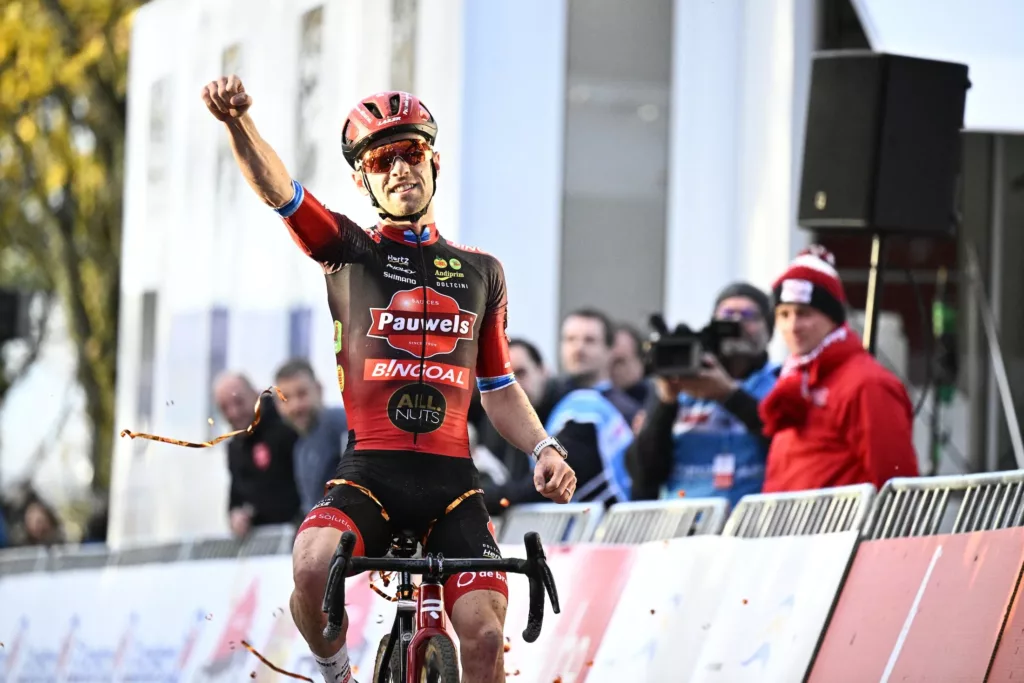 Photo Credit: Getty
From prodigy to elite benchmark
Iserbyt’s rise began early. He started cyclo-cross at 11, quickly turning youth categories into a run of national titles. By the time he reached the under-23 ranks, he was already racing with a clarity that looked older than his years.
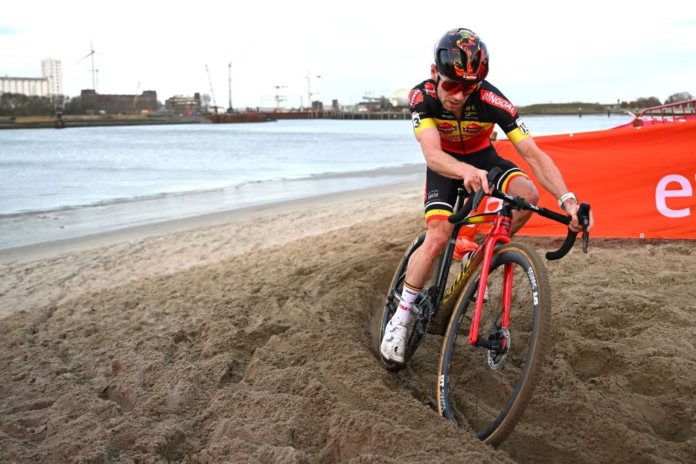
He became under-23 world champion in Zolder in 2016 as a first-year rider in the category, then added another under-23 world title in Valkenburg in 2018. His under-23 success translated directly into elite performance, and by 2019-2020 he had become a central figure in the top tier, winning World Cup rounds and regularly finishing second only to the biggest names of the generation.
That period also shaped his racing identity. Iserbyt was rarely the rider who waited. He was the rider who took initiative early, forcing rivals to respond, and often turning races into tests of repeated acceleration and technical precision rather than a single decisive move.
The context of a complicated final chapter
The past two seasons were not simple. Beyond the physical issues, Iserbyt’s 2024-2025 winter included controversy after an incident early in the season that led to a one-week suspension and a fine, followed by intense social media attention. He still returned to win races and close the winter with tangible success, but the overall picture was of a rider operating under strain.
His retirement message does not lean on any of that. It is direct: the sport is no longer compatible with his health.
 Photo Credit: Getty
What Iserbyt leaves behind
Cyclo-cross will move on, as it always does. But Iserbyt’s presence has been unusually structural. He was not just a contender. He was a reference point – a rider who made it normal to chase series classifications with real seriousness, and who carried the pressure of being the one expected to animate races when others were absent.
There is also something quietly unsettling about the line he chose to emphasise: that the advice extends beyond racing. When a rider says doctors have told him it is no longer responsible to ride even recreationally, it reframes retirement as a medical boundary, not a sporting decision.
For now, Iserbyt has not outlined what comes next. What he has offered instead is finality, and a short explanation that feels as hard as it is clear: the career cannot continue, because his body will not allow it.
-
 Photo Credit: quentinphotographiebe
 -
 Photo Credit: Getty