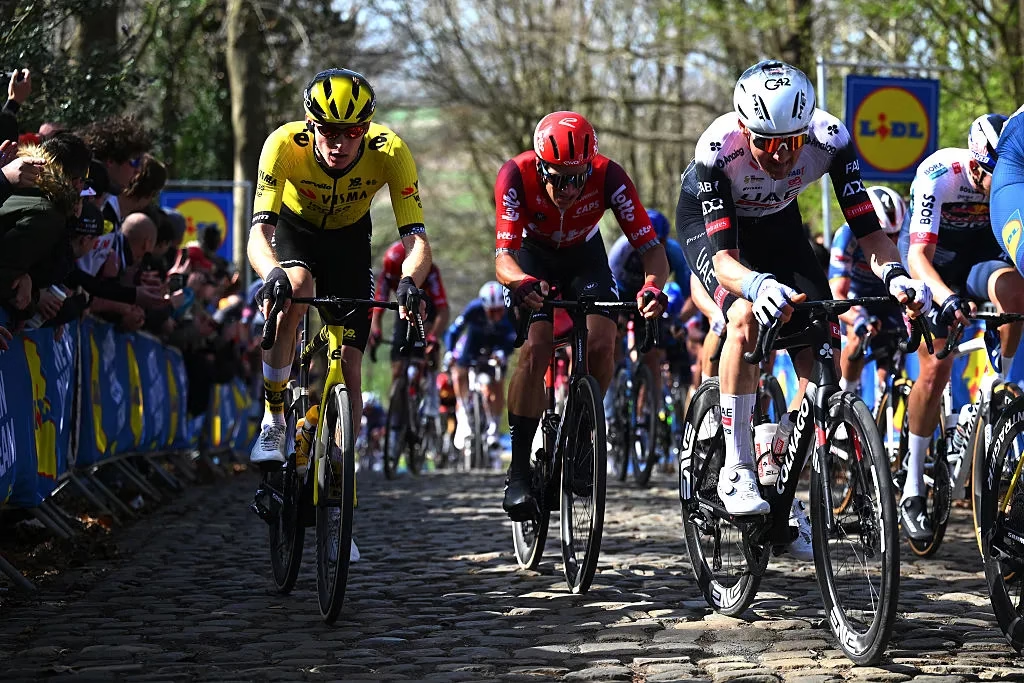
Men’s In Flanders Fields 2026 has attracted exactly the sort of field this race demands. It is not a line-up built purely around sprinters, and it is not reserved only for the hardest Classics specialists either. Instead, it sits in that familiar middle ground which has always made this race so compelling. There are riders here who can survive the climbs and still win from a reduced sprint, riders who will want to make the race much harder on the Kemmelberg, and teams with enough depth to shape the race in more than one way.
That balance is what makes the start list worth paying attention to. A race like this is rarely decided by one obvious favourite simply being faster than everyone else. Positioning, team support, exposed roads and timing all matter, which means the strongest squads often arrive with two or three possible winning cards rather than one fixed leader. This year’s field reflects that perfectly.
-
 Photo Credit: Getty
The headline names are easy enough to spot. Mads Pedersen, Wout van Aert, Mathieu van der Poel, Jasper Philipsen, Tim Merlier, Biniam Girmay and Arnaud De Lie all give the race star power, but the bigger story is how many different kinds of contenders are here. Some riders will want a selective sprint, others will try to split the race before the finish, and a few will hope the day becomes so chaotic that pure speed matters less than strength and judgement.
That is why Men’s In Flanders Fields remains one of the most interesting races of the spring. It is hard enough to expose weakness, but not always hard enough to eliminate the fastest finishers. The result is a race where the start list often tells you less about who will win than it does about how many different ways the race can be won.

For readers wanting more context around the likely shape of the race, this start list works naturally alongside the Men’s In Flanders Fields 2026 contenders preview, the Men’s In Flanders Fields 2026 route guide, and the In Flanders Fields 2026 team-by-team guide.
Data powered by FirstCycling.com
What stands out most is not just the quality at the top, but the depth beneath it. Riders such as Laurence Pithie, Matej Mohorič, Søren Wærenskjold, Filippo Ganna and Jordi Meeus ensure that even if the biggest favourites mark each other too closely, there are plenty of others capable of taking advantage. That is often where this race becomes most interesting. The strongest rider does not always win here, but the most complete rider for the specific race situation usually does.
In that sense, the start list for Men’s In Flanders Fields 2026 feels exactly right. It has proven winners, fast finishers, aggressive Classics riders and teams with genuine tactical options. That should be enough to make the race as open, tense and unpredictable as this event usually is.