
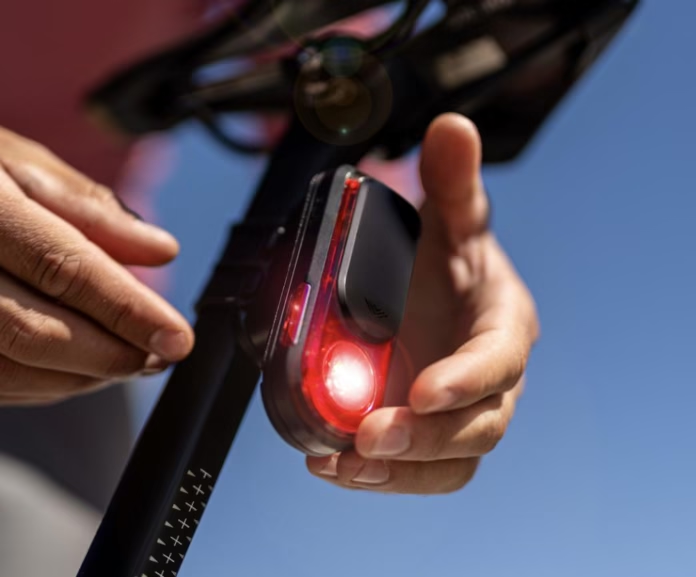
The Garmin Varia RearVue 820 is Garmin’s newest high-end rear radar light, and it arrives with a clear job: to give road cyclists more information about what is coming from behind. At £259.99, this is not just a rear light with a clever extra feature. It is a premium cycling radar aimed at riders who already see traffic awareness as part of their everyday safety set-up.
This Garmin Varia RearVue 820 review looks at whether that premium is justified. The short answer is that the RearVue 820 makes most sense for riders already using a recent Garmin Edge head unit, where its more advanced vehicle tracking, threat-level information and improved visibility can be used properly. For riders outside the Garmin ecosystem, the decision is more complicated.
Check Garmin Varia RearVue 820 availability on Amazon UK
Garmin Varia RearVue 820 review
The Garmin Varia RearVue 820 sits at the top end of the current cycling radar market. It combines a rear light, rear-facing radar, vehicle classification, threat-level information and brake light behaviour in one compact seatpost-mounted unit. It is designed for road cyclists, winter trainers, commuters and gravel riders who spend meaningful time sharing roads with traffic.
The main verdict is fairly clear. The RearVue 820 is one of the most advanced radar lights for road cycling, but it is not the best-value choice for every rider. If you use a compatible Garmin Edge, it feels like a serious upgrade on older Varia units. If you use Wahoo, Hammerhead or an older head unit, cheaper alternatives become much more persuasive.
Quick verdict
Overall verdict: The Garmin Varia RearVue 820 is an excellent premium cycling radar with stronger visibility, wider radar coverage, USB-C charging and more detailed traffic information than the older Varia RTL515. It is most convincing for committed Garmin users, but its high price makes it harder to recommend as a universal upgrade.
Best for: road cyclists, endurance riders, winter trainers and UK lane users already using a compatible Garmin Edge head unit.
Not ideal for: riders on a tight budget, riders using non-Garmin head units, or anyone who only needs a simple rear light.
Price: £259.99
Weight: 90g
Key specs: up to 100 lumens, claimed vehicle detection up to 175 metres, IPX7 water resistance, USB-C charging, 220-degree visibility and up to 30 hours of battery life in radar-only mode.
Reasons to buy
- Strong daylight visibility, with up to 100 lumens in day flash mode
- Advanced vehicle tracking with size and threat-level information
- Wider radar field than older Garmin Varia units
- USB-C charging is a welcome practical upgrade
- Brake light function adds useful signalling when slowing
- Best suited to riders already using Garmin Edge devices
Reasons to avoid
- Expensive compared with older Garmin and non-Garmin radar lights
- Most advanced features are tied to Garmin compatibility
- May be overkill for riders who mostly use traffic-free routes
- Battery life depends heavily on light mode and radar use
- Aero seatposts, saddle bags and low seatpost exposure may complicate mounting
Product overview
The RearVue 820 builds on the Garmin Varia RTL515, which has been the benchmark rear radar light for many road cyclists. The basic idea remains the same: the device detects vehicles approaching from behind and sends alerts to a compatible bike computer, watch or phone app. What changes here is the quality and depth of that information.
The RearVue 820 adds a more powerful radar platform, vehicle size detection, threat-level information and a brake light function. It also improves the light output and moves to USB-C charging, which is overdue but still welcome. For riders who use radar on every ride, those upgrades are meaningful rather than decorative.
Its closest rivals include the Garmin Varia RTL515, Wahoo Trackr Radar, Trek CarBack, Lezyne Radar Drive 300 and Magene L508. The RearVue 820 is not trying to beat them on price. It is trying to be the most complete radar light for road cycling, particularly for riders already committed to Garmin head units.
For UK cyclists, the use case is obvious. Narrow lanes, fast B-roads, rolling rural terrain and wet-weather commuting all create moments where earlier awareness of approaching traffic can change how relaxed a ride feels. Radar does not replace looking over your shoulder, clear road positioning or judgement, but it can reduce surprise. That is the strongest argument for this category.
Design and construction
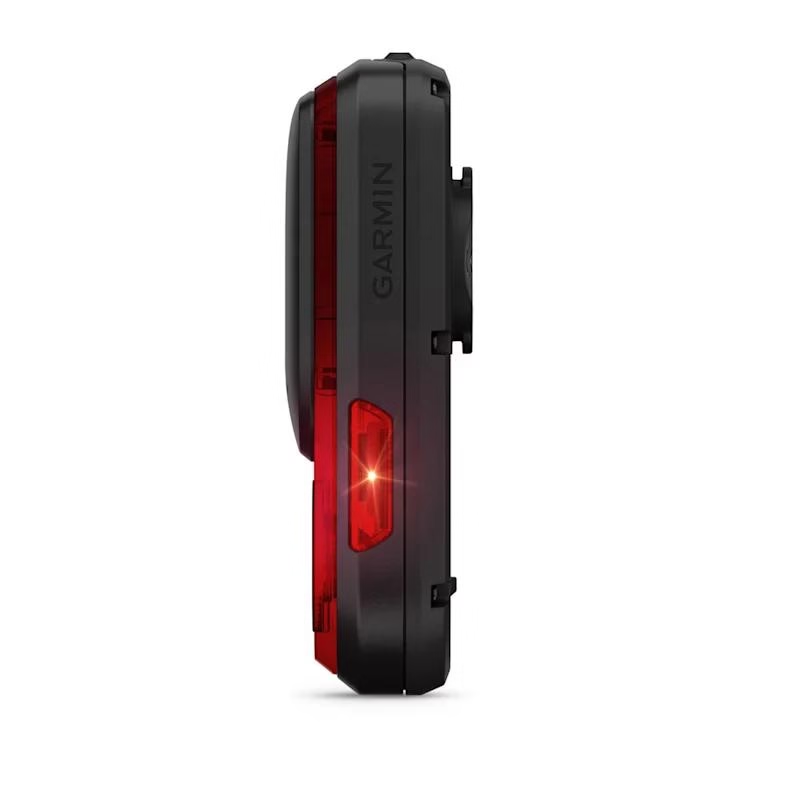
The Garmin Varia RearVue 820 is a compact vertical rear unit with an integrated radar, rear light and seatpost mounting system. At 98.9mm long, 43.2mm wide and 25.9mm deep, it is not tiny, but it sits neatly behind the bike when positioned properly. The 90g weight is noticeable against a basic rear light, though it is not a meaningful penalty for most road riding, winter training or commuting.
The light modes cover the main riding scenarios. Day flash is the obvious option for solo riding in bright conditions, with up to 100 lumens. Night flash is rated at 40 lumens, solid mode at 25 lumens, and peloton mode at 8 lumens. That spread is sensible. It means the RearVue 820 can be assertive on open roads without becoming needlessly aggressive when riding in a group.
Build quality feels appropriate for the product’s price and intended use. The casing has the solid, slightly dense feel of a premium electronic accessory rather than a cheap clip-on rear light. The IPX7 water rating is also important because a rear radar light lives in a difficult position on the bike. It gets hit by rain, road spray, grit and whatever comes off the rear wheel.
USB-C charging is one of the most practical upgrades. It means the RearVue 820 fits more naturally into a modern charging set-up alongside a phone, laptop, recent GPS computer or front light. It sounds minor until you are trying to keep several cycling electronics charged before an early ride, especially in winter when battery management becomes part of the pre-ride routine.
The mounting system is central to whether the product works cleanly on your bike. The radar needs to sit high, straight and unobstructed. Saddle bags, rear racks, mudguards, short seatpost exposure and deep aero seatposts can all interfere with the perfect position. That is not unique to Garmin, but it is something riders should check before buying.
Setup and ease of use
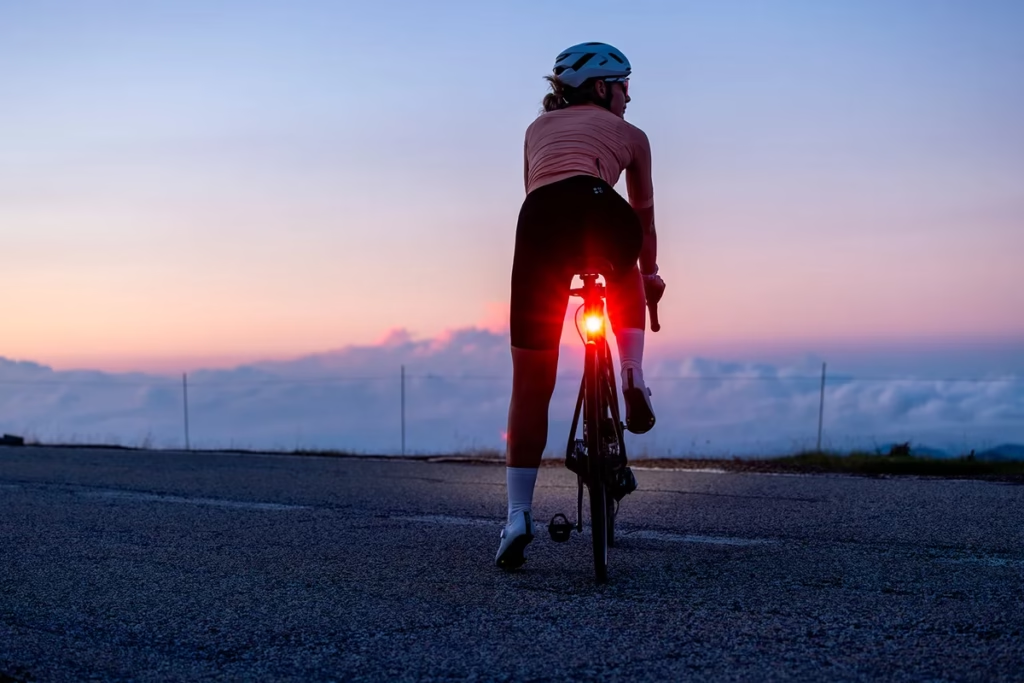
Setup is familiar if you have used a Garmin Varia before. Mount the unit centrally on the seatpost, pair it with a compatible Garmin Edge, Garmin watch or the Varia app, then choose the light mode and alert settings that suit your riding.
The first real task is alignment. A rear radar is not a fit-anywhere accessory. If it points down, twists sideways or sits behind a saddle bag, performance can suffer. The RearVue 820 needs a clear line backwards. Once that is sorted, the actual pairing process is straightforward for most Garmin users.
The experience is strongest with a recent Garmin Edge computer. That is where the 820’s richer vehicle information makes most sense. Alerts can show approaching vehicles, while compatible devices can display more detailed warning information. Used like that, the RearVue 820 feels integrated rather than bolted on.
With Wahoo, Hammerhead or older Garmin devices, the picture is less clean. The core radar function still has value, but not every advanced feature will be available in the same way. That is the biggest practical warning in this review. The RearVue 820 is not just a product, it is part of an ecosystem.
For riders who want a simple fit-and-forget rear light, there is more to manage here than with a basic unit. You have light modes, radar pairing, app settings, firmware updates and battery management. None of it is especially difficult, but it does ask more of the rider than a £40 rear light.
Real-world performance
The Garmin Varia RearVue 820 is at its best on solo road rides, where the value of radar becomes obvious within the first few outings. On quiet lanes, it reduces the number of surprises from fast-approaching traffic. On busier roads, it gives a steadier sense of what is building behind before the vehicle reaches your shoulder.
The main strength is not that it replaces judgement. It does not. You still need to look, listen, hold a sensible road position and ride defensively. What it does well is add another layer of information, and it delivers that information early enough to be useful rather than merely reassuring after the fact.
On rolling UK lanes, the RearVue 820’s wider radar field is one of its most useful upgrades. Vehicles rarely approach in a neat, straight line. They come out of bends, move across the lane to see ahead, then drift back before passing. The broader radar coverage gives the device more opportunity to track that movement and present it clearly on the head unit.
The extra vehicle information is where the RearVue 820 starts to separate itself from cheaper radar lights. A fast-approaching van or lorry is not the same as a small car closing slowly. The additional context can influence how firmly you hold your line, whether you delay moving around a pothole, or whether you warn another rider in front.
The brake light function is also more useful than it might sound. On descents into junctions, rolling lanes and stop-start commutes, the unit adds a clearer signal when you slow. It will not transform every driver’s behaviour, but it does make the back of the bike more communicative. For a product focused on being seen and understood, that is a valuable addition.
As a rear light, the RearVue 820 feels strong rather than excessive. A 100-lumen day flash is powerful enough for daytime road use, and the claimed long-distance visibility helps it compete as a serious rear safety device rather than a radar with a token light attached. Riders who want the brightest possible rear light may still look at alternatives such as the Lezyne Radar Drive 300, but Garmin’s balance of radar and visibility is convincing.
Battery life is one of the stronger parts of the package, provided the right mode is used for the ride. Garmin claims up to 10 hours in solid mode, 15 hours in peloton mode, 10 hours in night flash, 24 hours in day flash and 30 hours in radar-only mode. In normal road use, that gives enough range for long weekend rides, commuting blocks and most training days without turning charging into a constant worry.
The reality is that battery life will depend on how heavily the radar and lighting features are being used. Day flash, brake light behaviour, radar alerts and connected features all ask different things of the unit. For ultra-distance riding, touring or multi-day trips, you would still need to manage modes carefully. For standard UK road riding, the battery performance is comfortably usable.
In poor weather, the RearVue 820 suits UK use well. The IPX7 rating gives reassurance, while the casing and lens are easy enough to wipe down after wet rides. The more practical issue is grime. Spray and winter road film can quickly dull any rear light, so regular cleaning makes a real difference. This is not a product to leave coated in filth and expect full performance.
The main limitation is compatibility rather than radar performance. The Garmin Varia RearVue 820 offers its best experience when paired with the right Garmin device. If you are using Wahoo, Hammerhead or an older head unit, the core radar remains useful, but the premium features are less persuasive.
Radar light performance
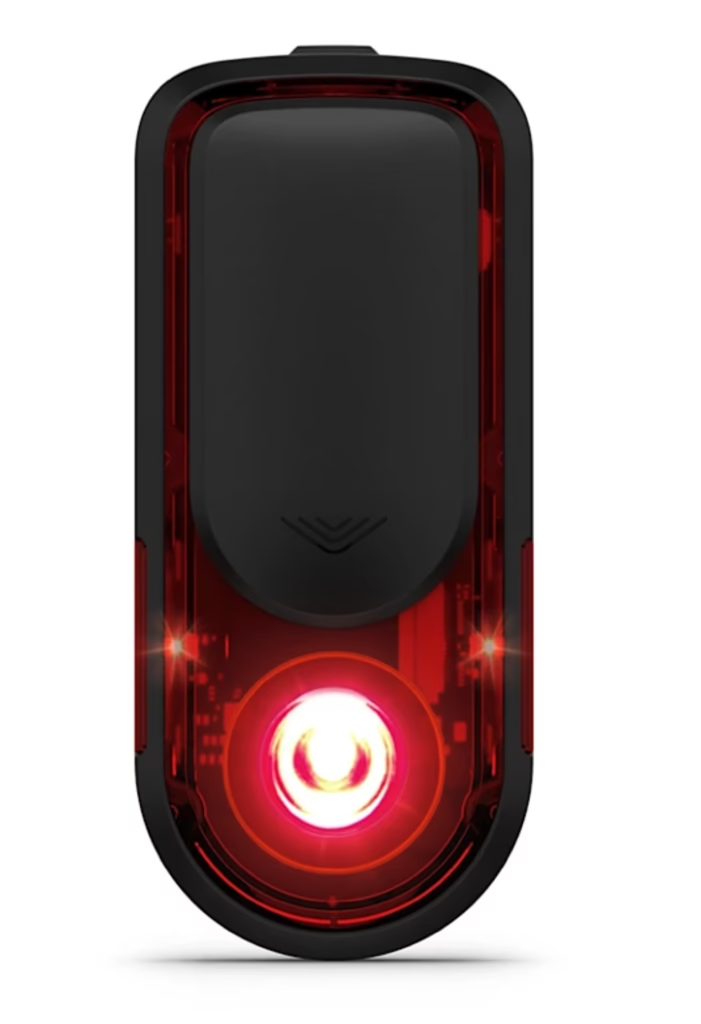
As a radar light, the RearVue 820’s headline figure is its claimed vehicle detection range of up to 175 metres. Detection range is not just a marketing number. The earlier a radar system picks up a vehicle, the more relaxed the alert feels. Shorter-range systems can still work, but they can feel abrupt when traffic approaches quickly.
The 60-degree radar beam is another important improvement. On real roads, vehicles rarely approach from perfectly behind the rider. This is especially true on narrow lanes, roundabouts, bends and roads where drivers move laterally before overtaking. Wider coverage makes the RearVue 820 better suited to those conditions.
The alert quality depends on the paired device. With a compatible Garmin Edge, the RearVue 820 can show more detailed information than a simple approaching-vehicle dot. That is what separates it from cheaper units and older radar lights. It is also why riders should check device compatibility before spending this much money.
False positives and false negatives are always the concern with cycling radar. A false positive is annoying. A false negative is more serious because it risks undermining trust. Garmin’s long experience in this category is a major strength, and the RearVue 820 feels designed around more precise tracking rather than just longer range.
The rear light modes are sensible. Day flash gives maximum visibility, solid mode suits lower-light situations, night flash is useful after dark, and peloton mode reduces irritation when riding in a group. The best setting will depend on ride type, weather and road environment rather than one mode being right all the time.
How it compares
The Garmin Varia RTL515 remains the most obvious comparison. It is cheaper, proven and still delivers the core benefit of radar alerts. The RearVue 820 adds better visibility, USB-C charging, wider detection and richer traffic information, but the RTL515 remains the better-value option for riders who simply want dependable rear radar without paying for the newest features.
The Wahoo Trackr Radar is the more natural choice for riders already using Wahoo head units. It may not offer the same Garmin-specific depth of information, but it fits better into a Wahoo set-up and will be easier to justify for riders who do not want to move ecosystems. For Wahoo users, it is the most obvious Garmin Varia RearVue 820 alternative.
The Trek CarBack is another strong rival. It offers serious radar performance and strong rear visibility, without feeling quite as tightly tied to Garmin’s product family. Riders who want a premium radar light but do not need the full Garmin software experience should consider it.
The Lezyne Radar Drive 300 makes sense for riders who place light output high on the list. Its brighter headline light output gives it a different character, closer to a powerful rear light with radar added. The Garmin feels more refined as an information device, while the Lezyne may appeal more to riders who want maximum visible presence for the money.
The Magene L508 and other lower-cost radar lights show how quickly this category has moved. They are unlikely to feel as polished as the Garmin, but they make rear radar accessible at a lower price. For riders trying radar for the first time, that is a significant point when the Garmin sits above £250.
Value
The Garmin Varia RearVue 820 is expensive, and there is no point softening that. At £259.99, it costs more than many excellent rear lights and more than several radar alternatives. The question is whether the extra spend buys meaningful performance.
For recent Garmin Edge users, it probably does. The advanced vehicle tracking, threat-level information, brake light function, stronger visibility and USB-C charging create a product that feels genuinely more capable than the older RTL515. If radar is part of every ride, the price becomes easier to justify.
For riders outside Garmin’s ecosystem, value drops. You may still get a very capable radar light, but you risk paying for features that are not fully available on your current head unit. In that case, a Wahoo Trackr Radar, Trek CarBack, Lezyne Radar Drive 300 or older Garmin Varia RTL515 may be the more sensible buy.
The strongest value case is for riders who spend a lot of time riding solo on open roads. If you regularly train on lanes, commute in traffic or ride routes where vehicles close quickly from behind, a premium cycling radar for UK cyclists can feel like a genuine upgrade rather than a luxury gadget.
-
 Photo Credit: Billy Ceusters / Getty Images



Verdict
The Garmin Varia RearVue 820 is an excellent premium rear radar light, but it is best understood as a high-end Garmin ecosystem product rather than a universal recommendation. It improves on the older Varia formula with stronger visibility, USB-C charging, broader radar coverage and more detailed traffic awareness.
For riders using a compatible Garmin Edge, it is one of the best radar lights for cycling. The additional information about vehicle size, threat level and movement gives the device a stronger safety argument than a basic rear radar. On fast UK lanes, wet commuter roads and solo endurance rides, that extra context can make riding feel calmer and better controlled.
Riders using Wahoo, Hammerhead or older Garmin computers should think more carefully. The RearVue 820 still offers strong core radar performance, but the price is harder to justify if you cannot use all of its advanced features. In those cases, the Garmin Varia RTL515, Wahoo Trackr Radar, Trek CarBack or Lezyne Radar Drive 300 may be better value.
The single biggest reason to buy the Garmin Varia RearVue 820 radar light is the depth of traffic information it can deliver when paired with the right Garmin device. The single biggest reason to hesitate is the price, especially if your current bike computer cannot unlock everything the unit is built to do.
Rating: 4.5/5

