The 2026 Giro d’Italia changes rhythm completely on Sunday, 24th May, with stage 15 taking the race from Voghera to Milan. After Jonas Vingegaard’s dominant summit-finish win on stage 14 to Pila moved him into the maglia rosa, the race now gives the sprinters one of their cleanest opportunities of the whole Giro.
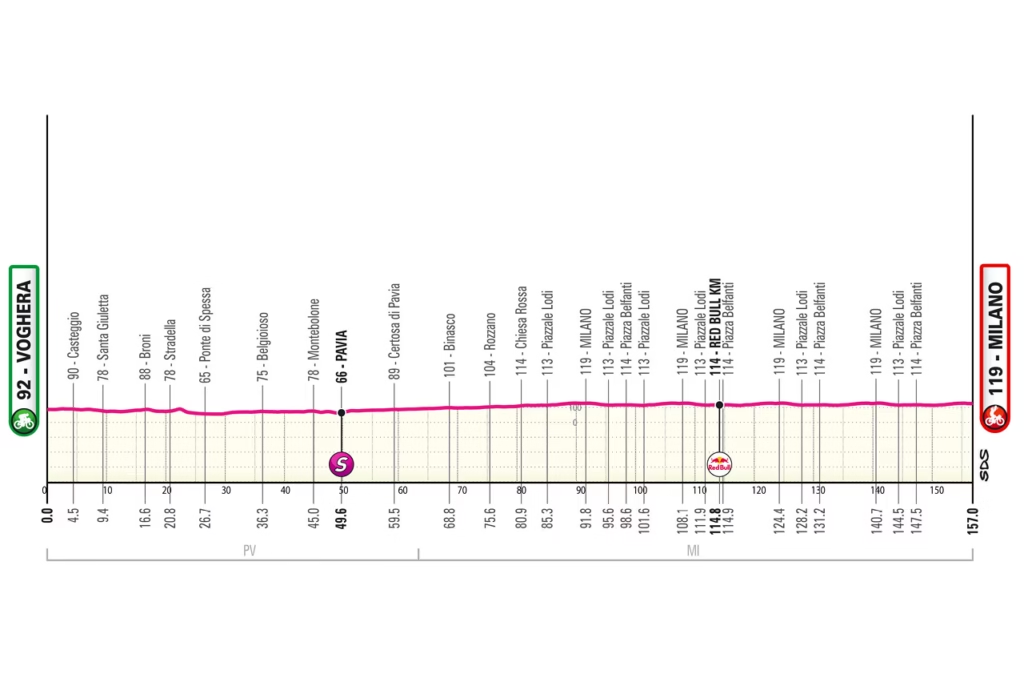
The stage is 157km long and contains only around 200 metres of altitude gain, making it almost entirely flat. The route heads from Voghera towards Pavia, then follows parts of the historic Milano-Sanremo road into Milan before entering a 16.3km finishing circuit that will be covered four times. The final circuit is flat, wide and has very few corners, with the last corner around 2km from the line and a flat, 8-metre-wide finishing straight.
That makes this a day for the fastest riders left in the race. The GC riders should get a temporary pause after Pila, but the sprint teams cannot treat this as easy. There have already been several stages at this Giro where breakaways, late attacks or harder-than-expected finales have spoiled the pure sprinters’ plans. Milan should be different, but only if the chase is organised.
The route
Stage 15 starts in Voghera and heads north towards Pavia on wide, mostly straight roads. That opening section should be straightforward for the peloton, and it gives the sprint teams plenty of time to manage the breakaway. There is no classified climbing to shape the day, and the route does not contain the kind of late hill that could remove the heavier sprinters.
After Pavia, the race follows sections linked to the traditional Milano-Sanremo route before entering Milan. That gives the stage a historical feel, even if the terrain is very different from a Monument finale. Instead of the Cipressa and Poggio, the decisive section here is a city circuit built for speed.
The riders enter the Milan circuit after passing Chiesa Rossa. The 16.3km lap is covered four times, giving teams several looks at the corners, road width and final positioning battle before the sprint. With the last corner around 2km from the finish, there should be enough time for lead-outs to reorganise before the final straight.
What’s on offer
- Stage: 15
- Date: Sunday, 24th May
- Route: Voghera to Milan
- Distance: 157km
- Altitude gain: around 200 metres
- Start time: 12:40pm BST
- Expected finish: around 4:07pm BST
- Stage type: flat
- Finish: flat, 8-metre-wide finishing straight in Milan
- Likely winner type: pure sprinter
- Main tactical point: control of the final Milan circuit
Why this is a major sprint opportunity
Stage 15 is the clearest sprint stage since the early part of the Giro. There is no late climb, no rolling finale, and no obvious reason for the pure sprinters to be distanced before the finish. After days like Chiavari, Novi Ligure, Verbania and Pila, this is the sort of profile that sprint teams have been waiting for.
The flatness matters. With only around 200 metres of climbing across 157km, fatigue will still be present from two weeks of racing, but the terrain itself should not split the peloton. Any selection is more likely to come from positioning, crashes or late hesitation than from physical difficulty.
The circuit also favours the sprinters. Four laps give teams time to learn the finish, and the final 2km after the last corner should allow proper lead-out structure. That does not remove danger, but it reduces the chance of a technical surprise deciding the stage.
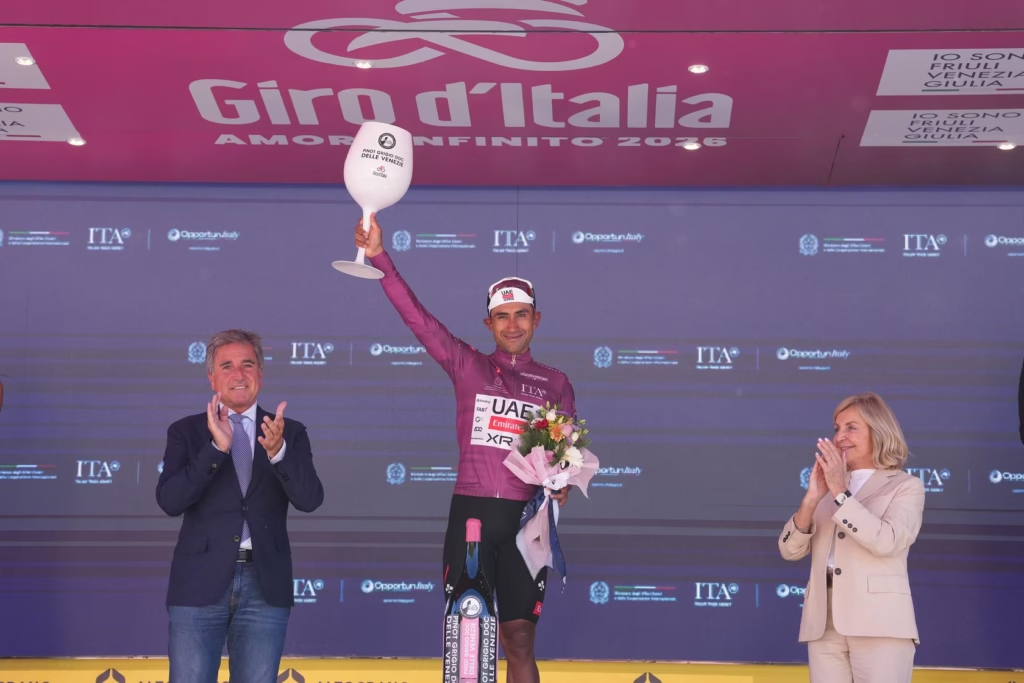 Photo Credit: RCS
The ciclamino battle
The points jersey adds an important layer to the stage. Jhonatan Narváez moved into the ciclamino jersey after stage 14, leading Paul Magnier by a single point, 131 to 130. That turns Milan into an immediate response opportunity for Magnier, especially because this is the kind of stage where a sprinter should be able to score heavily.
Magnier has been one of the central sprint figures in the race, but the points classification has not followed a simple sprint-stage pattern. Narváez has collected points through stage wins, breakaway success and harder days, which has made the contest much more awkward for the pure fast men.
Stage 15 gives Magnier the profile he needs. If he wins, or even places well, he can take back control of the ciclamino fight. But he cannot afford to be boxed in or lose points to Jonathan Milan, Jasper Stuyven or other fast finishers. With the classification this close, the sprint is not only about the stage.
Can Jonathan Milan win in Milan?
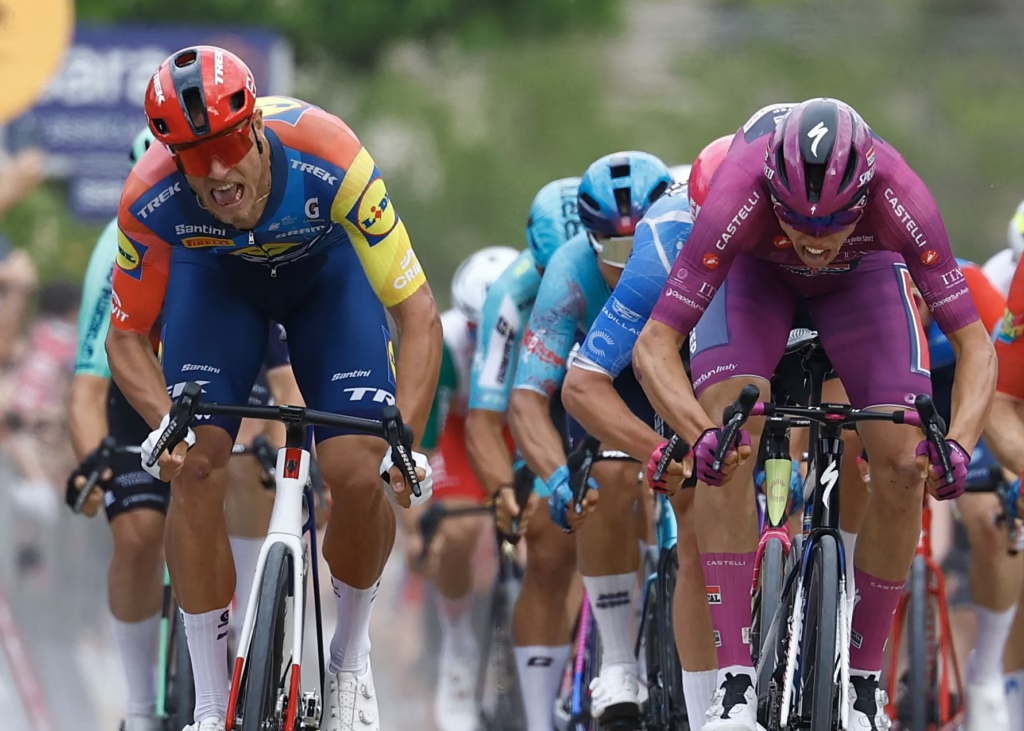
The obvious storyline is Jonathan Milan trying to win in Milan. The route is almost perfectly suited to a big-power sprinter: flat, fast, wide and relatively uncomplicated in the final kilometres. If Lidl-Trek can place him correctly into the last 2km, he has the speed to finish the job.
The problem is that this Giro has not always been kind to pure sprinters. Several expected sprint chances have disappeared through late attacks or harder terrain, and Milan has not been able to dominate the race in the way his profile might suggest on paper. Stage 15 is one of his best remaining chances to change that.
A victory here would matter beyond the wordplay. It would put him back into the centre of the sprint narrative, add pressure in the points competition, and give Lidl-Trek a clear reward after a Giro where the fast stages have been harder to control than expected.
Magnier’s chance to answer
Magnier may start the stage just behind Narváez in the ciclamino standings, but this is a stage that should suit him extremely well. The long, flat run into Milan gives Soudal-QuickStep time to control the race, and the wide finish should allow him to use his acceleration properly.
The important question is team management. Soudal-QuickStep also have Jasper Stuyven high in the points classification after his repeated success on harder stages. That gives the team options, but in Milan the obvious plan should be to set up Magnier.
If the race ends in a clean bunch sprint, Magnier should be one of the leading favourites. The only concern is whether the final circuit becomes too predictable and heavily contested. A wide sprint finish can still become chaotic when every team believes it has a chance.
The breakaway’s problem
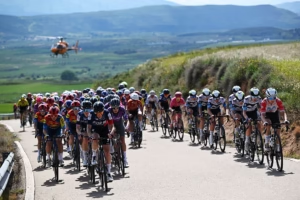
The breakaway will try, but this is a difficult day for an escape to succeed. The route is flat, the distance is manageable, and the sprint teams have a major incentive to bring everything back together. There are no climbs to help a small group build a lasting advantage, and the wide roads should make the chase efficient.
The only route for the breakaway is hesitation. If teams argue over responsibility, if the peloton allows a strong group too much time, or if the city circuit creates confusion, then an escape could survive longer than expected. But that kind of outcome would still be a surprise here.
The more likely scenario is a small early move being controlled at a safe gap, then caught either before or during the Milan circuit. Sprint teams have missed too many chances already to let this one drift.
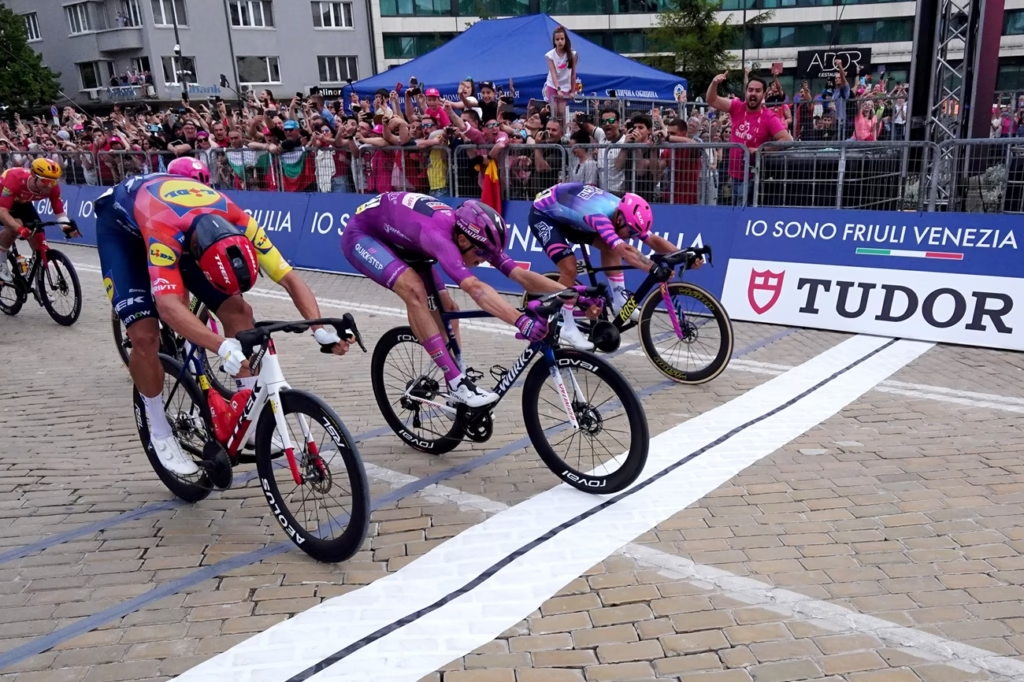 Photo Credit: RCS
What the GC riders need to do
For Vingegaard, stage 15 should be about protection and calm. He took the maglia rosa on Pila with his third stage win of the race, moving 2:26 clear of Eulálio overall after a decisive attack inside the final 5km. The work now shifts from chasing the jersey to defending it.
This is not a day where Vingegaard should be under pressure from his rivals, but flat city finishes can still be risky. Positioning matters, especially on the Milan circuit, where the sprint teams will begin fighting for space well before the final lap.
Eulálio, Gall, Arensman, Hindley and Pellizzari will all want the same thing: finish safely, avoid splits, and save energy before the mountains return. Stage 16 to Carì will bring the GC fight back quickly, so nobody in the top 10 should waste effort chasing a flat-stage result.
Riders to watch
Jonathan Milan is the headline name. The finish suits his power, the stage suits his team, and the setting gives him the most obvious story of the day. If he is delivered into position, he is one of the hardest riders to beat.
Paul Magnier has the ciclamino motivation and the speed to win. With Narváez leading the points classification by a single point, Magnier has every reason to make this stage count.
Jasper Stuyven is less of a pure sprint favourite but remains dangerous if the final becomes messy. He has been consistent across harder stages and could take advantage if the lead-outs break down.
Guillermo Thomas Silva has already won a stage at this Giro and remains an interesting option if XDS-Astana can keep him near the front. His team has been one of the success stories of the race, with multiple stage wins already.
Narváez is unlikely to be the fastest rider in a full bunch sprint, but his points jersey position means he still matters. If he can place well, he can limit Magnier’s gains. If he is absent from the top placings, the ciclamino jersey may change hands again.
How the stage could unfold
The opening kilometres should produce an early breakaway, but probably not a large one. Riders and teams without a sprint option may still want television time or a final chance before the rest day, but the profile gives them little to work with.
The middle section should be controlled by the sprint teams. The key will be keeping the gap manageable without burning too many riders before the Milan circuit. Once the race enters the city, the pace should rise quickly.
The four laps of the 16.3km circuit will be about position and timing. Teams will not want to leave their sprinters too far back, but going too early could waste lead-out riders before the final lap. The last corner at around 2km from the finish means the final lead-out should be long, fast and exposed.
From there, the winner should come from a high-speed bunch sprint. Milan, Magnier and the other pure sprinters should finally get the kind of finish they have been waiting for.
Prediction
Stage 15 is one of the few days in this Giro where the sprint teams have no real excuse. The route is flat, the finish is wide, and the final circuit is not technical enough to encourage a successful late attack. After repeated missed opportunities, the fastest riders should bring this one back together.
The ciclamino battle makes Magnier especially dangerous, but the stage feels tailor-made for Jonathan Milan. The finish gives him room to use his power, and the symbolism of winning in Milan is impossible to ignore.
Prediction: Jonathan Milan to win stage 15 in a bunch sprint, with Paul Magnier close enough to keep the points jersey battle tense as the race heads into the final week.