
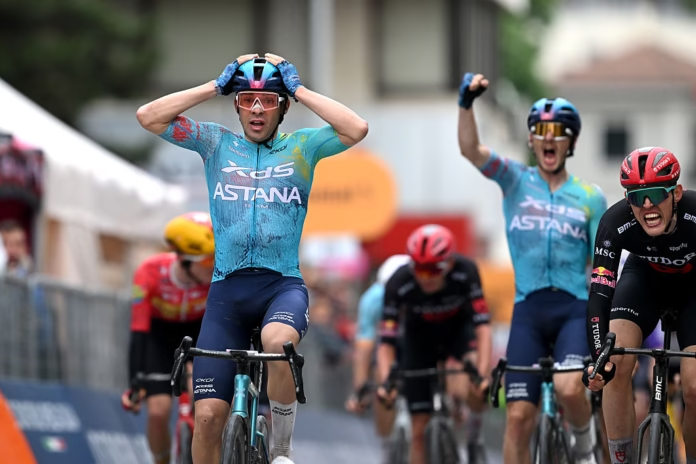
Thomas Silva won stage 2 of the Giro d’Italia 2026 on a damp and chaotic afternoon in Veliko Tarnovo, timing his sprint perfectly after a late crash and a hard uphill finale to take the biggest victory of his career so far. The XDS Astana rider beat Florian Stork and Giulio Ciccone in a reduced sprint after the stage had been neutralised following a major incident with around 20km to go. The result also made history, with Silva becoming the first Uruguayan rider to win a stage at any Grand Tour.
It was a stage that looked open from the start. At 221km, it was long and at times sleepy, but the punchy uphill finish and a late climb meant there was always the chance that the sprinters would lose control and the GC teams would take over. That is more or less what happened, but only after a long, quiet day gave way to a nervous and disrupted finale.
Maestri and Sevilla go early again
The day’s break formed almost immediately after the flag dropped. Mirco Maestri and Diego Pablo Sevilla went clear in the opening kilometres, giving the stage a familiar look after Sevilla had already been active on stage 1.
The peloton never showed much urgency in response. NSN took responsibility for most of the day through Ryan Mullen, keeping the move on a manageable leash while the rest of the bunch was content to sit in and save energy for later. The gap moved between roughly five and six minutes for long stretches, and for much of the stage the race drifted in that controlled holding pattern that often defines long Grand Tour transitional days.
Sevilla, already in the blue jersey, made the most of the early climbs. He took the KOM points on both the Byala Pass and the Vratnik Pass, strengthening his grip on the mountains classification, while Maestri was more interested in the simple business of staying clear as long as possible.
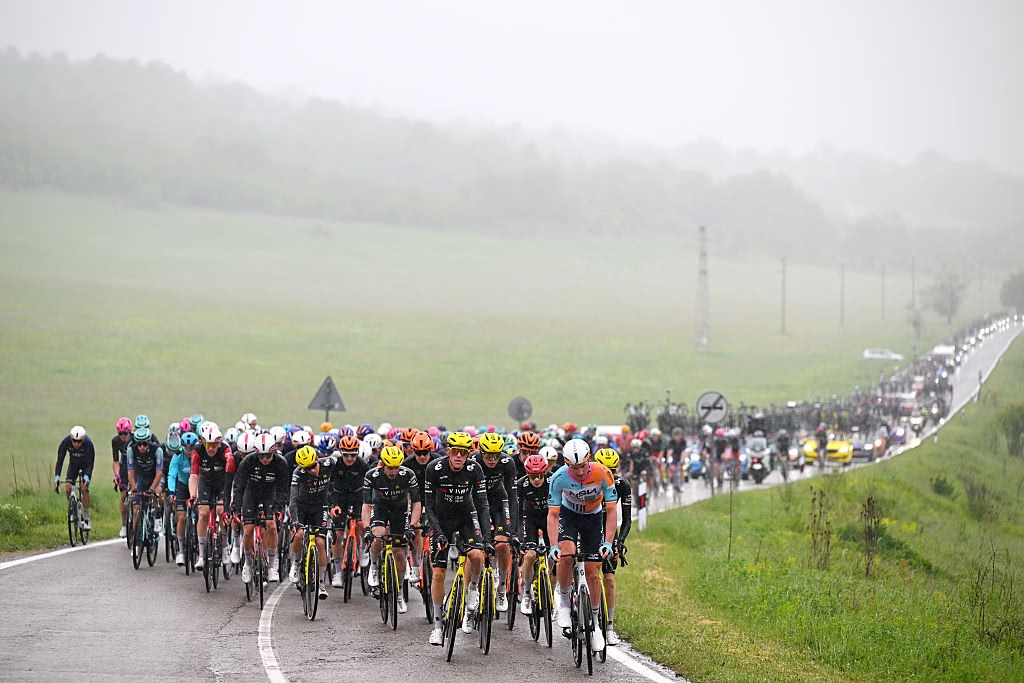 Photo Credit: Getty
The peloton wakes up around the intermediate points
The first real flash of intent from the bunch came at the intermediate sprint. Magnier, already in pink after his stage 1 win, sprinted for the points and took the maximum available behind the break, with Jonathan Milan following. It was a sign that the maglia ciclamino battle had already started properly, even if the race itself still felt subdued.
There was then another moment of interest at the Red Bull kilometre, where the GC riders finally stirred. Egan Bernal sprinted for the bonus and took six seconds, hinting that the more opportunistic climbers and overall contenders were keeping a close eye on every possible gain on a day like this.
Even then, the stage was still waiting for its real ignition point. The weather had turned nasty, rain jackets and gilets were appearing all over the bunch, and the wet roads were beginning to look like the most important factor in the finale.
Rain and nerves turn the finale dangerous
As the stage moved inside the final 50km, the tension slowly rose. The break’s lead began to collapse, the chase tightened, and the road into Veliko Tarnovo started to demand more precise positioning. The final climb was not severe enough to guarantee a pure GC battle, but it was hard enough to put the fast men under pressure and invite late attacks.
Maestri and Sevilla were finally caught with around 30km to go after spending almost 200km out front. From there, the big teams took over. Ineos, Team Visma | Lease a Bike and UAE Team Emirates-XRG all formed up near the front, while Astana and others were visibly preparing for the finish.
Then came the moment that changed the stage.
Major crash forces a neutralisation
With around 20km to go, a major crash brought down a significant number of riders and turned the stage upside down. Among those caught up were Adam Yates, Antonio Morgado, Derek Gee-West, Santiago Buitrago and Corbin Strong, while Jay Vine abandoned as a result of the incident. Victor Campenaerts, Andrea Vendrame and Adne Holter were also among the riders delayed or receiving attention after the crash.
The stage was quickly neutralised, with the race director’s car moving to the front of the peloton as riders tried to remount and assess the damage. Some were soon back on their bikes, others more gingerly, and the whole race briefly hung in limbo while the main groups reformed.
When the stage resumed with 18km to go, not everyone had made it fully back. That immediately altered both the tactical shape and the list of contenders. A number of riders who might have influenced the finale were either gone, delayed or too battered to contribute properly.
-
 Photo Credit: A.S.O./Gaëtan Flamme
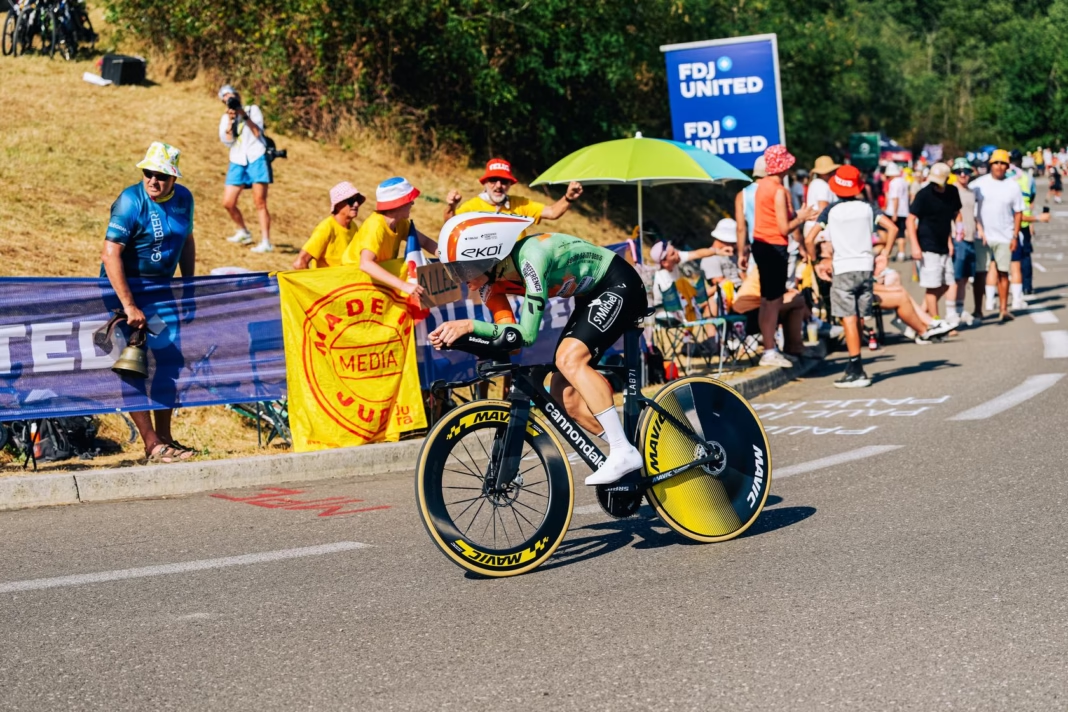
Visma light it up on the final climb
Once racing restarted, the pace went up sharply. The Red Bull kilometre had already brought one burst of action, but the final climb was where the real selection began. Astana led the bunch onto it at first, but Team Visma | Lease a Bike quickly took control and stretched the peloton into single file.
Paul Magnier was dropped, which meant the Giro would have a new pink jersey after only one day. Narváez and Gee-West were also struggling after their crash involvement, while Antonio Morgado was distanced despite having been seen as one of the possible stage contenders.
Then Jonas Vingegaard moved up.
The Dane lifted the pace on the steeper section and then attacked, taking only Giulio Pellizzari and Lenny Van Eetvelt with him at first. Behind, there were gaps everywhere. Bernal, O’Connor and Mas were all briefly adrift, while the GC group splintered into several fragments on the wet climb.
That move did not decide the stage, but it did force the race fully open and ensured the finish would be fought out by a mixed group of punchy climbers, aggressive GC men and opportunists rather than a conventional reduced sprint.
The race comes back together in the final kilometre
For a while it looked as though the leading trio would stay clear. The gap moved out towards 20 seconds, and on paper that should have been enough with only 10km remaining. But the chase behind was bigger than it first appeared, and once the race crested the climb and plunged towards the finish, the situation began to change quickly.
The roads into Veliko Tarnovo featured an uphill cobbled section and a technical run-in that kept the pressure on all the way to the line. Jan Christen attacked and bridged across late, while Van Eetvelt also tried a move inside the final kilometre, but none of the accelerations could keep the chasers away for good.
The leading quartet was finally swept up just before the finish, leaving the stage to be decided in a reduced sprint after all.
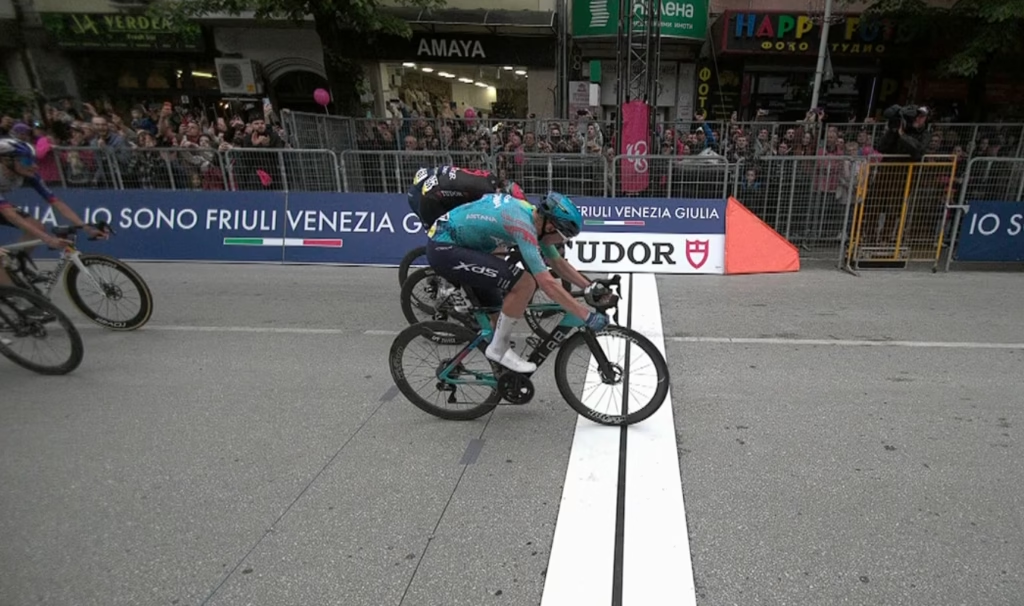
Silva finishes it off for Astana
Thomas Silva was the rider who judged that final sprint best. In a finish that had already changed shape several times and was made even harder by the damp roads and constant gradient changes, he produced the cleanest effort and came through to win for XDS Astana.
Florian Stork finished second for Tudor Pro Cycling, with Giulio Ciccone taking third for Lidl-Trek after another aggressive and intelligent ride. Christian Scaroni backed Silva up in fourth for Astana, while Giulio Pellizzari, Matteo Sobrero, Andreas Leknessund, Jan Christen, Martin Tjøtta and Mathys Rondel completed the top ten.
It was a result built as much on resilience and timing as on outright speed. The crash, the neutralisation and the stop-start finale meant this was never a straightforward day to win. Silva managed it by staying in position through the confusion and still having the sprint to finish it.
A messy, hard stage with a historic winner
This was not a stage that will be remembered for beauty or smooth flow. It began slowly, turned grim in the rain, was ripped apart by a major crash, and then ended in a reduced uphill sprint after a sequence of attacks, regroupings and tactical uncertainty.
But it did produce a strong winner. Silva handled the conditions, the climb and the sprint better than anyone else on the day, and Astana were rewarded with one of the biggest results of their season so far. It also gave Uruguay a landmark moment in stage racing, with Silva becoming the first rider from the country to win a stage at any Grand Tour.
The bigger story in the overall picture will sit with the damage from the crash and the new shape of the GC after Magnier lost pink. But in pure stage terms, this belonged to Silva.
Giro d’Italia 2026 stage 2 result
Results powered by FirstCycling.com
Main photo credit: Getty

