The 2026 Giro d’Italia reaches its second weekend with a stage that looks simple for almost 170km, then suddenly becomes one of the most important GC tests of the race so far. Stage 9 runs from Cervia to Corno alle Scale, taking the peloton from the Adriatic coast into the Tuscan-Emilian Apennines for a summit finish that should tell us more about the balance between Afonso Eulálio, Jonas Vingegaard and the rest of the overall contenders.
After Blockhaus and then the sharp, awkward finale into Fermo, the Giro now arrives at a very different type of mountain day. Stage 9 is not loaded with repeated climbs. It is more of a long approach to one decisive final ascent, which means the race may stay controlled for a long time before exploding late.
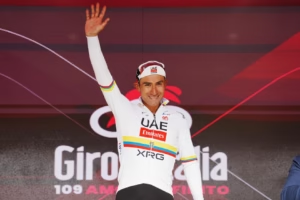
Jhonatan Narváez won stage 8 in Fermo after another aggressive day, while Eulálio kept the maglia rosa. His advantage over Vingegaard is now 3:15, a useful margin, but not one that feels fully secure after Vingegaard’s stage 7 victory on Blockhaus. Corno alle Scale gives the Dane another chance to reduce that gap before the first rest day.
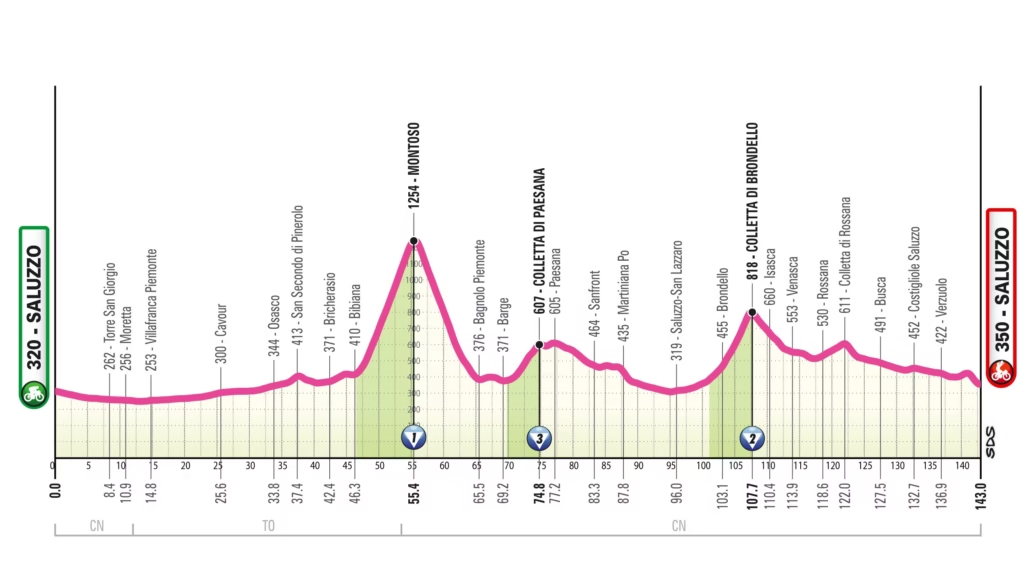
The route
Stage 9 begins in Cervia, on the Adriatic coast, before heading inland across mostly flat terrain. For much of the day, the profile is almost deceptive. The peloton rolls through Emilia-Romagna, passes the Bologna area, and moves steadily towards the Apennines without facing the kind of early climbing that usually breaks a stage open.
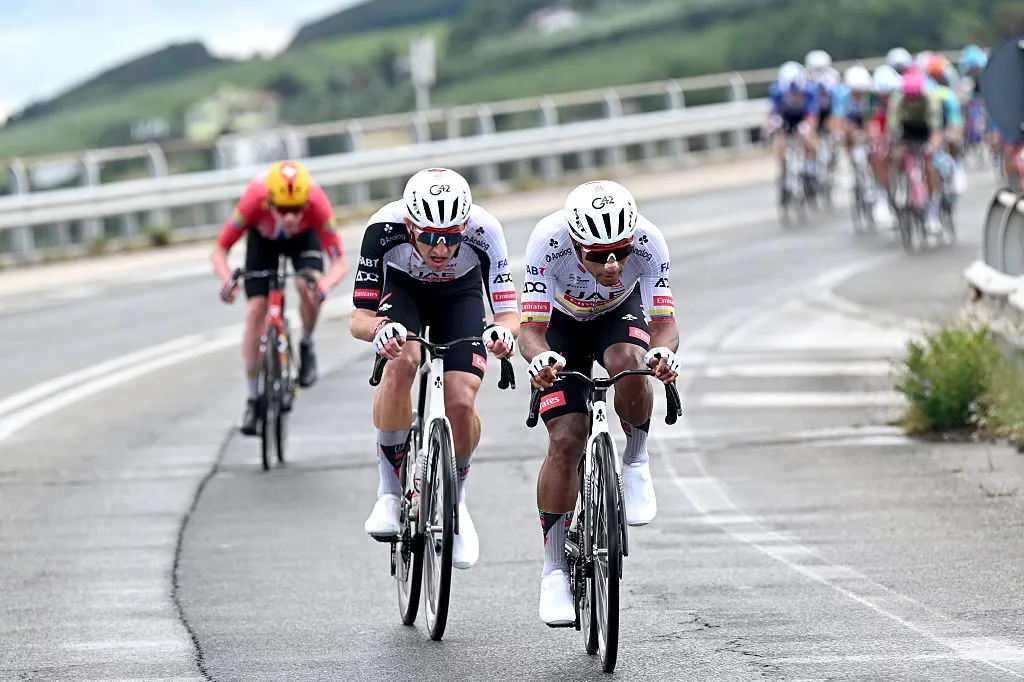
That should make the first half easier to manage for the GC teams. A breakaway is likely to go, but the peloton will have a long time to decide whether it wants to keep the move close or let the stage drift towards the attackers.
There is one modest climb before the finale, but the stage is really built around the final ascent to Corno alle Scale. Until that point, the Giro may feel like it is waiting. The difficulty is that the waiting ends all at once.
Corno alle Scale is a long final climb rather than a short punchy ramp. It is around 12.8km at an average of 6 per cent, but the headline number hides the way the climb becomes more serious towards the top. It is not brutally steep from bottom to top, but it is long enough to expose weakness and has sections late on where the stronger climbers can make a real difference.
The climb was last used as a Giro stage finish in 2004, when Gilberto Simoni won ahead of Damiano Cunego and Franco Pellizotti. That context matters because it underlines what kind of test this is. Corno alle Scale is a climb for proper GC riders, not just for opportunists or puncheurs.
What’s on offer
- Stage: 9
- Date: Sunday 17th May
- Route: Cervia to Corno alle Scale
- Distance: 184km
- Start time: around 11:35am BST
- Expected finish: around 4:15pm BST
- Main climb: Corno alle Scale
- Likely winner type: GC climber or breakaway climber
- Main tactical point: the final 6km of the summit finish
Why stage 9 is so different from stage 8
Stage 8 to Fermo was chaotic by design. It had short climbs, narrow roads, technical descents and a steep urban finish where timing mattered almost as much as climbing strength. Stage 9 is cleaner, but potentially more important.
This is a more traditional summit-finish test. The long flat approach means the strongest teams can keep their leaders protected and save energy before the final climb. There are fewer places to improvise before the finale, which may make the race more predictable, but also more direct.
That plays into Vingegaard’s hands. On Blockhaus, he showed that when the Giro becomes a pure climbing contest, he is the reference point. Corno alle Scale is not as long or as severe as Blockhaus, but it is still hard enough for the best climbers to separate themselves if they want to race aggressively.
For Eulálio, the stage is about containment. He has already conceded time on the hardest climb of the Giro so far, but he remains in pink. The question is whether he can limit his losses again, or whether Vingegaard can take another clear step towards the race lead before the rest day.
The GC situation
Eulálio still has a buffer, but the race has begun to narrow around him. Vingegaard is second overall at 3:15, close enough that another strong summit finish could bring the pink jersey within much more realistic reach.
Felix Gall remains one of the most important riders in this part of the race. He was the closest challenger to Vingegaard on Blockhaus, and Corno alle Scale should suit him better than the stop-start finish into Fermo. If he can stay with Vingegaard again, he can strengthen his podium position and perhaps put pressure on Eulálio.
Jai Hindley, Giulio Pellizzari and Ben O’Connor are also still in the GC fight. Hindley and O’Connor have the experience to handle a stage like this, while Pellizzari’s climbing has made him one of the most interesting riders in the top 10. The final climb is hard enough for all three to make gains if others fade.
Giulio Ciccone is another rider to watch. He has already had a prominent Giro, and this type of summit finish gives him a chance either to chase the stage or defend his place among the overall contenders. The difficulty is that Corno alle Scale may be less about explosive timing and more about sustained climbing, which could favour Vingegaard, Gall and Hindley more clearly.
The stage also matters for riders hovering around the edge of the top 10. A summit finish before the rest day is a classic place for the GC to stretch. A rider who loses 30 seconds here can suddenly find himself defending rather than attacking in week two.
How the stage could unfold
The early breakaway should form on the flat or rolling roads after Cervia. Because the stage finishes uphill, there will be plenty of riders who want to get ahead of the race, especially climbers who are already out of the GC picture. The challenge for the break is that the final climb is obvious enough for the main teams to measure the gap properly.
If Visma | Lease a Bike want another stage win and more time for Vingegaard, the breakaway may be kept within reach. That would turn the stage into a controlled build-up before the final climb. If they decide the rest day is close and the GC position is already improving, the break may have more room.
The first serious action should come on the lower slopes of Corno alle Scale, where teams will fight for position before the road narrows and the gradient begins to bite. The early part of the climb may be ridden at tempo, especially if GC squads still have domestiques available.
The decisive moves are more likely in the final 6km. That is where the climb becomes harder, fatigue from the long approach begins to count, and the GC riders have fewer teammates left. Vingegaard does not need to attack from far out, but he will know that a late acceleration could still take meaningful time.
A breakaway win remains possible, but the stage shape makes it harder than it was in Fermo. There is one obvious place where the GC teams can bring everything back, and if the gap is manageable at the foot of Corno alle Scale, the favourites could contest the win.
Why the final climb suits Vingegaard
Vingegaard’s strongest weapon is not just his ability to attack. It is the way he can sustain pressure after the attack has gone. Corno alle Scale gives him enough road to do both.
The climb is not so steep that it becomes a stop-start puncheur’s finish, but it is steep enough in the final section to reward a rider who can lift the pace and keep it high. That is the danger for Eulálio. If Vingegaard goes late, the Portuguese rider cannot simply ride his own tempo and assume the damage will be small. On this kind of climb, a gap can grow quickly once the elastic snaps.
Gall may be the rider most likely to stay closest if the climb becomes a pure test. Hindley also has the experience and climbing rhythm for this type of effort. Pellizzari, meanwhile, may have the freedom and confidence to follow moves rather than wait for others to dictate the race.
The final climb is also long enough to punish riders who are still carrying fatigue from Blockhaus and Fermo. The first rest day comes afterwards, which often encourages aggressive racing. There is less reason to save energy when recovery is finally close.
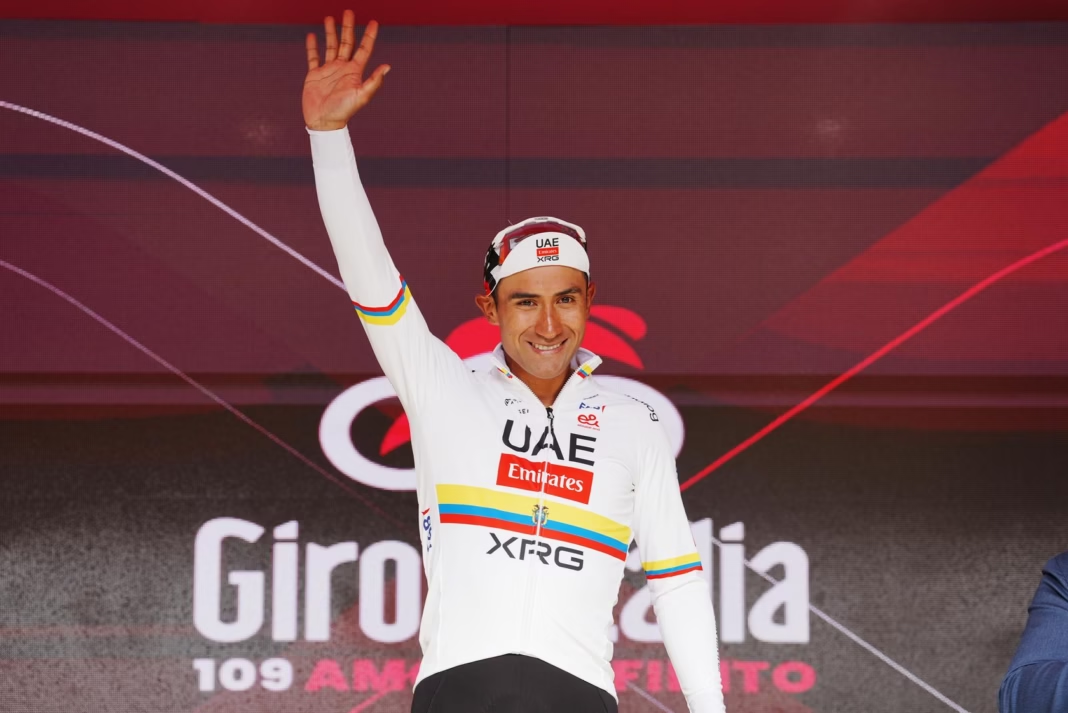
Riders to watch
Vingegaard is the obvious favourite if the GC group contests the stage. He looked strongest on Blockhaus, and Corno alle Scale offers another sustained climbing test where he can apply pressure without needing a complicated tactical set-up.
Eulálio’s role is different. He does not need to win the stage. He needs to limit the loss, stay calm if Vingegaard attacks, and avoid turning a difficult day into a damaging one. Holding pink into the rest day would still be a significant success, even if the gap shrinks again.
Gall has the profile to challenge on this kind of finish. He climbs best when the race settles into a hard rhythm, and the final ascent gives him a better chance than the punchier Fermo stage did.
Hindley is another rider who should prefer this to stage 8. The Australian has a strong Grand Tour climbing engine and knows how to measure an effort on a summit finish. If the front group thins gradually, he should be among the last riders left.
Pellizzari is one of the most intriguing names in the GC picture. He has shown enough climbing strength to be treated seriously, and a summit finish before the rest day gives him a chance to either consolidate or make a bigger statement.
Ciccone may be a threat if the final climb is raced more tactically. If the favourites hesitate and a reduced group reaches the last kilometre together, his punch becomes dangerous. If the climb is ridden at full GC pace from further out, it becomes a tougher ask.
From the breakaway, riders such as Einer Rubio, Jefferson Alexander Cepeda, Wout Poels, Filippo Zana or Alessandro Pinarello would all fit the stage if they can get into the right move. The issue is whether the GC teams allow enough space before Corno alle Scale.
Prediction
Stage 9 should bring the GC back to the front of the race. The route is too flat early to create chaos, but the final climb is hard enough to produce real separation. With the rest day coming afterwards, the strongest riders have a clear reason to spend energy.
A breakaway win is possible, especially if the peloton gives a strong group too much time before the Apennines. But after Blockhaus showed Vingegaard’s climbing superiority, Corno alle Scale looks like an obvious opportunity for Visma | Lease a Bike to apply pressure again.
Prediction: Jonas Vingegaard to win on Corno alle Scale, taking more time from Eulálio and tightening the battle for the maglia rosa before the first rest day.