RCS Sport has confirmed the full 21-team start list for the 2026 Giro d’Italia Women, which runs from May 30th to June 7th, with every Women’s WorldTeam set to be on the start line and a wild card mix that keeps the race firmly rooted in its home market.
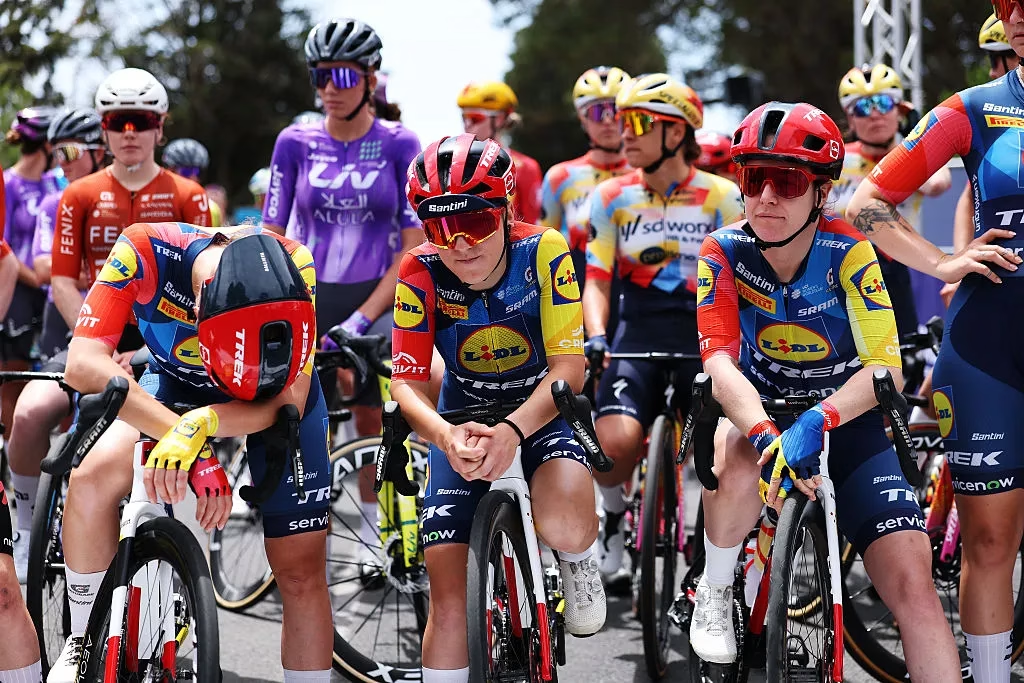
The headline is simple: all 14 Women’s WorldTeams are in. In a season where Women’s WorldTour participation rules have been under the microscope from Australia through the UAE and into the European spring, the Giro d’Italia Women is the clearest example yet of the top tier doing what the UCI intended: turning up in full.
There is, however, one notable absence. VolkerWessels has turned down its mandatory invitation, which reshapes the wild card picture and underlines a reality teams have been quietly navigating all year: a “mandatory” start list is only as rigid as a team’s capacity and priorities at that moment in the calendar.
What the selection tells us about RCS and the new hierarchy
RCS has built a start list that is both strong at the top and strategically familiar at the bottom.
At ProTeam level, Laboral Kutxa–Fundación Euskadi takes the automatic place via the 2025 ranking, reinforcing the idea that the second tier has a clear, performance-based route into the biggest races. St Michel–Preference Home–Auber 93 comes in as the sole ProTeam wild card, giving the organisers a second-tier team that can animate stages and chase results without needing special dispensation.
The more revealing part of the list sits in the Continental picks. All five invited Continental teams are Italian, a reminder that, even in an increasingly globalised Women’s WorldTour, RCS still sees domestic representation as a pillar of the Giro’s identity. It also neatly fits the practical logic of the Giro: local squads know the terrain, travel is simpler, and the teams bring sponsors, staff and supporters who recognise what the Giro means within the Italian calendar.
Competitive consequences for the race itself
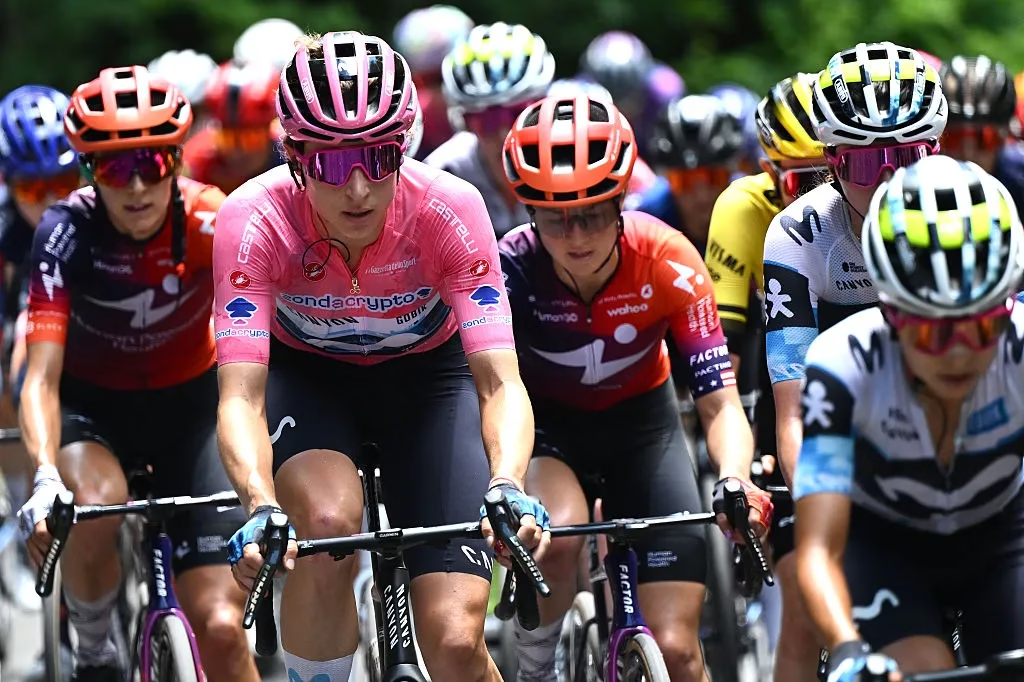
A full complement of WorldTeams usually produces two things: control and depth.
On flat or rolling days, the biggest squads can shut down chaos, manage breakaways, and set up their leaders with a level of structure that smaller races simply do not see. On mountain stages, the same depth can turn the race into a war of attrition, where teams with multiple climbing options can keep applying pressure long after others have run out of domestiques.
The Continental invitations still matter, though, because they often influence the shape of the racing. Third-tier teams are typically more willing to commit riders to long breakaways for visibility and experience, and that can change the texture of stages, even when the overall story is being written by WorldTeam GC contenders.
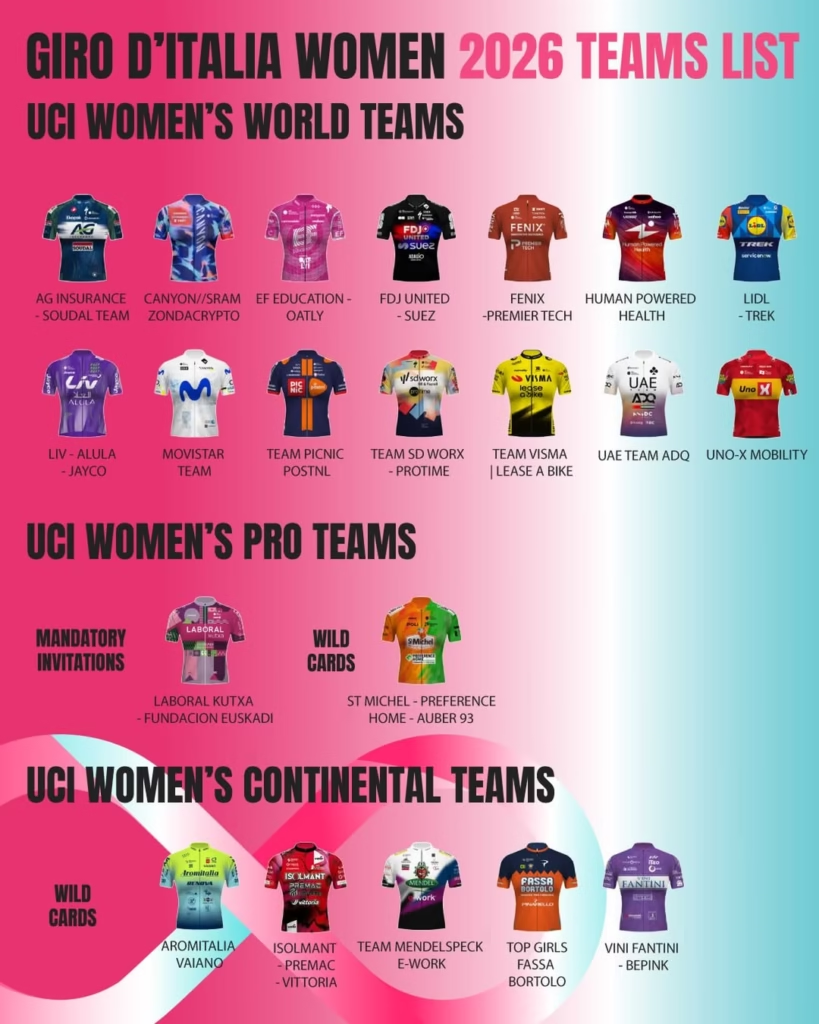
The 2026 Giro d’Italia Women teams
Women’s WorldTeams
- AG Insurance–Soudal Team
- Canyon-SRAM zondacrypto
- EF Education–Oatly
- FDJ United–SUEZ
- Fenix–Premier Tech
- Human Powered Health
- Lidl–Trek
- Liv-AlUla-Jayco
- Movistar Team
- Team Picnic PostNL
- Team SD Worx–Protime
- Team Visma | Lease a Bike
- UAE Team ADQ
- Uno-X Mobility
Women’s ProTeams
- Laboral Kutxa–Fundación Euskadi
- St Michel–Preference Home–Auber 93
Women’s Continental teams
- Aromitalia Vaiano
- Isolmant–Premac–Vittoria
- Team Mendelspeck E-Work
- Top Girls Fassa Bortolo
- Vini Fantini–BePink