The Grand Prix El Salvador delivered a different test to the previous day’s climbing finish, a UCI 1.1 one-day race run over an urban circuit around Santa Elena in the San Salvador metropolitan area. At roughly 79 kilometres, it was mostly flat with small rises, the sort of parcours that rewards organisation and timing more than raw climbing strength.
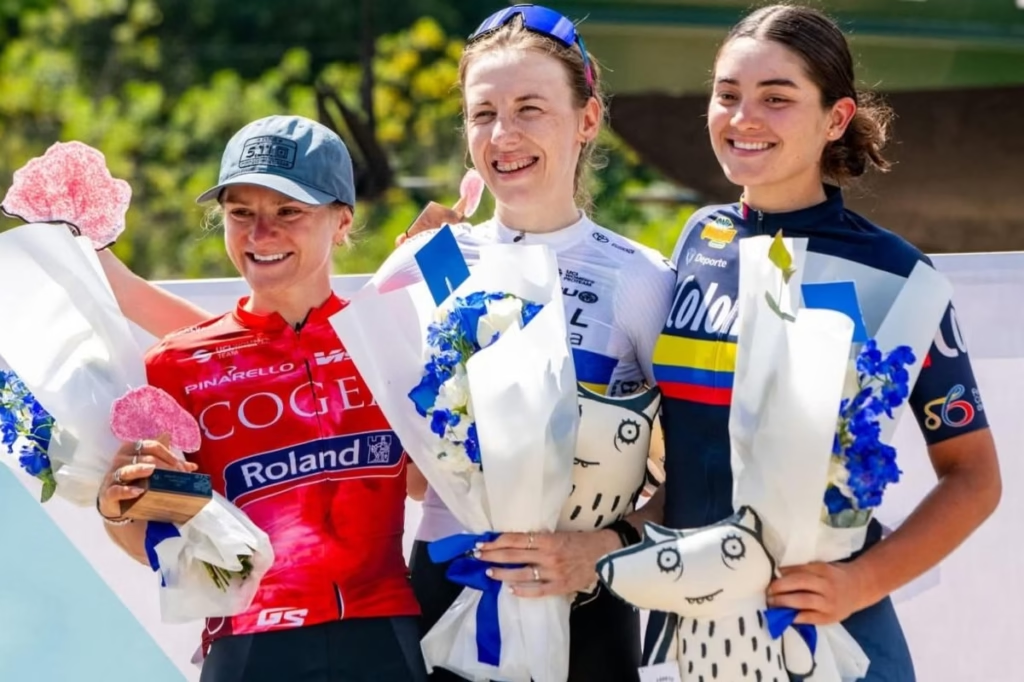
Yuliia Biriukova converted her near-miss from the day before into victory for Laboral Kutxa–Fundación Euskadi, finishing the job from the move of the day. The decisive moment came inside the final lap, when she attacked out of the front group and opened the few seconds she needed to hold off Francesca Hall and Angie Mariana Londoño Posada to the line.
A break of eight forms & the peloton hesitates
The race’s defining split was established early when a breakaway of eight riders went clear and quickly began to function like a genuine winning group rather than a placeholder move. The key detail was not just the size of the group, but how it created uncertainty behind: with multiple nations and teams represented, there was no obvious single squad willing to spend heavily on what looked, at first, like a manageable gap.
As the kilometres passed, that indecision became costly. The break’s advantage grew beyond two minutes, and the peloton fractured into two parts during the race, making a coordinated chase harder to assemble and easier for riders in the move to believe they could take it all the way.
Why the move stayed away: commitment at the front, confusion behind
Once the front group had time, the race shifted from formation to consolidation. Biriukova was described as one of the most active riders in the decisive action, which matters tactically, because in a break of eight the strongest rider can still lose if they do not control the rhythm and the selection.
Behind, the course profile did not offer a single obvious launch point for a full-gas chase. On a circuit with only small rises, the only way to bring back a committed group is sustained speed, and that requires clear responsibility. With the bunch split and teams weighing up their interests, the break’s advantage shrank but never collapsed.
The final lap: one acceleration is enough
The winning move came from clarity. Rather than waiting for a sprint that could be messy after a day spent off the front, Biriukova attacked inside the last lap, turning a group finish into a short solo effort. It was not a long-range gamble, it was a decisive, well-timed surge that forced the others into immediate damage limitation.
Hall and Londoño were the strongest responders, but the gap was already in the danger zone for a flat circuit finale. Biriukova held her advantage to the line, winning by seconds rather than metres, with the chase never quite reorganising in time.
The supporting results underline a race won through initiative
Hall’s second place backed up her form after winning the Grand Prix San Salvador the day before, and Biriukova’s victory completed a neat reversal of that result, after she had finished runner-up in San Salvador. For Laboral Kutxa–Fundación Euskadi, it was also a clean example of how to capitalise on momentum in a busy race block, with Biriukova arriving in clear form after placing ninth overall in the Tour El Salvador.
Elisa Valtulini’s fifth place confirmed the break was the race, not a late selection from the bunch, while the wider placings reflected the international mix on the start line, including strong rides from the Colombian contingent in the front group.
2026 Women’s Grand Prix El Salvador result
Results powered by FirstCycling.com