Drentse Acht van Westerveld was never the most glamorous race of the spring, but it had a very clear purpose and character. Held in Drenthe as the Friday opener to the old Ronde van Drenthe weekend, it gave the women’s peloton an early-season Dutch test built less on climbing than on exposure, positioning and the constant risk of the wind turning a straightforward race into something much harder. On calm days it often ended in a sprint. On rougher ones, it could become one of the most selective flat races on the calendar.
That balance was what made it valuable. The race was usually described as a warm-up for the bigger Sunday objective, but that never meant it was soft. Drenthe has a way of punishing riders without needing dramatic terrain. Narrow roads, open farmland and the later addition of the VAM-berg gave the race enough ingredients to become more than just a routine lead-in event. By the time the elite women’s race disappeared after 2024, Drentse Acht van Westerveld had built a stronger identity than its place on the calendar might initially suggest.
How Drentse Acht van Westerveld began
The first edition took place in 2007 under the name Drentse 8 van Dwingeloo. Over time, the race’s title shifted through several variations before settling as Drentse Acht van Westerveld in 2016. That changing name can make the history look slightly fragmented, but the race itself remained recognisably the same kind of event – a flat Dutch one-day race shaped by wind, road furniture and the constant stress of staying in the right place.
From the start, it filled an important niche. The women’s spring calendar did not have many races that looked flat on paper yet could still become highly selective through conditions alone. Drentse Acht van Westerveld offered exactly that. It was usually a race for quick riders, but rarely for riders who only had speed. The winners here generally needed resilience, awareness and the ability to survive a hard day before finishing it off.
How the race evolved
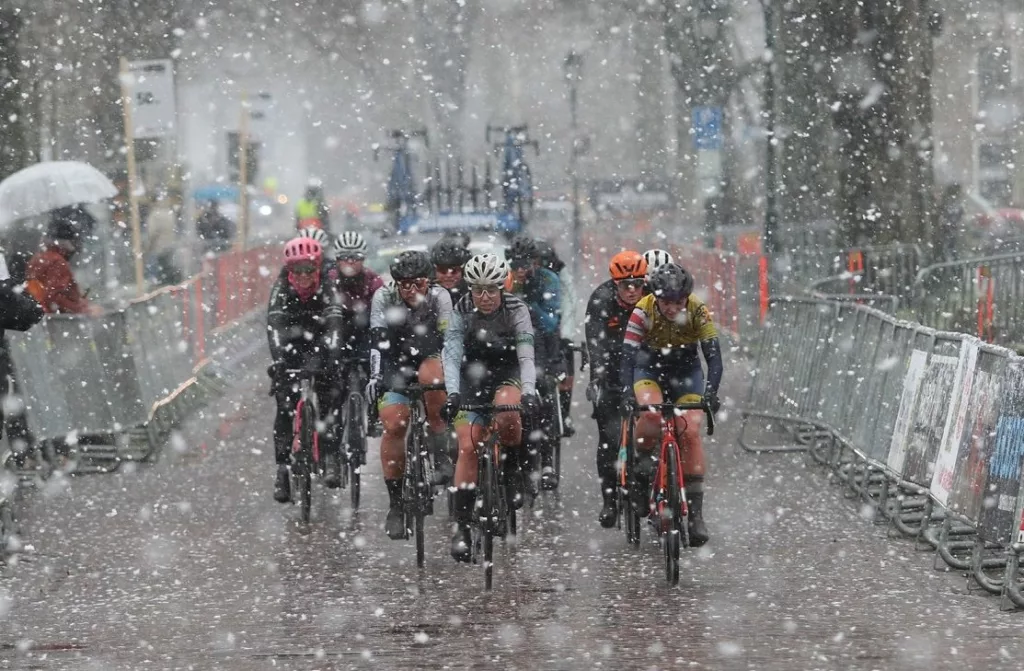
The race developed in quiet but meaningful ways. In its early years, it was more straightforwardly a bunch race, though even then the wind could disrupt the script. Over time, the VAM-berg became the most recognisable feature of the race. It was never close enough to the finish to act as a decisive final climb in the usual sense, but it added a repeated effort that could split the bunch, force accelerations and leave the peloton more fragile for the final phase.
That mattered because the race was often decided not by one single attack but by the field already being weakened into smaller units. The VAM-berg’s steep cobbled ramps gave the race a visual identity, but the larger truth of Drentse Acht van Westerveld remained the same: the roads of Drenthe and the wind over them were the real organisers of the race. When the conditions were hard enough, the event could produce huge time gaps that looked out of place in what was, on paper, a flat one-day race.
The riders who shaped Drentse Acht van Westerveld history
Ina-Yoko Teutenberg is the key name in the race’s history. Her three wins made her the most successful rider the event ever had, and that record says plenty about what the race rewarded. Teutenberg had elite sprint speed, but she also had the toughness and race intelligence to handle the kind of flat northern racing that is never quite as simple as it looks.
Behind her, the race produced a run of winners who underline that same pattern. Marianne Vos won twice, Chloe Hosking won twice, and Chantal van den Broek-Blaak also won twice. That mix tells the story well. Drentse Acht van Westerveld could reward a fast finisher, a classics rider or a complete all-rounder, provided they could come through the race in the front split or the front reduced group.
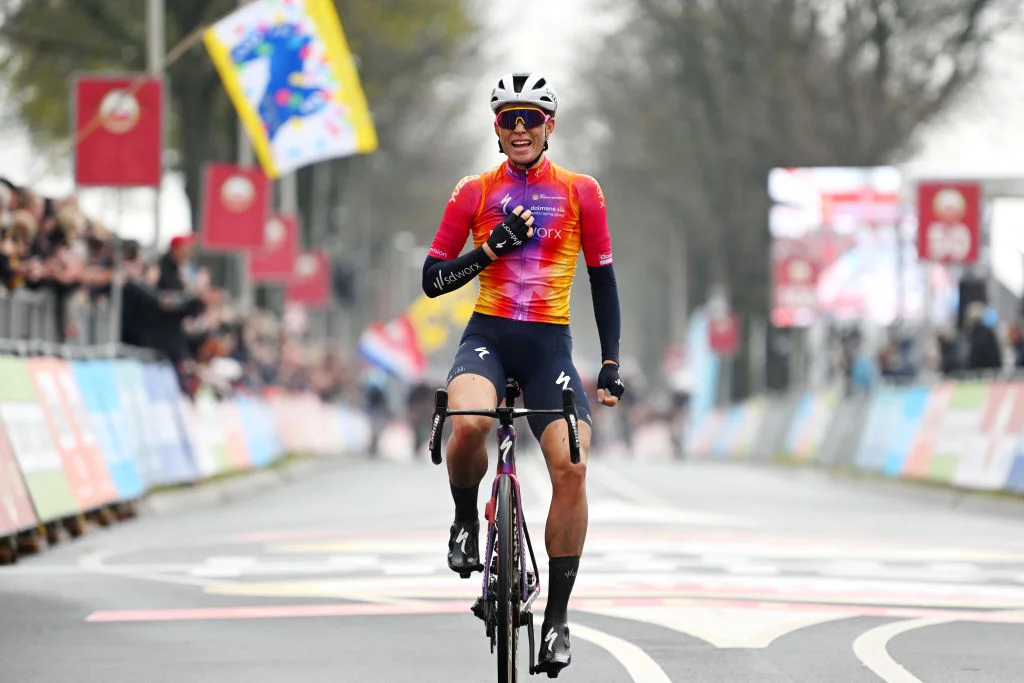
The final phase of the race’s history added a slightly different feel again. Audrey Cordon-Ragot’s 2019 victory came from one of the race’s most brutal wind-affected editions. Chantal van den Broek-Blaak won in 2021, Christine Majerus in 2022, and Sofie van Rooijen took the final elite edition in 2024. That sequence gave the race a fitting end: one last reminder that Drentse Acht van Westerveld was still a race where speed mattered, but only after the rest of the course had done its damage.

The greatest Drentse Acht van Westerveld edition
The 2019 edition remains the clearest example of how savage this race could become when the wind took control.
The riders faced winds of more than 25mph and the race split long before the finish. Trek-Segafredo drove the pace hard enough to force a front group clear, and once the field had fractured, the gaps only grew. By the end of the day, the riders at the front were almost 12 minutes ahead of the remains of the peloton, which is an extraordinary margin for a race of this type.
The final selection included Audrey Cordon-Ragot, Ellen van Dijk, Amy Pieters, Marta Bastianelli, Alexis Ryan, Lisa Klein, Gracie Elvin and Evy Kuijpers. Ellen van Dijk tried to split things again late, Gracie Elvin also attacked, but it was Cordon-Ragot who made the decisive move. Riding solo into a headwind is rarely an ideal proposition, yet with Van Dijk disrupting the chase and the rest already deep into the red, nobody could bring her back. She won by 90 seconds, with Pieters and Bastianelli completing the podium.
What made that edition so memorable was the scale of the destruction. This was no tidy reduced sprint after a windy day. It was a complete flattening of the race, with the strongest riders left in tiny groups spread across the roads of Drenthe. For a race that often carried the label of a Friday warm-up, 2019 showed how vicious it could be.
The defining section of Drentse Acht van Westerveld
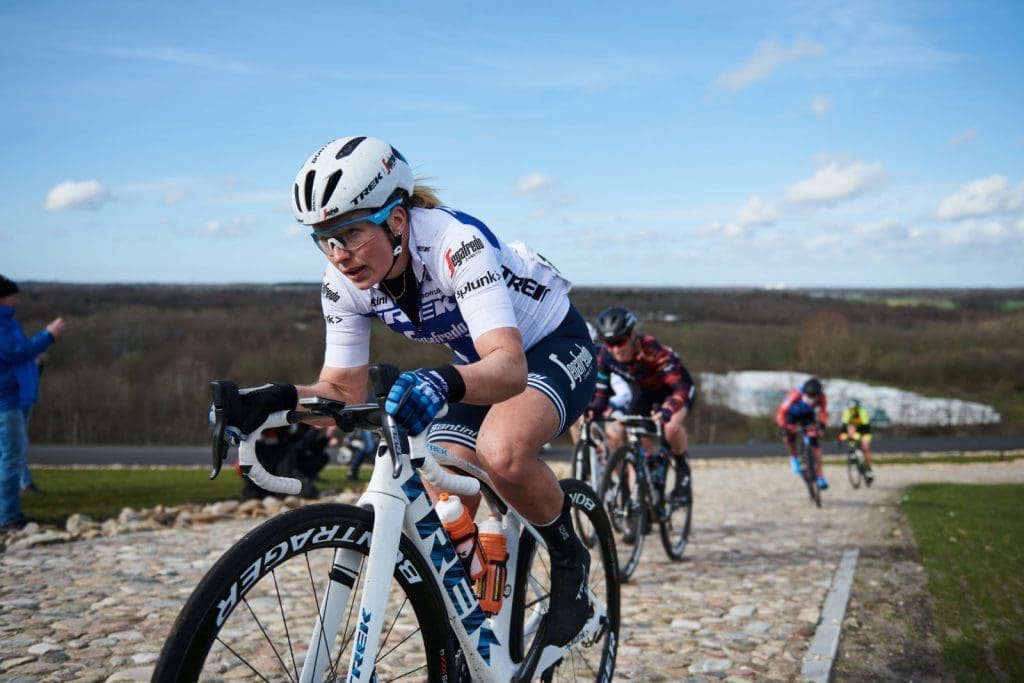
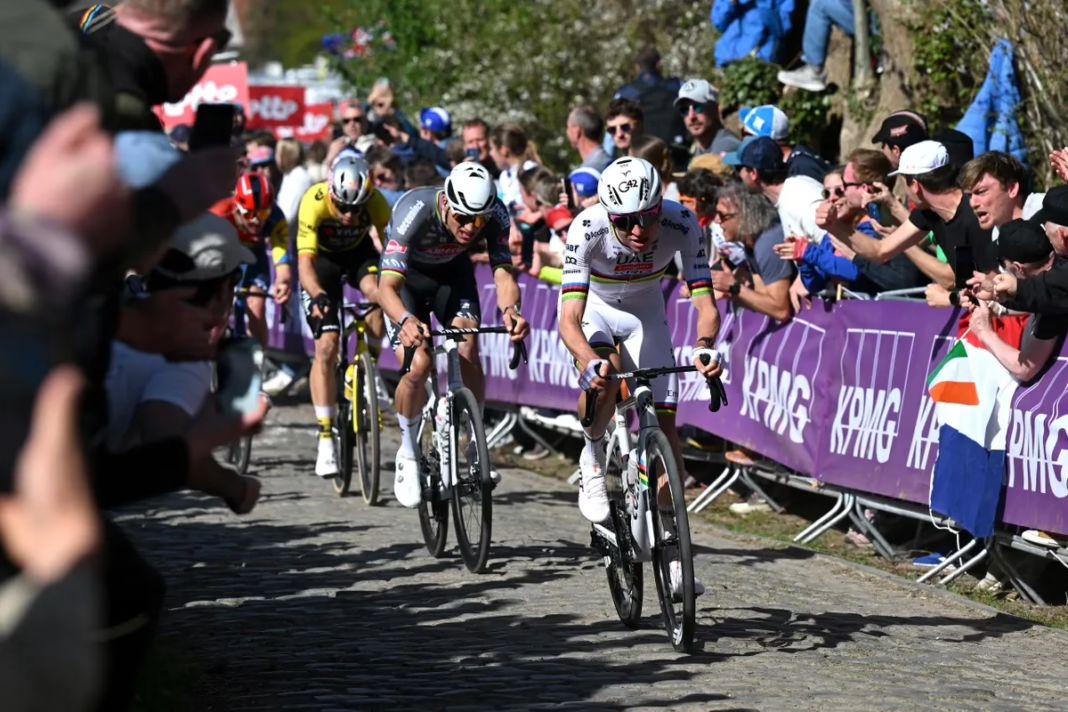
The VAM-berg became the race’s most recognisable feature in its later years. Built on top of a former landfill site, it is an unusual climb in any context, and in Drentse Acht van Westerveld it added a distinctive visual and tactical marker to an otherwise flat race.
Its importance was never simply about selecting the winner there and then. The climb was too far from the finish for that. What it did instead was create strain. Riders had to accelerate hard on steep cobbled ramps, recover quickly and then settle back into the exposed roads where the wind could do the rest. In that sense, the VAM-berg summed up the race quite well. It was not a decisive mountain. It was a stress point in a race built around repeated discomfort.
Drentse Acht van Westerveld previous winners
- 2007 – Regina Schleicher
- 2008 – Ina-Yoko Teutenberg
- 2009 – Ina-Yoko Teutenberg
- 2010 – Ina-Yoko Teutenberg
- 2011 – Marianne Vos
- 2012 – Marianne Vos
- 2013 – Chloe Hosking
- 2014 – Chantal van den Broek-Blaak
- 2015 – Giorgia Bronzini
- 2016 – Leah Kirchmann
- 2017 – Chloe Hosking
- 2018 – Alexis Magner
- 2019 – Audrey Cordon-Ragot
- 2020 – not held
- 2021 – Chantal van den Broek-Blaak
- 2022 – Christine Majerus
- 2023 – cancelled due to weather
- 2024 – Sofie van Rooijen

Who has won Drentse Acht van Westerveld the most times?
Ina-Yoko Teutenberg is the most successful rider in the race’s history with three wins. That record places her just ahead of Chantal van den Broek-Blaak, Chloe Hosking and Marianne Vos, who each won twice. It is a useful reflection of the type of rider the race often rewarded – powerful, tactically sharp and fast enough to finish the job after a hard day.
Why Drentse Acht van Westerveld still matters
Drentse Acht van Westerveld matters because it was one of the best examples of a race that did not need a dramatic profile to have real personality. It used landscape, weather and repeated stress to create a sporting challenge that could look simple until it suddenly was not. In that sense, it represented something quite Dutch and quite specific within the women’s calendar.
Its disappearance after 2024 also gives it a slightly different kind of historical weight now. It is no longer just a supporting race in the Ronde van Drenthe weekend. It is a lost race from the early spring that had a clearer identity than many events with bigger billing. Flat, exposed and often underestimated, Drentse Acht van Westerveld ended up being one of the more distinctive Friday races the women’s calendar had.