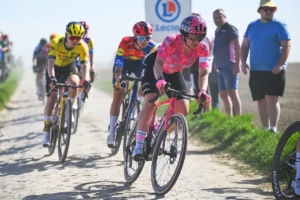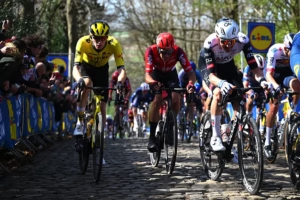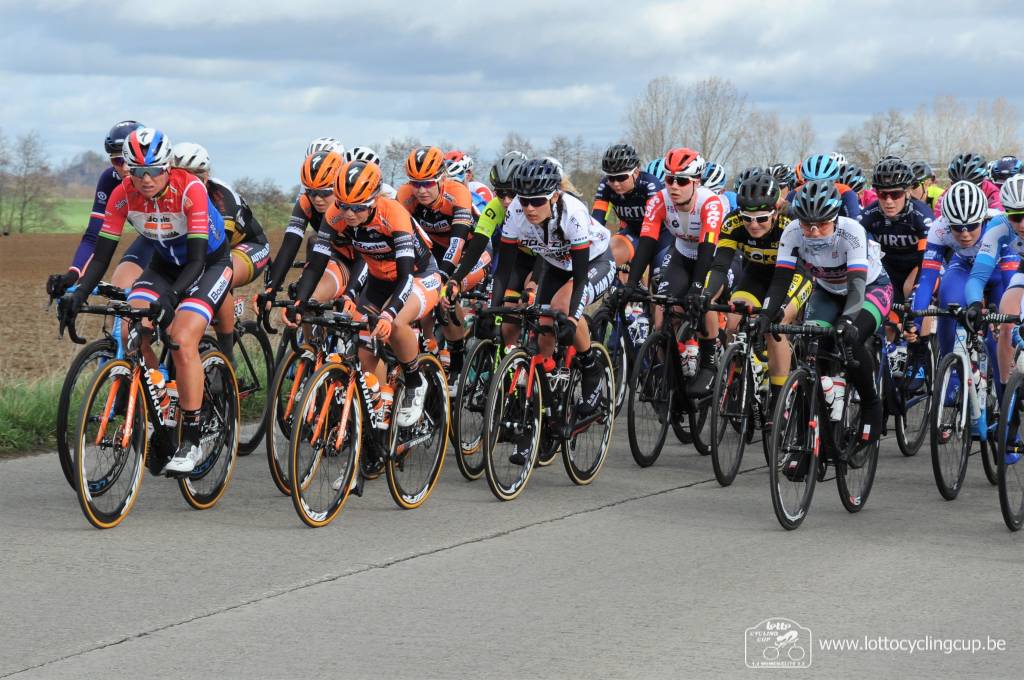
Le Samyn des Dames may not have the prestige of the biggest spring Monuments, but it has built a clear identity of its own. Held in Wallonia on roads that are full of cobbles, short climbs and repeated rhythm breaks, it is one of those races that can look manageable on paper and feel anything but straightforward once the racing begins. It has become an important early-season marker for riders who can handle rough roads, sharp positioning battles and a finale that often rewards strength as much as speed.
That is what has made the race more valuable over time. In its early years, Le Samyn des Dames could still tilt towards a bigger finish. In its more developed modern form, it has become a race where the cobbled climbs and sectors repeatedly soften the field until only the strongest and most resilient riders are left in contention. It is not quite Flanders and not quite Roubaix, but it lives in an appealing space between the two.

How Le Samyn des Dames began
Le Samyn des Dames started in 2012, held alongside the men’s race and using a good deal of the same sporting character, even if not exactly the same route. From the beginning, it gave the women’s calendar an early-season Belgian cobbled race that asked different questions from the smoother sprint events around it. That mattered, because at the time there were still relatively few women’s races built so clearly around rough roads and repeated stress.
The setting helps define the event. Although often described in relation to Flanders, Le Samyn des Dames is a Walloon race, and that gives it a slightly different feel. It is less about one iconic climb and more about constant wear. Cobbled sectors, short ramps and repeated laps all contribute to a race that grinds riders down rather than blowing the field apart in one single spectacular moment.
How the route shaped the race
The current style of Le Samyn des Dames is built around a large opening loop followed by repeated laps of a finishing circuit. That structure matters because it keeps bringing the riders back to the same pressure points. Côte de la Roquette and Côte des Nonettes are not huge climbs in isolation, but their repeated inclusion changes the shape of the race. Add in flat cobbled sections such as Chemin de Wiheries, Vert Pignon and Rue Belle Vue, and the effect is cumulative rather than dramatic.
That is why the race has grown more selective over time. The early editions were still capable of ending in bigger sprints, but once the parcours was hardened, Le Samyn des Dames increasingly began to favour either solo winners or very small groups. The race stopped being one where the fastest finisher simply had to survive, and became one where survival itself was already a selective skill.
By 2026, that identity is even clearer. The race now sits comfortably as a serious early-season cobbled test rather than a lower-key warm-up event. Riders who do well here usually have the kind of durability and positioning sense that translates well into the rest of the northern spring.
-
 Photo Credit: Getty


The riders who shaped Le Samyn des Dames history
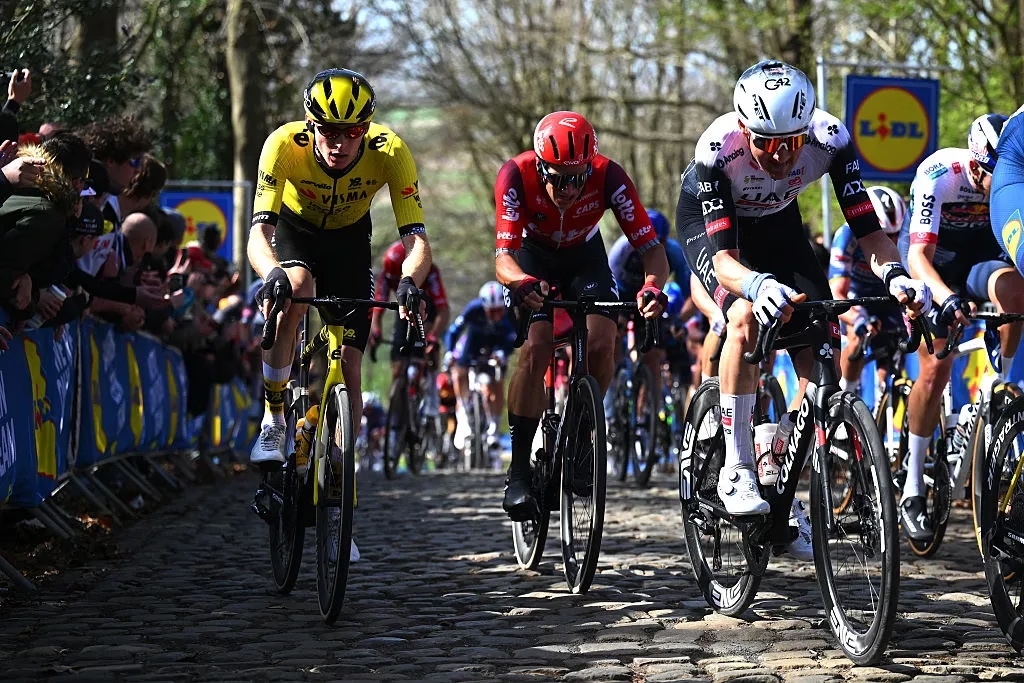
For a long time, Dutch riders dominated the race. Chantal van den Broek-Blaak became the defining figure by winning three times, which still makes her the standout rider in Le Samyn des Dames history. Her record tells you plenty about what the race rewards. Blaak was never just a finisher. She was powerful, composed on rough roads and able to win from reduced groups or more aggressive race situations.
Other winners helped shape the race in different ways. Emma Johansson, Ellen van Dijk and Sheyla Gutiérrez all represented that tougher, more durable kind of rider who could thrive on a course like this. Then the race entered a more varied phase. Jip van den Bos and Janneke Ensing won, before a newer set of names arrived. Lotte Kopecky, Emma Norsgaard Bjerg, Marta Bastianelli, Vittoria Guazzini, Lorena Wiebes and Lara Gillespie all added their names from 2021 to 2026, which shows how wide the race’s appeal now is. It can still suit a strong finisher, but only if that rider can handle a lot more than just the sprint.
That breadth is what makes the palmarès interesting. Le Samyn des Dames does not only crown one style of rider. It tends to reward riders who can adapt to a hard Belgian race and then still finish with authority after the route has stripped away the weaker legs.
The greatest Le Samyn des Dames edition
There is a strong case for 2013 as the race’s first genuinely iconic edition.
The day started with an organisational mishap, as the race began while some riders were still on the podium signing on, which gave the whole event an immediate sense of disorder. Once things settled into proper racing, though, it became a fascinating edition. Ellen van Dijk attacked on the cobbles with around 35km to go, and behind her the chase was disrupted by a crash in the peloton. Emma Johansson and Elisa Longo Borghini managed to stay upright and tried to bridge across, with Shelley Olds later joining them after also recovering from a fall.
What followed captured the race beautifully. Van Dijk was not just strong, she was relentlessly strong, and the chasers never really gained meaningful ground. Olds sprinted for second ahead of Johansson, but the story of the day was Van Dijk soloing to the line by more than three minutes. It was the kind of result that gave Le Samyn des Dames real credibility. This was no soft opener to the season. It was a race that could produce a serious solo winner on rough Belgian roads.
The defining section of Le Samyn des Dames
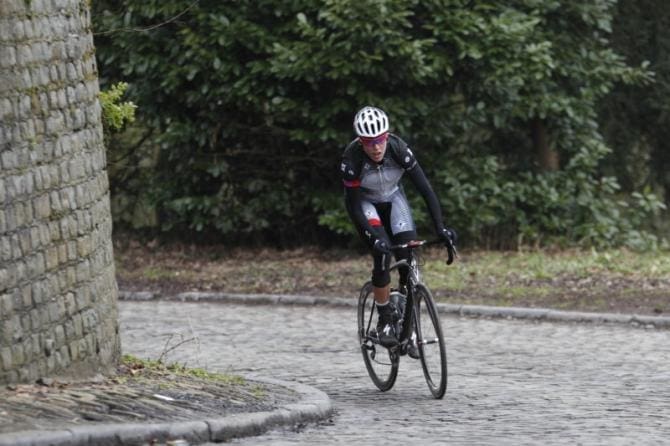
The Côte de la Roquette is probably the best expression of what makes Le Samyn des Dames difficult. On paper, it does not look especially intimidating. The climb is short and the gradient is not extreme. In practice, though, the cobbles are awkward, the lines through the bends matter and any rider who loses momentum there can quickly find herself in trouble.
That is what makes it such a useful race-defining section. It is not about spectacular altitude gain. It is about how rough roads and repeated pressure expose riders who are even slightly off the level. A powerful rider can make the difference there simply by keeping the pace high and forcing everyone else onto bad lines or into repeated accelerations. In that sense, the Côte de la Roquette sums up the race perfectly. Le Samyn des Dames is less about one grand decisive climb and more about accumulating damage until the strongest riders are left.
Le Samyn des Dames previous winners
- 2012 – Adrie Visser
- 2013 – Ellen van Dijk
- 2014 – Emma Johansson
- 2015 – Chantal van den Broek-Blaak
- 2016 – Chantal van den Broek-Blaak
- 2017 – Sheyla Gutiérrez
- 2018 – Janneke Ensing
- 2019 – Jip van den Bos
- 2020 – Chantal van den Broek-Blaak
- 2021 – Lotte Kopecky
- 2022 – Emma Norsgaard Bjerg
- 2023 – Marta Bastianelli
- 2024 – Vittoria Guazzini
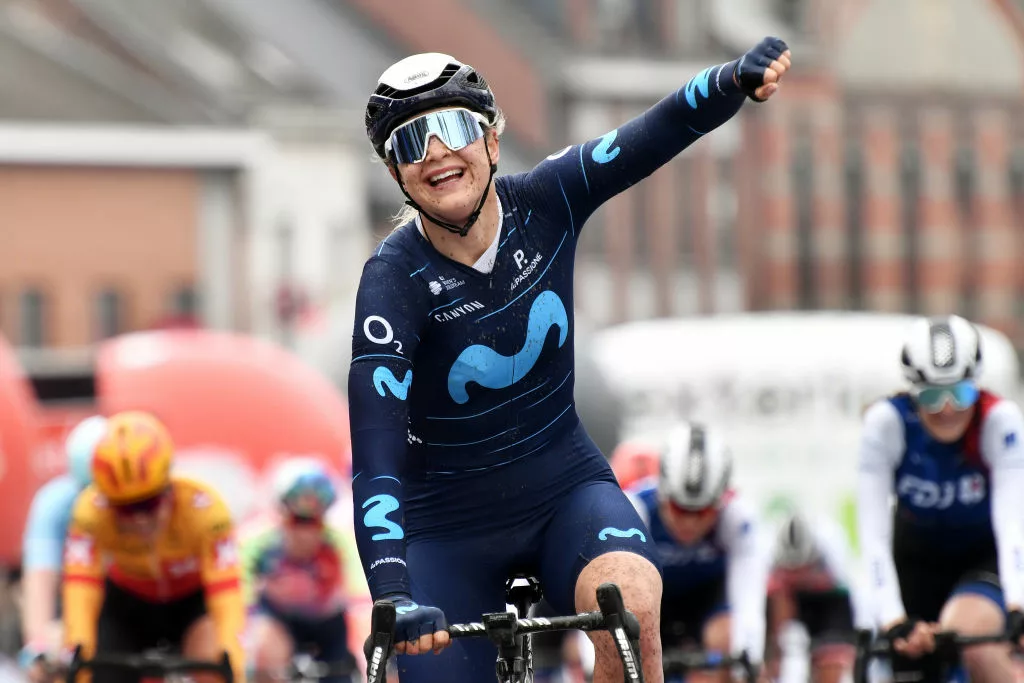
- 2025 – Lorena Wiebes
- 2026 – Lara Gillespie
Who has won Le Samyn des Dames the most times?
Chantal van den Broek-Blaak remains the most successful rider in Le Samyn des Dames history with three wins. That record still stands out because it reflects the exact qualities the race rewards: strength on cobbles, composure in selective racing and the ability to finish off a hard day.
Why Le Samyn des Dames matters
Le Samyn des Dames matters because it offers the women’s calendar something specific. It is an early-season Belgian race that is tough enough to mean something, but still open enough to produce different kinds of winners. It gives rouleurs, attackers and hard-race sprinters all a reason to believe, but only if they can cope with cobbles, repeated pressure and the scrappy rhythm of a race that never really settles.
That has helped it outgrow its old reputation as a smaller supporting race. By 2026, Le Samyn des Dames feels like an established and useful part of the spring, not because it pretends to be bigger than it is, but because it knows exactly what sort of race it wants to be. It is rough, selective, awkward and often decided by the riders who are strongest when the roads stop being comfortable.