
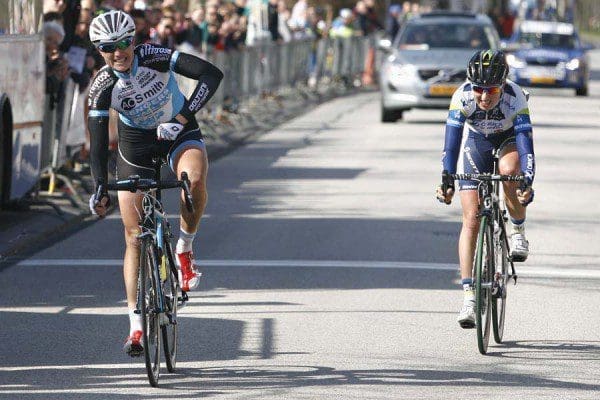
Omloop van Borsele does not have the cobbled mythology of the Tour of Flanders or the brute force reputation of Paris-Roubaix Femmes, but it has built a very clear identity of its own. Held in Zeeland, just over the Belgian border, it is one of those races where the profile can look deceptively simple until the wind starts doing the real damage. Flat roads, open terrain and constant exposure mean Omloop van Borsele is usually less about surviving climbs and more about surviving the race being torn into pieces.
That is what gives it its place in the women’s spring calendar. Omloop van Borsele is, at heart, a sprinter’s Classic, but only for sprinters who can also read the wind, hold position and stay calm when the bunch fractures. It is a race that often looks straightforward on paper and then becomes selective through the landscape itself.
How Omloop van Borsele began
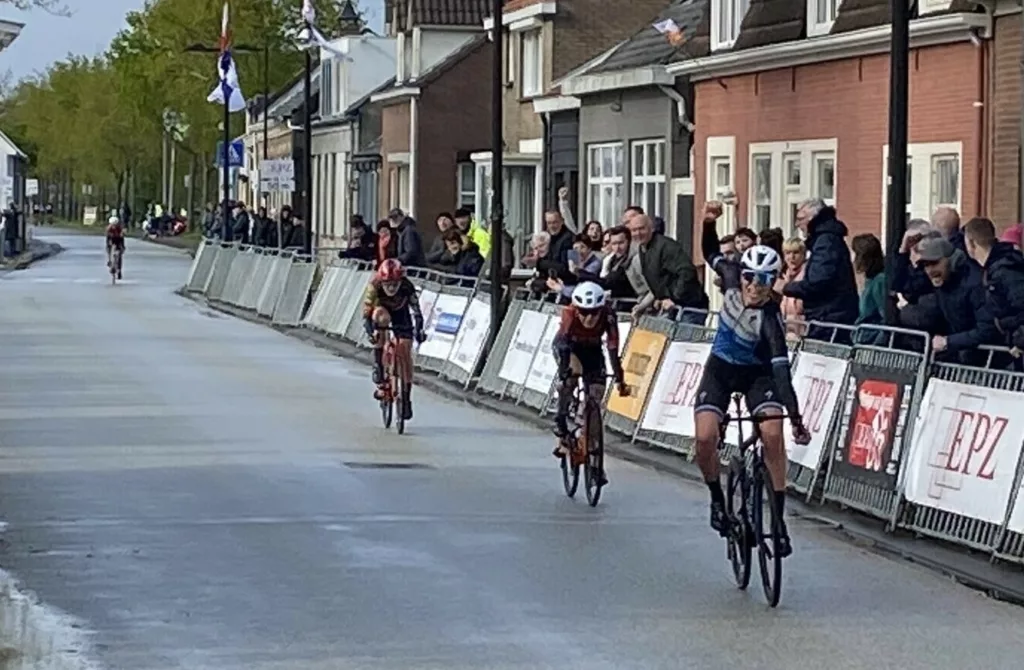
The broader Omloop van Borsele event has existed since 1983, but for the purposes of modern elite women’s road racing, the history starts in 2002. That distinction matters because the race has developed over time into a wider event weekend, while the professional women’s road race has its own more recent identity and winners list.
From the beginning, Zeeland gave the race its character. This is not terrain that creates spectacle through gradients. It creates it through exposure. The roads are open, the dykes leave little shelter, and the race often hinges on who is alert when the crosswinds begin to bite. That has long made Omloop van Borsele an ideal stage for quick finishers, but rarely for pure sheltered sprinters. The riders who win here usually have a more complete one-day skill set than the profile first suggests.
What kind of race Omloop van Borsele usually produces
At first glance, Omloop van Borsele looks straightforward. It is flat, usually fast, and should suit a sprint. In reality, it often behaves more like a selection race disguised as a sprinters’ event. Wind is the main reason. On calmer days, a larger front group can survive to the line. On rougher days, the race can split repeatedly and leave only a small cluster still capable of contesting the finish.
That has shaped the winners list for years. The race has mostly been won by recognised fast finishers or riders with enough finishing speed to profit from a reduced front group. Kirsten Wild defined that pattern more than anyone else, but the more recent editions have shown the next generations of quick riders doing the same. Elisa Balsamo won in 2018, Lorena Wiebes in 2019, Linda Zanetti in 2023 and Sofie van Rooijen in 2024. That sequence says plenty about the race. Omloop van Borsele may be flat, but it still tends to reward the rider who can sprint after stress rather than just sprint in ideal conditions.
The riders who shaped Omloop van Borsele history
Kirsten Wild remains the race’s defining figure. For a long stretch, Omloop van Borsele felt almost built for her. She had the speed for a sprint, the resilience for a hard windy race and the race sense to stay out of trouble on roads where trouble is rarely far away. Marianne Vos also won it twice earlier in the race’s modern era, which underlined just how attractive the event has always been to Dutch riders with both speed and depth.
The interesting part of the palmarès, though, is where it breaks from the expected script. Vera Koedooder’s 2013 win stands out because it came from an aggressive, selective race rather than a more standard fast finish. Riejanne Markus did something similar in 2017. Those editions matter because they show that Omloop van Borsele is not purely mechanical in how it produces a winner. It may favour speed, but it can still be opened up by strong racing, crosswinds and the right attacking moment.
The more recent winners have also kept the race relevant to a newer generation. Balsamo and Wiebes effectively traded victories in 2018 and 2019, which now reads like an early sign of how quickly both would develop into major names. After the race did not produce elite women’s winners in 2020 and 2021, Maaike Boogaard won in 2022, Linda Zanetti in 2023 and Sofie van Rooijen in 2024. The 2025 cancellation interrupted that run, but the race remains an important marker of this particular kind of Dutch one-day racing.
-
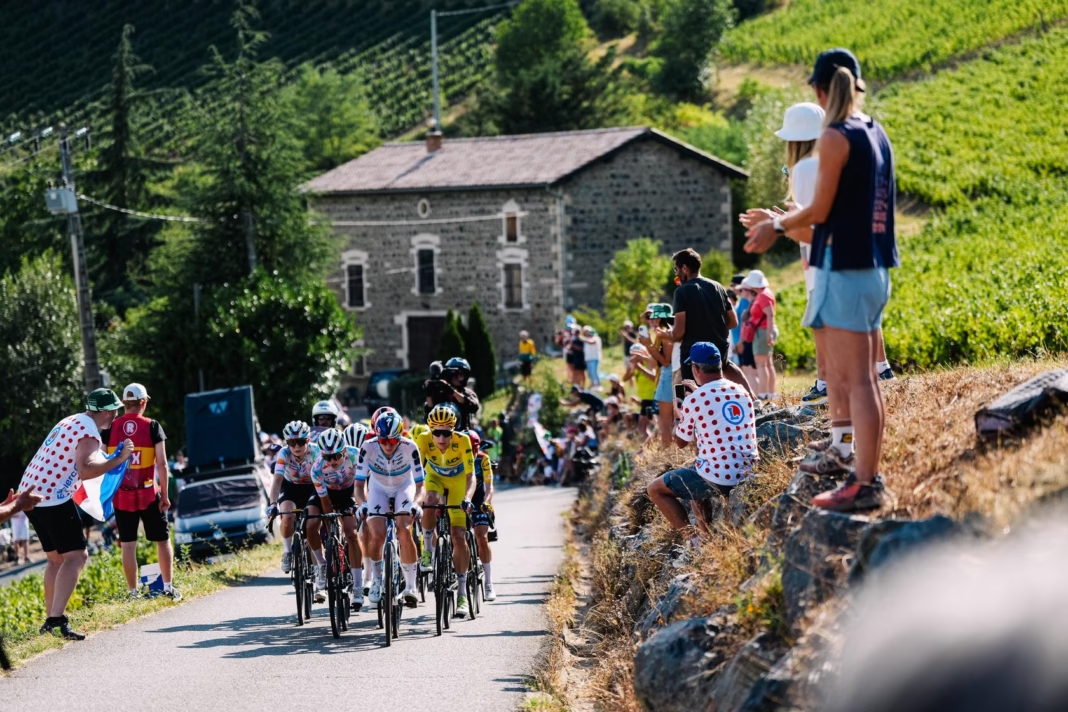
 Photo Credit: A.S.O./Billy Ceusters
The associated time trial and why it matters
One of the more distinctive features of Omloop van Borsele is that the road race has, since 2012, sat alongside a separate elite women’s time trial. The two are not combined into one general classification, so they are best treated as linked but separate events. Riders often do both, but they reward different qualities and create a fuller race weekend around the main road race.
Ellen van Dijk has been the dominant figure in that time trial history. Her record there underlines how well the local terrain suits pure power when the road runs flat and exposed. In 2012 she won both the time trial and the road race, still one of the clearest statements any rider has made across the Borsele weekend. That part of the event deserves more attention than it usually gets, because it broadens the identity of Omloop van Borsele beyond just being a windy one-day sprinters’ race.
The greatest Omloop van Borsele edition
If one edition best captures what the race can become when the wind fully takes over, it is 2013.
That year, Ellen van Dijk had won the time trial the day before but was unable to start the road race through illness. The race itself quickly turned into the kind of fractured, hard flat Classic that Omloop van Borsele is capable of producing at its best. Loes Gunnewijk and Vera Koedooder were central to the decisive move, while Lucinda Brand, Chloe Hosking and Nina Kessler were also part of the front group as the race split apart behind them.
With around 20km to go, Koedooder attacked again and only Gunnewijk could stay with her. Brand tried to manage the gap behind, but the move had already become the race-winning one. Koedooder then proved strongest in the sprint from two, with Gunnewijk second and Brand third. What made that edition stand out was not just the result, but the scale of the damage. The next groups came in minutes down, not seconds, and much of the field was left scattered across the roads of Zeeland. That is the race at its sharpest, not spectacular because of climbing, but because the wind turns a flat route into a test of judgement and survival.
The defining section of Omloop van Borsele
Omloop van Borsele does not have a famous climb or a single postcard landmark that defines it in the way the Oude Kwaremont defines Flanders. Its most distinctive section is the exposed road along the dyke, where riders can be seen from above and where the race feels at its most Zeeland. The attraction there is not technical difficulty or steep gradients. It is the way the landscape exposes everything.
From the top of the dike, you can see the bunch stretched out next to the water, and you can often tell immediately whether the race is still calm or already under stress. Riders disappear and reappear on the other side, and because the roads are so open, the sense of speed and distance becomes much clearer than on more enclosed courses. It suits the race perfectly. Omloop van Borsele is about exposure in every sense, and the dyke section expresses that better than anywhere else on the route.
Omloop van Borsele previous winners
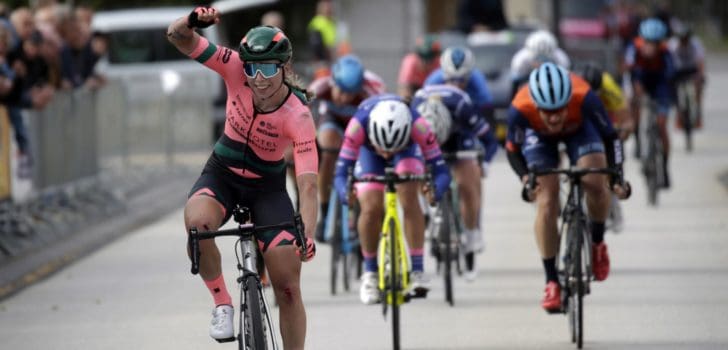
A full winners list is one of the easiest ways to show how the race has evolved in the elite women’s era.
- 2002 – Leontien van Moorsel
- 2003 – Suzanne de Goede
- 2004 – Loes Markerink
- 2005 – Chantal Beltman
- 2006 – Marianne Vos
- 2007 – Marianne Vos
- 2008 – Kirsten Wild
- 2009 – Kirsten Wild
- 2010 – Kirsten Wild
- 2011 – Kirsten Wild
- 2012 – Ellen van Dijk
- 2013 – Vera Koedooder
- 2014 – Chloe Hosking
- 2015 – Kirsten Wild
- 2016 – Barbara Guarischi
- 2017 – Riejanne Markus
- 2018 – Elisa Balsamo
- 2019 – Lorena Wiebes
- 2020 – not held for elite women
- 2021 – not held for elite women
- 2022 – Maaike Boogaard
- 2023 – Linda Zanetti
- 2024 – Sofie van Rooijen
- 2025 – cancelled
Who has won Omloop van Borsele the most times?
Kirsten Wild is the standout name in Omloop van Borsele history. Her repeated success made her the benchmark for the kind of rider this race most often rewards – quick, durable, experienced in crosswinds and sharp enough to survive a reduced-group finale. Marianne Vos is the other major multiple winner from the earlier part of the race’s modern elite history, but Wild’s run gives her a special place in the event’s story.
Why Omloop van Borsele still matters
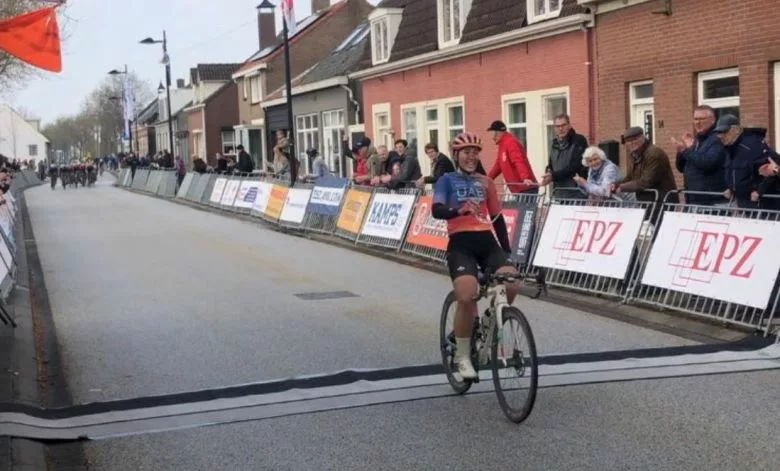
Omloop van Borsele matters because it offers a different kind of spring challenge. It does not need climbs to be selective. It does not need cobbles to create stress. Instead, it uses the landscape of Zeeland to ask a simpler, harder question: can you stay in the right place when the wind starts making decisions for everyone?
That makes it a valuable race in the calendar and an interesting one historically. It has produced dominant repeat winners, unexpected attacking victories and a useful bridge between pure sprinting and proper northern race craft. The 2025 cancellation was a setback, but the race still has a clear identity and a worthwhile place in the story of women’s one-day racing. If you want the short version, Omloop van Borsele is one of the best examples of how a flat race can still have real character.

