Anna van der Breggen’s career can look deceptively neat from a distance. The records line up cleanly enough: Olympic road race gold, world titles, Giro d’Italia Donne wins, a Tour of Flanders title, seven straight wins at Flèche Wallonne Féminine history, previous winners and greatest moments, and a reputation as the rider who owned the Ardennes for years. But the shape of her story is more interesting than the headline list alone suggests.
She was never just a punchy uphill finisher, and she was never only a stage race specialist who happened to collect Classics as well. At her best, she was one of those rare riders who could impose herself on almost any kind of race, whether that meant climbing clear, timing a late attack perfectly, or simply making a selective race feel impossible for everyone else.
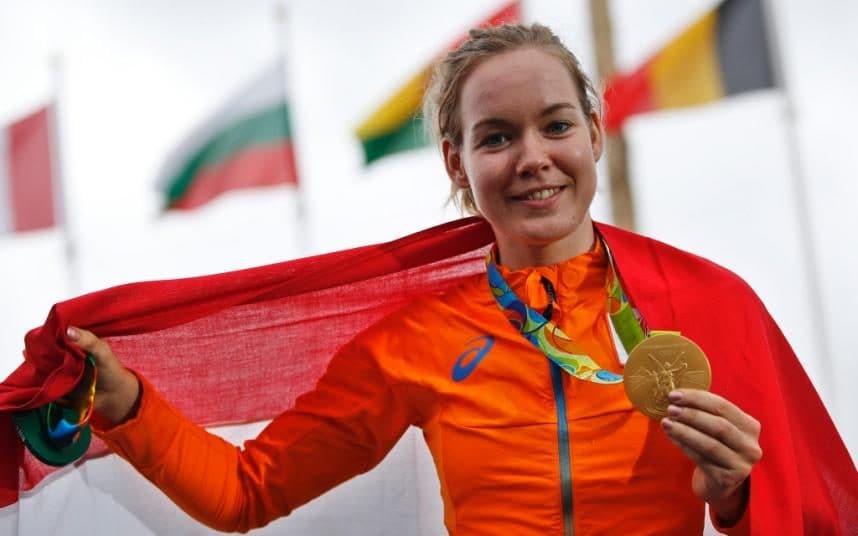
Within women’s cycling history, van der Breggen belongs among the defining champions of the modern era. She won the Olympic road race in Rio in 2016, took world road titles in 2018 and 2020, added the world time trial title in 2020, won the Giro Rosa or Giro d’Italia Donne four times, and built one of the most extraordinary Spring Classics records the sport has seen. She retired at the end of 2021, moved into sports direction with SD Worx, and then returned to racing for the 2025 season. That gave her story an unusual second act after what had already seemed a complete career.
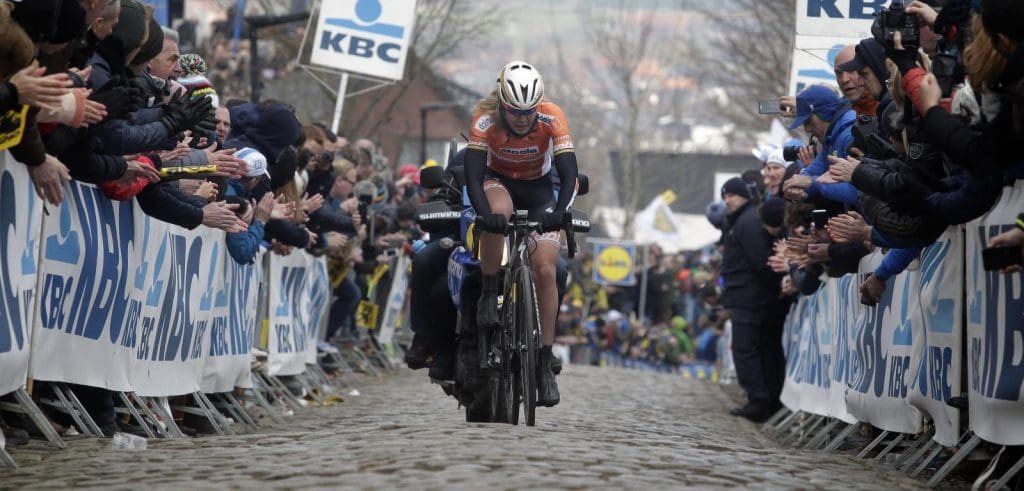
Before the great wins, Anna van der Breggen was building quietly
Anna van der Breggen was born in Zwolle on the 18th April 1990, and although she became one of the biggest names of her generation, her career did not begin with instant domination. The early years were more about signs than certainties. She had talent, range and race intelligence, but the version of van der Breggen who would later control the Ardennes and collect Grand Tour titles had not fully emerged yet.
Those early indicators still mattered. In 2012, her first full season at top level, she won the Tour de Bretagne and finished 5th in the World Championships road race. That alone was enough to mark her out as more than just another promising Dutch rider. She could handle a stage race, she could survive hard one-day racing, and she clearly had the kind of finishing strength and climbing ability that would translate well into the biggest races on the calendar.
The following year was quieter, but not insignificant. She was still finishing her nursing degree, and that gave that period of her career a slightly different texture to some of her rivals. Even so, she still managed 4th at the 2013 World Championships road race, which was another reminder that the talent was not fading or stalling. It was simply waiting for a bigger structure and a clearer pathway.
The first rise – stage races, Classics and proof of a bigger ceiling
That next step came more clearly in 2014. Riding for Rabobank-Liv, van der Breggen became a much more regular presence in the biggest races. She finished in the top 10 at Trofeo Alfredo Binda, the Tour of Flanders Women and Ronde van Drenthe, while also showing that her long-term ceiling was probably even higher in stage races than in the one-day calendar. She won the Tour of Norway and the GP Elsy Jacobs, and she finished 3rd overall at the Giro Rosa.
That combination is what made her such an interesting rider even before the major titles arrived. Some riders announce themselves as pure Classics specialists. Others make their name first in stage races. Van der Breggen was already hinting that she might be able to do both at a very high level, and that dual threat would become one of the central features of her career.

The injury that could have stopped her
The end of 2014 also brought one of the first major setbacks of her career. In the team time trial at the World Championships, teammate Annemiek van Vleuten crashed, and van der Breggen broke her pelvis in the incident. It was the kind of injury that can badly disrupt momentum, especially for a rider whose rise was still in progress rather than fully established.
What followed was important because it established something that remained true throughout her best years. Van der Breggen was not just talented, she was resilient. She recovered well enough to turn the next season into the first truly major chapter of her career.
2015 and 2016 – from major talent to Olympic champion
In 2015, van der Breggen crossed the line from elite prospect to major winner. She won Omloop Het Nieuwsblad after a decisive move with Ellen van Dijk, took the first of her seven wins at Flèche Wallonne Féminine, retained the GP Elsy Jacobs, and won the Giro Rosa overall for the first time. By the end of the season, she had also finished 2nd in both the World Championships time trial and road race. It was no longer a question of whether she belonged among the best riders in the world. She clearly did.
The 2016 season was slightly different in tone. It was not quite as full of headline victories in the spring, but it was still a year that pushed her into another level of recognition. She defended her Flèche Wallonne title, finished 3rd overall at the Giro Rosa, and then came the defining moment of that phase of her career: Olympic road race gold in Rio. Van der Breggen won after the dramatic descent and crash that took Annemiek van Vleuten out of the race, then followed that later in the season by winning the first women’s European Championships road race.
That Rio win mattered for more than the medal itself. Olympic titles carry a different cultural weight, even in careers already rich with major victories. It gave van der Breggen a place in sporting history beyond cycling’s own internal hierarchy, and it helped frame the next period of her career not as promise fulfilled, but as the beginning of sustained greatness.
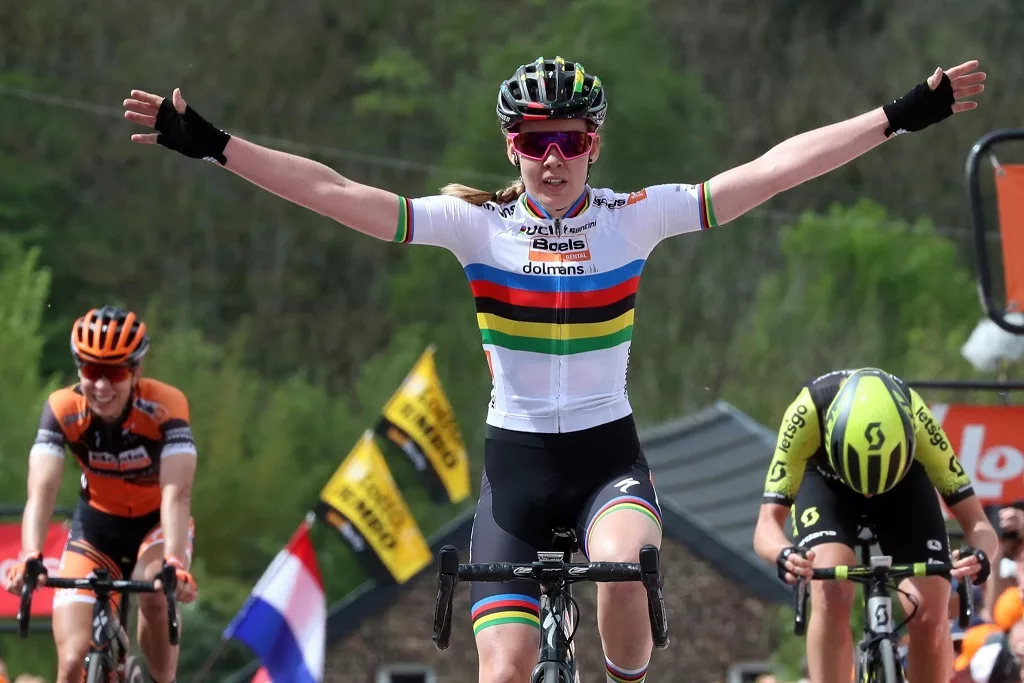
The Queen of the Ardennes period
If there is one label that follows Anna van der Breggen everywhere, it is Queen of the Ardennes. That status was fully secured in 2017. Having moved to Boels-Dolmans, she won Amstel Gold Race, Flèche Wallonne Féminine and Liège-Bastogne-Liège in the space of a single week. It remains one of the great one-week runs in women’s cycling.
What made that stretch so significant was not just the number of wins. It was the way they confirmed the shape of her dominance. Van der Breggen was not simply good on one uphill finish. She could read selective races perfectly, manage her effort on repeated climbs, and deliver the decisive move at exactly the point when others were already near their limit. On the Mur de Huy she became almost untouchable, but her Liège and Amstel victories showed that her range extended well beyond one signature climb.
That same season she won the Giro Rosa for a second time and finished 2nd once again in the World Championships time trial. Even without a vast scatter of smaller wins, the totality of her season made her the Women’s WorldTour individual winner. That is important because it captures the scale of her excellence. She was not just peaking for a handful of targets, she was one of the most complete riders in the peloton over the whole season.
2018 – the year everything came together
For some riders, there is one season that best captures the full extent of what they could do. For van der Breggen, that may well have been 2018. She began her year with victory at Strade Bianche in brutal conditions, then won the Tour of Flanders Women with a huge solo attack after the Kruisberg. She followed that with another Flèche Wallonne Féminine title and another Liège-Bastogne-Liège victory. Later in the season, she added the World Championships road race title in Innsbruck.
The Tour of Flanders win deserves special weight in any account of her Spring Classics career. Van der Breggen attacked with 27 kilometres to go and turned one of the hardest races on the calendar into a personal demonstration of control and force. It was not a narrow tactical steal or a sprint from a select group. It was a Monument won by strength.
That Innsbruck world title also mattered because it gave proper rainbow confirmation to a rider who had already been hovering around that level for years. She had been 2nd at Worlds more than once, both on the road and in the time trial. The 2018 road title finally converted long-standing elite status into the clearest single-day validation the sport can offer.
 Photo Credit: Getty
What kind of rider was Anna van der Breggen?
Calling van der Breggen an all-round Classics specialist is true, but it undersells her. She was also one of the most complete stage race riders of her era. She won the Giro Rosa or Giro d’Italia Donne four times, in 2015, 2017, 2020 and 2021, and that alone places her among the major stage race figures in women’s cycling history.
What made her especially difficult to categorise was how neatly so many of her strengths overlapped. She could climb, she could time trial, she could race explosively on steep finishes, and she had the tactical discipline to win races that were decided through attrition rather than pure power. Unlike some champions who need a very particular race shape, van der Breggen could win in several different scripts.
At her absolute best, she could make a race feel controlled even when the decisive move was aggressive. That was one of her great talents. The attack was often hard and sharp, but it rarely felt reckless. Van der Breggen usually looked as though she understood exactly how far she could go and exactly how much trouble the riders behind were already in.
The final peak, retirement and comeback
The later phase of her first career was every bit as decorated as the earlier one. In 2019 she won Flèche Wallonne Féminine for the fifth consecutive time and added GP de Plouay, while in 2020 she produced one of the most remarkable seasons of any rider in the sport. That year she won the Giro d’Italia Donne, took both the elite time trial and elite road race titles at the World Championships in Imola, and became only the second rider to win both events in the same year. She also won Flèche Wallonne Féminine again just days later.
That 2020 world double is one of the strongest arguments for van der Breggen’s place among the all-time greats. By then she was already an Olympic champion, a Giro winner and a dominant Classics rider, but the missing world time trial title had lingered. Once she filled that gap and then added the road race title in the same championship week, her career looked unusually complete.
She had already announced that she would retire after the delayed Tokyo Olympic cycle, and 2021 became the final year of that first chapter. Van der Breggen won Omloop Het Nieuwsblad and claimed an extraordinary seventh consecutive Flèche Wallonne Féminine before stepping away from racing at the end of the season.
That looked like a neat, finished ending. But it was not the end after all. Van der Breggen later returned to professional racing for the 2025 season with SD Worx-Protime. That comeback gave her career a very unusual shape. Few riders leave with that kind of legacy already secured, move into team management, and then decide they still have enough motivation to return to the highest level.
You can read more on that later phase in Anna van der Breggen’s 2026 spring Classics programme and Anna van der Breggen set for a 2025 return to professional racing.
-
 Photo Credit: Getty

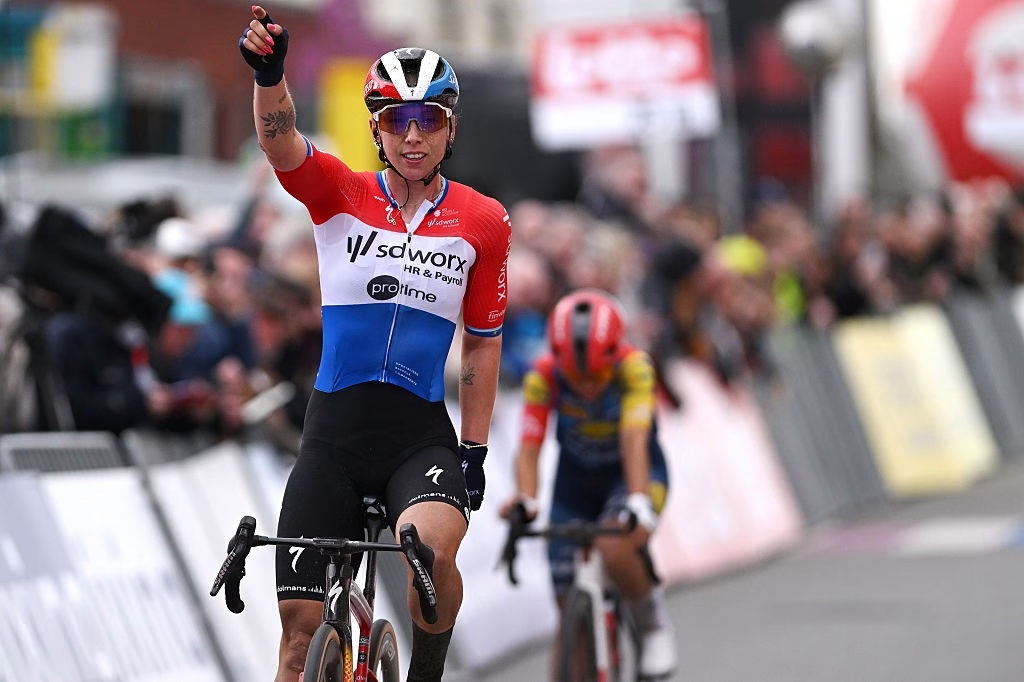
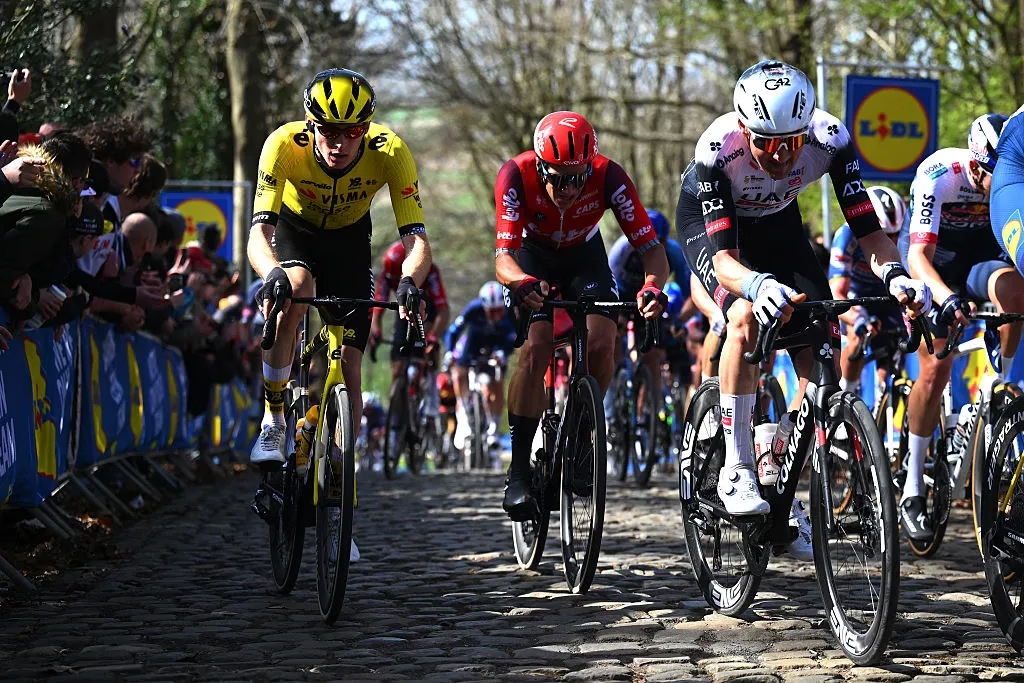
Why Anna van der Breggen still matters
Van der Breggen matters because she helped define what complete modern excellence in women’s cycling looked like. She was not just a specialist who ruled one niche of the calendar. She won Monuments and Ardennes Classics, Grand Tours, world titles and Olympic gold. She could dominate uphill, out-think rivals in selective races, and carry form from spring into the biggest stage races of the year.
She also matters because her career sits at a key point in the sport’s development. She was central to an era when the depth of the women’s peloton increased, the biggest races became more visible, and the standard required to dominate rose sharply. Her best years were not built in a weak field. They were built against some of the strongest rivals of the modern period, and she still found ways to look inevitable.
In a wider women’s cycling history series, van der Breggen belongs very comfortably among the defining riders of the sport. She was not only one of the best of her generation. She was one of the clearest examples of how many different ways a truly great rider can win.
That is also why she sits naturally alongside Annemiek van Vleuten: the full story of one of women’s cycling’s defining champions, Jeannie Longo: the full story of one of women’s cycling’s most complex greats, Leontien van Moorsel: the full story of a rider who rebuilt herself and changed women’s cycling and Ellen van Dijk: the full story of one of women’s cycling’s great time triallists and Classics riders.
Anna van der Breggen career highlights
- Olympic road race champion at Rio 2016
- World road race champion in 2018 and 2020
- World time trial champion in 2020
- Four-time Giro Rosa or Giro d’Italia Donne winner, in 2015, 2017, 2020 and 2021
- Winner of the Tour of Flanders Women in 2018
- Winner of Liège-Bastogne-Liège in 2017 and 2018
- Winner of Amstel Gold Race in 2017
- Winner of Strade Bianche in 2018
- Winner of Omloop Het Nieuwsblad in 2015 and 2021
- Seven-time winner of Flèche Wallonne Féminine, from 2015 to 2021
- Retired at the end of 2021, moved into sports direction with SD Worx, then returned to racing for the 2025 season