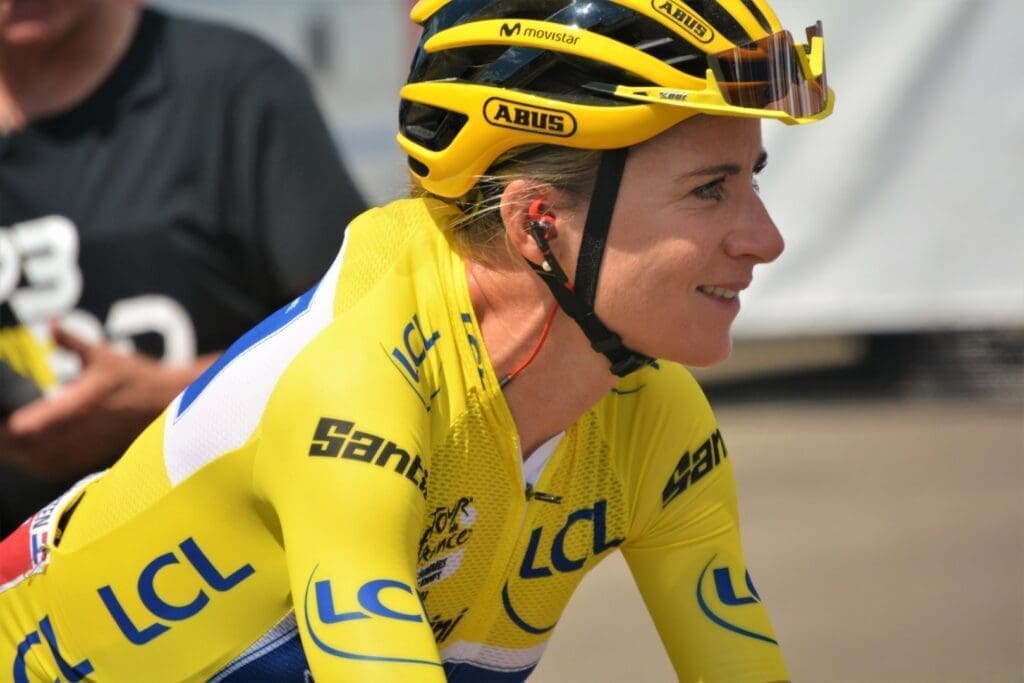
Annemiek van Vleuten’s career eventually became so large that it can be easy to forget how unusual its shape really was. She did not arrive as an immediate prodigy who dominated from the start. Instead, her career built in phases: early promise, then years of strong but not yet overwhelming consistency, then an extraordinary late peak that turned her into one of the most dominant riders women’s cycling has seen. By the time she retired at the end of 2023, she had won the Tour of Flanders twice, Liège-Bastogne-Liège twice, Strade Bianche twice, Omloop Het Nieuwsblad twice, four Giro d’Italia Donne titles, the 2022 Tour de France Femmes, the 2023 La Vuelta Femenina, two elite road world titles, two elite time trial world titles, Olympic time trial gold and Olympic road race silver.
That scale of achievement is what makes Van Vleuten so central to modern women’s cycling history. She was not only a climber, not only a time trial specialist and not only a one-day rider. She was one of those rare champions who could shape a race almost anywhere, by climbing away, time trialling everyone into submission or simply attacking from so far out that the race bent around her. Within the wider women’s cycling history hub, she belongs alongside Marianne Vos, Anna van der Breggen and her fellow Dutch greats as one of the riders who helped define the sport’s most visible and competitive modern era.

Before the greatness, Annemiek van Vleuten was a late developer
Van Vleuten was born in Vleuten on the 8th October 1982 and came to top-level cycling relatively late compared with many elite riders. That matters because it helps explain why her career did not follow the standard arc of a junior star turning directly into a dominant professional. Her early years in the peloton were more about gradual improvement, and that slow burn became one of the defining truths of her story.
Those first signs of promise were there early enough. She finished 14th overall in the 2008 Boels Ladies Tour as an amateur with Vrienden van het Platteland, then moved into the DSB Bank-LTO structure for the next phase of her career. Even before the biggest wins arrived, she was already showing the markers of the rider she would become: resilience, climbing ability and a willingness to race with aggression rather than simply wait for events to happen.
The first big step – from promising rider to real contender
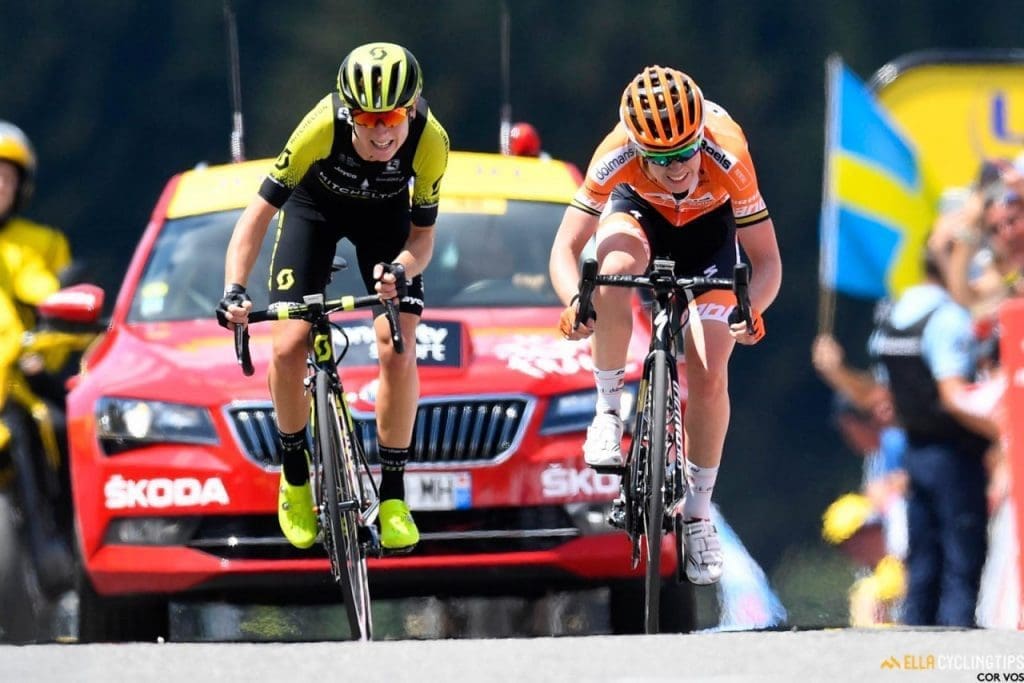
Van Vleuten’s first real breakthrough season was 2010. She finished second in Ronde van Drenthe and tenth in the Tour of Flanders, but perhaps more importantly, she won the Route de France overall. That result mattered because it showed she was more than a one-day prospect. She could handle a stage race, recover over several days and beat a strong field on a climbing-friendly route. It was the first clear sign that her ceiling might be much higher than her early Classics results alone suggested.
Then came 2011, the year she won the Tour of Flanders for the first time. That victory instantly gave her a place in Women’s Tour of Flanders history, previous winners and greatest moments, but it also did something bigger. It confirmed that Van Vleuten could win the biggest one-day races, not just ride well in them. That season she also won GP de Plouay and, crucially, the overall Women’s Road World Cup title. That last result is often overlooked, but it matters because it reflected not just one great day, but season-long excellence across the best one-day races on the calendar.
The middle period – consistently excellent, not yet unstoppable
The years from 2012 through 2016 are often the least celebrated part of Van Vleuten’s career, but they are essential to understanding what came next. She was no longer simply an emerging talent, yet she was not quite the all-conquering rider she would later become. Instead, she was consistently one of the best riders in the peloton, especially in stage races, time trials and selective one-day events.
She won the Dutch national road title in 2012 and supported Marianne Vos to Olympic road race gold in London. Over the next few years she kept stacking strong results, winning the Belgium Tour in 2014 and 2016, taking Dutch national time trial titles in 2014 and 2016, and remaining a regular top-10 finisher in races like Flèche Wallonne Féminine history, previous winners and greatest moments, Trofeo Alfredo Binda history, previous winners and greatest moments and the major cobbled Classics. Those seasons may not have had the same headline dominance as what followed, but they built the base for it. Van Vleuten was learning exactly how and where she could impose herself on races.
Rio 2016 – the crash that changed everything
The pivotal moment in Van Vleuten’s career came not with a victory, but with one of the most brutal crashes women’s cycling has seen. In the Rio 2016 Olympic road race she was leading with under 11 kilometres to go when she crashed heavily on the descent. She suffered concussion and spinal fractures. It was one of the defining images of the Games, and at the time it looked as though the greatest opportunity of her career had ended in disaster.
What gives that crash its place in cycling history is what followed. Van Vleuten later said that the training block she had built for Rio changed her physically, especially in the mountains. In other words, the race ended in catastrophe, but the work behind it helped create the rider she became afterwards. That is one of the strangest and most revealing parts of her story. The moment that seemed to ruin her biggest dream also became the hinge point that led to her greatest years.
The great transformation – from elite rider to dominant force
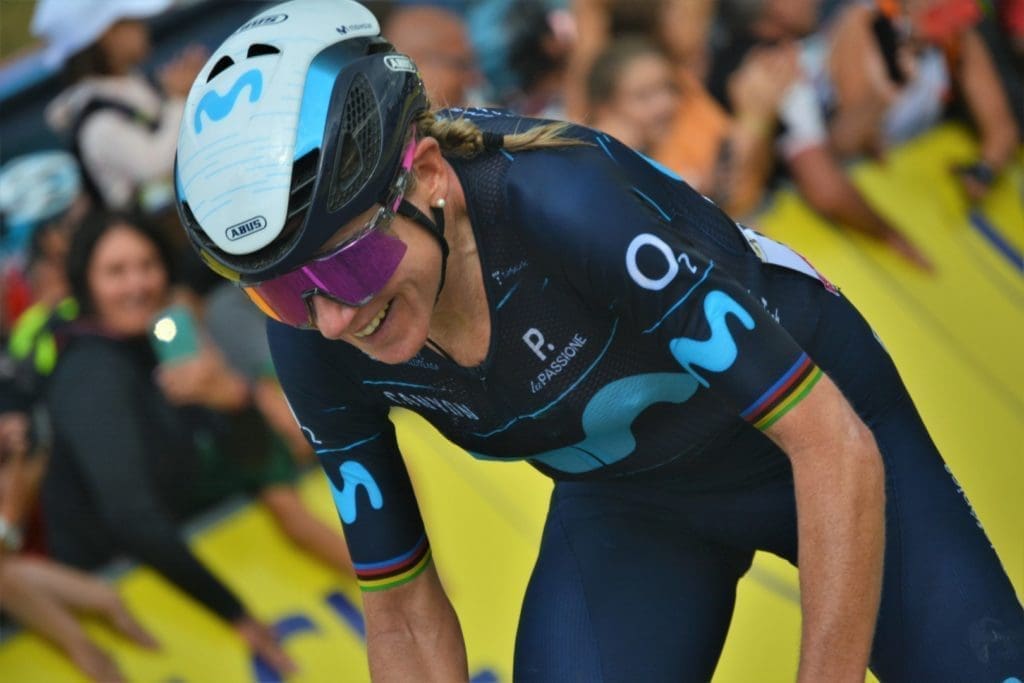
From 2017 onward, Van Vleuten moved into a different category altogether. She won La Course by Le Tour de France in 2017, the world time trial title that same season, and then began a run of grand tour and Classics success that made her the defining all-round stage race rider of the next era. In 2018 she won the Giro d’Italia Donne and retained her world time trial title. In 2019 she won the Giro Donne again, Strade Bianche Women history, previous winners and greatest moments, Liège-Bastogne-Liège Femmes history, previous winners and greatest moments, and then produced the astonishing 100km solo win at the World Championships in Yorkshire to take her first elite road race rainbow jersey.
That 2019 season is still probably the clearest expression of what made Van Vleuten special. She was no longer simply winning races that suited her. She was imposing a new standard of aggression and endurance on the peloton. Her Yorkshire ride remains one of the benchmark performances in A brief history of the road cycling world championships, and her Liège victory that same year sits naturally inside Liège-Bastogne-Liège Femmes history, previous winners and greatest moments. It was the point at which the sport stopped seeing her as one of the best, and started seeing her as the rider everyone else had to answer.
What kind of rider was Annemiek van Vleuten?
Calling Van Vleuten an all-round Classics specialist is accurate, but incomplete. She was also one of the great grand tour and stage race riders in women’s cycling history. She could climb better than almost anyone at her peak, time trial at world-class level and sustain long solo efforts in a way that made ordinary race tactics feel almost irrelevant.
That is what separated her from many other champions. A lot of elite riders need a particular kind of race. Van Vleuten eventually became the sort of rider who could shape almost any race into something that suited her. If the route climbed, she could ride away uphill. If it did not, she could still attack at distance. If it came down to a time trial, she was one of the best in the world. That is why her name appears naturally across so many race histories: Strade Bianche Women history, previous winners and greatest moments, Women’s Tour of Flanders history, previous winners and greatest moments, Omloop Het Nieuwsblad Women history, previous winners and greatest moments and Flèche Wallonne Féminine history, previous winners and greatest moments.
Tokyo 2020 – redemption, and not the kind she expected
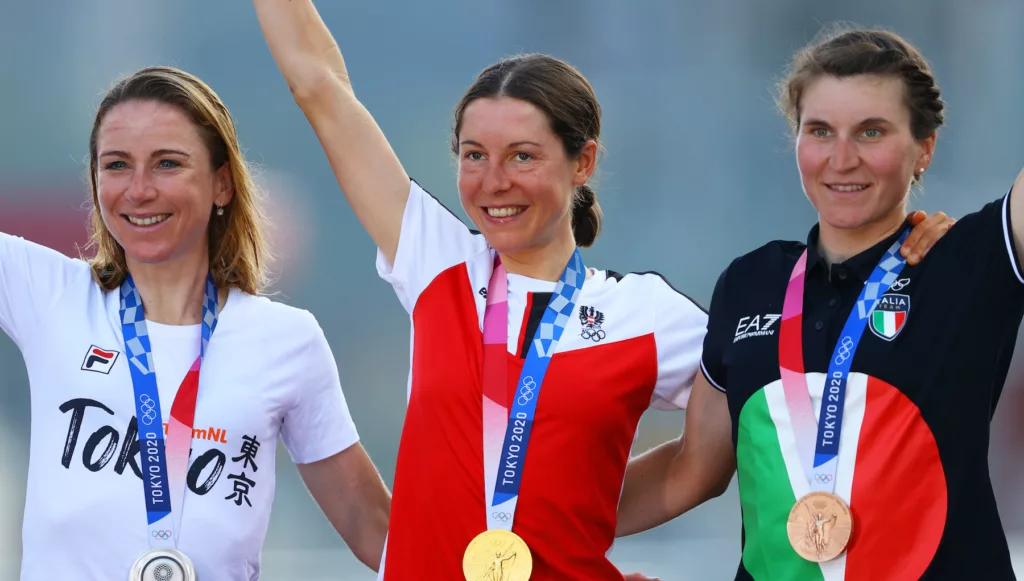
Tokyo changed her Olympic story. Five years after the Rio crash, Van Vleuten went into the delayed 2021 Games with unfinished business. The road race brought silver rather than gold after the famous misunderstanding over Anna Kiesenhofer’s position on the road, but the time trial delivered the redemption that mattered most. She won Olympic gold in the individual time trial.
That double medal haul is vital to her story. She did not just come back from Rio emotionally. She came back competitively and left Tokyo with the one Olympic title that had escaped her. It is why she now belongs not only in Women’s Olympic road race winners through her silver-medal narrative and Rio near-miss, but also in the broader Olympic history of the sport as a rider who ultimately completed her redemption.
2022 – one of the greatest seasons in women’s cycling history
If 2019 was arguably Van Vleuten’s most spectacular year, 2022 may have been her most complete. She won the Giro Donne, the Tour de France Femmes and the Ceratizit Challenge by La Vuelta, effectively sweeping the biggest stage races of the season. She also won the overall Women’s WorldTour title in 2022. Then, at the World Championships in Wollongong, she won the elite road race despite carrying a broken elbow from the mixed relay.
That season was extraordinary because it brought together every part of Van Vleuten’s skill set. She won through climbing, resilience, endurance and sheer refusal to accept normal physical limits. The Wollongong road race in particular felt like the purest symbol of her late-career greatness. She was injured, apparently constrained, and still found a way to win. It is one of those performances that shifts a rider from champion to legend.
The final season and retirement
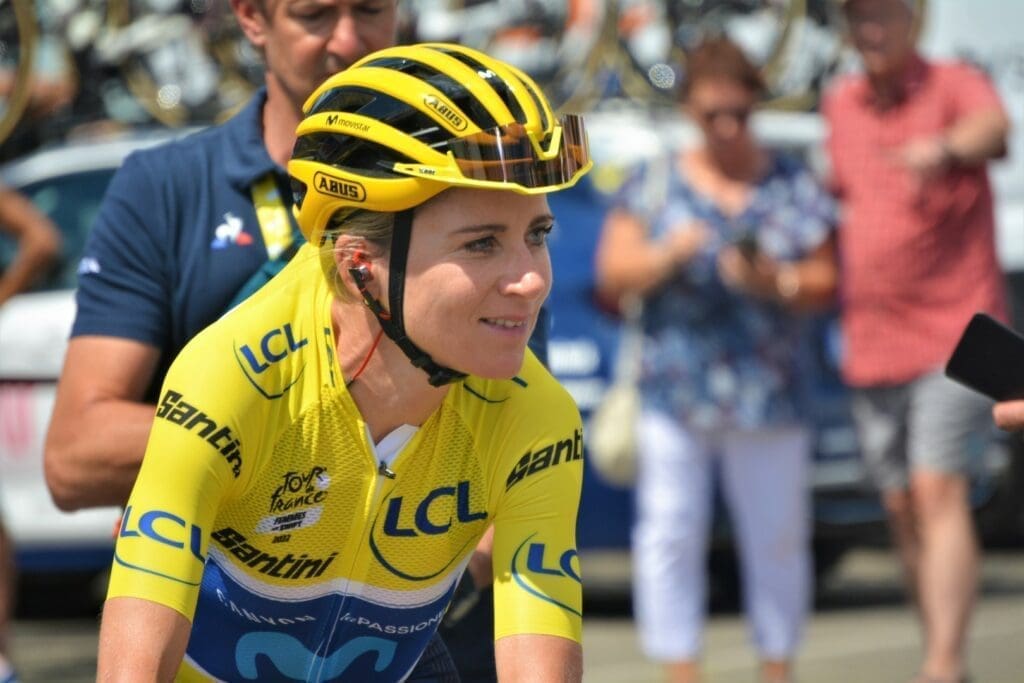
Van Vleuten announced in 2022 that 2023 would be her final season. She wanted to leave on her own terms rather than drift on too long. Even then, she kept winning. She took La Vuelta Femenina and the Giro d’Italia Donne in 2023, though she missed out on a second straight Tour de France Femmes and finished just off the podium in fourth.
That final year mattered because it showed how high her standard remained right to the end. She did not retire as a rider hanging on to reputation. She retired as one of the best in the world, still winning grand tours and still shaping the biggest races. That gives her career a rare completeness. There is no sagging epilogue. The ending is fully worthy of the rest.
Life after racing
Van Vleuten initially spoke about retirement as a period of space and uncertainty rather than a rushed jump into another defined role. She was happy not to have everything planned and wanted time away from the structure of professional cycling.
By late 2024, though, a clearer next chapter had emerged. She joined Fenix-Deceuninck as a performance mentor in 2025. That role makes sense. Her racing career was built on relentless self-analysis, training precision and the confidence to race on instinct when needed. As a mentor, she is well placed to pass on exactly those qualities.
-
 Photo Credit: Getty

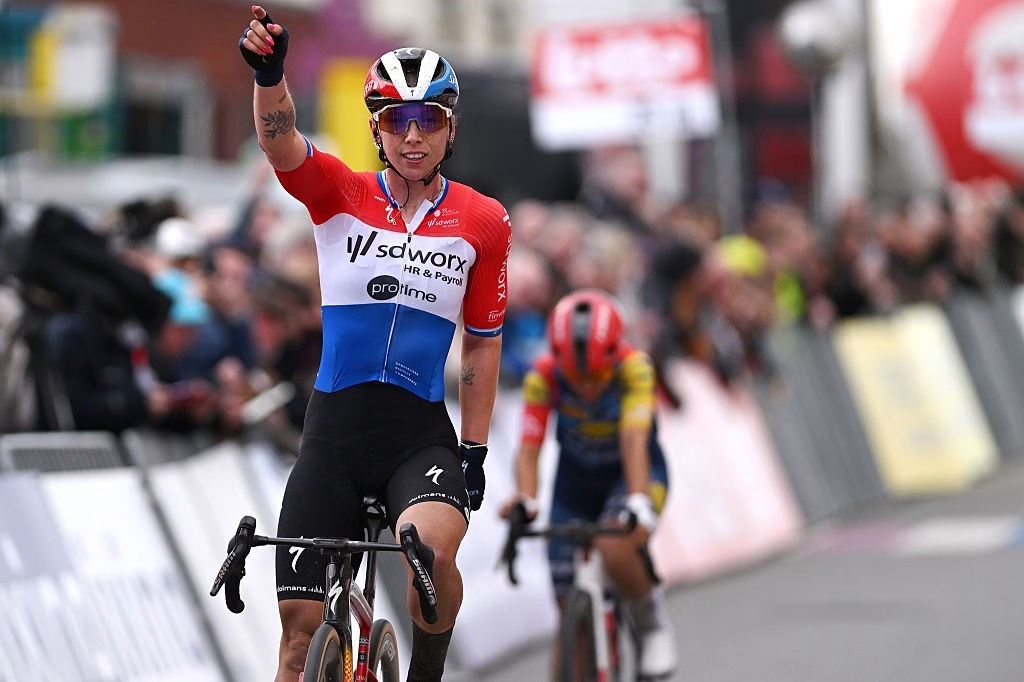
Why Annemiek van Vleuten still matters
Van Vleuten matters because she is one of the clearest examples of how women’s cycling changed in the 2010s and early 2020s. She did not dominate because she belonged to an underdeveloped era. She dominated in a deep, aggressive, international peloton and often did so by making races harder than anyone else wanted them to be.
She also matters because her career is unusually complete. She won Monuments and major Classics, world titles, grand tours and Olympic medals. She crashed horribly, came back, and then somehow became even better. That gives her a place not just among Dutch greats, but among the defining champions in the whole history of the sport. In a series that includes Jeannie Longo: the full story of one of women’s cycling’s most complex greats, Leontien van Moorsel: the full story of a rider who rebuilt herself and changed women’s cycling and Ellen van Dijk: the full story of one of women’s cycling’s great time triallists and Classics riders, Van Vleuten belongs very comfortably indeed.
Annemiek van Vleuten career highlights
- Winner of the 2011 and 2021 Tour of Flanders
- Winner of Liège-Bastogne-Liège Femmes in 2019 and 2022
- Winner of Strade Bianche in 2019 and 2020
- Winner of Omloop Het Nieuwsblad in 2020 and 2022, and Dwars door Vlaanderen in 2021
- Four-time Giro d’Italia Donne champion, in 2018, 2019, 2022 and 2023
- Winner of the 2022 Tour de France Femmes and the 2023 La Vuelta Femenina
- Elite road world champion in 2019 and 2022, and elite time trial world champion in 2017 and 2018
- Olympic time trial gold medallist and road race silver medallist at Tokyo 2020
- Returned to the professional peloton in 2025 as a performance mentor with Fenix-Deceuninck