
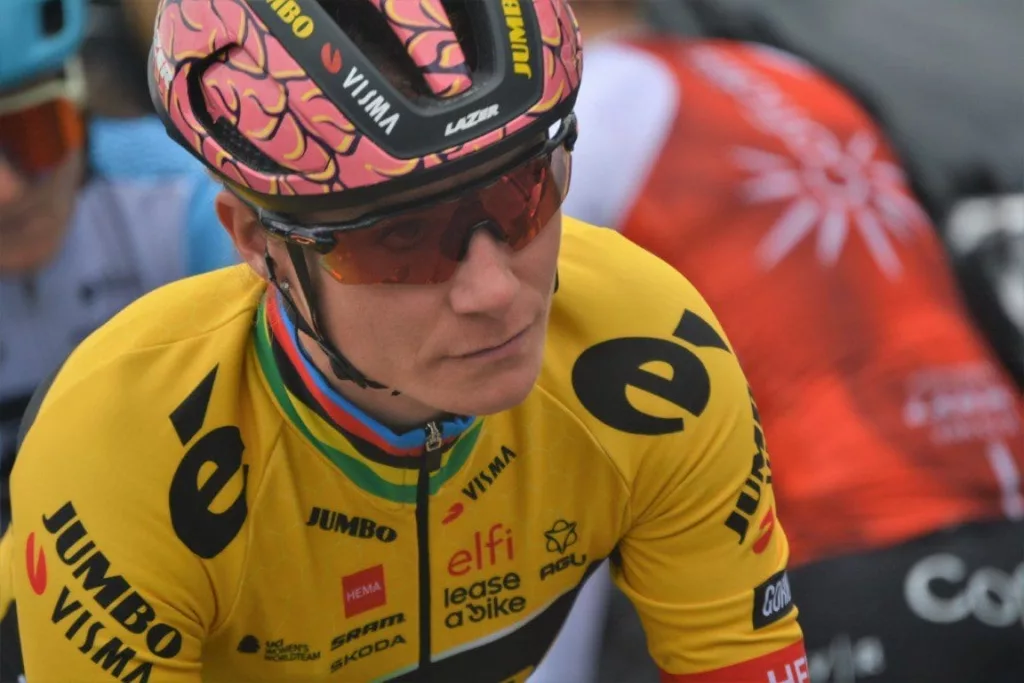
Across men’s and women’s cycling, very few riders can match the breadth, longevity and sheer weight of Marianne Vos’ palmares. She has been a world champion on the road, on the track, in cyclo-cross and, later, in gravel. She has won Monuments, Spring Classics, Grand Tour stages, stage race general classifications, Olympic titles and world titles across multiple eras of the sport. That alone would make her exceptional. What elevates her even further is that she has remained relevant through so many different versions of women’s cycling, from the years before the current WorldTour structure to the far deeper and more internationally competitive peloton of the 2020s.
Within women’s cycling history, Vos is not just one of the greats. She is one of the central figures around whom the modern sport is organised. Her career stretches across generations of rivals and entirely different race landscapes, yet she has kept finding ways to win. That is why she sits so naturally alongside Anna van der Breggen, Annemiek van Vleuten, Jeannie Longo and Leontien van Moorsel. Vos is not simply a champion from one great period. She has been the constant.
Before the dominance, Marianne Vos arrived as a phenomenon
Marianne Vos was born on the 13th May 1987, and unlike some champions whose careers take years to build, she announced herself at elite level almost immediately. Her breakout year on the road came in 2006, but that barely tells the full story because the winter before it had already delivered her first elite cyclo-cross world title. Then, in the same year, she won the Dutch national road title, the European title and the elite world road race title. For most riders, that would amount to a career peak. For Vos, it was only the opening chapter.
That early explosion matters because it shaped the way the sport came to see her. Vos was never really treated as a promising rider who might eventually become great. She arrived looking like a generational talent from the start. Yet even with that level of natural ability, what made her career so extraordinary was not only the brilliance of those first seasons but the fact that she kept adapting as the sport changed around her.
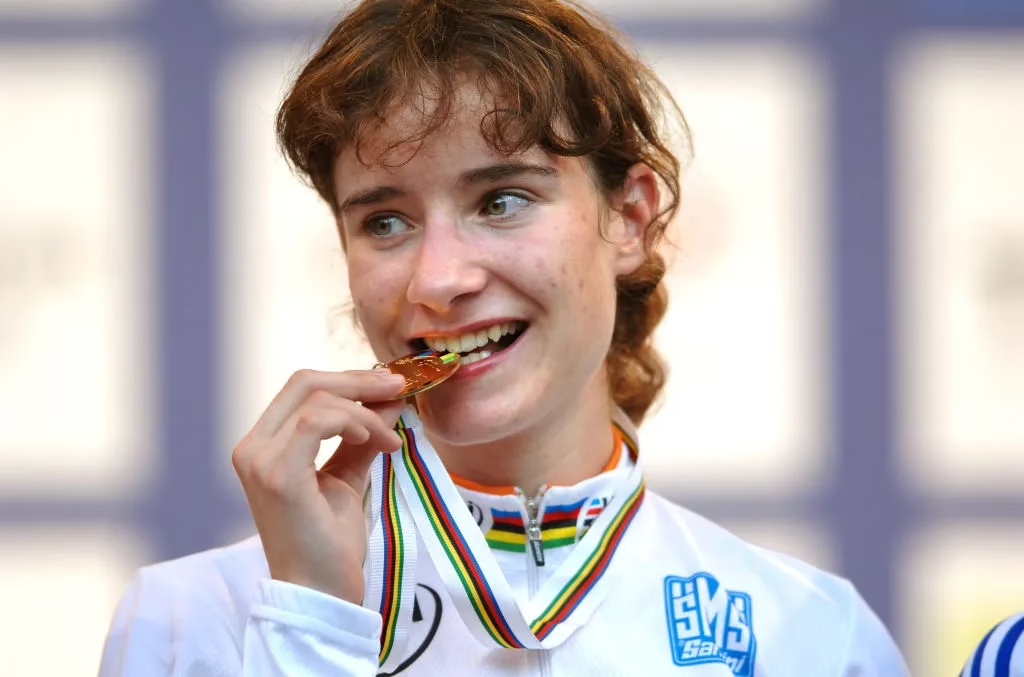
The first great phase – Classics, stage races and total control
In 2007, Vos won the women’s road World Cup for the first time and took her first La Flèche Wallonne Féminine title. It was a sign that her range was already becoming unusually broad. She was not just winning championships. She was beginning to dominate the major one-day races that best riders build their reputations around. Over the next few seasons that pattern only deepened.
Between 2008 and 2010, Vos accumulated victories at a rate that made her feel almost inevitable. She added more national titles, won more editions of La Flèche Wallonne Féminine, and collected major one-day wins at races such as Trofeo Alfredo Binda and Ronde van Drenthe. She also kept winning stages in races like the Giro Rosa and Route de France, which showed that even before her first overall Giro title, she was far more than a one-day specialist. She could sprint, climb, recover and out-race rivals over almost any format.
Her first Giro Rosa overall victory came in 2011 and it felt like a perfect summary of what made her such a daunting rider. She won five stages as well as the general classification, the points classification and the mountains classification. Few riders in women’s cycling history have combined so many talents so completely in one race. That performance did not just confirm that Vos could win a Grand Tour-style stage race. It showed she could dominate one from every possible angle.
The years when Vos became the sport’s standard
If the first phase of her career established her brilliance, the years around 2012 and 2013 made her the standard by which everyone else was judged. After a remarkable stretch of second places at the World Championships road race, Vos returned to the rainbow jersey in 2012. She also won the Olympic road race in London, adding that title to the Olympic gold she had already won on the track in Beijing in 2008. Another Giro Rosa overall win, again with five stage victories, underlined just how complete a rider she had become.
In 2013, she won the world road title again and added the Tour of Flanders Women to her palmares. That Flanders victory matters especially in a Spring Classics context because it completed another piece of her one-day record. Vos was already the dominant force on uphill finishes and selective races, but Flanders showed she could also own one of the most prestigious cobbled Monuments in the women’s calendar.
By that point, her career had become so broad that it was easy to forget just how young she still was. Vos was not hanging on through experience alone. She was still in the thick of her physical prime, and that is what made her level of control over the sport feel so intimidating. She could beat riders in sprints, in attritional Classics, in stage races and in championships. Very few champions have ever been that multidimensional.
Setback, illness and a career that had to change shape
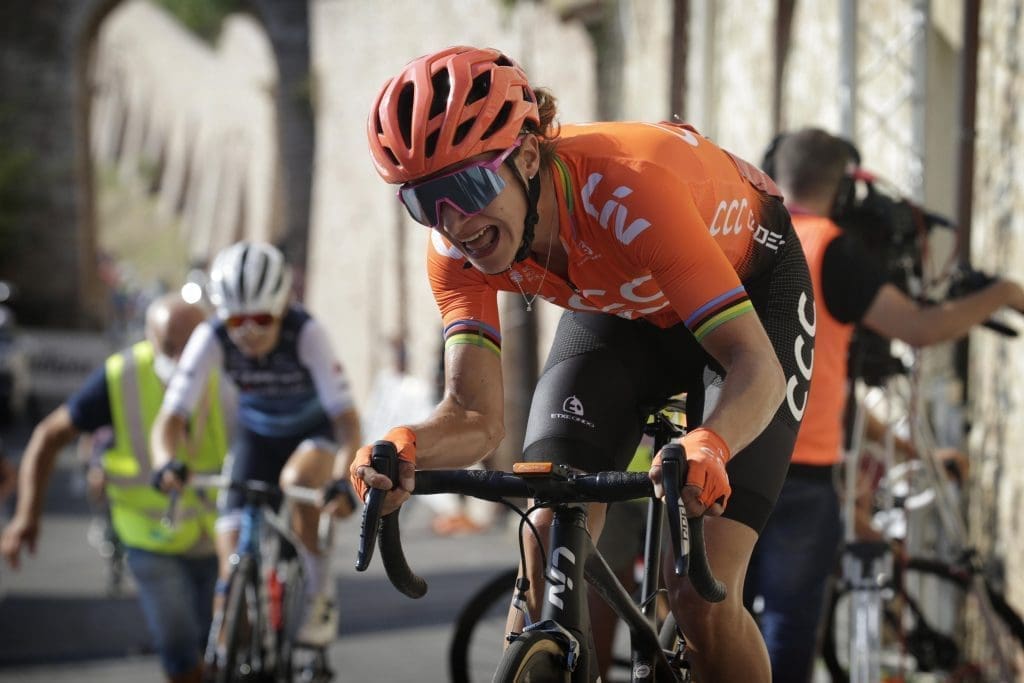
The first real break in the pattern came in 2015. Vos had already won The Women’s Tour and the first edition of La Course by Le Tour de France in 2014, and she took another Giro Rosa title that same season, but the following year brought a very different story. A hamstring problem early in the year was followed by a broken rib, and for the first time in her elite road career she finished a season without a win. It was a striking moment because it interrupted what had seemed like an almost continuous run of success.
That season matters in hindsight because it forced her career into a new shape. The Vos who came afterwards was no longer simply the unstoppable force of the late 2000s and early 2010s. She had to adapt, manage her body differently, and coexist with a new generation of riders who had grown up in a sport she had helped define. For many champions that kind of interruption marks the beginning of the end. For Vos, it became the start of a new version of greatness.
Reinvention and the long second peak
Vos still won stages and important races in 2016, but the sense of total dominance had eased. A younger generation was coming through, and women’s cycling itself was becoming deeper and more specialised. Yet Vos remained too intelligent, too versatile and too competitive to fade away quietly. In 2017 she won the European Championships road race, a major title that felt symbolic as much as prestigious. It was proof that she was still capable of beating the best in the biggest races.
She also won the Tour of Norway in 2017 and retained it in 2018, while a Giro Rosa stage win in 2018 ended a four-year wait for another victory in that race. None of that looked like a nostalgic farewell tour. It looked like a champion learning how to reassemble herself for a different era.
Then came 2019, and with it a much clearer resurgence at the highest level. Vos won four stages of the Giro Rosa, claimed the Tour de Yorkshire overall and took La Course for a second time. Perhaps most tellingly in a Spring Classics context, she won Trofeo Alfredo Binda again, a full decade after her first victory there. That kind of longevity is rare in any discipline. In a sport as physically and tactically demanding as elite road cycling, it is almost absurd.

The late-career Classics revival
What has made Vos’ later years so compelling is that they did not simply add sentimental wins to an already complete legacy. They materially changed the size of that legacy. In 2021, she won Gent-Wevelgem for the second time and added another major spring success to her record. Then, in 2024, she produced one of the most remarkable Spring Classics campaigns of her entire career, winning Omloop Het Nieuwsblad, Dwars door Vlaanderen and Amstel Gold Race.
The Omloop Het Nieuwsblad victory was especially notable because it came on her first appearance in the race, despite the absurd breadth of her career. She beat Lotte Kopecky and Elisa Longo Borghini in the sprint from a select group, which said plenty about both her positioning and her finishing speed even at that stage of her career.
Dwars door Vlaanderen followed a month later, where she beat Shirin van Anrooij in a two-up sprint after another selective edition of the race. Then came Amstel Gold Race, where she took her second victory in the event in dramatic fashion after Lorena Wiebes celebrated too early before the line. That 2024 trio mattered because it was not simply nostalgic brilliance. It was evidence that Vos could still beat the best riders of a much younger generation in major spring races.
You can trace that impact across several of the sport’s biggest one-day races, including Tour of Flanders Women and La Flèche Wallonne Féminine, where her name continues to sit prominently among the defining winners.
What kind of rider was Marianne Vos?
Calling Vos an all-round Classics specialist is accurate, but it still feels incomplete. She has always been something larger than a standard race category. She could sprint like a pure finisher, climb like a puncheur, survive hard races over cobbles, win uphill finishes, dominate cyclo-cross, succeed on the track and still return to the road as one of the smartest tactical riders in the peloton. Her skill set has always spilled beyond neat classification.
That is a large part of why she has remained relevant for so long. Riders who rely on one narrow strength can age out of a changing sport more quickly. Vos has always had several ways to win. In some years she was the overwhelming engine of the race. In others, she became the sharpest finisher from a reduced group. At times she was the rider everyone feared on short steep climbs. At others, she was the one nobody wanted to arrive with at the line. That adaptability is probably the clearest single explanation for her longevity.
-
 Photo Credit: Lezyne
 -
 Photo Credit: David Pintens / BELGA MAG/AFP via Getty Images

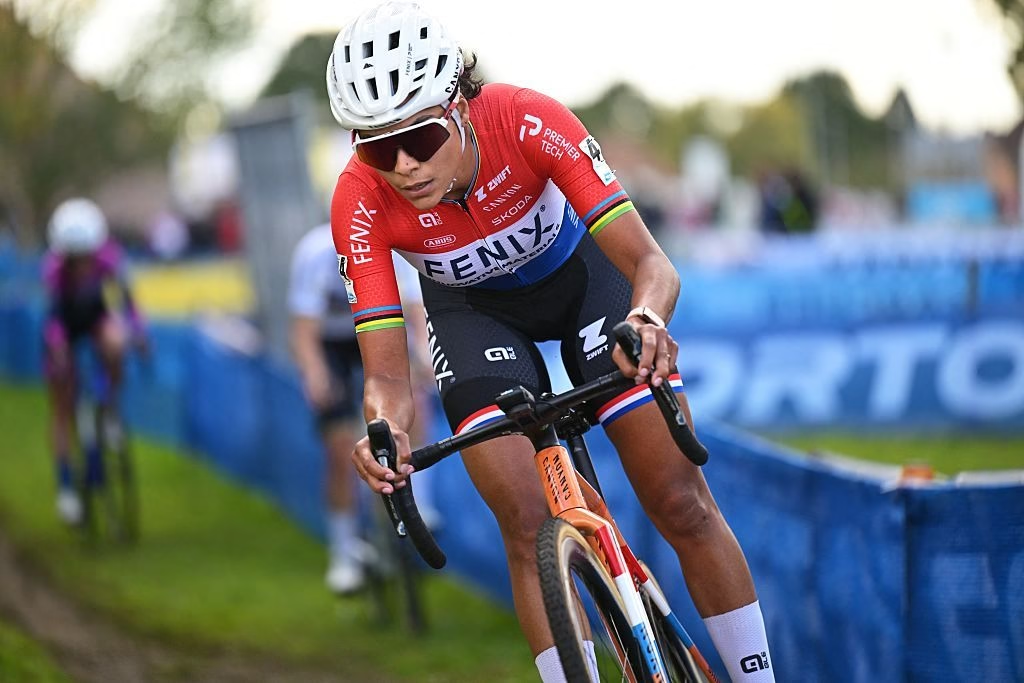
Greatest race victory at 2009 Trofeo Alfredo Binda
If one race captures Marianne Vos as a Spring Classics rider, 2009 Trofeo Alfredo Binda is a strong choice. The conditions were miserable, with heavy rain turning the race into a test of strength, patience and resilience rather than just explosiveness. Emma Pooley attacked after only 11 kilometres and spent roughly 80 kilometres out in front alone, forcing the race to develop behind her in a way that gradually stripped the bunch down to its strongest core.
Once Pooley was finally caught, the race did not settle. Team Bigla tried to turn the catch into an opportunity, and then Vos attacked with Emma Johansson. That was the winning move. Behind them, riders including Kristin Armstrong and Eva Lutz tried to bridge, but the effort never quite brought the race back together. Armstrong got close, but close was all it was. The final climb finished her chances, and the race belonged to the two leaders.
What made the win so revealing was that it showed several parts of Vos at once. She had the judgement to attack at exactly the right moment, the engine to sustain the move in atrocious conditions, and then the speed to finish it off against Emma Johansson in a direct sprint. It was not her biggest win in terms of prestige alone, but it was one of the clearest expressions of her range as a Classics rider.
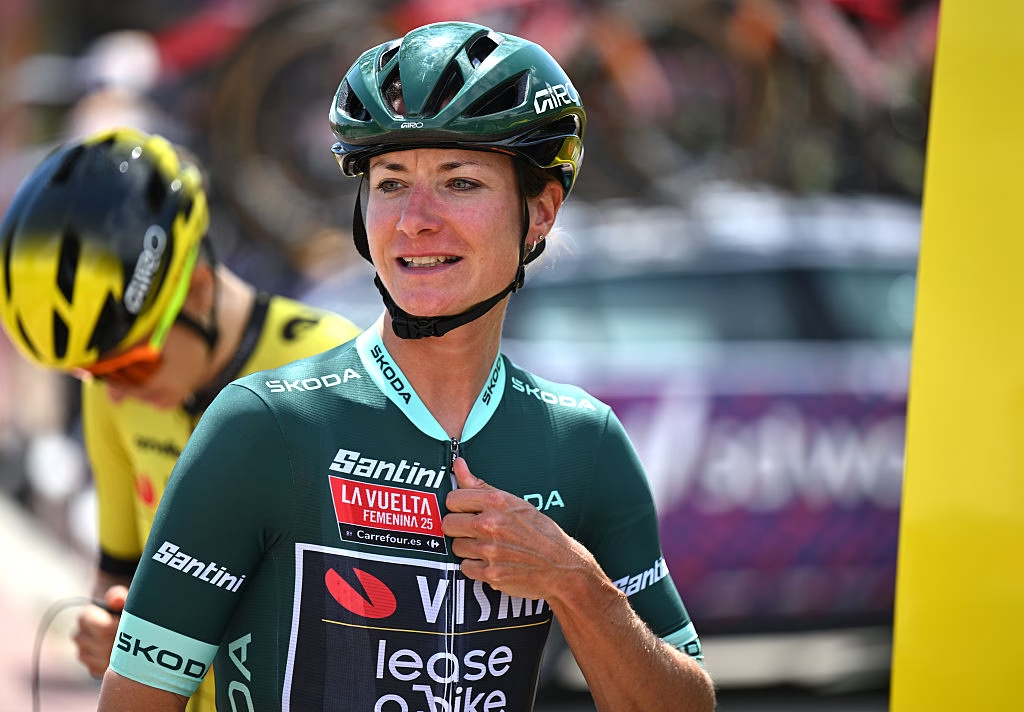
Why Marianne Vos still matters
Vos matters because she is one of the clearest links between different ages of women’s cycling. She was already a world champion before many of her later rivals had even turned professional, yet she has kept winning against them anyway. That makes her more than just a champion with longevity. It makes her a rider whose career maps the growth of the sport itself.
She also matters because her versatility remains almost unmatched. Pauline Ferrand-Prévot is the other obvious modern comparison in terms of world titles across multiple disciplines, but even that does not quite capture the total breadth of Vos’ road palmares across Monuments, Classics, stage races, championships and Grand Tour stages. Vos’ claim to being the women’s peloton’s equivalent of Eddy Merckx is not just a neat line. It is a serious argument.
In a Spring Classics context, her record alone would make her a giant of the sport. But the larger truth is that Marianne Vos has never belonged only to one corner of cycling. She has defined too many of them.
Marianne Vos career highlights
- Olympic road race champion in 2012, after previously winning Olympic track gold in 2008
- Multiple elite world titles on the road, in cyclo-cross, on the track and in gravel
- Winner of the Tour of Flanders Women in 2013
- Winner of La Flèche Wallonne Féminine in 2007, 2008, 2009, 2011 and 2013
- Winner of Trofeo Alfredo Binda in 2009, 2010, 2012 and 2019
- Winner of Ronde van Drenthe in 2011, 2012 and 2013
- Winner of Gent-Wevelgem in 2012 and 2021
- Winner of Amstel Gold Race in 2021 and 2024
- Winner of Omloop Het Nieuwsblad and Dwars door Vlaanderen in 2024
- Multiple Giro Rosa stage wins and overall victories, including one of the most dominant editions of the race in 2011

