Professional men’s cycling is now at a point where its financial weaknesses can’t be ignored. They are no longer background issues or off-season talking points. They sit at the centre of almost every discussion about where the sport is heading. Each winter brings rumours of sponsors leaving, warnings about shrinking team budgets, and fresh doubts about how long some squads can survive in the WorldTour. The racing remains exciting, but the structure beneath it feels unstable.
Much of the sport still relies on an old financial model built on external sponsors, scattered race ownership, and the overwhelming pull of the Tour de France. That tension reaches into every part of the peloton – from how teams plan their seasons to how riders negotiate their contracts. It fuels the constant worry about which team may not return next year.
To understand why the situation feels so fragile, we need to look closely at each layer of the sport’s economics. The calendar, the media landscape, the power of race organisers, the cost of running a WorldTour team – all of them play a role. So do the reform projects that promised change but stalled before they could take hold. Only by looking at these parts together can we start to imagine what a stable and modern financial future for men’s cycling might actually look like.
 Photo Credit: Cor Vos
The fragility of cycling’s financial foundations
The foundations of professional men’s cycling rest on a financial model that is far more fragile than many fans realise. At first glance, the sport looks modern. Teams invest in aerodynamics, sports science, nutrition, and long-term rider development. Their staff lists grow every year, and the equipment they use is as advanced as anything in elite sport. The racing looks sharper, faster, and more polished than ever. But underneath this high-tech surface sits an economic structure that feels closer to the amateur days than to a global sport with huge audiences.
The main problem is the imbalance in who controls the sport’s most valuable assets. Teams provide the riders, the tactics, and the stories that fans follow through the season. They carry the identity of the sport, yet they have almost no influence over the money it generates. Teams do not own the races. They do not earn anything from TV broadcasts even though their riders make the action worth watching. They have little say in how the calendar is shaped. Most of the commercial power lies with race organisers and broadcasters, not the teams competing on the road.
This system is not the result of recent mistakes. It is the product of how cycling grew over the last hundred years. Road races were originally created by newspapers to sell more copies. Later, regional governments, tourist boards, and private promoters used cycling as a way to promote towns, regions, or national pride. Races like Paris-Roubaix and the Tour de France were built for marketing long before anyone thought about building a balanced sport with shared commercial rights.
Teams also began in a very different form. For decades, they were groups of riders backed by bike manufacturers. They were marketing tools, not long-term sporting organisations. As the sport evolved, this turned into the naming-rights model we have today, where a team’s identity changes whenever a sponsor changes. Other sports built leagues, shared revenue, and stable clubs with long histories. Cycling stayed tied to individual races and short sponsorship cycles.
The result is a sport with world-class racing but financial foundations that remain thin, scattered, and vulnerable.
 Photo Credit: Getty
Competing priorities and a divided ecosystem
The divide between the sporting and commercial sides of men’s cycling creates a system where major stakeholders often pull in different directions. Race organisers focus on running successful events, securing local sponsors, managing logistics, and selling broadcast rights one race at a time. Broadcasters concentrate on producing good coverage for their own markets, not the sport as a whole. Fans see a season that looks connected on screen, but underneath it is commercially scattered.
Teams sit at the very end of this chain. They bring the racing to life, develop the riders, and create the stories that fans follow each year. But they have almost no ownership of the events that shape the sport. With no major assets of their own, teams rely almost entirely on sponsorship to survive. Every other financial lever is controlled by someone else.
This imbalance becomes clear whenever there is conflict. Teams might push for a more balanced calendar, stronger safety standards, or a long-term commercial plan for the whole sport. But organisers have little reason to give up control or share revenue. Each group works toward its own goals, and the system rewards that self-interest. What it rarely delivers is a unified vision that strengthens the sport for everyone involved.
 Photo Credit: LaPresse
Visibility without stability
Perhaps the most jarring feature of cycling’s financial landscape is the gap between sporting success and organisational security. In most major sports, a team performing well on the field or court is typically rewarded with stronger revenue, higher ticket sales, and more commercial stability. In cycling, success can help attract a sponsor, but it does not guarantee survival.
The list of teams that have folded despite strong results is long and sobering. Some had won major races. Others had developed some of the sport’s best young riders. Many had loyal fanbases and clear sporting identities. Yet when a key sponsor pulled out, the entire structure collapsed within months. The sport’s history is littered with examples of teams disappearing while still competing at a high level, because their existence depended entirely on whether a corporation continued to see value in cycling sponsorship.
This fragility affects every layer of the sport. Riders negotiate contracts knowing that their team’s future might be uncertain. Staff face the same insecurity. Young talent may find their development pathway disrupted if a feeder team folds. Even fans struggle to maintain long-term loyalty when a team’s identity changes with each sponsorship cycle.
From the outside, cycling appears healthier than ever. The WorldTour has expanded its global reach. Advancements in technology, nutrition, and planning have elevated performance to new heights. Audiences grow during the Grand Tours, and social media has increased rider visibility dramatically.
Yet much of this growth is cosmetic. The underlying financial model has not evolved in parallel. Teams may look more professional, but their revenue structure remains fundamentally unchanged. Costs continue to rise, but income remains stagnant. Investment in performance masks the reality that the teams driving this evolution still rely on financial structures that have barely moved on from the 1990s.
A system built on goodwill
Ultimately, professional men’s cycling continues to operate because a number of sponsors, governments, and wealthy individuals choose to fund teams out of a mixture of passion, branding opportunity, and national pride. Their support is genuine but not guaranteed. The sport is one change in corporate direction away from losing a major team. One shift in the political climate away from losing state-backed funding. One economic downturn away from another wave of collapses.
Cycling has always lived with instability. In many ways, it has embraced it as part of its culture. But the scale and speed of modern professional sport demand a more resilient foundation. Without meaningful reform, the men’s peloton will remain a world-class sporting product built on a precarious financial system. The risk is not that cycling disappears, but that its long-term potential remains permanently limited by a model that no longer fits the era it is trying to compete in.
Why sponsorship-driven teams face structural instability
Sponsorship itself is not the villain in professional cycling’s financial story. Corporate partners have always been part of the sport’s DNA, funding teams, supporting events, and giving identity to generations of squads. Many modern sports thrive with prominent sponsor involvement. The issue in the men’s peloton is not that sponsorship exists, but that it exists in isolation. It stands alone as the only reliable income source. Without it, the entire structure collapses.
In cycling, teams do not merely wear sponsor logos. They are the sponsor. Their identity is so tightly bound to corporate branding that continuity becomes almost impossible. A football club, even with a jersey sponsor, retains its crest, colour, and history. A Formula 1 team may change title sponsors but retains a core brand. Cycling, on the other hand, ties its identity entirely to whichever company is currently funding the roster. Team names become corporate billboards that change every few years, sometimes even mid-cycle if a sponsor exits unexpectedly.
 Photo Credit: Getty
Identity built on shifting ground
The result is a fluid landscape where fans struggle to maintain long-term associations with teams. A squad may build a strong identity built on attacking racing, developmental excellence, or Grand Tour success, yet that identity can evaporate the moment a sponsor leaves and a new name arrives. The continuity of the sporting project remains, but the branding that binds fans to a team resets abruptly.
This instability undermines the cultural depth that helps other sports build generational loyalty. It is harder to create a lasting narrative when the team’s name, colours, and logo are dictated entirely by corporate strategy rather than by a stable club identity. Even the most storied modern teams have gone through numerous name changes. The brand equity is transient, not cumulative.
Sponsorship cycles clash with sporting cycles
Corporate sponsorship tends to follow economic moods. Companies invest during growth phases and retreat during downturns. Marketing budgets are often the first to be cut when financial pressure rises. Different industries also carry different levels of risk. Telecoms, gambling platforms, cryptocurrency ventures, energy firms, and government-backed entities have all funded major teams, and all have a history of rapid strategic pivots. That volatility directly transfers to the teams they support.
Meanwhile, cycling operates on sporting cycles that require long-term planning. Developing a Grand Tour contender can take five to seven years. Building a competitive Classics squad involves careful recruitment and progressive strengthening. Teams must plan their athlete pipelines years in advance. Yet their financial horizons barely extend beyond the next sponsorship renewal. This disconnect forces teams to operate in a constant state of uncertainty, making it harder to commit to ambitious, multi-year projects.
Short-term deals drive short-term thinking
WorldTour teams often sign sponsorship contracts that last only two or three years. That may be sufficient for delivering brand visibility, but it is far too short for building a stable sporting organisation. Each renewal becomes a high-stakes negotiation. Every autumn brings rumours of sponsors stepping back or shifting priorities. Teams routinely find themselves scrambling to secure new funding just to survive the following season.
The uncertainty does not only affect management. Riders feel it acutely. Contract negotiations can hinge not only on performance, but on whether the sponsor is likely to remain in the sport. Talented riders may leave development programmes prematurely because the team cannot guarantee its future. Ambitious young riders may be reluctant to sign multi-year deals with teams that appear financially unstable, even if the sporting fit is ideal.
The human cost of volatility
Behind the riders are dozens of staff whose employment depends on the same fragile model. Mechanics, soigneurs, sports scientists, nutritionists, PR managers, chefs, and logistics teams live with perpetual uncertainty. Even squads with a strong public image can be one phone call away from a crisis. When a sponsor withdraws, there is no central body that steps in to stabilise the team. The organisation often collapses outright.
This fragility becomes visible during sponsor exits. Teams that had been competing at the top level can disappear within weeks despite years of strong results. No other elite sport sees this level of volatility among its professional teams. It creates a work environment where staff loyalty is strong, but job security is thin.
 Photo Credit: Getty
Performance plans stalled by financial limits
The instability also affects high-performance projects. Cycling has entered an era where marginal gains matter more than ever. Teams invest in altitude camps, aerodynamics, nutrition, data analytics, and cutting-edge sports science. These projects are expensive and designed to yield long-term improvements. But when the financial model is built on short-term sponsorship cycles, those performance pathways become vulnerable.
A team that intends to develop a GC leader may need five years of consistent investment. A Classics squad aiming to build a deep roster requires multi-season recruitment. Yet a single failed sponsorship negotiation can shut down an entire pipeline. Teams often hesitate to commit fully to long-term performance strategies because they know the financial foundation may shift under their feet.
The imbalance of power
Ultimately, the sponsorship-driven model leaves teams with little leverage. They have to accept the terms set by sponsors because they have no alternative revenue streams. They cannot rely on broadcast income, revenue sharing, or event ownership to maintain stability. When negotiations become tense, the sponsor always has the upper hand. That imbalance shapes everything from rider retention to staff budgets to transfer ambitions.
It also encourages teams to prioritise visibility above strategic planning. Sponsors want exposure, especially during the Tour de France. Teams, therefore, tailor their sporting strategy around visibility metrics rather than purely sporting logic. The calendar becomes a branding exercise rather than an optimised performance plan.
A model that cannot scale
As the sport becomes more sophisticated and expensive, the limitations of a sponsorship-only model become clearer. It cannot scale to the level required to match the professionalism seen in other global sports. Costs rise faster than commercial value. Technology advances faster than marketing budgets. Sponsorship alone is increasingly unable to fund the ambitions of the modern peloton.
The instability is structural, not incidental. As long as teams depend entirely on corporate partners for their identity and existence, they will continue to live with uncertainty that undermines long-term planning, athlete development, and competitive balance.
Cycling does not need to eliminate sponsorship. It needs to rebalance its reliance on it. Until that happens, the sport will continue to operate with one of the most precarious financial structures in elite sport, no matter how spectacular the racing looks from the outside.
 Photo Credit: Getty
The calendar imbalance: a global sport with a narrow economic core
At first glance, the WorldTour calendar appears vast, diverse, and impressively international. It stretches from Australia to Canada, from the Middle East to northern Europe, and from the Basque Country to the high Alps. More than 200 days of racing are available for teams each season, with a mix of stage races, Classics, and week-long tours. The sport looks global in scope and rich in opportunity.
Yet when examined through a commercial lens, the footprint of the calendar shrinks dramatically. Despite its geographical spread and historical depth, professional men’s cycling is economically dominated by a single event: the Tour de France. Everything else, even the prestigious monuments and the two other Grand Tours, sits on a different tier of financial relevance.
A calendar built around one gravitational force
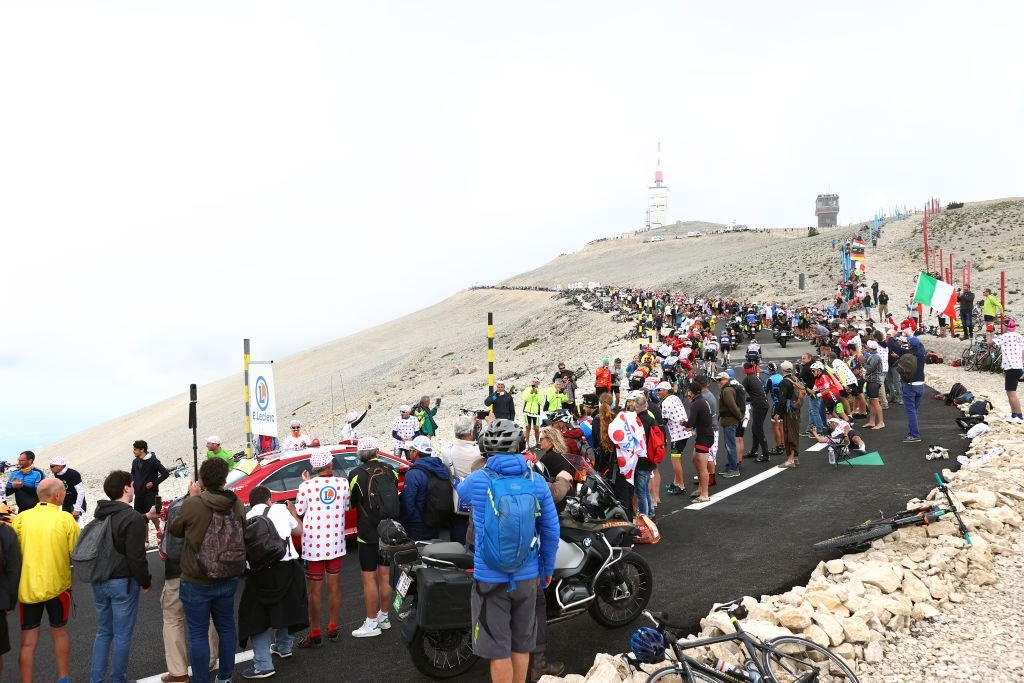
The Tour de France is not just the biggest race in cycling. It is the anchor around which the entire sport’s economic logic revolves. It shapes sponsorship pitches and dictates team budgets. It determines which narratives broadcasters prioritise. It drives fan engagement at a level no other event can match. For many casual viewers, it is professional cycling.
This gravitational force has consequences. Success in July is often worth more commercially than success across the rest of the season combined. Teams can win multiple major Classics, dominate early-season stage races, or build a consistent record of strong results, and still find that sponsors ultimately judge their value through the Tour lens. A single standout performance in France can secure a renewal; a quiet July can raise awkward questions in a boardroom.
Even the Giro d’Italia and Vuelta a España, despite their heritage and sporting complexity, struggle to compete with the Tour’s global reach. The Giro’s Italian identity is rich but comparatively localised. The Vuelta, while increasingly competitive and popular, remains a race with smaller international resonance. Combined, their worldwide impact still falls short of what the Tour achieves each year.
A patchwork calendar with uneven financial terrain
Beyond the Grand Tours, the sport becomes even more fragmented. Many races outside July rely on local tourism boards, regional government funding, or civic festivals to remain viable. These races are invaluable for sporting development and for maintaining the cultural fabric of the sport, yet they exist on fragile footing. Their budgets are modest, their broadcast packages limited, and their long-term futures often tied to political winds rather than sporting merit.
This vulnerability creates a landscape where races disappear not because they fail to attract strong fields or produce compelling racing, but because a mayor loses an election, a tourism agency reprioritises, or a sponsorship arrangement expires. Historic events have vanished with little warning. New races arrive with fanfare only to fade after a few editions. The patchwork nature of race ownership ensures that the calendar remains susceptible to abrupt shifts.
The effect on team strategy and sporting priorities
The economic imbalance feeds directly into how teams build their seasons. For sponsors seeking visibility, the Tour offers unrivalled return on investment, so teams are incentivised to shape their entire competitive year around July. This distorts sporting logic. Riders who might otherwise target the Giro or attempt ambitious early-season campaigns often feel pressure to arrive at the Tour in perfect condition. Domestiques who may be peaking in spring are asked to hold form for midsummer. Talented all-rounders sometimes sacrifice other opportunities to serve a Tour-based team strategy.
The resulting dynamic creates an annual hierarchy of objectives. The Tour sits at the top, the Giro and Vuelta occupy the middle tier, and the rest of the calendar becomes a proving ground, a preparation schedule, or a place to support secondary sponsors’ regional goals. Teams do value winning across the year, but the commercial incentives are skewed so heavily toward July that other ambitions feel secondary.
This also affects a rider’s market value. A stage win, a jersey stint, or a standout performance in the Tour can transform a rider’s contract prospects. Equivalent results elsewhere do not hold the same commercial weight, even if the sporting difficulty is comparable. The Tour defines careers in a way no other cycling event can replicate.
 Photo Credit: Getty
Innovation constrained by commercial gravity
The dominance of the Tour also makes innovation challenging. For a race to attract investors, broadcasters, or long-term commercial partners, it needs a guaranteed audience. Yet outside the Tour, that guarantee is elusive. Organisers may have strong ideas for new formats, improved coverage, or modernised race structures, but without significant global visibility, such innovations struggle to gain traction.
This is one reason why experiments like the Hammer Series faced difficulty. Even with team support and a promising format, the series could not compete with the gravitational pull of the established calendar. New ideas often struggle to find oxygen in a system dominated by a single event that is culturally immovable and commercially unmatched.
Meanwhile, attempts to rationalise the calendar continue to run into political complexity. Each race is owned by a different promoter with its own historical roots, regional stakeholders, and vested interests. Some rely heavily on government support and cannot move dates easily. Others are tied to tourism seasons. Some have heritage that organisers resist altering. Even when the sport acknowledges that its calendar is crowded or inefficient, aligning all the moving parts remains extremely difficult.
A global sport with a narrow commercial horizon
The paradox of men’s professional cycling is that its sporting diversity is both a strength and a weakness. The calendar is rich, varied, and full of races that hold deep meaning for their local communities. Yet commercially, the sport relies on a narrow core centred on July. Until the broader calendar can generate consistent global value, cycling’s economic structure will remain lopsided, and the peloton will continue to operate with one financial pillar rather than many.
The sport will not solve its financial challenges simply by racing more often or by expanding geographic reach. True stability requires broadening the commercial value beyond the Tour, strengthening other events to become meaningful revenue engines, and creating a season-long ecosystem that teams can plan around. Without that evolution, the calendar will remain a global tapestry woven around a single, dominant thread.
 Photo Credit: Getty
Broadcast revenue: the missing pillar of modern sports economics
Broadcast income is the financial backbone of nearly every major global sport. From football to Formula 1 to the NBA, centralised media rights underpin the stability of teams, shape long-term planning, and drive investment in infrastructure, talent, and technology. In these sports, television and digital streaming contracts are collectively negotiated, packaged as a premium product, and redistributed across teams in a way that ensures both competition and financial resilience.
Professional men’s cycling stands apart from this model almost entirely. It is a global sport without a global media strategy. The money generated by broadcasting the world’s biggest races does not flow through the teams who animate the competition, nor does it contribute to a shared commercial foundation. Instead, cycling operates within a scattered, race-by-race rights system that leaves teams excluded from the most valuable revenue stream in modern sport.
A media landscape built around race promoters, not teams
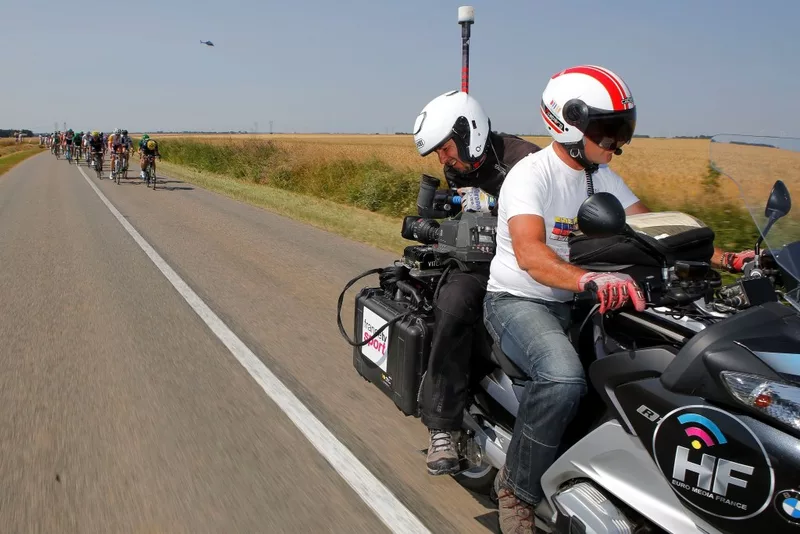
The roots of cycling’s fragmented broadcast model lie in its decentralised race ownership. Each event, whether a century-old Classic or a newer WorldTour stage race, is owned by a different entity. Some are run by private companies, some by local governments, others by newspaper groups or specialist promoters. As a result, each race negotiates its own broadcast contracts independently, tailoring the package to its local market and budget.
For race organisers, this system is perfectly logical. Broadcast rights are a crucial part of their financial viability. But the lack of centralisation creates an ecosystem where rights are sold piecemeal, often country by country, and broadcasters have little incentive to invest in long-term production or marketing. The WorldTour becomes less a unified sporting product and more a patchwork of separate events stitched together by tradition rather than commercial coherence.
Teams sit entirely outside these negotiations. They generate the sporting value, develop the riders, and create the drama that broadcasters sell – yet they receive none of the revenue. They are, in effect, content producers with no ownership of the content.
A fragmented viewing experience that limits engagement
For fans, the consequences of this structure are immediate and familiar. Following professional cycling across Europe or beyond often requires multiple subscriptions, hopping between broadcasters whose coverage varies dramatically in quality, language, and availability. A fan in the UK may watch one set of races on a subscription platform, another on free-to-air, and others on obscure or regionally restricted streams. A viewer in Italy or Spain might face the opposite problem: excellent coverage of local races, but limited access to events abroad.
Geo-blocking is common. Commentary teams and production values vary from race to race. Streaming platforms change rights holders year to year, forcing fans to constantly adapt. The viewing experience lacks the consistency, accessibility, and polish that modern sports audiences expect.
In an era when other sports are building unified digital ecosystems – such as Formula 1’s F1 TV, MotoGP VideoPass, or the NFL’s global streaming strategies – cycling’s reliance on local TV deals leaves it trailing behind. The result is a sport with global potential constrained by a broadcast model that feels several decades out of date.
The absence of a cohesive season-long narrative
The fragmented rights structure also undermines one of the most crucial commercial elements in modern sport: the season narrative. Fans of leagues like the Premier League or the NBA follow a season-long arc. Every match contributes to a larger story. Media coverage reflects the rhythm of a coherent competitive journey.
Cycling, by contrast, operates without a unifying storyline. The broadcast product is a series of disconnected chapters, each owned and distributed independently. The Tour de France dominates the global conversation, but the races before and after it lack a shared commercial framework that would tie them together as part of a single ecosystem.
This absence of unity makes it harder for teams to build visibility throughout the year. A strong spring campaign might be meaningful to core fans, but it is not integrated into a broader narrative that appeals to casual viewers. The sport struggles to maintain momentum across the calendar because the broadcast product itself does not encourage it.
 Photo Credit: Getty
Teams left outside the commercial loop
The financial consequences of this structure are severe. Because teams do not share in broadcast revenue, they must rely almost entirely on sponsorship. While organisers profit from the media value of the races, the squads delivering the spectacle have no claim to that revenue. This asymmetry leaves teams financially exposed and limits their ability to invest, innovate, or plan long term.
In other sports, broadcast income can cover a large portion of a team’s operating budget. In cycling, it covers none. This structural gap is one of the most significant reasons the peloton remains unstable. Without a centralised rights model, teams have no predictable, recurring source of income tied to the sport’s most valuable commodity: its audience.
A model that restricts growth
The lack of centralised broadcast rights also affects how the sport can adapt to the digital age. A unified streaming platform could showcase every WorldTour race, build year-round engagement, and provide data-driven insights into audience behaviour. Instead, the sport remains locked into a system designed for a pre-digital world, where local TV channels dominate and rights are sold piecemeal.
Innovations – from enhanced onboard footage to advanced data overlays – are difficult to implement consistently when each race has its own production setup. Without a cohesive media strategy, the sport cannot fully modernise its presentation or compete with sports that have aligned their commercial offerings with modern fan expectations.
The opportunity cycling has yet to seize
Broadcast revenue remains the single greatest untapped economic resource in the men’s peloton. It is a pillar that other sports rely on to maintain financial stability, invest in growth, and build compelling storytelling arcs. Cycling has the audience, the history, and the global reach to develop a similar model, but until its fragmented media rights structure evolves, the sport will continue to operate at a disadvantage.
Centralising rights would not solve every problem overnight, but it would provide the financial spine the sport currently lacks. Without it, teams will remain outside the economic engine room, and the WorldTour will continue to behave less like a modern league and more like an assortment of independent events competing for attention on an uneven playing field.
Cycling’s broadcast potential is enormous. Unlocking it is perhaps the single most important step toward creating a stable and sustainable future for the men’s peloton.
Organiser power and the dominance of ASO
No discussion of professional men’s cycling’s financial structure can be complete without addressing the influence of Amaury Sport Organisation. ASO is not simply one organiser among many. It is the central gravitational force around which the modern sport orbits. The company owns the Tour de France, the single most valuable commercial, cultural, and sporting property in the entire cycling universe. It also organises Paris-Roubaix, Liège-Bastogne-Liège, La Flèche Wallonne, Paris-Tours, and major stage races like Paris-Nice and the Critérium du Dauphiné. Its footprint touches nearly every pillar of the calendar.
This dominance shapes not only what fans watch, but how the sport is structured, financed, and governed. ASO’s decisions reverberate through every corner of the peloton. Its control over the Tour gives it an immense bargaining advantage over teams, broadcasters, and even rival organisers. Understanding this dynamic is essential for understanding why reform has proved so difficult.
The Tour as an economic monopoly
The Tour de France is a phenomenon that extends far beyond cycling. It is a cultural landmark stretching back to 1903, a travelling festival, a national treasure, and one of the most-watched sporting events in the world. Its audience dwarfs that of almost every other race in the sport. Sponsors know that visibility in July offers a return on investment unmatched by any other month. Broadcasters treat the Tour as a centrepiece of their summer programming. Casual fans often engage with the sport only through the Tour.
The result is a de facto monopoly. ASO controls the event that defines careers, shapes sponsorship decisions, and anchors the media landscape. Teams cannot boycott the Tour, cannot negotiate collectively for better terms, and cannot realistically create an alternative. The Tour is simply too big and too entrenched. Any attempt to reshape cycling’s financial structure must confront the fact that one company holds the rights to the sport’s primary commercial engine.
 Photo Credit: Getty
Why ASO holds such leverage
ASO’s leverage stems not only from the size of the Tour, but from the way cycling’s governance is distributed. Unlike many sports where leagues own the competition and teams share in the revenue, cycling’s major races are privately owned. ASO takes the financial risk of organising the Tour: paying for logistics, venue arrangements, road closures, security, TV production, and an enormous moving infrastructure. The company argues that these risks justify full ownership of the revenue.
Teams, in contrast, bring the riders but have no ownership stake. They are invited to participate, but they have no legal claim to the profits generated by the event. This structure has existed for over a century and remains largely unchanged.
The long-running debate over revenue sharing
Teams have pushed for revenue sharing for decades. Their argument is simple: the riders produce the sporting value, the sponsors fuel the visibility, and the teams deliver the narratives that make the Tour marketable. Without the peloton, the race does not exist. They contend that a portion of TV rights or commercial income should be redistributed to teams to stabilise the sport.
ASO’s counter-argument is equally clear: the company bears the organisational, financial, and historical risk. They own the intellectual property, control the logistics, and manage the global distribution of one of sport’s biggest assets. From their perspective, the teams are participants, not partners. That core philosophical divide has prevented progress for generations.
The strategic implications of ASO’s dominance
This imbalance affects the sport in multiple ways:
1. It limits the development of alternative revenue models.
Teams cannot build a stable financial base if they remain excluded from the sport’s most lucrative asset. Even if they develop strong sporting identities, invest heavily in technology, or attract major sponsors, their budget still depends on external corporate decisions.
2. It restricts innovation across the calendar.
Because ASO’s events are so influential, rival organisers struggle to attract long-term investment or create commercially competitive races. Sponsors looking for mass-market impact prioritise ASO’s portfolio. Broadcasters do the same. This reinforces a cycle where non-ASO races find it harder to grow.
3. It divides the sport’s political landscape.
The UCI governs cycling, but ASO governs much of its economic reality. Their interests do not always align. Calendar reforms, safety protocols, broadcast modernisation, and team-driven initiatives often require delicate negotiation between organisers and the governing body. ASO’s position as the custodian of the sport’s crown jewel gives it enormous bargaining power in these discussions.
The impact on collective team initiatives
Attempts by teams to rebalance the structure – such as Velon’s commercial platform or the OneCycling project – inevitably run up against the limits of ASO’s influence.
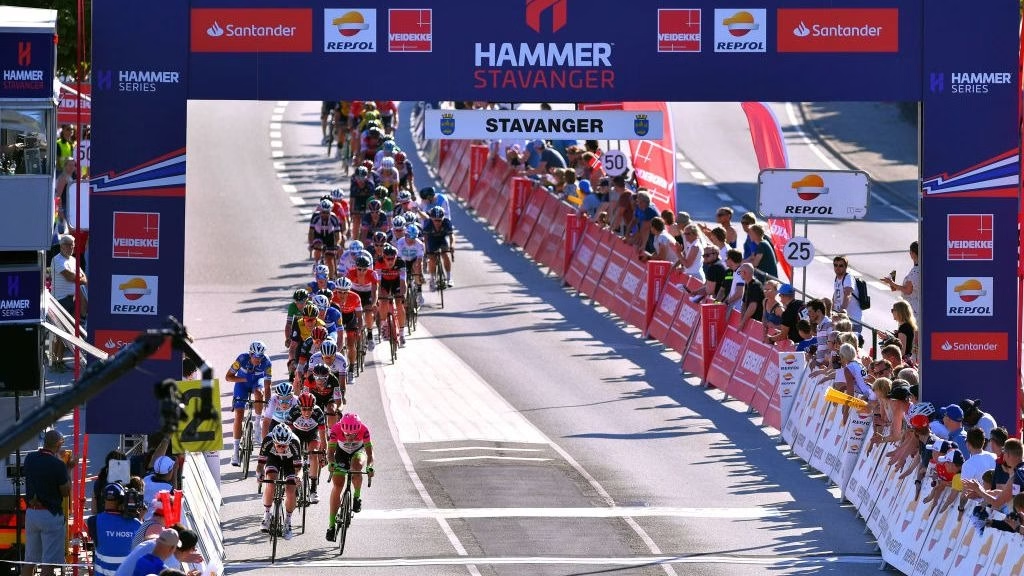
Velon’s Hammer Series offered teams their own event concept, built around modern broadcasting and digital engagement. It was, in many ways, an attempt to create a property that teams could call their own. Yet without major organiser backing, particularly from ASO, the series struggled to build scale.
OneCycling represents an even more ambitious attempt to centralise media rights, coordinate the calendar, and bring teams into a revenue-sharing model. But with ASO reluctant to join the project, its viability has been limited. Without the Tour de France, a unified media package cannot achieve the value needed to sustain such a project.
A closed loop with no easy exit
ASO’s dominance creates a self-sustaining loop. Because the Tour is the sport’s primary commercial asset, ASO has overwhelming influence. Because ASO has an overwhelming influence, teams cannot access Tour revenue. Because teams cannot access that revenue, they remain financially dependent on sponsors. Because they remain financially dependent, they lack the bargaining power to challenge ASO’s position. And because they lack bargaining power, the cycle repeats.
This dynamic does not exist because ASO is hostile to teams or unwilling to support the sport. It exists because the structural incentives built into the sport overwhelmingly favour race organisers, and ASO happens to own the most valuable race of all.
The quiet acknowledgement within the peloton
Privately, most teams accept that ASO’s dominance is unlikely to change. They may not agree with the financial balance, but they recognise that the Tour is too valuable, too iconic, and too culturally embedded to challenge head-on. Instead, they seek incremental solutions – building their own commercial platforms, improving sponsor engagement, and pushing for gradual modernisation in broadcast production or race scheduling.
Yet the fundamental reality remains unchanged: ASO controls cycling’s crown jewel, and as long as that remains true, any attempt to build a more integrated or balanced financial model will have to negotiate around that dominance.
The men’s peloton may race across dozens of countries on hundreds of race days, but commercially, it moves to the rhythm set by one organisation and one event. That imbalance sits at the centre of the sport’s financial challenges, shaping decisions far beyond July and influencing the future direction of cycling’s entire professional ecosystem.
The rise and stall of Velon: lessons from a team-owned commercial platform
Velon emerged during a period when many leading WorldTour teams felt increasingly frustrated with their lack of influence over the sport’s commercial direction. For years, teams had been sidelined from the financial engines that sustained the wider ecosystem. They understood that without ownership of assets or access to broadcast revenue, their long-term stability would always be fragile. Velon was created as a direct response to that reality – an attempt to seize back some commercial power and create a new model for how teams could participate in, and profit from, the media side of the sport.
A collective effort to shift the balance
Formed by a group of the most forward-thinking teams in the peloton, Velon was built on the idea that teams could achieve more collectively than they ever could individually. It aimed to operate as a modern commercial platform – not a competitor to race organisers, but a complementary force. The teams contributed rider data, behind-the-scenes content, and access to athletes and staff in ways that individual organisers could never coordinate. In return, Velon sought to monetise these assets, creating a revenue stream that would flow directly to its member teams.
For the first time in decades, the teams were trying to act like stakeholders rather than participants. The ambition was bold. Velon wanted to modernise the sport’s digital footprint, build new flavours of racing designed for modern audiences, and make teams true commercial partners rather than entities dependent on external sponsorship cycles.
The Hammer Series: a modern product with real potential
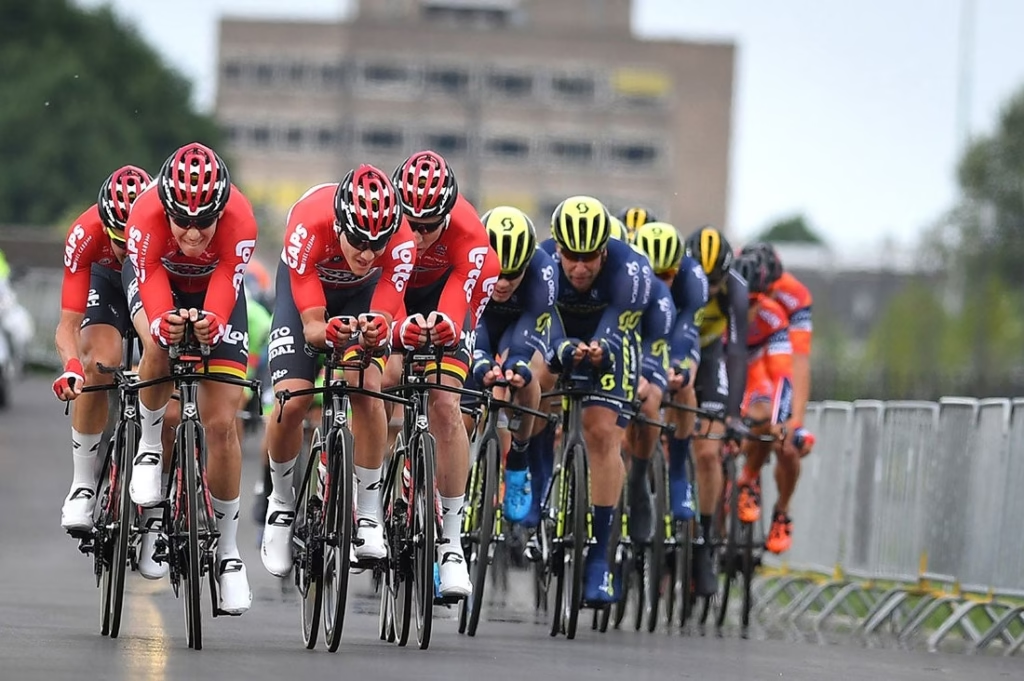
The Hammer Series was Velon’s most visible and ambitious project. Launched with considerable fanfare, it promised a radical break from the traditional format of professional racing. Instead of long road stages or multi-hour battles shaped by tactics invisible to casual viewers, the Hammer Series offered three tightly defined disciplines – Sprint, Climb, and Chase – spread over short, digestible formats designed to test specific team strengths.
It was team-versus-team racing, not rider-versus-rider. Tactics were immediate and transparent. Fans could easily understand which team was gaining points and what each effort meant. On-screen graphics and real-time rider data added clarity and drama. For younger audiences accustomed to fast-paced, data-rich sports broadcasting, it felt like a step forward.
The racing itself was excellent. Riders embraced the format. Fans enjoyed the accessibility. Analysts found it refreshing. There was a sense, at least for a while, that this could be a genuine second pillar of professional cycling – something new, innovative, and commercially scalable.
Where the concept ran into resistance
Yet the Hammer Series faced significant structural headwinds almost immediately. To succeed, it needed calendar space, broadcaster interest, and organiser cooperation. The best riders needed to be present, the teams needed flexibility, and the events needed long-term commitment. That combination was difficult to secure.
Many organisers viewed the series as a threat – a product that sat outside the traditional hierarchy and did not feed naturally into their existing events. Some feared that if the Hammer Series grew too strong, it might divert attention from their races or weaken their negotiating power. Others simply could not find the calendar space to support it.
There were deeper political tensions as well. Cycling is a sport built on tradition, and new ideas often struggle to gain acceptance. The Hammer Series’ fast-paced, almost “made-for-TV” style challenged long-standing views about what professional cycling should look like. The conservative instinct within the sport is strong, and anything perceived as “gimmicky” or too detached from road racing’s heritage was met with scepticism.
Legal battles and the loss of momentum
The biggest blow came when legal disputes erupted between Velon and the UCI over sanctioning issues and competition rules. The conflict dragged on, draining energy, time, and goodwill from all involved. The Hammer Series needed stability and cooperation to thrive; instead, it found itself in the middle of political crossfire. As the court battles dragged on, the series stalled.
Meanwhile, the calendar moved on. Teams became more cautious. Race organisers dug in. Broadcasters lost interest without a clear future. The pandemic then further disrupted the experiment, making it almost impossible to relaunch a format that required international travel, strong logistical support, and a high level of coordination.
By the time the dust settled, the Hammer Series had lost its momentum. It still exists in the collective memory as a promising but unrealised concept – a demonstration of what modernised cycling could look like, but also a reminder of how challenging it is to reshape a sport so entrenched in its traditions and governance structures.
Velon today: valuable, but limited
Despite the decline of the Hammer Series, Velon has not disappeared. It continues to provide revenue to its member teams through commercial partnerships built on rider data, on-bike camera footage, and behind-the-scenes content. These are useful and increasingly important innovations, especially as fans demand more immersive and data-rich viewing experiences.
However, the original vision – a substantial, team-owned commercial ecosystem that could serve as a counterweight to race organisers – has not materialised. Velon has influence, but not power. It provides value but not structural change.
Lessons for the peloton
Velon’s rise and stall offer several important lessons:
1. Teams acting collectively can innovate – but only up to a point.
Without alignment across organisers, governing bodies, and broadcasters, even strong ideas cannot reshape the sport.
2. New race formats require long-term commitment.
The Hammer Series showed potential, but novelty alone cannot sustain an event. It needs integration into the broader calendar and political support.
3. Team-driven commercial platforms are necessary but insufficient.
Data and digital content can supplement income, but they cannot replace the foundational revenue streams cycling currently lacks.
4. Reform requires cooperation, not isolation.
Velon’s struggles reflect a deeper issue: cycling’s fractured structure prevents unified commercial development. Any future reform project must bridge these fault lines rather than operate around them.
A glimpse of what could be
Despite its struggles, Velon remains a significant chapter in the sport’s commercial evolution. It proved that teams are willing to innovate, that fans respond to new formats, and that cycling can be presented in modern, engaging ways. It also demonstrated that changing the sport’s structure is extraordinarily difficult when commercial interests are scattered across so many entities.
The Hammer Series may be dormant, but its influence lingers. It remains a reminder that cycling’s future could look different if its stakeholders can ever align their interests. Velon showed the appetite for change. The question now is whether the sport will find a way to turn that appetite into something lasting, unified, and commercially sustainable.
Reform attempts: from the Hammer Series to the OneCycling project
If Velon represented cycling’s attempt to reform itself from the bottom up – with teams pooling their resources to create commercial assets they could control – then the OneCycling project was the boldest effort yet to rewire the sport from the top down. Where the Hammer Series tried to innovate through new formats and digital storytelling, OneCycling aimed to rebuild the entire economic structure of the men’s peloton. It promised centralised media rights, guaranteed revenue for teams, and a coherent league-like system that could elevate cycling to the commercial level enjoyed by other global sports.
For a brief moment, it looked like a genuine turning point. Investors were interested, teams were engaged, and the project seemed poised to address the core structural weaknesses holding the sport back. Yet the deeper the project progressed, the more apparent the entrenched obstacles became.
OneCycling’s radical proposition
At its heart, OneCycling presented a simple but transformative idea: treat professional cycling as a unified product rather than an assortment of independent races. By grouping key events into a single media offering and negotiating rights collectively, the sport could finally tap into the broadcast revenue that drives financial stability elsewhere.
The proposal went further. OneCycling envisioned:
- A season built around a tighter, more coherent calendar
- More predictable scheduling to help broadcasters and fans
- Guaranteed income for teams through revenue sharing
- Longer-term commercial planning
- A unified digital footprint
- Greater control for teams over the commercial growth of the sport
In exchange for this stability, teams would commit fully to the new structure, participating in a core set of events that formed the backbone of the league. The project promised a narrative arc that stretched across the entire season rather than focusing almost exclusively on July. For the first time, it felt like cycling was discussing not just tweaks around the edges, but systemic change.
Initial enthusiasm and the sense of opportunity
Some of the most forward-thinking teams were drawn to the vision immediately. They recognised that the current model, dependent on short-term sponsorship and fragmented race ownership, could not sustain the increasing costs of operating at WorldTour level. For these teams, OneCycling was a rare chance to modernise a sport that had resisted reform for decades.
Investors were also intrigued. Professional cycling has global reach, loyal fans, huge cultural heritage, and an annual structure that should, in theory, lend itself to a league model. The gap between its commercial potential and its current economic reality made OneCycling an attractive proposition. With enough backing, it might be possible to reshape the sport’s financial landscape for the next generation.
The politics of reform: where the project ground to a halt
But the closer OneCycling came to challenging established structures, the more resistance it encountered. The most significant obstacle was ASO. Without the Tour de France – the sport’s commercial centre of gravity – no unified broadcast package could reach the value needed to sustain guaranteed team revenues. ASO’s reluctance to participate made it nearly impossible to build the model envisioned by OneCycling’s architects.
In many ways, the conflict was inevitable. OneCycling proposed a model where teams and organisers shared revenue more equitably, where media rights were centralised, and where the sport could scale commercially. ASO, however, already owned the most commercially valuable asset in the sport and had no incentive to give up control or share revenue. Their decision not to join effectively blocked the project from becoming a true league.
Other organisers were divided. Some saw potential in a centralised model. Others feared that joining a new commercial entity could weaken their autonomy or place them in a weaker negotiating position. Cycling’s calendar is filled with events owned by dozens of promoters, each with their own interests. Aligning all of them behind one unified strategy proved far more difficult than anticipated.
Internal tensions within the peloton
Beyond organiser resistance, OneCycling also faced challenges within the teams themselves. The WorldTour is not a monolith. It includes:
- Wealthy, heavily funded teams backed by multinational corporations
- Mid-budget squads dependent on a single sponsor
- Teams tied to national projects or regional priorities
- Development-focused organisations with very different sporting objectives
Aligning these varied interests proved challenging. Some teams embraced the promise of guaranteed income and financial reform. Others feared losing autonomy, being tied into a structure that did not fit their competitive model, or creating conflict with their own sponsors’ commercial priorities.
Budget disparities also complicated discussions. Wealthier teams feared revenue sharing could limit their freedom to outspend rivals. Smaller teams, desperate for stability, were more enthusiastic. Achieving unanimity among such a diverse group was always going to be difficult.
A project stalled but not forgotten
As momentum slowed, OneCycling gradually shifted from being an imminent reform to a hypothetical blueprint. Key discussions stalled. Investment timelines stretched. The political landscape became more tangled. The project still exists in a conceptual form – teams continue to talk, investors remain loosely engaged, and some promoters see value in the concept – but its once revolutionary energy has dimmed.
Yet OneCycling remains important precisely because it revealed the scale of the appetite for change. It forced teams to think collectively. It brought investors into a conversation the sport had long resisted. It made clear that the current model is not just imperfect but unsustainable for many teams.
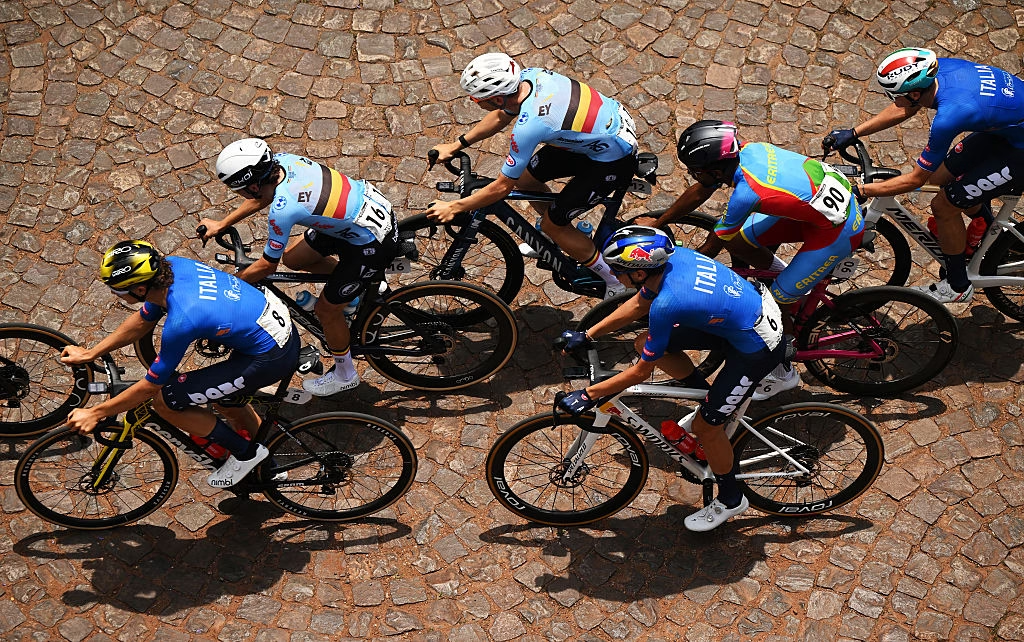
The financial burden of operating a WorldTour team
The financial demands of running a modern WorldTour team have increased to such an extent that they now resemble those of a mid-level motorsport outfit more than a traditional cycling squad. What was once a lean, opportunistic operation built around a few star riders, a fleet of bikes, and a handful of staff has evolved into a sophisticated performance machine requiring continuous investment, deep specialist knowledge, and global logistical infrastructure. The gap between what it costs to compete at the highest level and what the sport’s financial model provides has never been wider.
The rising cost of talent
The first and most visible pressure comes from rider salaries. As sports science, training methodologies, and talent identification have advanced, the gap between a world-class rider and a merely excellent one has narrowed in sporting terms but widened dramatically in financial terms. Teams now pay significant premiums to secure established leaders, promising young climbers, or versatile Classics contenders. The age of the long apprenticeship has shortened; now, a 20-year-old winning big races commands a salary that would have been unthinkable a decade ago.
Even domestiques – the backbone of any Grand Tour squad – have become more valuable. With the level of racing so high, teams need depth across the board: climbers who can set tempo at altitude, rouleurs who can control crosswinds, and lead-outs who can deliver sprinters into perfect position. Each of these roles demands specialist abilities, and those specialists cost money.
A support structure transformed by science
Modern cycling teams operate more like mobile performance laboratories than old-fashioned sports clubs. The staff list now extends far beyond directeurs sportifs and mechanics. It includes:
- Sports scientists overseeing rider load, recovery, and training stress
- Nutritionists constructing personalised fuelling plans for every race
- Performance engineers evaluating equipment and aerodynamics
- Data analysts tracking pacing, power profiles, and strategic simulations
- Medical staff managing everything from injury to illness prevention
These roles are essential, not optional. The competitive margins are so fine that any team neglecting these areas risks falling behind. But each role adds salary costs, travel expenses, and operational needs. The staff-to-rider ratio at some teams now approaches one-to-one.
Altitude training camps add further expense. Whereas a single pre-season camp once sufficed, teams now run multiple altitude blocks for leaders and domestiques alike. These require accommodation, transport, chefs, staff rotation, and carefully controlled training environments. The total cost of these programmes can run into millions over a season.
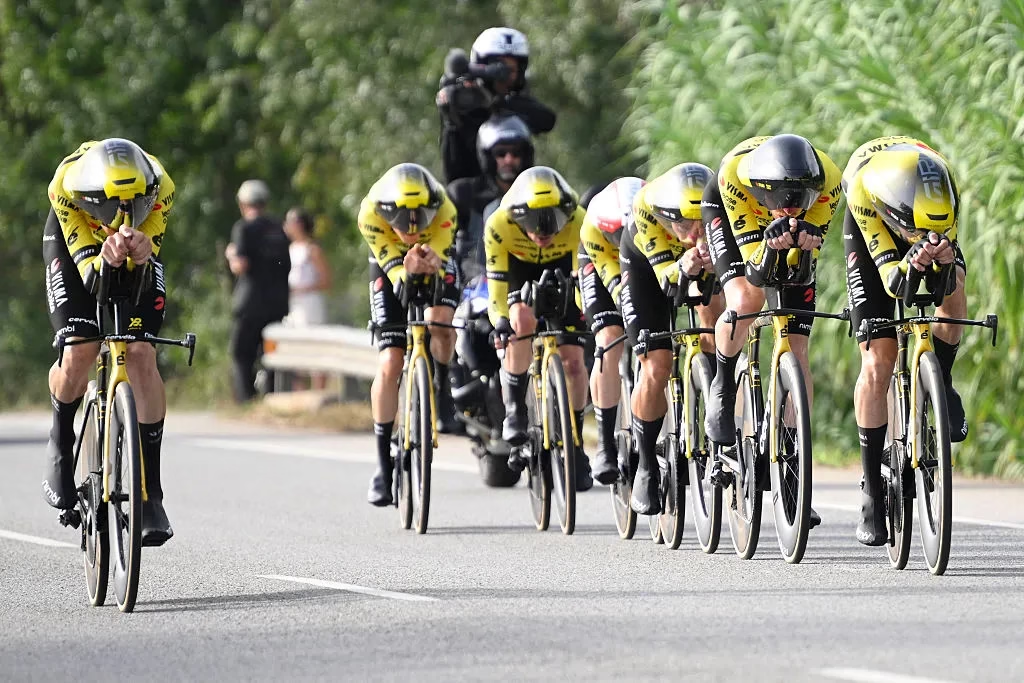
Equipment: a relentless arms race
The technical side of men’s cycling has never been more advanced, and it has never been more expensive. WorldTour teams now rely on equipment that would have looked like experimental prototypes only a few years ago. Every marginal gain is hunted down, whether it comes from a new frame design, a refined aerodynamic position, or a slight improvement in rolling resistance. The result is a constant stream of development, testing, and upgrades that all add to the financial pressure on teams.
Each rider uses several different bikes across a season. They have climbing bikes, aero bikes, and time-trial machines, sometimes with custom adjustments for key races. They need multiple sets of wheels for different terrain and weather, along with high-performance tyres, chains, bearings, cassettes, and power meters. Teams carry spare frames and extra groupsets to cover crashes, mechanical issues, or training requirements. Riders also take part in detailed fitting sessions and positional analysis to extract every watt of efficiency.
Wind tunnel testing has become a routine part of performance planning. Teams use it not only for bikes but also for clothing, helmets, and time-trial suits. Many squads now develop race-specific aero suits or cooling systems for hot stages, adding another layer of costs. Modern on-bike camera systems and telemetry equipment provide valuable data, but they also add to the expense of building and maintaining each machine.
Most of these improvements deliver only small gains. A few watts saved here, a couple of seconds gained there. Yet when combined, they can shape the outcome of major races. That makes them essential rather than optional. Equipment sponsors help cover part of this constant development, but teams still carry heavy costs for testing, logistics, and validation. Over a full season, the financial weight of staying competitive in the technical arms race becomes impossible to ignore.
A global calendar with global logistics
The WorldTour spans nearly every corner of the sporting world. The days of a Europe-centric calendar are long gone. Teams now open their seasons in Australia, fly to the UAE, split their squads for early spring racing in France and Belgium, then send climbers to altitude while Classics teams move to northern Europe. The middle of the year demands simultaneous rosters at the Tour, the Giro, and other events. By autumn, teams are travelling to Canada, the USA, and Asia.
This geographical sprawl requires logistical coordination of extraordinary complexity. A single season involves:
- Fleet-wide transport of bikes, tools, spares, and nutrition
- Freight shipments across continents
- A rotation of mechanics and soigneurs to avoid burnout
- Hotels, catering, and recovery facilities arranged months in advance
- Dedicated buses, trucks, cars, and support vehicles
- Multiple storage bases across Europe
Costs are rising here too. Fuel, insurance, transport fees, and flights add up quickly. When a team runs three racing programmes on the same weekend, each with its own staff and support vehicles, the budget pressure becomes increasingly visible.
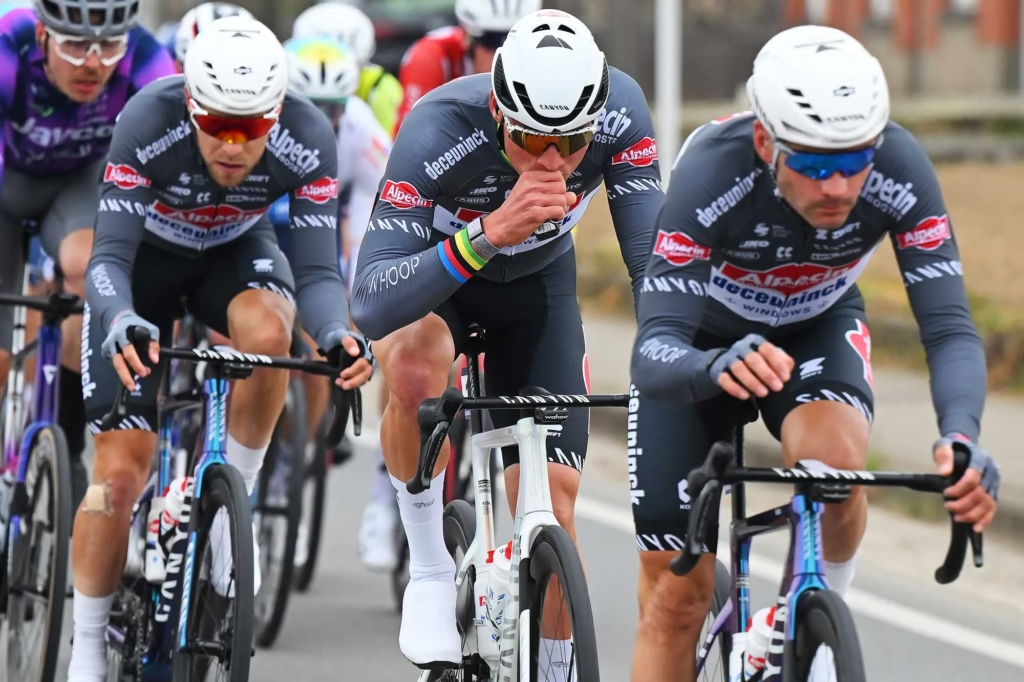
Catering, recovery, and on-the-road infrastructure
One of the biggest shifts in the last decade has been the introduction of mobile kitchens and full-time chefs. Fuelling is now part of the competitive landscape, and teams invest heavily in ensuring riders have controlled, consistent nutrition regardless of location. That means:
- Truck-mounted kitchens
- Climate-controlled food preparation areas
- Specialist chefs trained in performance nutrition
- Strict logistics for food sourcing and transport
The same applies to recovery. Portable massage rooms, dedicated physiotherapy areas, mobile ice baths, and sleep-optimised hotel planning all contribute to performance but add substantial costs.
Rising ambitions, static revenue
All of this investment has elevated performance standards dramatically. The racing is faster, more controlled, and more scientifically optimised than ever. Riders are better supported, better fuelled, and better equipped. Yet while the sporting side of the WorldTour has advanced, the financial side has not. Team budgets have ballooned, but revenue sources remain fundamentally unchanged.
Teams are still almost entirely dependent on sponsorship income, which is often fixed and short-term. There is no broadcast revenue. No central league structure. No equitable revenue sharing from major events. No mechanism to match rising performance costs with rising commercial income.
A widening gap between ambition and support
This financial imbalance creates a precarious situation. Teams are expected to perform at an ever-higher level, adopting every new technology and staffing every new specialist role, yet their ability to fund these ambitions depends on volatile external partners. Wealthy teams can keep pace, while mid-budget squads face constant pressure to maintain competitive standards.
The result is a sport that has embraced the modern, scientific era on the performance side but remains rooted in a century-old financial model on the commercial side. The mismatch between these two trajectories is one of the core reasons the peloton feels increasingly unstable.
Teams want to innovate, invest, and expand their capabilities. They simply lack the revenue structure to do so sustainably. Until that changes, every marginal gain comes with a marginal increase in financial risk – and every ambitious project forces teams to bet on future sponsorship security rather than reliable, recurring income.
The modern WorldTour team is a high-performance organisation built on an unpredictable foundation. And that tension grows sharper with every passing season.
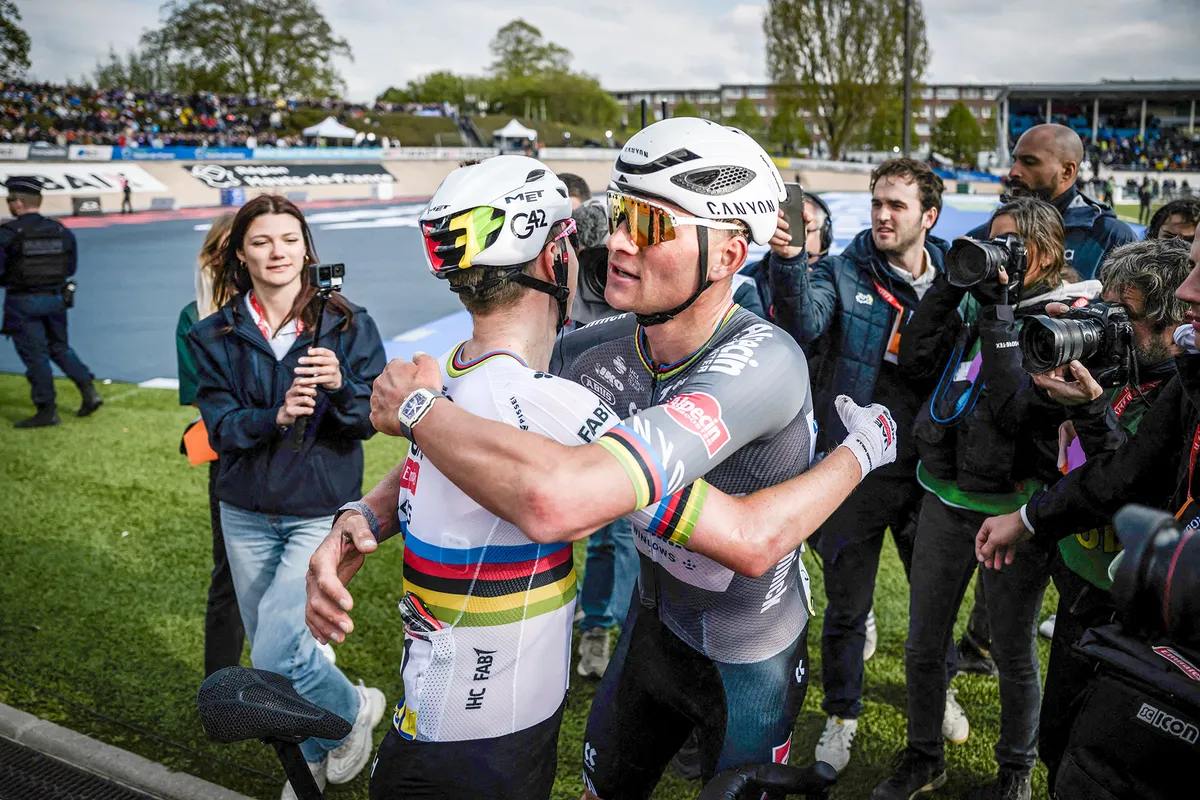
Why investors persist despite limited returns
In many ways, the persistence of investors in professional men’s cycling is one of the great paradoxes of the modern peloton. The financial model offers little in the way of predictable returns. Asset ownership is minimal, revenue sharing is non-existent, sponsorship cycles are short, and costs continue to rise. Yet season after season, new investors arrive – from multinational corporations to wealthy individuals, national institutions, political entities, and state-backed projects. The logic behind these investments can seem opaque from the outside, but a closer look reveals a complex blend of passion, branding opportunity, national pride, and strategic positioning.
Branding power that outperforms the spend
Perhaps the clearest motivation for corporate investors is the sheer marketing efficiency of cycling. Unlike football or motorsport – where visibility competes with stadium advertising, jersey sponsors, and dozens of commercial partners – cycling places the title sponsor at the forefront of every broadcast. The team name is the brand. It is spoken repeatedly by commentators, displayed prominently on jerseys, cars, buses, bikes, and graphics, and seen for hours each day across some of the most picturesque backdrops in sport.
The Tour de France magnifies this effect dramatically. With a global audience in the hundreds of millions and three weeks of sustained exposure, the Tour provides marketing value far exceeding what equivalent budgets buy in more saturated sports. A brand can achieve name recognition, association with performance, and visibility in key markets at a fraction of the cost of sponsoring a Premier League club or a Formula 1 team.
For companies seeking to project ambition, resilience, innovation, or international reach, cycling presents an unusually clear platform. Even mid-budget WorldTour teams can deliver global visibility that rivals major sponsorship arrangements in other sports. This alone is often enough to justify the investment.
National projects and soft power
In recent years, state-affiliated or government-backed projects have become increasingly common in the peloton. These investments serve strategic purposes beyond sport. They can be tools of:
- National prestige
- Tourist promotion
- Healthy living campaigns
- Cultural diplomacy
- Industrial or technological showcasing
- International brand-building
In these cases, the team becomes a form of national representation. Success at the Tour or other major races provides a narrative of progression, ambition, and global engagement. For emerging economies or nations seeking international recognition, cycling offers a relatively low-cost but high-impact platform.
Such projects can also inspire domestic interest in cycling as a participation sport, bolster local races, and align with health initiatives. But their funding often depends on political stability. A change of government or shift in policy priorities can rapidly destabilise these programmes.

Private wealth and personal passion
A significant number of team owners come from private wealth backgrounds. For them, cycling is not primarily an investment – it is a passion project. They grew up loving the sport, admired its endurance, its tactical depth, its mythology, and its connection to European culture. Owning a team allows them to contribute directly to something they care about deeply.
These investors often describe the value of team ownership in emotional rather than financial terms. They enjoy building a structure, supporting young riders, assembling competitive squads, and being part of the frontline action at the sport’s biggest races. It becomes an identity as much as an investment.
Yet this passion-driven model is fragile. Passion can waver. Circumstances change. Families may reassess priorities. Even the most committed private owners sometimes step back when the financial or personal demands become unsustainable.
Corporate strategy and sector alignment
Some sponsors enter cycling because the sport aligns naturally with their business model. Energy companies, outdoor brands, logistics firms, health-related companies, and mobility providers all see cycling as a thematic fit. The sport’s values – endurance, teamwork, sustainability, technology, and human performance – can reinforce brand narratives effectively.
In these cases, sponsorship functions as a broader branding strategy rather than a pure ROI calculation. However, these alignments can weaken if corporate objectives shift, if the company is acquired, or if financial pressure forces a reshuffling of marketing budgets.
The prestige of winning on the world stage
For some backers, the appeal lies in the prestige that comes with sporting success. Winning the Tour de France, dominating the Classics, or producing the next generational talent delivers global recognition. The sense of being part of cycling history carries weight. Investors often express pride in their role supporting athletes who achieve extraordinary feats, especially in a sport where human effort is so central to the spectacle.
Prestige is a powerful motivator, but it is also unpredictable. Teams can invest heavily without achieving results. Injuries, illness, tactical errors, crashes, or generational rivalries can derail multi-season plans. Without financial returns to balance this unpredictability, prestige-driven investors face moments of reckoning when success proves elusive.

Fragility baked into the motivations
Across these varied motivations – branding, national pride, strategic alignment, personal passion, and prestige – a recurring theme emerges: they are all external to the sport’s underlying financial model. None of them guarantees longevity. All of them can shift rapidly based on emotional changes, political contexts, financial pressures, or strategic reassessment.
When an investor’s circumstances change, the team is exposed immediately. Because cycling offers no safety nets – no league guarantees, no centralised revenue, no long-term commercial rights – a single decision at a board level or government office can threaten the team’s existence. Even well-performing squads can find themselves scrambling for funding because their financial bedrock was built on motivations that operate outside the sport’s control.
A model that depends on goodwill
The continued presence of investors in professional cycling is a testament to the sport’s emotional and cultural appeal. It is magnetic, romantic, global, and steeped in tradition. But the model remains precarious because these motivations do not translate into stable, recurring income.
The men’s peloton survives not because the financial model is robust, but because enough investors are willing to overlook its flaws. It is a system sustained by goodwill, passion, strategic convenience, and national ambition – powerful forces, but fragile ones.
As long as these motivations continue to outweigh the risks, the sport will endure. But genuine stability will only arrive when teams no longer depend on the shifting winds of individual or institutional enthusiasm to survive.
What alternative models could realistically look like
Reforming professional men’s cycling does not require tearing the entire sport down and rebuilding it from scratch. The idea of transforming the peloton into a franchise league is often raised and dismissed in equal measure – seen by some as the only way forward and by others as a threat to cycling’s cultural DNA. The truth lies somewhere in the middle. Multiple incremental reforms could strengthen the sport financially without disrupting its heritage or alienating its traditional fanbase.
The challenge is not a lack of ideas. The challenge is alignment. Cycling’s greatest obstacle has always been its fragmented structure, with organisers, teams, broadcasters, and governing bodies all pulling in different directions. Yet beneath the political tension lies a clear blueprint for a more resilient ecosystem.
Centralised media rights: the cornerstone of modernisation
One of the biggest changes professional cycling could make – and a central idea behind the OneCycling project – is to bring all media rights under one system. Instead of every race selling its rights on its own, the sport could bundle its major events together, negotiate as one, and share the resulting income between organisers and teams. This is how most major sports operate today. Formula 1 sells its rights through a single commercial body. Football leagues negotiate as a collective to protect competitive balance. American sports rely almost entirely on shared broadcast deals to keep their teams financially secure.
If cycling adopted a similar model, the benefits would be significant. Broadcasters would receive a clearer, more coherent season to promote, rather than a patchwork of individually packaged races. Teams would gain a stable, predictable income that does not depend entirely on sponsors. Fans would enjoy consistent production standards and easier access to coverage throughout the year. The sport would also become far more attractive to digital platforms and streaming services, which need unified rights packages to invest at scale.
The main difficulty lies in persuading race organisers – especially ASO – to share control of a commercial system they currently dominate. Yet the history of other sports shows that collective strength often brings greater long-term value than independent negotiation. Cycling has reached a stage where that lesson may finally matter more than tradition.
 Photo Credit: Getty
Revenue sharing tied to participation
Once media rights are centralised, revenue sharing becomes the logical next step. Teams would finally have access to a recurring, predictable income stream tied to their involvement in WorldTour events. This would reduce reliance on sponsorship, prevent teams from collapsing when backers depart, and allow longer-term investment in structures, staff, and development pathways.
Revenue sharing would provide:
- A base level of financial security
- A platform for ambitious performance projects
- Greater competitive balance between wealthier and mid-budget teams
- Stability that helps retain staff and develop riders over multiple seasons
Even a modest revenue-sharing model would be transformative for many teams currently operating on thin margins.
Long-term licences to stabilise team identities
Cycling’s dependence on sponsor-driven team names makes it hard for the sport to build long-lasting identities. When a sponsor changes, the entire team name changes with it, which breaks any sense of continuity. Other major sports have avoided this problem by using long-term licences or fixed team brands, similar to the structures seen in Formula 1 or the major American leagues. These systems allow teams to keep a stable identity even when commercial partners come and go.
In a model like this, a team’s core brand would stay the same from year to year. Sponsors could still be added in a prominent way, but they would no longer replace the team’s name entirely. Fans would be able to follow a consistent story across decades rather than adjusting to a new identity every few seasons. The team itself would become an asset with value, instead of a short-lived vehicle for whatever company happens to be topping the budget at that moment.
This shift would also make teams far more appealing to investors. Instead of buying into a temporary brand that might disappear, they would gain a share of something stable and recognisable, with long-term commercial potential.
Spending regulations and competitive balance
While salary caps are controversial – and difficult to enforce across borders – spending regulations could help prevent runaway budget inflation. Cycling already exhibits some budget disparity, but the gap is widening. Without controls, the sport risks drifting into a two-tier system where only the richest teams can realistically compete for major victories.
Regulation could take several forms:
- Soft spending caps with luxury taxes
- Limits on performance staff or development programmes
- Transparent budget reporting
- Minimum operational standards for all teams
The aim is not to hinder ambition, but to prevent a scenario where financial power trumps sporting merit.
Equity stakes in major events
Teams could also gain stability if they were allowed to own a share of the events they compete in. This model has precedent. In some American sports, teams collectively own the league and its commercial rights. In motorsport, teams receive revenue because they effectively own part of the commercial entity governing the sport.
Cycling could explore:
- Equity partnerships between organisers and teams
- Revenue-based incentives tied to long-term participation
- Collective stakes in new events or formats
This would increase alignment: when teams have a stake in an event’s success, they contribute more to its growth.
Digital content and modern storytelling
Cycling has huge potential as a storytelling sport. The personalities, the suffering, the scenery, and the tactical depth all translate naturally to modern digital platforms. Velon’s work with rider data and on-bike cameras proved how eager fans are for more access and insight. Yet the sport still delivers that content in fragments. Some races offer strong behind-the-scenes coverage, while others provide very little. The result is a digital landscape that feels exciting in moments but inconsistent across the season.
A unified digital strategy would change that completely. Fans could follow rider data throughout the year, rather than only when a particular organiser chooses to share it. A single platform could bring races, documentaries, interviews, and analysis together in one place, creating something closer to the streaming experience audiences now expect. Broadcasts could follow the same production standards from race to race, giving viewers a consistent level of quality. Better on-bike footage and richer telemetry would make the sport easier to follow, while fan engagement tools could connect real-time data to the stories unfolding on the road.
This kind of approach matches the habits of younger audiences, who expect clear access, immersive content, and year-round narratives. Cycling already has the raw material. What it needs is a unified system to bring it all together.
Secondary race formats that complement the traditional model
The Hammer Series, even in its short life, showed that new race formats can work in professional cycling. The events were fast, direct, and easy to understand, and they brought a team-versus-team dynamic that looked modern on screen. They also proved that alternative formats could sit alongside traditional road racing rather than replace it. With the right backing, these kinds of events could become valuable additions to the calendar, offering broadcasters fresh, compact content that appeals to a wider range of viewers.
There is plenty of room for further development. Off-season invitational races could give fans something to follow during quieter months. Hybrid formats inside velodromes or arenas could mix track and road elements in new ways. Data-driven sprint or chase events could use power numbers and real-time telemetry to make tactics clearer. City-centre circuits designed for television could bring the sport into urban spaces and reach new audiences. There is also scope for formats aimed specifically at younger fans who watch sport differently from older generations.
These ideas are not meant to replace the Monuments or the Grand Tours. Those races remain central to the sport’s identity. Instead, new formats can enrich the wider calendar and help cycling evolve without losing its core heritage.
A season-long narrative structure
Cycling often struggles to maintain narrative continuity outside the Tour. By creating structured arcs around:
- Rankings
- Rivalries
- Season-long classifications
- Storylines that follow specific teams or riders
The sport could build a stronger emotional investment. This is not about reinventing the UCI points system; it is about delivering consistent storytelling that broadcasters can sell.
The blueprint exists, but alignment remains elusive
Every idea listed here has been discussed within the peloton at some point. Many have been piloted, modelled, or incorporated into proposals like Velon or OneCycling. The sport does not lack imagination or ambition. What it lacks is a governance structure capable of aligning stakeholders whose commercial priorities differ significantly.
Organisers want autonomy. Teams want revenue security. Broadcasters want flexibility. The UCI wants regulatory oversight. Investors want clarity. No reform will succeed until these interests converge.
Yet the outlines of a more sustainable future are visible. Centralised rights. Revenue sharing. Team stability. Modernised content. Innovative race formats. A coherent season-long narrative.
Cycling does not need to abandon its traditions to achieve stability. It simply needs to evolve in ways that match the modern world. The pieces are on the table. The question, as always, is whether the sport can assemble them into something coherent before financial pressure forces change from the outside rather than the inside.
The consequences of inaction
If the issues facing professional men’s cycling feel familiar, that is because the sport has lived with instability for generations. Teams have folded before, race organisers have come and gone, and the peloton has weathered financial storms, political disagreements, and governance disputes. Yet the conditions surrounding the sport today are fundamentally different from those that allowed it to survive past crises. The world around cycling has professionalised, globalised, and commercialised at a pace that far exceeds the sport’s structural evolution. In this landscape, doing nothing is not a neutral position. It is an active decision with tangible long-term consequences.
Teams will continue to disappear despite sporting success
Perhaps the most visible consequence of inaction is the likelihood that more teams will vanish unexpectedly. Even squads with strong sporting records, robust recruitment strategies, and well-developed performance programmes remain exposed to the whims of sponsorship cycles. Without alternative revenue streams, a sponsor’s withdrawal can still collapse an organisation within months.
This is not a hypothetical risk. The men’s peloton has lost WorldTour teams multiple times in the last decade despite competitive success and strong fan support. These closures do not reflect sporting failure. They reflect the fragility of a model that offers teams almost no protection against commercial decisions made far outside the sport.
Each disappearance has a ripple effect:
- Riders scramble for last-minute contracts
- Staff members face sudden unemployment
- Development pipelines collapse
- Equipment suppliers lose partnerships
- Sponsors in the ecosystem hesitate to invest further
In a world where stability is a competitive advantage, cycling remains uniquely exposed.
The budget gap will widen and distort competition
State-affiliated teams and the wealthiest sponsors will continue to outspend mid-budget squads, and under the current model that financial power translates directly into performance. Bigger budgets mean more altitude camps, stronger support squads, better data analysis, and the most advanced equipment. They also make it far easier to retain or recruit top talent.
If the gap grows wider, the effects will be clear. A small group of teams will dominate the Grand Tours and the Monuments, leaving the rest of the peloton fighting for scraps. Mid-budget squads will struggle to hold on to rising stars, who will almost always be drawn toward higher salaries and more stable structures. Smaller teams may find themselves focusing on breakaways and opportunistic stage wins rather than aiming for genuine contention. The unpredictability that has long defined cycling – the sense that an underdog can still shape a race – will begin to fade.
Cycling has always been a sport where tactical nuance and clever racing can overcome raw financial strength. But if inequality continues to grow unchecked, the peloton risks slipping into a predictable hierarchy, where only the richest teams have the resources to win at the highest level.

Smaller races will vanish, reducing development pathways
The men’s calendar is already heavily dependent on regional funding and local government support. Without a stronger commercial framework, smaller races remain vulnerable to budget cuts, political changes, and shifting priorities in tourism marketing.
If these races disappear:
- Upcoming climbers and sprinters lose essential proving grounds
- Teams lose race days needed to develop tactics and cohesion
- Fans lose regional events that form the cultural backbone of the sport
- The sport becomes even more dependent on its biggest races
The calendar could tighten not by design, but by attrition. And a calendar shaped by attrition rarely reflects the optimal developmental environment for riders or teams.
Development teams and pathways will shrink
Youth development has become one of the quiet strengths of modern cycling. Structured training programmes, a strong U23 scene, continental squads, and dedicated academies have all helped young riders progress faster and more confidently than in the past. The system now produces talent at a remarkable rate, and many of today’s stars reached the WorldTour earlier because these pathways existed. But this network is costly to run, and it depends heavily on the financial stability of the top-tier teams.
If budgets fall or major sponsors step away, development structures are usually the first to be cut. Fewer places become available for young riders, and the path from junior to professional level becomes narrower. Promising talents may face slower or more uncertain career progression, simply because the opportunities around them shrink. National federations can step in to help, but many lack the resources to replace the investment provided by WorldTour teams.
The next generation of Grand Tour contenders will come through these systems. Weakening them would not only affect individual careers, but also reduce the long-term competitiveness of the sport as a whole.
Innovation will stagnate & the sport will fall behind
Other sports have embraced modern marketing, digital storytelling, centralised content platforms, and data-driven fan engagement. Cycling has the raw material to do the same – charismatic riders, dramatic landscapes, compelling narratives, tactical complexity – but without structural reform, innovation remains fragmented and inconsistent.
Inaction means:
- No unified streaming or digital platform
- Continued broadcast fragmentation
- Limited access to on-bike data and telemetry
- Slow adoption of modern content formats
- Difficulty attracting younger audiences
As other sports become more immersive and data-rich, cycling risks appearing outdated despite its intrinsically dramatic nature.
External forces may eventually impose change
If stakeholders within the sport cannot align, external forces may eventually force change upon them:
- Broadcasters could demand more coherent rights packages
- Investors might insist on structural reform before committing capital
- Sponsors could favour sports with more reliable commercial frameworks
- Governments may reduce reliance on public funding for smaller races
At that point, cycling would be negotiating from a position of weakness rather than opportunity.
A sport at risk of losing its competitive soul
Cycling’s charm lies in its unpredictability, the openness of its competition, and the sheer breadth of its racing calendar. Yet without reform, the sport risks losing that essence. A shrinking pool of competitive teams, homogenised race strategies, and widening budget gaps would fundamentally alter the character of the peloton.
Standing still is no longer an option
Cycling has survived many crises, but surviving is not the same as thriving. The modern sports landscape rewards coherence, stability, and innovation. Cycling cannot rely indefinitely on passion-driven investment and fragmented organisation. Standing still is no longer a holding pattern – it is a decision to allow instability, inequality, and unpredictability to continue shaping the sport in ways that limit its potential.
The risk is not that cycling disappears. It is that it remains trapped in a perpetual cycle of financial fragility while the world around it continues to evolve. Only through meaningful reform can the sport safeguard its future and unlock the commercial and cultural growth it has long deserved.
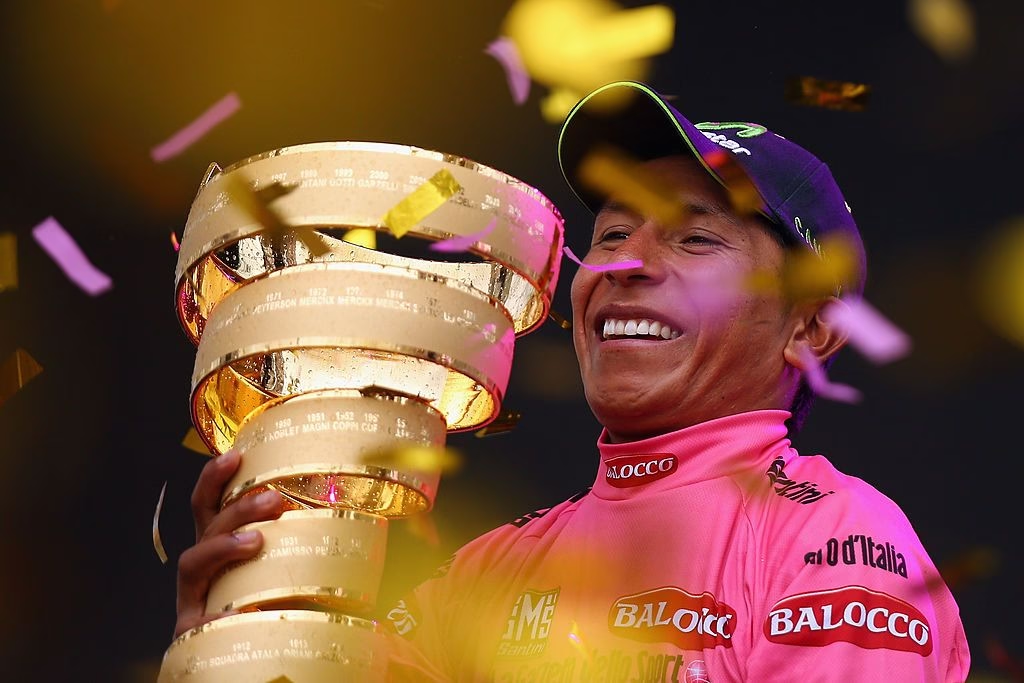
Towards a sustainable future for the men’s peloton
Imagining a sustainable future for professional men’s cycling requires looking beyond the sport as it operates today. It means stepping away from the familiar pattern of annual sponsorship negotiations, precarious team budgets, fragmented race ownership, and a media model built around broadcasting customs from another era. A sustainable ecosystem would not just protect teams from sudden collapse – it would empower them to plan, invest, innovate, and grow.
In such a future, the men’s peloton would not depend so heavily on external goodwill or short-term corporate enthusiasm. Instead, teams would work from financial foundations stable enough to support multi-year strategies. Sponsors would complement rather than define a team’s identity. And the sport’s central commercial assets – from media rights to digital platforms – would be structured in a way that delivers value to all stakeholders.
Stability that allows coherent sporting and financial planning
At the heart of a sustainable future is the idea of stability. Not the illusion of stability provided by a three-year sponsorship cycle, but genuine long-term security. A team secure in its financial footing can map out its progress over five or ten years, not just one season at a time.
This would encourage:
- Long-term investment in youth development
- More coherent planning around Grand Tours and Classics
- Greater loyalty between riders and teams
- Retention of key staff who can shape performance culture
- Confidence to pursue ambitious multi-season projects
Rather than operating in survival mode, teams could focus on maximising performance and building meaningful identities. Budget predictability would transform decision-making from reactive to strategic.
A healthier relationship between teams and organisers
The relationship between teams and race organisers has long been shaped by competing priorities and old tensions. Organisers want to protect their autonomy and the heritage of their events. Teams fight for financial stability and a stronger voice in how the sport is run. The governing bodies sit in the middle, trying to balance these interests, often without the tools to create real change.
A future-oriented model would replace that friction with genuine collaboration. Organisers would see the value in working more closely with teams, recognising that a stable, competitive peloton increases the strength and visibility of their events. Teams, in return, would play a bigger role in the commercial side of the sport, not just lining up to race but helping build a stronger overall product.
With a unified approach, the sport could gain a more coherent calendar and consistent broadcast quality across the season. Safety standards and race logistics could become more predictable and professional. Everyone would benefit from shared incentives that reward growth, rather than a system where each party protects its own interests in isolation.
Cycling would not need to abandon its historic races or traditions to achieve this. It would simply need to align the commercial structure of the sport with the competitive reality that unfolds on the road.
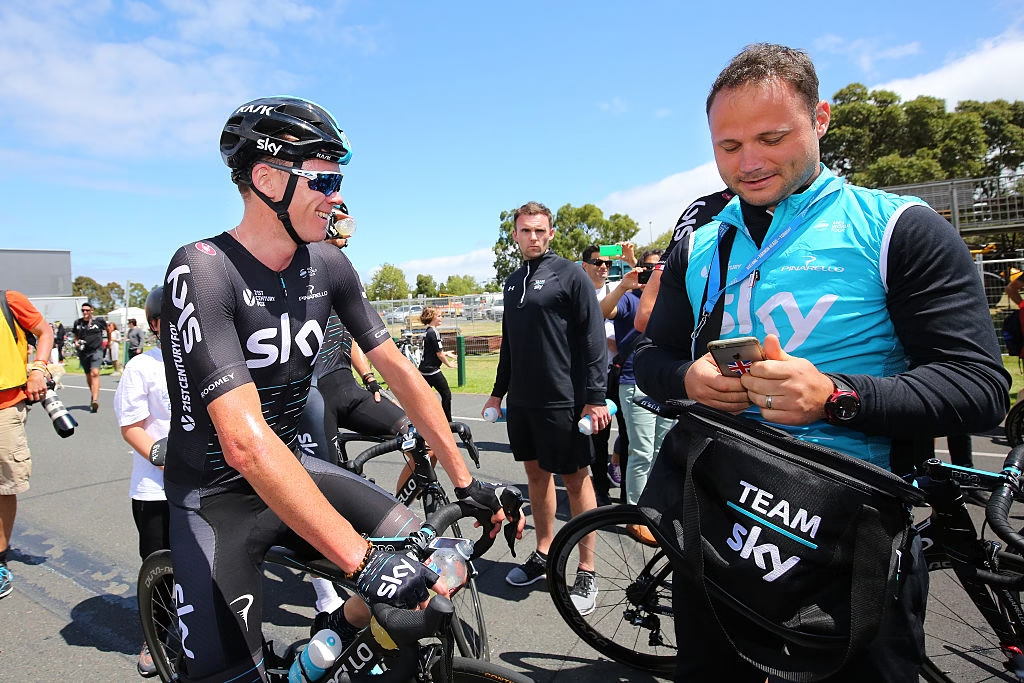
A media product that reflects the richness of the sport
A sustainable future would also transform how fans engage with cycling. The current viewing experience is often disjointed, shaped by fragmented rights and inconsistent coverage. A unified, modernised media product would allow fans to follow the season as a single narrative. It would connect early-season races to mid-season battles, setting the stage for the Grand Tours and continuing that momentum into autumn.
In such a model:
- Fans would have access to consistent, high-quality coverage across the calendar
- Broadcasters would benefit from a clearer season structure and unified storytelling
- Teams could build digital brands that engage fans directly
- Data, telemetry, and behind-the-scenes content could become central to coverage
- New audiences could be reached through modern streaming platforms
- Broadcasters and teams could collaborate to create richer narratives
Cycling has the raw material for exceptional storytelling: landscapes, personalities, tactics, rivalries, and the human drama of endurance sport. What it lacks is the infrastructure to present that story coherently. Reform would unlock that potential.
Modernisation without sacrificing heritage
A central tension in discussions about reform is the fear that modernisation threatens tradition. Cycling is a sport rich in heritage, shaped by iconic races, legendary climbs, and historical continuity. But modernising the commercial model does not require abandoning the sport’s soul.
Reform would simply remove the structural obstacles that prevent cycling from prospering in the modern era. The pavé of Roubaix would remain. The bergs of Flanders would still decide races. Alpe d’Huez, the Stelvio, and Lagos de Covadonga would continue to define generations. The traditions that make cycling captivating would stay intact. What would change is the financial architecture that supports them.
 Photo Credit: Getty
A landscape shaped by ideas already on the table
The good news for the sport is that the vision for a sustainable future does not need to be invented from scratch. The ideas already exist:
- Velon demonstrated how teams can collaborate to produce modern content and data-driven engagement.
- The Hammer Series showed that new race formats can resonate with audiences accustomed to fast-paced, digital-friendly sports.
- OneCycling proved that serious investment is available when the sport presents a coherent commercial plan.
These projects, despite their limitations, reflect the creativity and ambition needed to push the sport forward. They are prototypes – imperfect but instructive – that show reform is not only possible but overdue.
The real barrier: collective will
What remains is the hardest part: alignment. Cycling is caught in a structural stalemate where each stakeholder protects its own interests, even when collective action would ultimately benefit everyone. Organisers guard autonomy. Teams chase sponsorship. Broadcasters negotiate fragmented rights. The UCI attempts to balance competing forces.
Reform requires a level of coordination the sport has historically struggled to achieve. Yet without that coordination, cycling risks drifting further into instability, watching other sports evolve while it repeats the same patterns.
The path is visible; the question is whether the sport will take it
A sustainable future for the men’s peloton would bring stability, predictability, and room for growth. It would empower teams to build lasting identities. It would modernise the fan experience. It would keep the sport’s traditions intact while allowing it to compete commercially with other major sports.
The blueprint is clear. The need is undeniable. The ideas have been tested. What remains uncertain – and what will define cycling’s next decade – is whether the sport can finally find the collective will to act.
If professional cycling wants to move beyond survival mode and into a new era of long-term growth, the path is already laid out. The question now is whether it will finally walk it before another generational window closes.