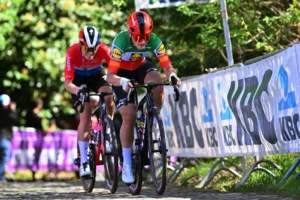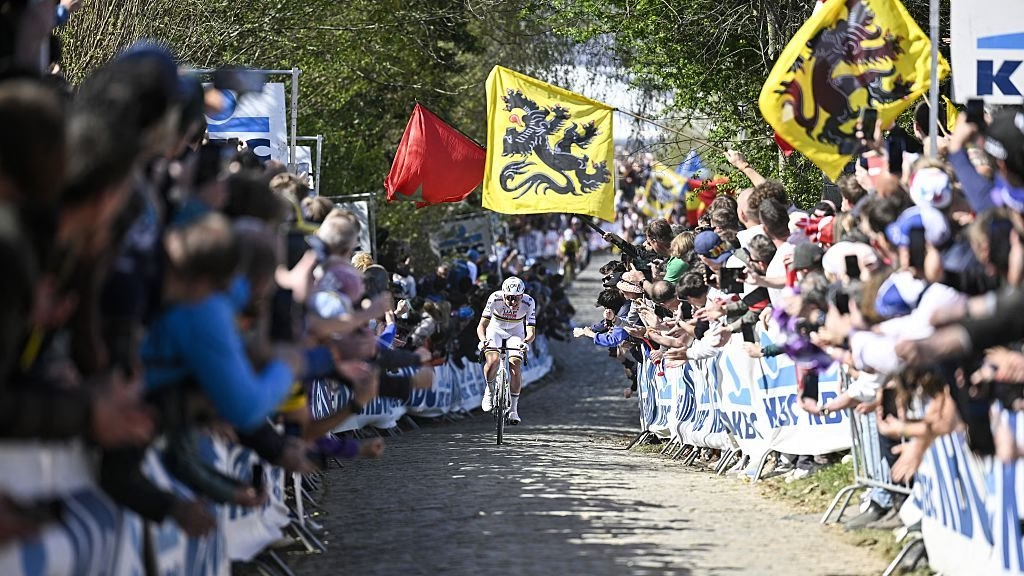
The Spring Classics represent cycling’s most atmospheric racing period, when the professional peloton battles across the cobbles and bergs of Belgium and northern France through March and April. For UK cyclists, experiencing this legendary month of racing offers an extraordinary combination: watching world-class racing, riding the same roads as the professionals, and immersing yourself in a region where cycling isn’t just a sport but a cultural obsession. The proximity makes it remarkably accessible, with race weekends achievable from the UK in just a few hours of travel.
Understanding the Spring Classics Calendar
The Classics season builds through March and peaks in early April with the Monuments. Strade Bianche in Tuscany (early March) opens proceedings, though most UK fans focus on the Belgian and French cobbled races that follow. The key weekends typically include Omloop Het Nieuwsblad (late February/early March), E3 Saxo Classic and Gent-Wevelgem (late March), Tour of Flanders (early April), and Paris-Roubaix (mid-April).
For a first-time visitor, the Tour of Flanders weekend offers the most complete experience. The race has an unmatched atmosphere, the sportive on Saturday allows you to ride the course, and Oudenaarde becomes the epicentre of cycling culture for four days. However, Gent-Wevelgem provides a slightly quieter alternative with equally compelling racing, whilst Paris-Roubaix delivers the most brutal spectacle on the calendar.
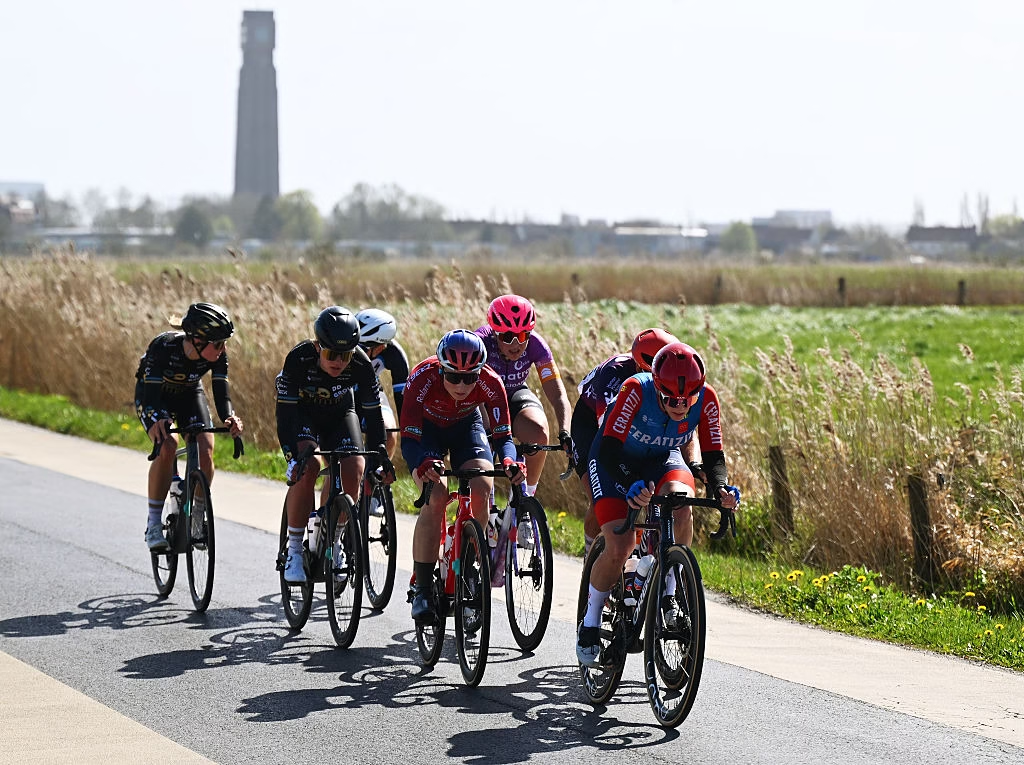
Getting There: Your Travel Options
UK cyclists enjoy exceptional access to Belgium. Brussels Airport receives direct flights from London, Manchester, Edinburgh, Birmingham, and Newcastle, typically requiring 60-90 minutes flying time. Budget carriers, including Ryanair, easyJet, and British Airways, serve this route, with return flights often available for £60-150 if booked well in advance. From Brussels Airport, trains depart every 30 minutes to Ghent (35 minutes), Bruges (90 minutes), and other Belgian cities, with onward connections to smaller towns like Oudenaarde (change at Ghent).
The Eurostar offers an appealing alternative for those who dislike flying or want to bring bikes. St Pancras to Brussels requires 2 hours, with onward connections throughout Belgium. Eurostar permits boxed bikes (£30 fee), or you can use bike bags, though space remains limited and advance booking proves essential. The “Any Belgian Station” ticket allows continuing your journey from Brussels to final destinations like Oudenaarde or Kortrijk on a single ticket.
For maximum flexibility, driving via Eurotunnel or ferry remains popular. The Folkestone to Calais crossing requires 35 minutes (Eurotunnel) or 90 minutes (ferry), followed by 90 minutes of motorway driving to Kortrijk or Oudenaarde. This option suits groups sharing costs, those wanting to explore multiple towns, or cyclists bringing their own bikes without airline baggage hassles.
Choosing Your Base
Where you stay shapes your entire experience, and the choice depends on what you prioritise: pure cycling immersion, cultural experience, or logistical convenience. As explored in ProCyclingUK’s guide to staying for the Spring Classics, each base offers distinct advantages.
Oudenaarde provides the most cycling-focused base, particularly for Tour of Flanders. The town sits at the heart of the Flemish Ardennes, allowing you to roll directly onto the Oude Kwaremont and surrounding climbs. Race week transforms the town, with every café filled with cycling discussion, bike shops hosting evening presentations, and the atmosphere reaching fever pitch by Saturday. The Leopold Hotel Oudenaarde offers secure bike storage, early breakfast, and positioning that lets you walk to the start/finish of the sportive. However, Oudenaarde remains a working town rather than a tourist destination, meaning limited evening entertainment beyond cycling-themed bars.
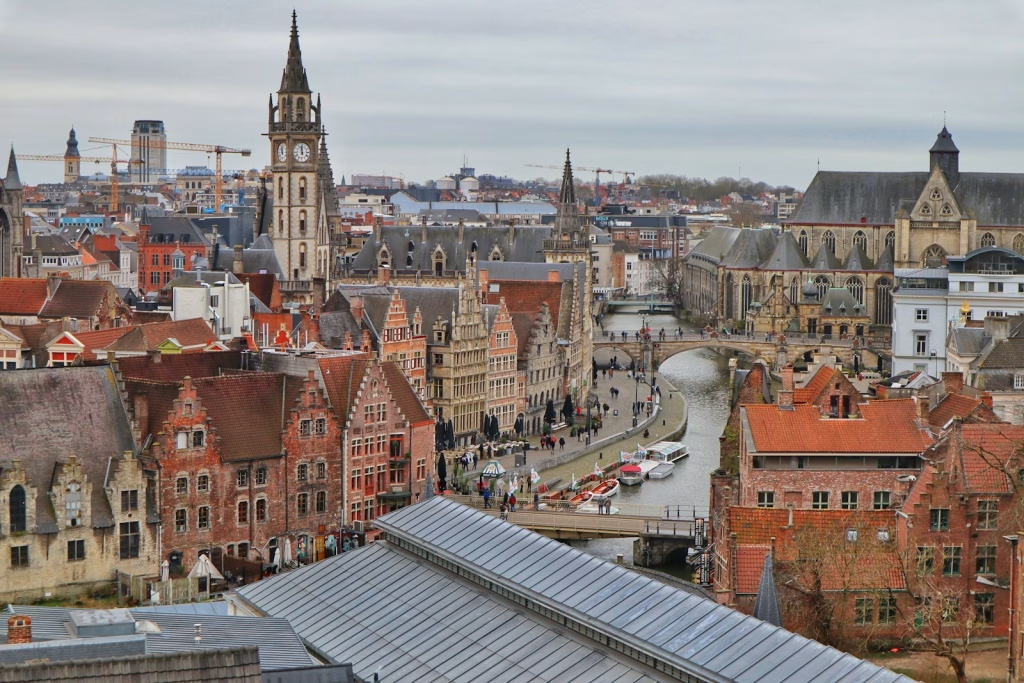
Bruges offers the opposite proposition: a beautiful UNESCO World Heritage city with exceptional restaurants, museums, and nightlife, but requiring 45-60 minute drives to reach the key climbs. This trade-off suits couples where one partner shows less enthusiasm for cycling, or those wanting the Classics experience wrapped in a proper city break. The canal-side setting and medieval architecture create a romantic atmosphere that pure cycling towns cannot match.
Ghent strikes a balance between these extremes. This vibrant university city provides cultural depth, excellent restaurants, and evening activities whilst maintaining good access to the cobbled routes (30-40 minutes driving to most climbs). Ghent also offers superior train connections, making it logical for those relying on public transport. The city’s size (population 260,000) means more hotel options at varied price points compared to smaller towns.
For those seeking complete immersion, staying directly in the Flemish Ardennes villages like Kwaremont, Oudenaarde’s outlying areas, or Ronse puts you literally on the race routes. The Flandrien Hotel has achieved cult status amongst cycling fans, offering themed rooms celebrating Flemish cycling legends, early breakfast for riders, and an atmosphere where everyone speaks the same language regardless of nationality.
Riding vs Watching: The Sportive Experience
Most UK visitors combine watching professional racing with riding the courses themselves through organised sportives. The Tour of Flanders sportive (Saturday before the race) attracts 16,000+ riders across three distances: the short route (74km), medium route (139km), and long route (235km). Entry opens in January and typically sells out within days, requiring early planning. The sportive provides a car-free experience on closed roads, neutralised climbs (no racing, steady pace), and the extraordinary atmosphere of riding with thousands of other cyclists over the same cobbles the professionals will tackle 24 hours later.
However, you needn’t enter an official sportive to ride these routes. The climbs remain open year-round, with the Cycling in Flanders website providing GPX files for the permanent signposted loops (Red, Yellow, and Blue routes) that cover all the major bergs. Riding independently allows flexibility in timing, distance, and difficulty, though you’ll share roads with cars and miss the unique sportive atmosphere.
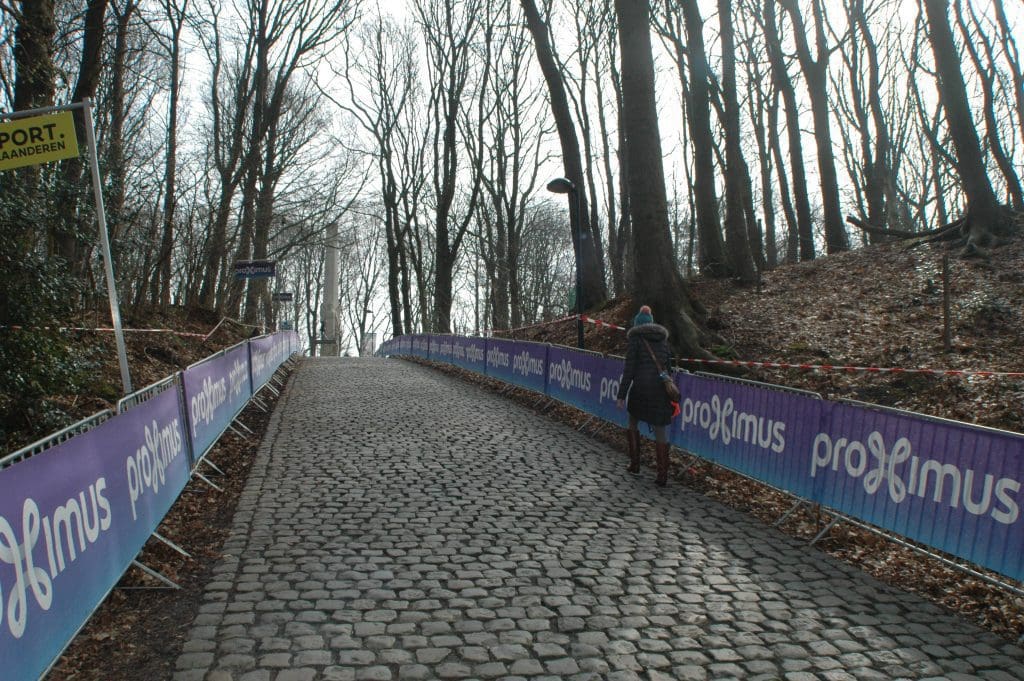
The cobbled sectors demand respect regardless of when you ride them. Bring a bike with wider tyres (minimum 28mm, ideally 30-32mm), lower tyre pressures (60-70 PSI) for better vibration damping, and prepare for significant jarring on extended cobbled sections. The climbs themselves rarely exceed 2 kilometres in length, but gradients can reach 20%+ on sections like the Koppenberg or Paterberg, with loose cobbles adding significant difficulty. Many riders find the cobbles harder than expected, with sustained sections creating cumulative fatigue that differs entirely from smooth road climbing.
Race Viewing: Where to Watch
Watching the professionals provides different rewards from riding. The Classics unfold over 150-200+ kilometres, making it impossible to see the entire race from one location. Most spectators choose strategic points where the race passes multiple times or where decisive action typically occurs.
For the Tour of Flanders, the Oude Kwaremont (final ascent approximately 50km from the finish) and the Paterberg (17km from the finish) offer classic viewing. These climbs sit close together, allowing you to see the race on both with minimal movement. However, these locations attract enormous crowds (particularly the Paterberg), requiring arrival several hours before the race passes to secure good positions. The finish in Oudenaarde requires paid tickets for grandstand seating, though free standing areas exist further from the line.
Alternative viewing strategies include choosing less-crowded climbs earlier in the race (the Koppenberg, Taaienberg, or Molenberg), watching from multiple locations if you have a car and are willing to drive between passages, or securing spots in one of the roadside cafés that line the route (arrive very early, expect to buy food and drinks throughout the day). Some organised tours provide VIP viewing areas with seating, food, and screens showing race coverage, offering comfort at premium prices (£200-500 per person).
For Paris-Roubaix, the cobbled sectors between Wallers and Roubaix offer spectacular viewing as riders battle the pavé. The Arenberg Forêt sector, whilst furthest from the finish, creates the most dramatic racing and has achieved legendary status. The Carrefour de l’Arbre sector (17km from the finish) provides a more accessible option closer to Roubaix, though expect significant crowds here as well.

Accommodation: Book Early
The Classics period represents peak season for Belgian cycling tourism, with accommodation booking essential well in advance. For the Tour of Flanders weekend, hotels in Oudenaarde, Ronse, and nearby villages often fill 6-12 months ahead. Prices reflect demand, with room rates doubling or tripling compared to non-event weekends.
Budget-conscious travellers should consider staying further afield (Ghent, Kortrijk, Bruges), where availability remains better, and rates are more reasonable, accepting the trade-off of driving 30-60 minutes to reach the cycling areas. Alternatively, Airbnb and holiday rentals often provide better value for groups, with entire houses or apartments available for £400-800 for a long weekend, splitting between four people creates savings compared to individual hotel rooms.
For those not committed to specific dates, the less-celebrated races (Dwars door Vlaanderen, Kuurne-Brussels-Kuurne) offer similar riding and atmosphere with dramatically easier accommodation availability and lower costs. These races attract fewer international visitors whilst providing an authentic Classics experience for those willing to be flexible.
What to Pack
Belgian spring weather varies dramatically, often within a single day. Temperatures typically range 5-15°C, with rain possible any day regardless of the forecast. Pack layers including arm warmers, leg warmers, gilet, and a lightweight rain jacket. The cobbles create significant spray from puddles, making mudguards valuable for wet-weather riding. Bring multiple pairs of gloves (full-finger for cool mornings, fingerless for afternoon warmth) and a buff or cap for wind protection.
For riding the cobbles, padded gloves prove essential for reducing vibration, spare tubes and tyre levers (punctures are more common on rough surfaces), and chain lube for post-ride bike cleaning (the fine dust and grit from cobbles requires thorough washing). Many riders bring two sets of cycling kit, allowing one to dry/be washed whilst wearing the other.
Non-cycling essentials include comfortable walking shoes for spectating (you’ll stand for hours), a waterproof jacket for watching in the rain, and layers for standing still (temperatures feel much colder when stationary than whilst riding).
Building Your Itinerary
A typical first-time Tour of Flanders trip from the UK might follow this structure:
Thursday: Afternoon/evening flight or Eurostar to Belgium, collect rental car if needed, check into accommodation in Oudenaarde or nearby, evening meal and early night.
Friday: Morning ride exploring local climbs (Oude Kwaremont, Paterberg, Koppenberg) to familiarise yourself with the terrain, afternoon rest or Oudenaarde sightseeing (Tour of Flanders museum), carb-loading dinner, early bed before Saturday’s sportive.
Saturday: Tour of Flanders sportive (start times vary by route, typically 7am-10am starts), post-ride recovery including shower and meal, evening relaxation whilst preparing for Sunday’s race viewing.
Sunday: Early start to secure race viewing position (8am-9am arrival typical for popular climbs), watch race pass (women’s race typically 10am-2pm, men’s race 1pm-5pm), evening celebration in Oudenaarde bars and restaurants, late dinner.
Monday: Morning return to UK, or extend stay for recovery rides and exploring the region without race crowds.
This four-day structure provides a complete experience without excessive rushing, though condensed three-day trips (Friday arrival, Monday return) prove feasible for those with limited holiday time.
Costs: Budgeting Your Trip
A Tour of Flanders weekend from the UK typically costs:
Transport: £100-200 (flights) or £150-300 (Eurostar) or £200-400 (ferry/Eurotunnel plus petrol/car hire)
Accommodation: £300-600 for 3 nights (budget hotel/Airbnb split between sharers) to £600-1,200 (mid-range hotel single occupancy)
Sportive entry: £80-120 depending on distance
Food and drink: £150-250 for weekend (café stops, restaurants, groceries)
Bike rental (if required): £150-250 for 3-day quality road bike rental
Race viewing/VIP packages (optional): £0 (free roadside) to £500+ (premium hospitality)
Total budget: £800-1,500 per person for a good experience, with costs reducing significantly for groups sharing accommodation and transport.
 Photo Credit: Getty
Making the Most of Your Trip
The Spring Classics offer rewards beyond the cycling itself. Take time to visit Oudenaarde’s Tour of Flanders museum (excellent displays on race history), explore the beautiful old centres of Bruges, Ghent, or Ypres, sample Belgian beer culture (hundreds of unique brews, each with specific glass), and embrace the local food (frites with mayonnaise, stoofvlees, waffles, and chocolate).
Learn a few Dutch phrases for the Flemish region (dank u wel for thank you, alstublieft for please), though most locals speak excellent English. Respect the local cycling culture by riding predictably, signalling intentions, and acknowledging other riders with a wave or nod. The Belgians take their cycling seriously but remain welcoming to international visitors who show genuine enthusiasm for the sport.
Most importantly, understand that perfection proves impossible. You cannot ride every climb, watch every key moment of the race, visit every museum, and eat at every recommended restaurant. Choose what matters most to you, accept that you’ll miss some things, and savour what you do experience. The Spring Classics will still be there next year.
For more detailed route information and race previews, explore ProCyclingUK’s Spring Classics coverage, which provides comprehensive guidance on experiencing Belgium’s cycling heartland.
Quick Planning Checklist
6-12 months before:
- Research race dates and decide which races to target
- Book accommodation (essential for the Tour of Flanders weekend)
- Register for sportives (Tour of Flanders typically opens in January)
3-6 months before:
- Book flights or Eurostar
- Arrange car hire or Eurotunnel if driving
- Plan specific routes you want to ride
- Book bike rental if you’re not bringing your own
1-3 months before:
- Download GPX files for routes
- Book any VIP viewing packages
- Research restaurants and make reservations for popular places
- Check weather forecasts and start refining packing list
1-2 weeks before:
- Confirm all bookings
- Download offline maps
- Pack bike and kit
- Build a final day-by-day itinerary
Enjoy Belgium’s cycling paradise!