Commuting by bike transforms the everyday journey into something far more rewarding. It saves time, keeps you active, cuts the cost of fuel or public transport and brings a sense of calm that most morning routines struggle to deliver. But starting can feel daunting, especially if you are working out routes, traffic, clothing and what to do when the weather inevitably turns.
The good news is that you do not need special equipment or elite fitness to commute confidently. You just need a simple, practical plan built around the realities of UK roads. This guide takes you through the basics, from choosing the right setup to navigating traffic and managing the small details that make daily cycling easier.
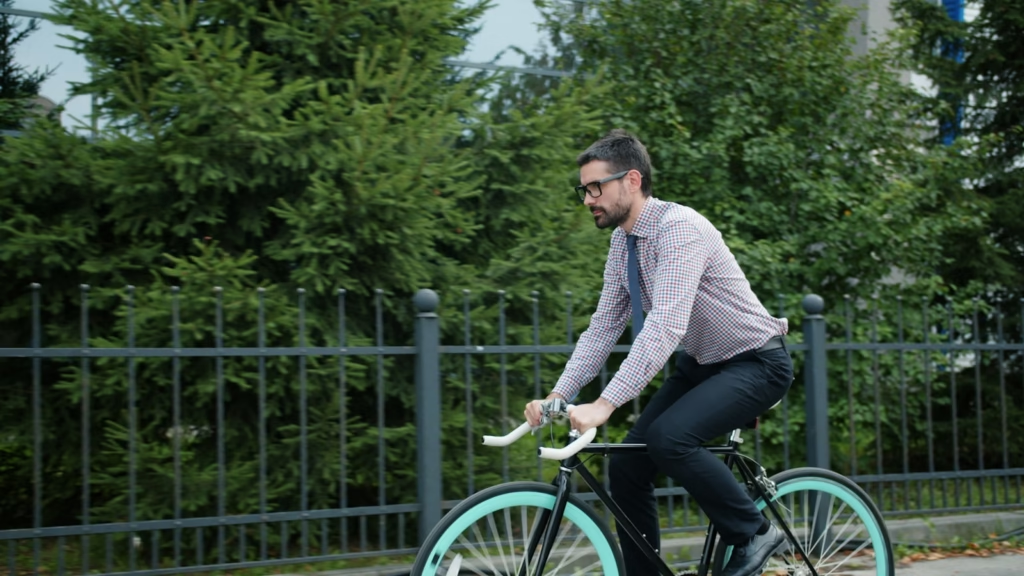
Start with a route that suits your confidence
A good commuting experience begins with a good route. It does not have to be the fastest one. In fact, for most new riders, the best option is often a quieter, slightly longer path that gives you space to relax rather than negotiate heavy traffic from the first corner.
Many UK cities and towns now provide cycle lanes, shared paths, low traffic neighbourhoods and park cut-throughs. Use mapping tools to explore options and test a route on a weekend when the roads are calmer. This allows you to spot tricky junctions, tight pinch points or roadworks before you encounter them at rush hour.
The key is learning which parts of the ride require more focus and which sections allow you to settle into a rhythm. As your confidence grows, you can adjust the route, shorten it or choose a more direct line if you want to shave minutes off the journey.
Choose a bike that fits the job, not just the aesthetic
Any bike can be a commuter if it fits you well and is mechanically sound. Road bikes offer speed but can feel firm on rough tarmac. Hybrids give comfort and upright visibility. Gravel bikes handle potholes, kerbs and towpaths with ease. Folding bikes are ideal for mixed train-bike commutes and for storing indoors at work.
More important than category is practicality. Good commuting bikes tend to share a few features:
- Tyres wide enough to deal with varied surfaces
- Mounting points for mudguards and a rack
- Gearing suitable for stop-start riding, bridges and short climbs
- A comfortable fit that does not overload your hands or back
If your current bike meets most of these requirements, use it. The perfect commuter is the one that is ready now, not the one you wait six months to buy.

Clothing that works for British weather
Rain, drizzle, crosswinds, sudden cold snaps: commuting in the UK means preparing for inconsistency. You do not need a full wardrobe of cycling kit. What you need is reliability.
A lightweight waterproof jacket is essential, even in summer. In winter, add gloves, a thermal base layer and a neck warmer. Mudguards make the biggest difference to comfort of all, because they keep you dry from road spray rather than the sky.
Many riders prefer to commute in normal clothes and keep work attire at the office. This works well if your route is gentle and your bike has full mudguards. If you ride harder or further, moisture-wicking clothing keeps you comfortable without looking sporty.
Reflective details matter more in commuting than high-vis panels. A small flash of reflection at moving joints, such as ankles, is far more visible to drivers than a bright yellow jacket with static panels.
Lights, locks and the small essentials
Two bright lights are mandatory for winter and wise all year round. A steady front light improves visibility in traffic, while a flashing rear light helps drivers notice you sooner. Many commuters use a second backup light in case batteries fail. The best setup is a rechargeable system that you plug in at work, making charging part of your daily routine.
A sturdy lock is non-negotiable. In most UK towns, a single lock is not enough for high-risk areas. Use a D-lock for the frame and a cable or second lock for the wheels. If your workplace offers secure storage, use it. If not, choose busy locations with CCTV and solid anchor points.
Carry a small set of essentials:
- A multi-tool
- A spare inner tube
- Tyre levers
- A mini pump
- Something reflective for dusk or low sun
These weigh little but solve the majority of mid-commute problems.
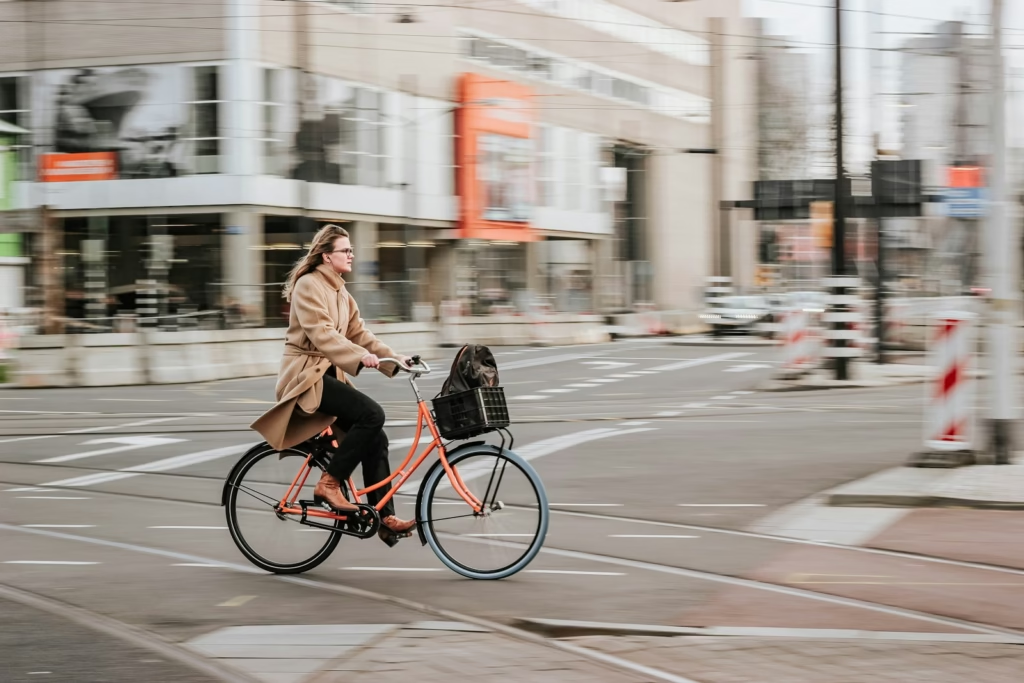
How to ride confidently in traffic
Traffic is the biggest barrier for new commuters, but confidence grows quickly with good technique. The most important principle is road positioning. Ride about a metre from the kerb, not tucked into the gutter. This keeps you visible, avoids debris and discourages unsafe overtakes.
At junctions and roundabouts, move into the centre of the lane. It feels bold at first, but it gives you space and clarity. Your movements become more predictable, and drivers understand where you are going.
Signals should be clear and early. A full arm signal is far better than a vague gesture. Before changing position, glance over your shoulder. This is both a safety check and a subtle communication to drivers that you intend to move.
Avoid filtering up the inside of large vehicles at junctions. These blind spots can be deadly. If in doubt, wait behind the vehicle and move off when it is safe.
The rhythm of commuting changes with experience. What first feels chaotic becomes predictable as you learn how buses accelerate, where cars drift and which junctions require patience. That predictability is the foundation of safe commuting.
Managing effort and expectations
Commuting is not a race. It is a steady, repeatable effort that should leave you feeling energised, not exhausted. If your ride is longer or hilly, start gently. Over time, you can treat parts of the ride as training if you choose, but that should come later. The priority is consistency.
Food and hydration matter too. Even a short commute can feel draining if you start hungry or dehydrated. Keep a snack at work for days when the ride home demands more energy.
The weather will sometimes win, and you will take the bus. That is not failure. It is experience. Cycling as a commuter is about balance, not perfection.
The small details that make big differences
A few tweaks can transform the commute:
- Panniers beat backpacks for comfort on longer rides
- Regular cleaning prevents winter grit from wearing down chains and cassettes
- Tyres with puncture protection save time and clothing frustration
- A bell helps with shared paths where pedestrians are common
- Keeping a spare set of clothes at the office removes stress on wet days
These practicalities add up to a smoother, more enjoyable routine.
Why commuting by bike becomes addictive
Most riders start commuting to save money or time. They continue because it changes how the day feels. A morning ride clears the head better than a coffee, and an evening ride helps shake off the workday. Routes that once felt intimidating become familiar. Weather that once felt discouraging becomes an interesting challenge. Before long, the bike commute becomes the best part of the daily routine.
Starting is the hard part. Once you settle into the rhythm, cycling to work in the UK is one of the simplest, healthiest and most satisfying habits you can build.