In Flanders Fields 2026 remains one of the most tactically open races of the Flemish spring. The renamed race starts in Middelkerke, runs through the Moeren, then heads into Heuvelland for the familiar sequence of climbs and Plugstreets, with the final Kemmelberg still coming with 35.5km left to race. That usually leaves room for more than one outcome: a selective sprint, a reduced group, or a late move that survives because too many fast teams have already spent their matches. The broader route shape is covered in more detail in ProCyclingUK’s men’s In Flanders Fields 2026 route guide.
The field for 2026 reflects that uncertainty. There are pure sprinters here, but also several teams that can make the race harder, either because they back a rider who wants to attack before the finish, or because they have enough depth to race aggressively on the climbs and Plugstreets. If you want the wider spring context around who is building towards the next major tests, the recently published E3 Saxo Classic 2026 team-by-team guide is a useful companion piece.
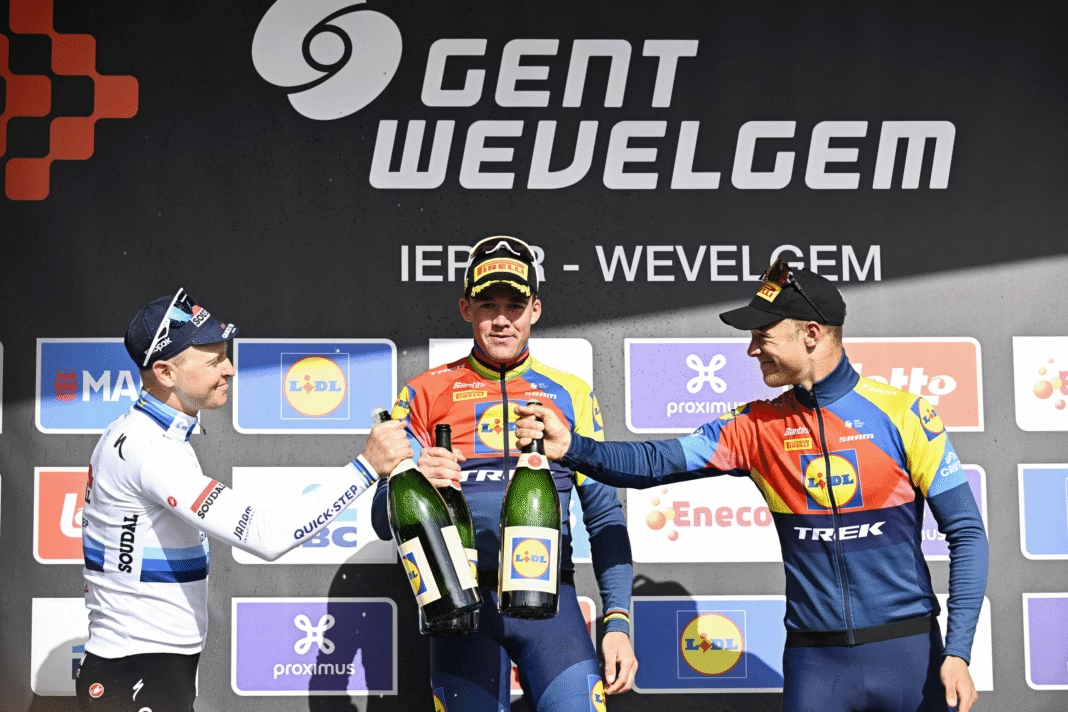
Lidl-Trek
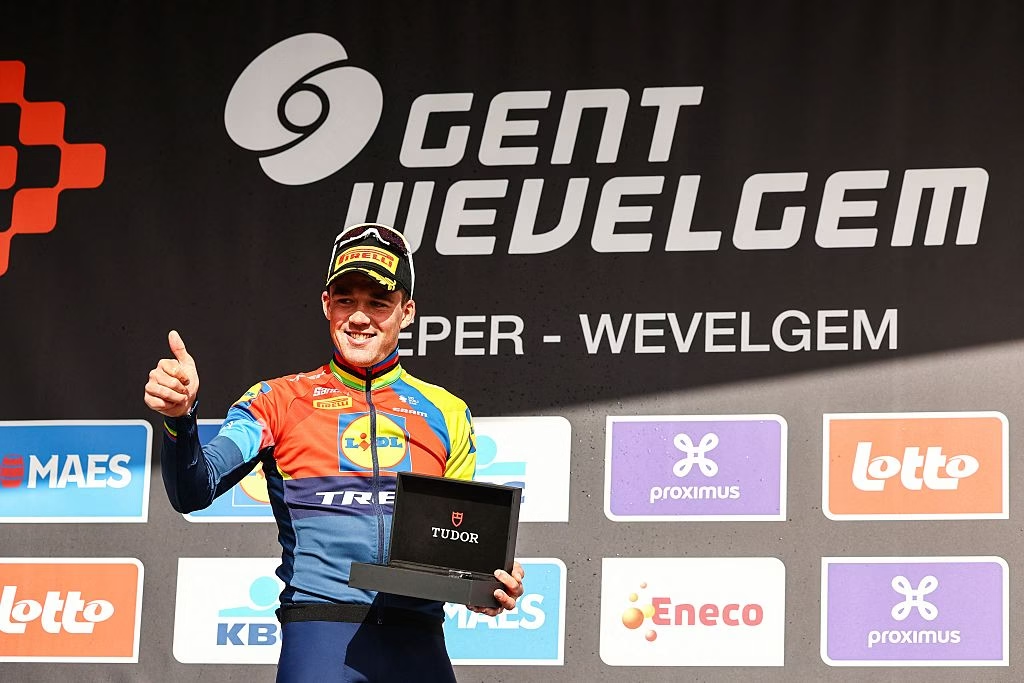
Lidl-Trek arrive with one of the most interesting line-ups in the race. Mads Pedersen is the obvious headline name and, even with his spring disrupted by the collarbone and wrist injuries he suffered in February, his return has come far sooner than expected. Jonathan Milan gives them a second route to victory if it comes back together, while Søren Kragh Andersen, Toms Skujins and Edward Theuns give them several ways to shape the race before then.
Soudal Quick-Step
Tim Merlier gives Soudal Quick-Step a straightforward winning card if the race is controlled well enough. Jasper Stuyven and Yves Lampaert bring more than enough nous for the harder parts of the day, while Paul Magnier adds another fast finisher if things get messy. This is not the deepest squad in terms of multiple outright leaders, but it is experienced enough to stay in the race for a long time.
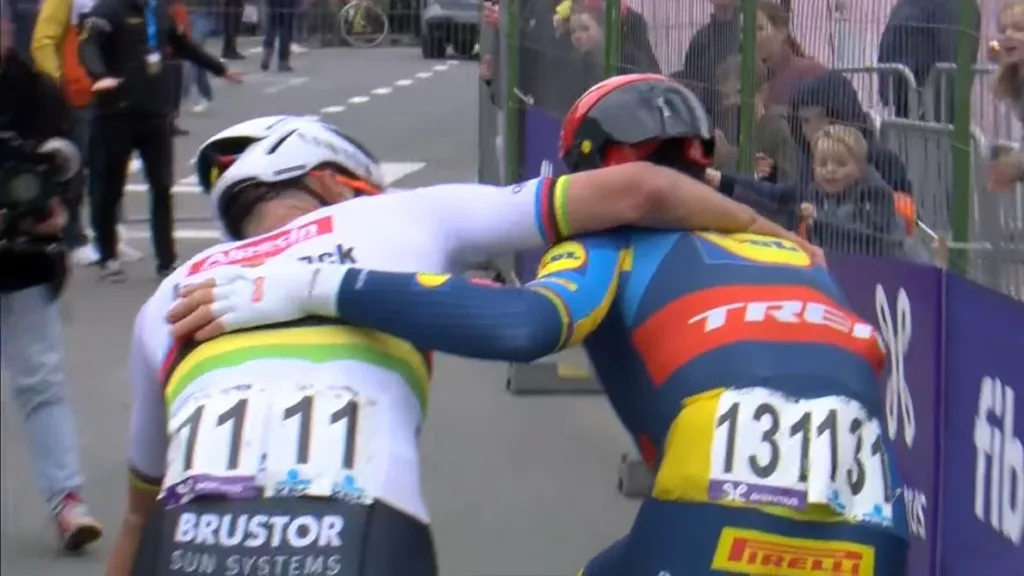
Alpecin-Premier Tech
Everything revolves around Mathieu van der Poel and Jasper Philipsen. Van der Poel is still officially in the frame for the weekend after being caught up in the Milan-San Remo crash, where he appeared to suffer cuts to his hand, so his condition matters enormously to how Alpecin race this. If he is strong enough, he can detonate the race. If not, Philipsen becomes the obvious closer, with Silvan Dillier, Jonas Rickaert and Florian Sénéchal there to guide the race in that direction. The latest men’s Milano-Sanremo 2026 contenders preview and race coverage add useful context to where both leaders sit coming into this weekend.
Bahrain Victorious
Matej Mohoric is Bahrain Victorious’ most disruptive option. He is exactly the sort of rider who can profit from hesitation after the Kemmelberg or from a long-range tactical move on a day when the sprinters’ teams start to run thin. Phil Bauhaus gives them a fallback for a faster finish, but this feels more like a squad built to race opportunistically than one that wants a neat bunch sprint.
Decathlon CMA CGM Team
There is depth here without an obvious top-tier favourite. Oliver Naesen still suits this sort of attritional Classics day, Stefan Bissegger and Daan Hoole can help keep positioning under control, and Tobias Lund Andresen adds some finishing speed if he survives the hard points well enough. This is the kind of line-up that could place someone in the top 10 without ever fully controlling the race.
 Photo Credit: LaPresse
EF Education-EasyPost
Kasper Asgreen and Colby Simmons give EF two quite different possibilities. Asgreen is the rider for a hard, selective race where strength matters more than sprint speed, while Simmons and Madis Mihkels are useful options if the finale becomes more tactical and less explosive. Vincenzo Albanese and Luke Lamperti mean EF have enough pace to be dangerous if the race flattens out late.
Groupama-FDJ United
This is a younger and slightly harder-to-read team, but there is some useful speed in Paul Penhoët and enough punch in riders such as Bastien Tronchon and Cyril Barthe to stay involved. They may not have the obvious favourite, yet they do have the kind of roster that can benefit from chaos if bigger teams start marking each other too closely.
INEOS Grenadiers
INEOS have brought a line-up that looks more suited to control and pressure than to a straightforward sprint. Filippo Ganna is the biggest name, and he can turn this race into a very different contest if the weather and pace line up for him. Magnus Sheffield, Ben Turner and Sam Watson add depth for a hard day, while Connor Swift and Kim Heiduk strengthen the support around the key sectors. This is a team that could split the race rather than wait for it.
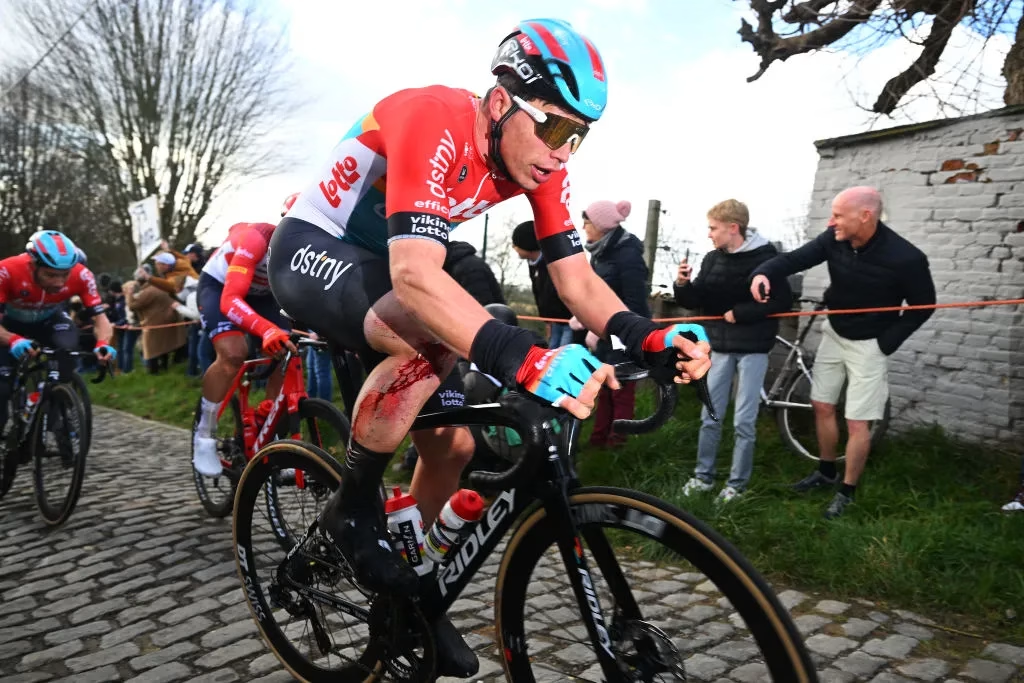
Lotto-Intermarché
Arnaud De Lie is the centre of the plan here. If he is still in good position after the last Kemmelberg, Lotto-Intermarché have a genuine winning chance because he can handle a tougher race than many pure sprinters. Around him, Jenno Berckmoes, Cédric Beullens and Jonas Rutsch give the team enough support to keep him sheltered and present.
Movistar Team
Iván García Cortina remains the rider who makes most sense here. He has the engine and the experience for this sort of race, and Movistar also have enough support through Jon Barrenetxea, Orluis Aular and Roger Adrià to stay relevant deep into the finale. The question is whether they can turn presence into a truly winning situation.
NSN Cycling Team
Biniam Girmay is the obvious focal point and this race has long looked like one that suits him when he is going well. He was among the riders brought down in the Milan-San Remo crash last weekend, so how well he has recovered will shape NSN’s ambitions. Lewis Askey, Hugo Hofstetter and Matis Louvel make this a useful supporting cast, especially if the race becomes fractured rather than fully selective.
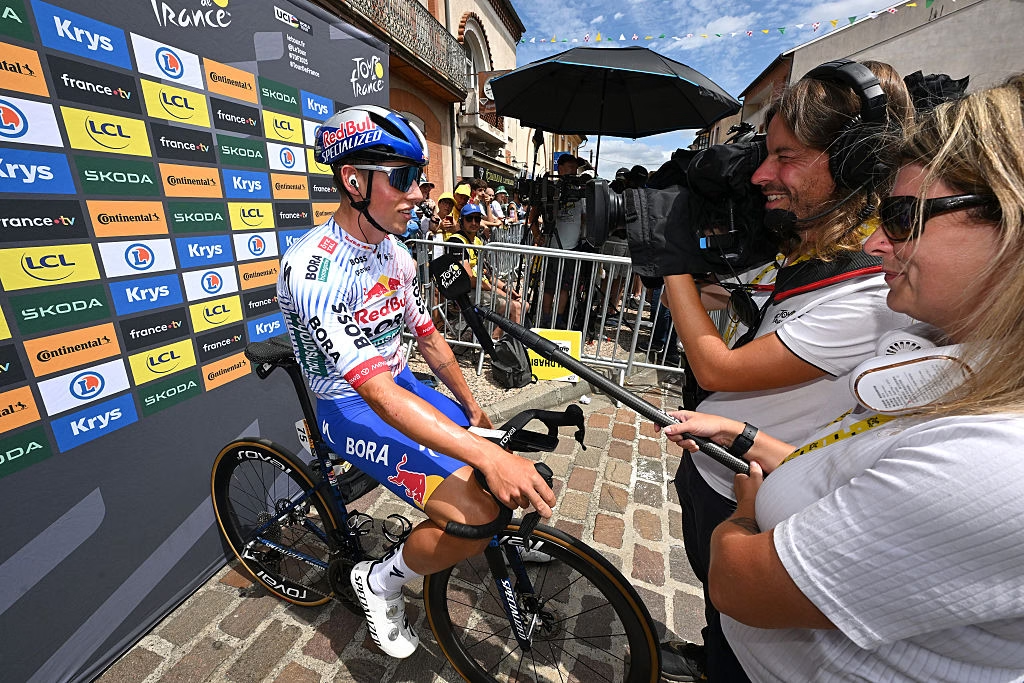 Photo Credit: Getty
Red Bull-BORA-hansgrohe
Laurence Pithie is the standout name here because this sort of race suits his aggressive Classics profile. Jordi Meeus offers a very different finishing option if the race comes back together, while Mick and Tim van Dijke, plus Arne Marit, make this a line-up with genuine flexibility. They are one of the teams that can race either proactively or patiently.
Team Jayco-AlUla
Pascal Ackermann is the obvious finisher, but the more intriguing names may be Amaury Capiot and Dries De Bondt, who can help turn this into a more awkward race for the bigger sprint trains. Jayco do not look like the strongest team on paper, yet they do have enough experience to stay organised when positioning becomes frantic.

Team Picnic PostNL
John Degenkolb brings historical authority, even if the fastest version of this race probably suits others more now. Sean Flynn and Julius van den Berg are the names that could help Picnic stay active before the finale, while Pavel Bittner gives them some finishing speed. This feels like a team that may need the race to become untidy rather than simply fast.
Team Visma | Lease a Bike
Wout van Aert is due back here after skipping E3, having already shown his level with 3rd at Milan-San Remo despite being caught up in that late crash. Christophe Laporte gives the team a second elite card, Matthew Brennan adds pace, and Edoardo Affini can be hugely important in the exposed early parts of the race. Visma have one of the strongest combinations of power and finishing speed in the field, which makes them a major presence however the race unfolds. Readers wanting the broader lead-in can also jump across to the How to watch E3 Saxo Classic 2026 in the UK page and the E3 Saxo Classic 2026 route guide for the wider spring picture.
UAE Team Emirates-XRG
This is a proper Classics support unit centred around Florian Vermeersch, Nils Politt and António Morgado. None of them is the obvious fastest rider in a sprint, but all three are capable of making the race difficult and forcing others to react. Sebastian Molano offers some speed if he survives, though the most likely route for UAE is to attack the race structure rather than wait for a clean finish.
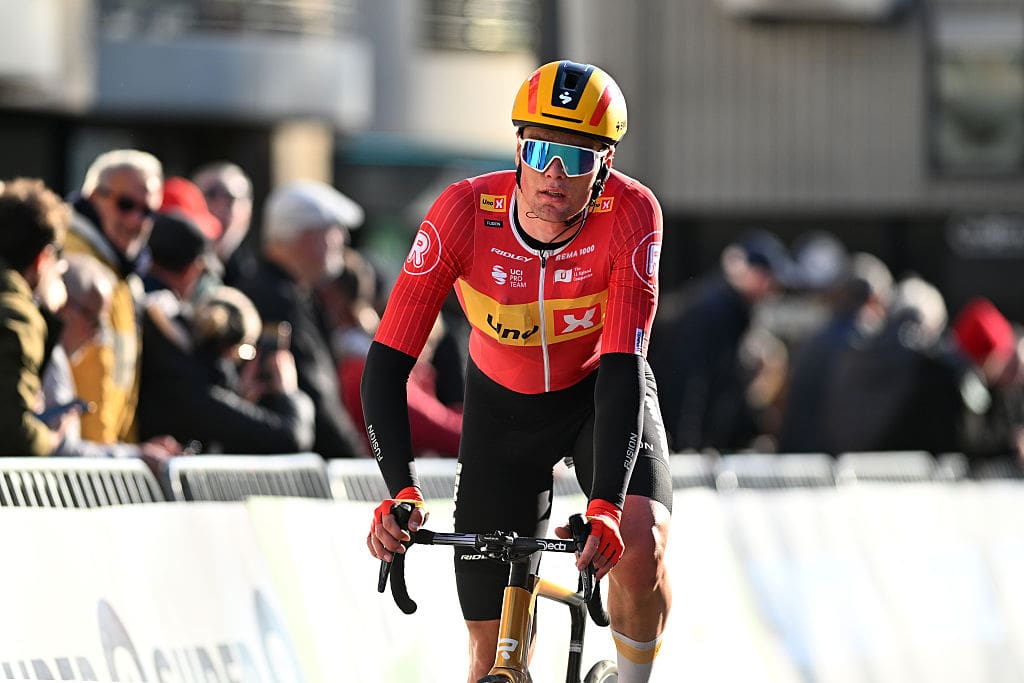
Uno-X Mobility
Uno-X Mobility looks well-suited to this race. Søren Wærenskjold has the speed and resilience to contend from a reduced sprint, Jonas Abrahamsen can animate the race from distance, and Rasmus Tiller is exactly the type of rider who thrives when the day gets rough and irregular. This is one of the more balanced squads in the field.
XDS Astana Team
There is a useful mix here. Davide Ballerini and Mike Teunissen both understand these races well, Max Kanter gives them a faster finish, and Arjen Livyns should be highly motivated on Belgian roads. Astana may not start as one of the top favourites, but they have enough pieces to exploit a tactical opening.
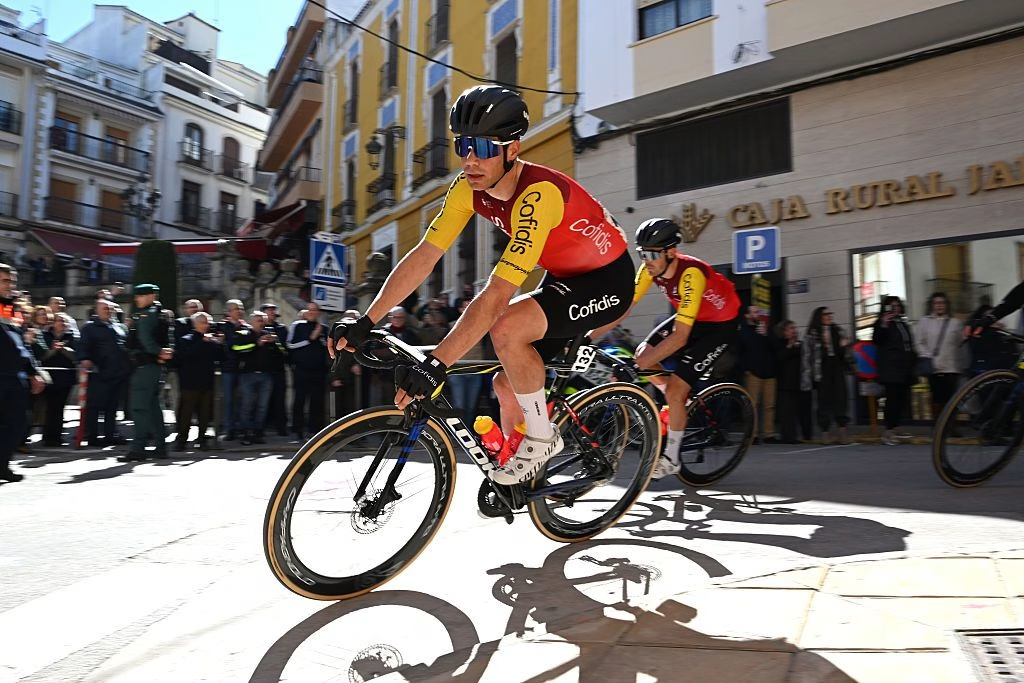
Cofidis
Milan Fretin is the eye-catching name if the race ends quickly, while Dylan Teuns and Alex Kirsch provide the strength for a more selective edition. Hugo Page adds another fast option, which gives Cofidis a nice spread of possibilities. They are unlikely to dominate, but they could certainly put the right rider in the right move.
Pinarello-Q36.5 Pro Cycling Team
Fred Wright is the rider who stands out immediately. This is the sort of race where his durability and reading of the finale can matter, especially if the favourites hesitate after the decisive sectors. Brent Van Moer is another useful name for an aggressive scenario, while Frederik Frison adds Belgian experience to the support group.
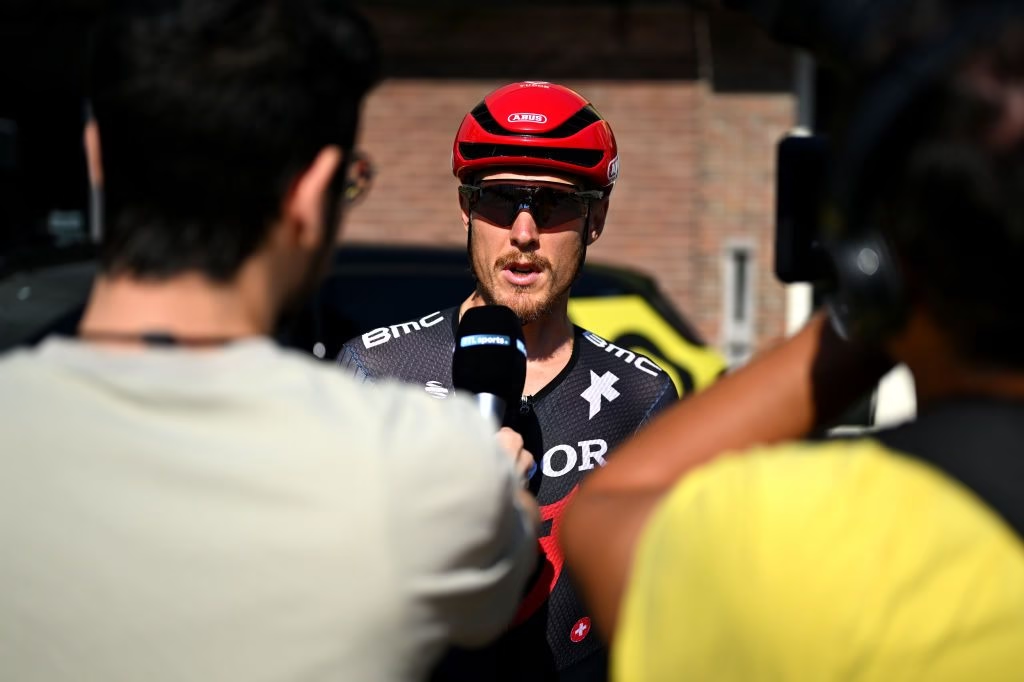
Tudor Pro Cycling Team
Luca Mozzato is the obvious finisher here and Matteo Trentin remains one of the smartest road captains in these races. Marco Haller strengthens that experienced core, so Tudor should be well-positioned when the race starts to stretch. Their best chance probably comes from getting Mozzato to the finish in a reduced group rather than trying to blow the race apart themselves.
Burgos Burpellet BH
For Burgos Burpellet BH, this is more about surviving the race well and trying to anticipate rather than outmuscle the biggest teams. Eric Fagúndez and Georgios Boúglas are among the more recognisable names, but overall this is a squad that will need to be opportunistic to feature prominently.
Team Flanders-Baloise
This is a home race, and that matters. Michiel Lambrecht, Victor Vercouillie and Jules Hesters should all be highly motivated to show themselves, and the team will almost certainly try to get into moves rather than sit back. A result deep in the top 10 would be a very strong return from this line-up.
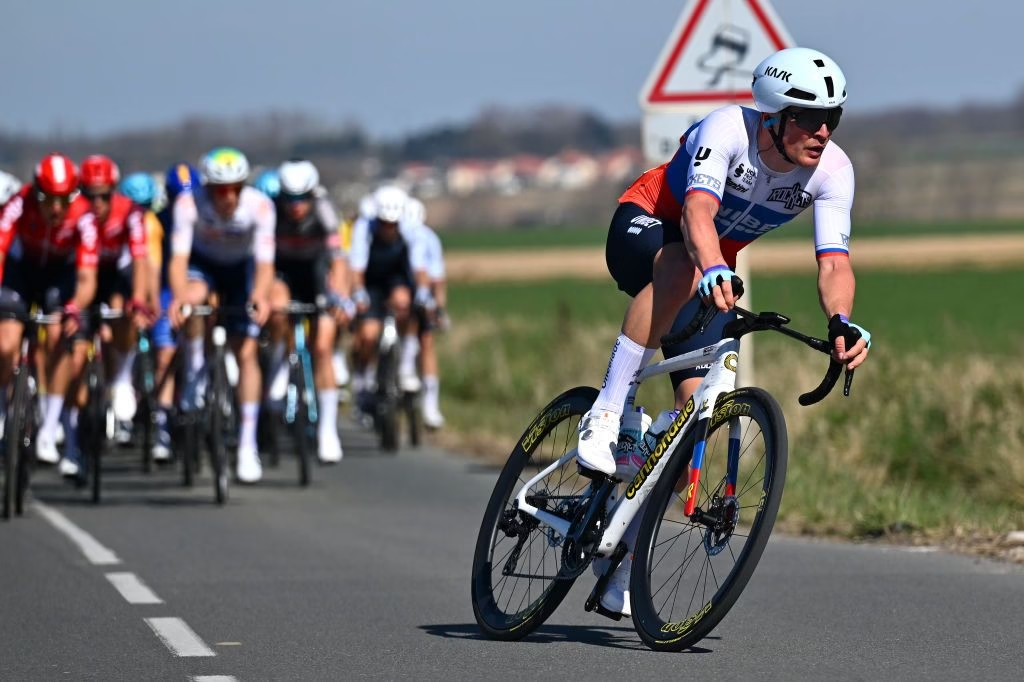
Unibet Rose Rockets
This is a lively outsider team. Lukas Kubis has shown enough at this level to be taken seriously, while Elmar Reinders and Wessel Mouris add support for the flatter and more chaotic parts of the race. They are unlikely to control anything, but they could still get into the race through aggression and smart positioning.
Team TotalEnergies
Anthony Turgis remains the big reference point. He is exactly the kind of rider who can take advantage when the favourites fail to fully commit, and TotalEnergies also have enough support through Alexys Brunel and Thomas Gachignard to stay visible. They are another team that will prefer a stressful, tactical finale over a clean sprint.
Who looks strongest?
On paper, Lidl-Trek, Alpecin-Premier Tech and Team Visma | Lease a Bike look like the most complete teams because they combine genuine winning speed with the ability to make the race harder before the finish. Soudal Quick-Step and Uno-X Mobility also make a lot of sense for this route, while UAE Team Emirates-XRG and INEOS Grenadiers look like the squads most likely to test the race before the final sprint settles. If you want more background around how the renamed race fits into the season, ProCyclingUK’s brief history of men’s In Flanders Fields is the natural companion read, while the broadcast details sit in the How to watch the Men’s In Flanders Fields 2026 in the UK guide.