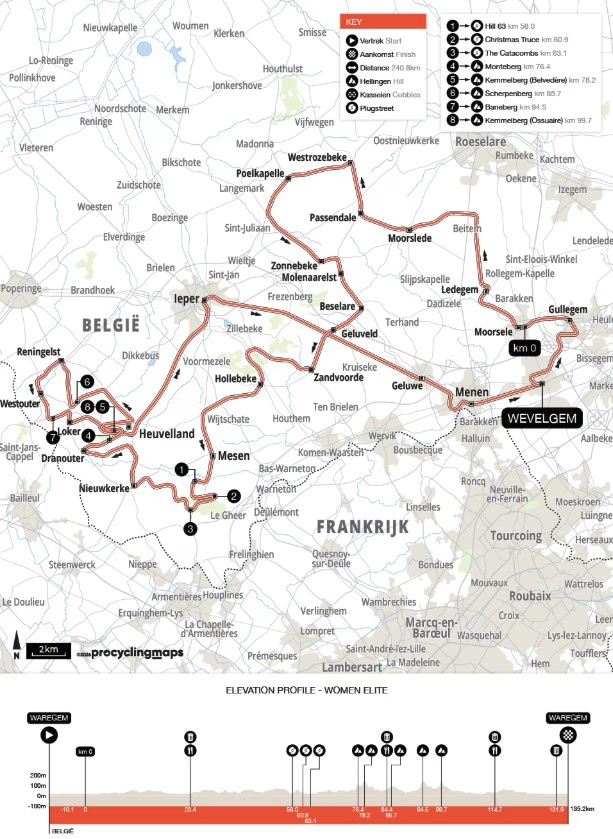
In Flanders Fields Women 2026 keeps the same underlying character as the race long known as Gent-Wevelgem Women, but the new title makes the route’s identity feel even clearer. This is a race built around landscape, history and changing terrain rather than one single obstacle. The 2026 women’s race takes place on Sunday 29 March, starts and finishes in Wevelgem, and covers 135.2km. It is not especially long by WorldTour standards, but it packs enough into that distance to keep several types of rider interested deep into the afternoon.
The key to understanding the route is that it comes in layers. The early part gives the race its historical and geographical setting. The middle adds the rougher, more symbolic Plugstreets. The final phase brings in the Heuvelland climbs and, above all, the Kemmelberg. That structure is why the race can still tilt between a reduced sprint, a late solo move or a small attacking group. ProCyclingUK’s Beginner’s guide to In Flanders Fields 2026 is the natural companion piece if you want the broader race identity alongside the route itself.
Start and finish in Wevelgem
One of the biggest changes for 2026 is that the women’s race starts and finishes in Wevelgem. The route begins with a neutral roll-out through Wevelgem districts including Gullegem and Moorsele before the peloton moves out towards the flatter roads and the historically loaded areas further north-west and west. That change matters because it gives the women’s event a slightly more self-contained shape, even while the broader race identity remains familiar.
From a practical racing point of view, it also means the route feels tighter and more purposeful. There is less need for a long transition from a distant start, and more emphasis on when the race moves from open roads into the sections that really define it.
The opening run through the war landscape
Early in the race, the peloton heads through places such as Zonnebeke, Langemark-Poelkapelle and Ypres. These are not just route markers. They are part of why the event now carries the In Flanders Fields name so explicitly. The course moves through terrain shaped by First World War memory, and the organisers are clearly leaning into that connection more directly than before.
That gives the race an atmosphere that feels slightly different from the other Flemish classics. It is still a hard one-day race, but the route has a stronger sense of narrative and place. The roads are not there simply to connect the sectors. They are part of the meaning of the event itself.
The Plugstreets
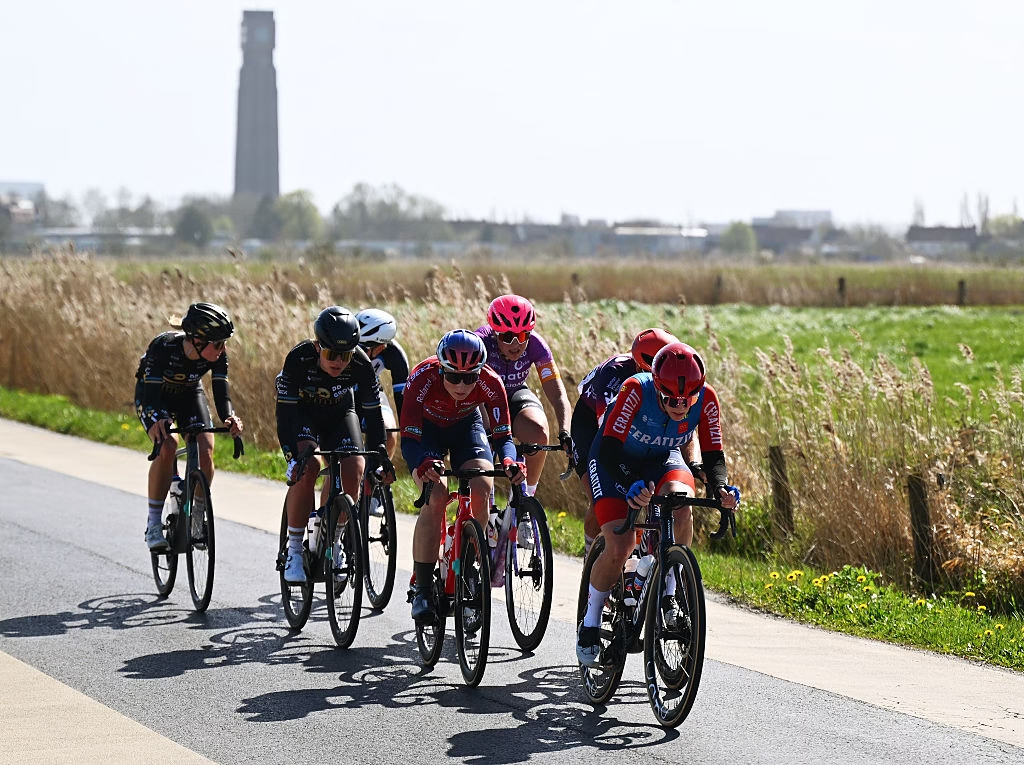
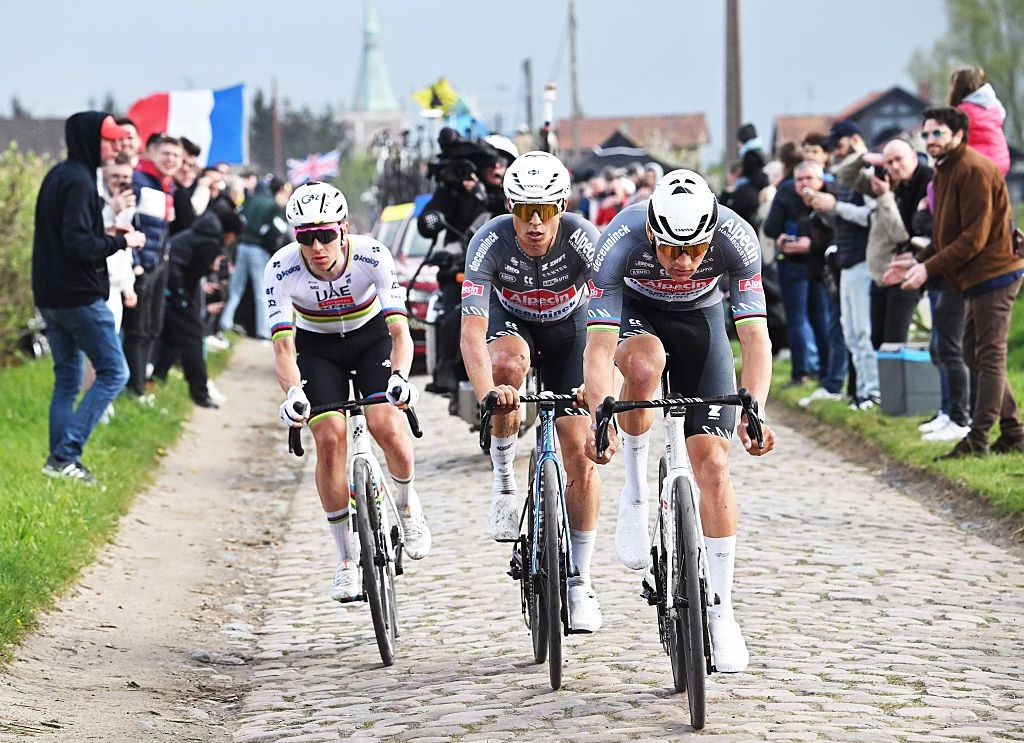
The Plugstreets remain one of the defining elements of the race. In 2026, the women again tackle the three Plugstreets, the unpaved roads near Ploegsteert that add a rougher, more unpredictable layer to the route. They are not cobbles in the classic Flemish sense, but they still disrupt rhythm, punish poor positioning and create tension in a very specific way.
This is one of the reasons the race is not just a straightforward sprint classic. Riders who are perfectly comfortable on tarmac can suddenly find themselves under pressure here. Teams need to stay organised, and favourites cannot afford to drift too far back. Small mistakes can be amplified quickly once the race reaches these roads./
Heuvelland and the climbs
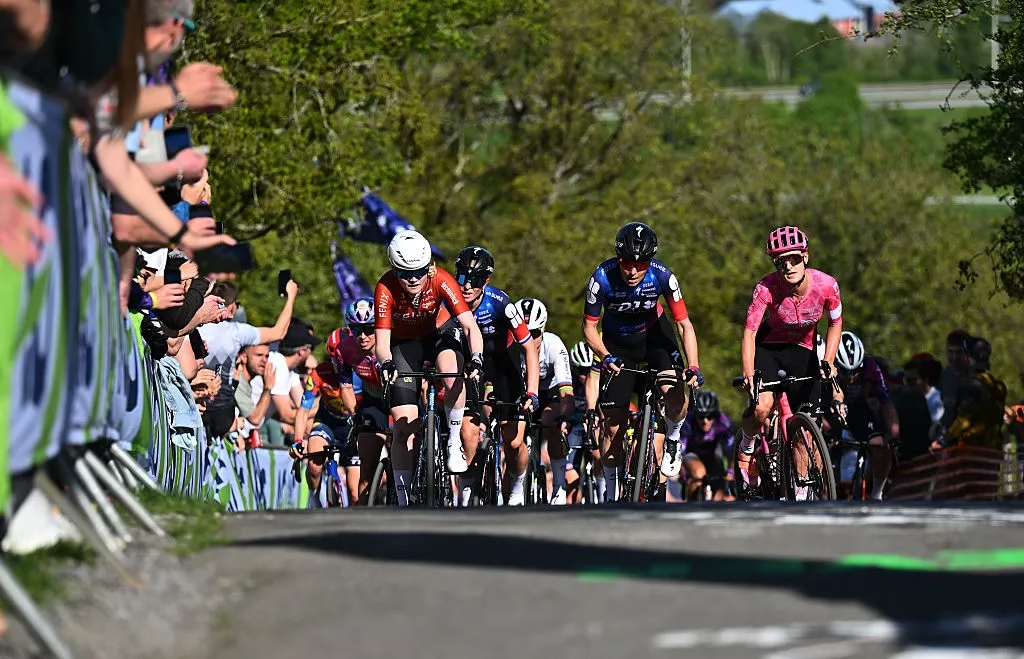
After the Plugstreets, the route moves into the hillier phase in Heuvelland. The 2026 women’s course includes Monteberg, Kemmelberg Belvedère, Scherpenberg, Baneberg and then the final ascent of the Kemmelberg via Ossuaire. Those climbs are short and sharp rather than long and mountainous, but that is exactly what makes them so important. They invite repeated accelerations and force riders to keep responding.
This is the point where the race usually starts to reveal what kind of finale it will produce. If the pace is high enough, the bunch can be cut down sharply. If the strongest teams commit, the race can become selective enough to remove the purest sprinters. But because the climbs are not endlessly repeated, there is still room for riders to come back if the cooperation behind is good enough.
Why the Kemmelberg matters most
As ever, the Kemmelberg is the route’s central reference point. It is the climb most likely to force real separation between the favourites and the rest, especially once it comes later in the race and fatigue has already built. In 2026 the women’s course uses both the Belvedère side and later the Ossuaire side, which gives the route two slightly different expressions of the same iconic obstacle.
The Kemmelberg matters not because it is impossibly long, but because of what it does to a race already under pressure. Riders have to hit it in position, handle the gradients cleanly and still be ready for what comes after. That makes it less like a decisive summit finish and more like a gateway. Survive it in the right group and the race is still there to be won. Miss the move and it can be very hard to put right.
The flat run to Wevelgem
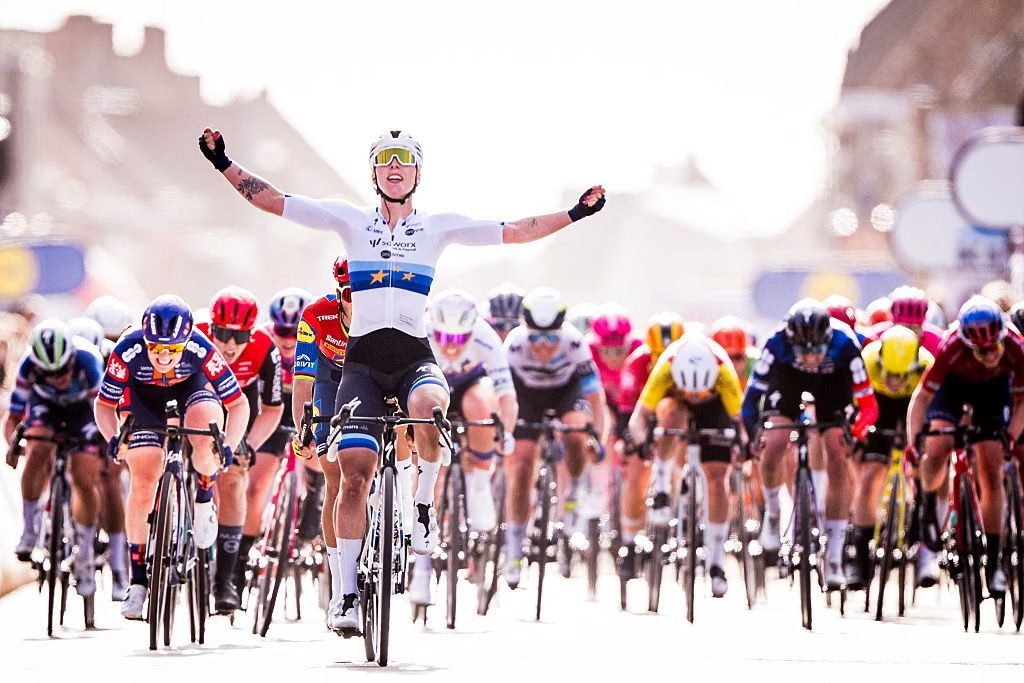
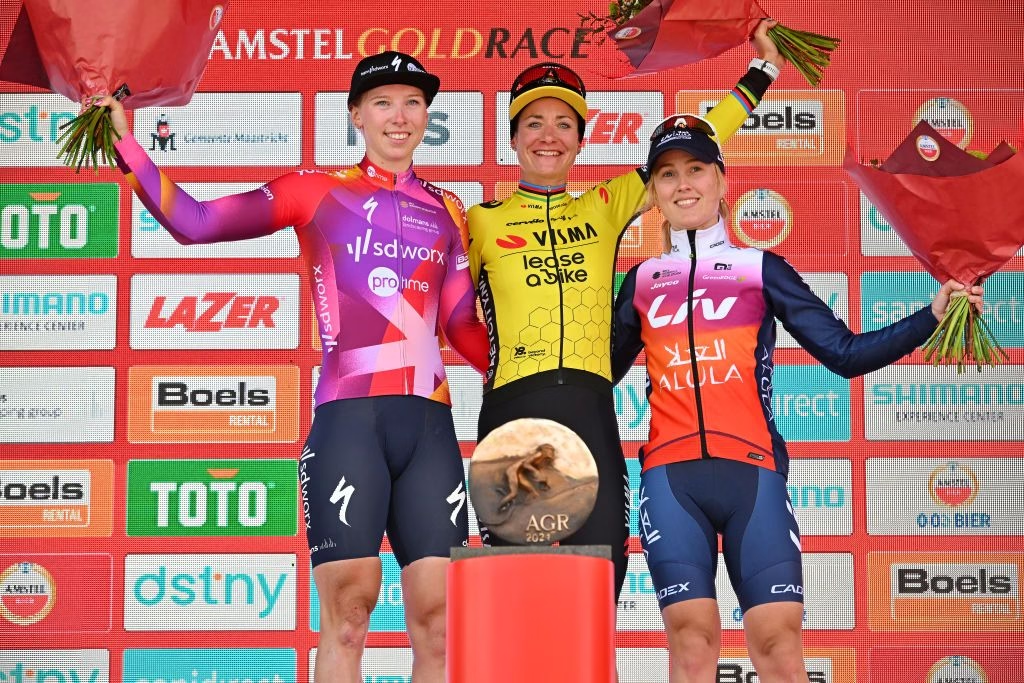
After the final Kemmelberg ascent, the route trends back towards a flatter run-in to Wevelgem. This is why the race remains tactically open. If a small elite group forms over the climbs, it can stay away. If the favourites hesitate or the chasing group works well, the route also leaves room for a reduced sprint. That has always been part of the event’s appeal. It is selective, but not so selective that it closes every door.
This is also where team depth matters. A squad with two or three riders still in contention can shape the finale in a very different way from a team built around one clear leader. The race does not always go to the strongest individual. Sometimes it goes to the best-positioned team with the right rider left at the end.
What the route means for the race
The 2026 women’s route looks well-balanced. At 135.2km, it is long enough to build fatigue but short enough to keep the pace high. The Plugstreets add unpredictability, the Heuvelland climbs create selection, and the final run to Wevelgem keeps more than one race scenario alive. That combination is why In Flanders Fields Women has remained such a useful meeting point between a hard classics race and a selective sprint classic.
It also means the race still feels true to its older Gent-Wevelgem identity even under the new name. The core ingredients are still there: rough roads, wind-threat terrain, climbing pressure and the Kemmelberg as the race’s most important signal flare. What has changed is the framing. The route now sits more explicitly inside the event’s historical and regional story, and that suits it well.
For more on how it fits into the spring, ProCyclingUK’s A brief history of Men’s In Flanders Fields and Beginner’s guide to Tour of Flanders Women 2026 are the best next reads.