Ina-Yoko Teutenberg was one of the defining sprinters of her generation and remains one of the most important figures in modern women’s cycling through her post-racing work as a sports director. Born in Düsseldorf on the 28th October 1974, she built a career around speed, judgement and consistency, winning across Europe, North America and Australia before moving into leadership roles that helped shape the next phase of the sport.
That combination is what makes her story especially strong. Teutenberg was not only a prolific finisher who won stages and one-day races at a remarkable rate. She also became one of the women shaping the modern peloton from the team car, first with Trek’s women’s programme and then with Lidl-Trek Women, while also taking on major roles with USA Cycling. If you are working through the wider women’s cycling history hub, she belongs to that important generation that carried the sport from the more fragmented late 1990s and 2000s into the increasingly structured era that followed.
Before the big wins, Ina-Yoko Teutenberg came through a cycling family
Teutenberg began racing at the age of six and grew up in a family deeply connected to cycling. Her brothers Sven and Lars Teutenberg also raced, and that early immersion helped shape the rider she became: tactically sharp, comfortable in race chaos and highly attuned to positioning.
That background matters because Teutenberg’s style was built on more than top-end speed. She became one of the riders who could read race finales better than most, and in women’s cycling of the 2000s, that often mattered as much as pure power. She was a sprinter, certainly, but she was also one of those finishers who knew exactly how to survive the right sort of hard race and still deliver at the line.
The early career and the rise to the top tier
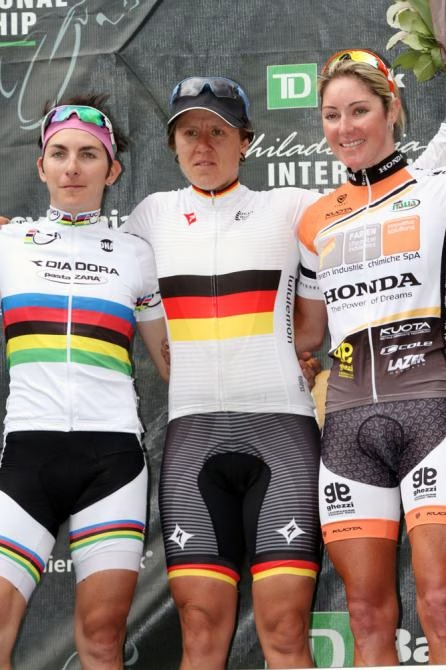
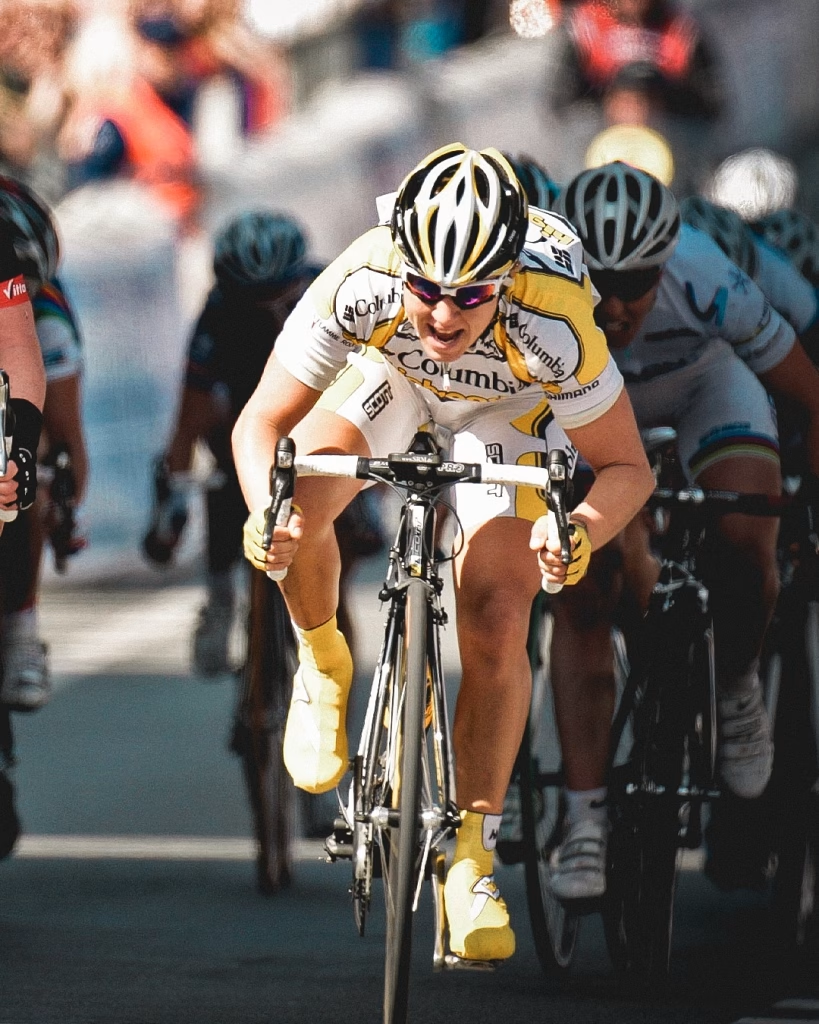
Teutenberg’s professional teams included Red Bull Frankfurt in 2000, Saturn Cycling Team from 2001 to 2003, and then the T-Mobile, Columbia and HTC structures that formed the core of the next phase of her career from 2005 to 2013. Her most successful years came in that second period, when she became one of the most feared finishers in the peloton.
She retired with well over 150 UCI-listed victories, and some broader career summaries place her total haul above 200 wins. Either way, the central point is the same. Teutenberg was one of the most prolific winners in the women’s peloton over a long period, and she did it in a way that went far beyond flat sprints.
What kind of rider Ina-Yoko Teutenberg was
Teutenberg was, first and foremost, a finisher. But calling her only a sprinter undersells her. She was one of those riders who thrived in hard, selective races that still came back together just enough for a fast finish. That is why she could win bunch sprints, reduced-group sprints and lumpy one-day races that did not look like straightforward sprinter territory on paper.
That broader skill set is what gives her palmarès so much historical weight. She won the 2006 Geelong World Cup, a major one-day race against elite opposition, and she also built a huge body of stage-race success. Teutenberg was not a rider who won one big race and then lived off the reputation. She won over and over again, across different calendars and different race shapes.
Ina-Yoko Teutenberg’s greatest years
There was no single neat peak because Teutenberg kept winning over a long stretch, but the mid to late 2000s were clearly her strongest period. This was the era when she became one of the most dependable finishers in the peloton and one of the names most closely associated with victory itself.
Her results in stage races underline how productive that period was. She won 21 Tour de l’Aude stages across her career, a huge number in one of women’s cycling’s most important historic stage races, and she also racked up repeated stage wins in events such as the Giro d’Italia Femminile, Route de France, Holland Ladies Tour, Tour of New Zealand and the Women’s Challenge.
That volume matters because it tells you something about the nature of her greatness. Teutenberg was not one of those riders whose entire legacy rests on a single day. She was one of the peloton’s most effective repeat winners, a rider who turned up week after week and finished the job.
The major one-day wins that define her legacy
For all the stage wins, Teutenberg’s one-day palmarès is what gives her historical shape.
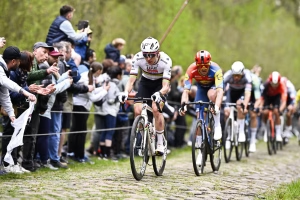
Her win at the 2009 women’s Tour of Flanders remains one of the most important. That result links her to one of the central races in the sport and makes her part of the longer story told in Women’s Tour of Flanders history, previous winners and greatest moments. It also says a lot about the kind of rider she was. The Tour of Flanders was never a race for sheltered sprinters. To win there, Teutenberg had to survive the hardest parts of the race first, then finish with authority.
Then there is the Liberty Classic. She won it four times, which says plenty because that race was historically one of the most prestigious one-day races in North America. It was not just about flat speed. Riders had to come through repeated climbing and city-centre circuit pressure before still having the sharpness to win. That sequence of victories helped define Teutenberg as more than a specialist in simple bunch finishes.
The Olympic career and what she did not quite get
Teutenberg competed at two Olympic Games, in 2000 and 2012. That makes her a two-time Olympian, but the Olympic road race never became the central pillar of her career in the way it did for some of the all-time legends. Her legacy was built much more through volume, consistency and repeated victory on the international calendar than through one Olympic breakthrough.
That slightly changes how she should be framed historically. Teutenberg was not one of those riders whose story hinges on one perfect day. She was one of the riders who kept winning everywhere else, season after season. In that sense, she belongs more naturally with the great specialists and serial finishers than with the one-day myth-makers of the sport.
The concussion that ended her racing career
Teutenberg retired in 2013, and the end came not because she had simply run out of level, but because of a concussion after a serious crash. That gives her retirement a slightly harsher edge than some of the more graceful exits of her generation.
Even so, the scale of the career she left behind was huge. Whether you use the stricter UCI-style win tally or the broader career counts, the point is the same: Teutenberg retired as one of the most successful women road racers of her era.
-
 Photo Credit: Getty
Ina-Yoko Teutenberg’s post-cycling career
Her post-racing career has been almost as important to the modern sport as her career on the bike.
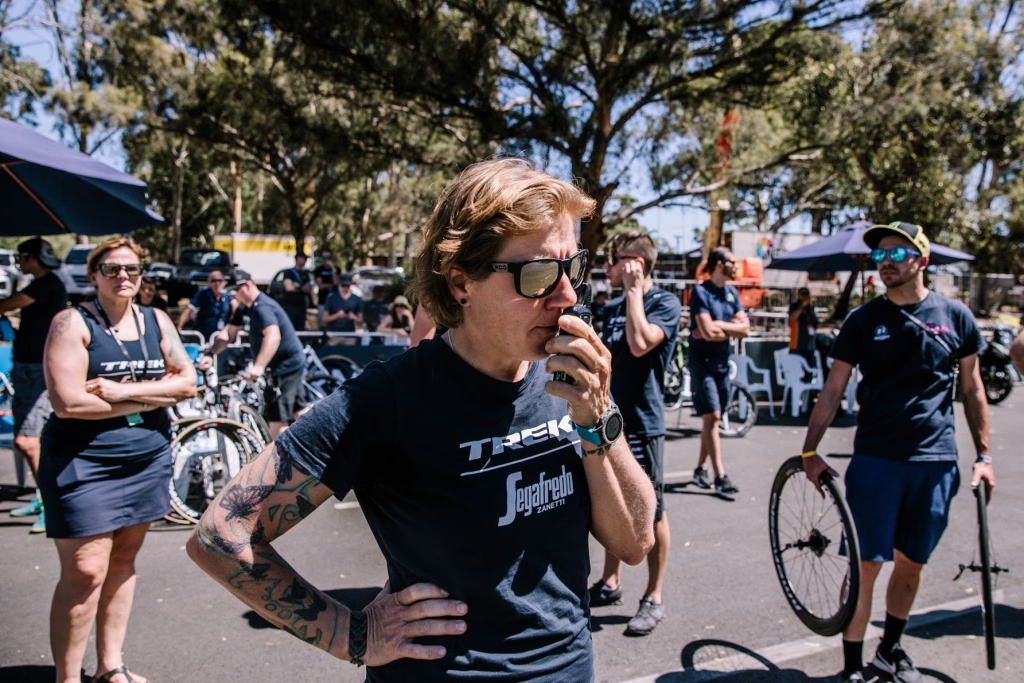
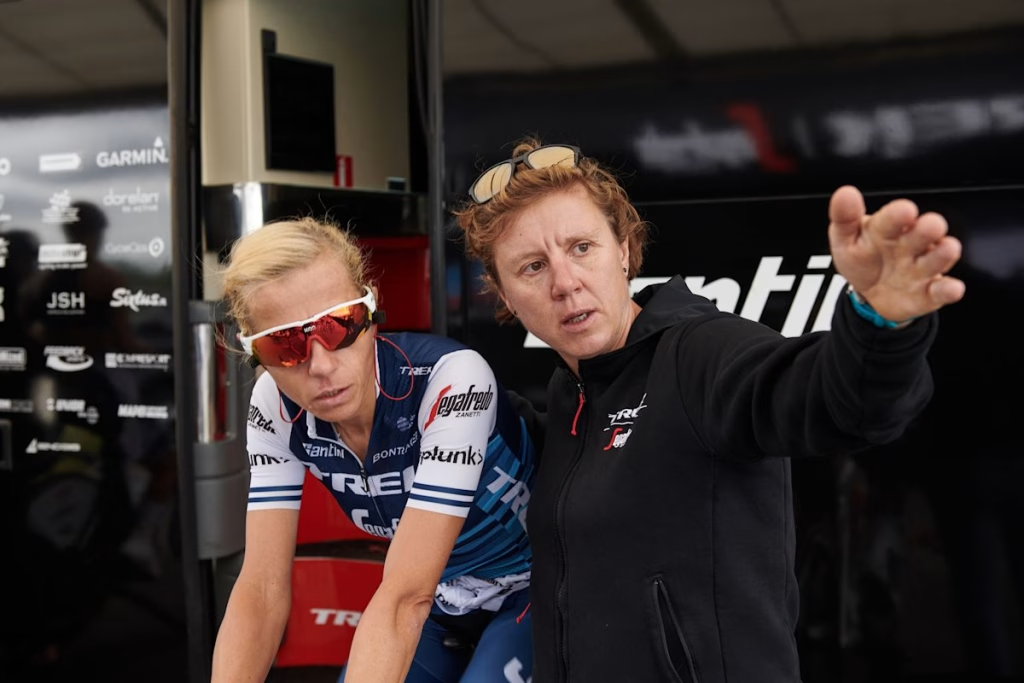
After retiring, she worked with USA Cycling on a temporary basis directing junior men’s and women’s programmes in Europe, later took on leadership roles with the Trek women’s team, and then became one of the key figures in the development of what is now Lidl-Trek Women. That second career matters because it turns Teutenberg into more than a former rider. She became one of the people helping define how a modern top women’s team should work.
Her role has included developing young talent, building race programmes and creating a stable sporting identity. That says a lot about how she sees the sport from the car rather than the bike. Teutenberg has often come across as a figure who understands that winning teams are built over time, not just assembled around one star name.
She is still part of that world now. That gives her a particularly strong post-cycling legacy, because it means her influence did not end when she stopped racing. It simply changed form.
Why Ina-Yoko Teutenberg still matters
Teutenberg matters because she bridges two different versions of women’s cycling. As a rider, she was one of the great finishers of the 2000s, a specialist who could still win much harder races than the label sprinter usually suggests. As a director, she has become one of the women helping shape the sport’s current competitive structure from inside a top WorldTour programme.
That puts her in a slightly different category from some other greats. She may not have the same Olympic-centred legacy as a Leontien van Moorsel or the same long all-purpose dominance as a Jeannie Longo, but she was one of the most effective winners of her generation and has stayed influential after retirement in a way many champions do not.
That makes her a very strong subject for a wider women’s cycling history series, especially alongside pages like Omloop Het Nieuwsblad Women history, previous winners and greatest moments, Women’s Tour of Flanders history, previous winners and greatest moments and A brief history of the road cycling world championships, where riders of her type helped shape what those races became.
Ina-Yoko Teutenberg career highlights
- One of the most prolific winners of her era, with well over 150 UCI-listed victories and more than 200 career wins in broader counts
- Winner of the 2009 women’s Tour of Flanders
- Winner of the 2006 Geelong World Cup
- Four-time winner of the Liberty Classic
- 11 stage wins at the Giro d’Italia Femminile and 21 at the Tour de l’Aude
- Two-time Olympian, in 2000 and 2012
- Retired in 2013 after concussion, then became a senior sports director with Trek and later Lidl-Trek Women, while also working with USA Cycling