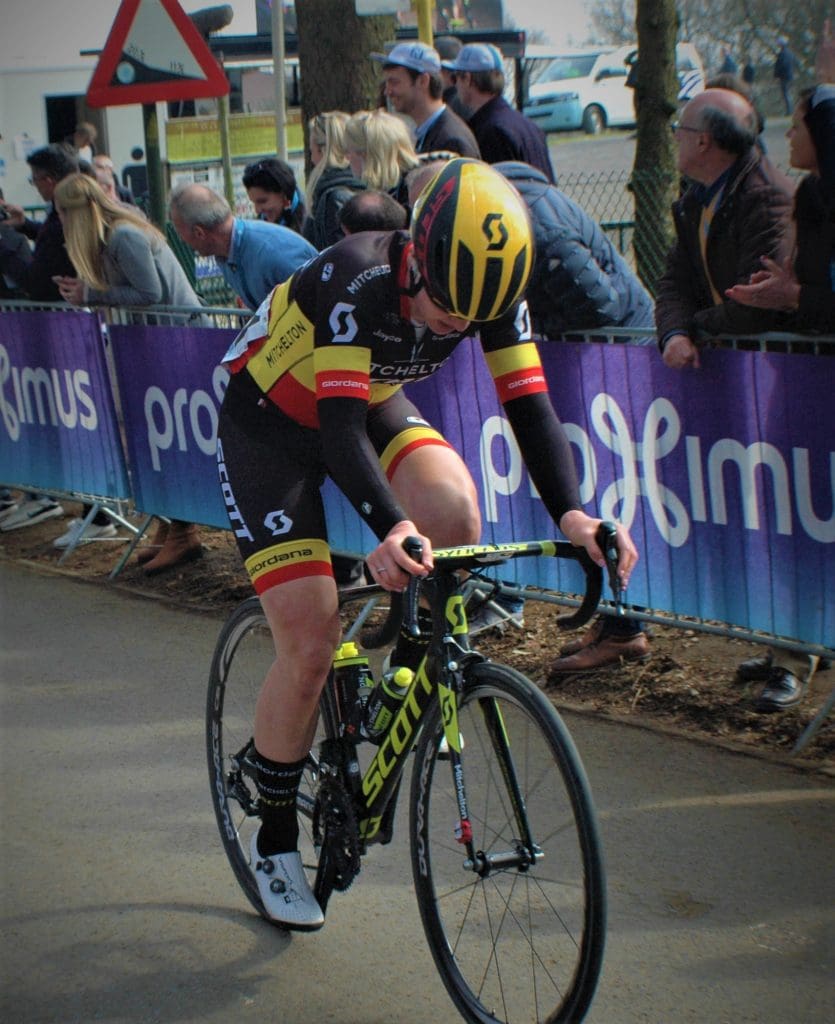
Jolien d’Hoore was one of those riders who made the final kilometre feel narrower. In the wind-tossed, technical finishes that suit the Low Countries, she carried the kind of sharp acceleration that could turn a fast group into a private contest. Belgian, fast and hard to dislodge when the road was flat and the bunch was nervous, she built a career around precision rather than noise. The draw was not only speed, but timing: the brief, ruthless moment when a lead-out train dissolved and she took over.
Her place in the sport is fixed in more than results. D’Hoore belonged to the generation that helped make women’s road racing look fully professional in the eyes of the wider public, while also becoming one of Belgium’s most dependable finishers. She won on the road, on the track and in stage races that demanded both nerve and repeatable acceleration. For any reader tracing the shape of women’s cycling history, she is a rider who sits comfortably in the modern era’s transition from opportunist sprinting to something much more structured and tactically mature.
Jolien d’Hoore and the making of a Belgian sprinter
D’Hoore was born in Ghent in 1988, and that matters in the way Belgian riders often carry their geography with them. The roads around Flanders teach close-quarters riding early. The weather makes patience useful. The racing culture rewards riders who can read a lead-out, survive crosswinds and stay composed when the line is still out of sight. She came through that environment with a style that was neat rather than extravagant, the sort of sprinting that relies on positioning, patience and a clean launch.
She first made her name on the track, where speed is stripped of clutter. In that setting, she was a rider who understood geometry, gap management and repetition. Those qualities translated naturally to the road, especially in bunch finishes that asked her to remain calm while everyone else was trying to create chaos. D’Hoore was never the tallest presence in a sprint train, but she was often the quietest rider in the right place.
Big wins and defining results
Road racing victories
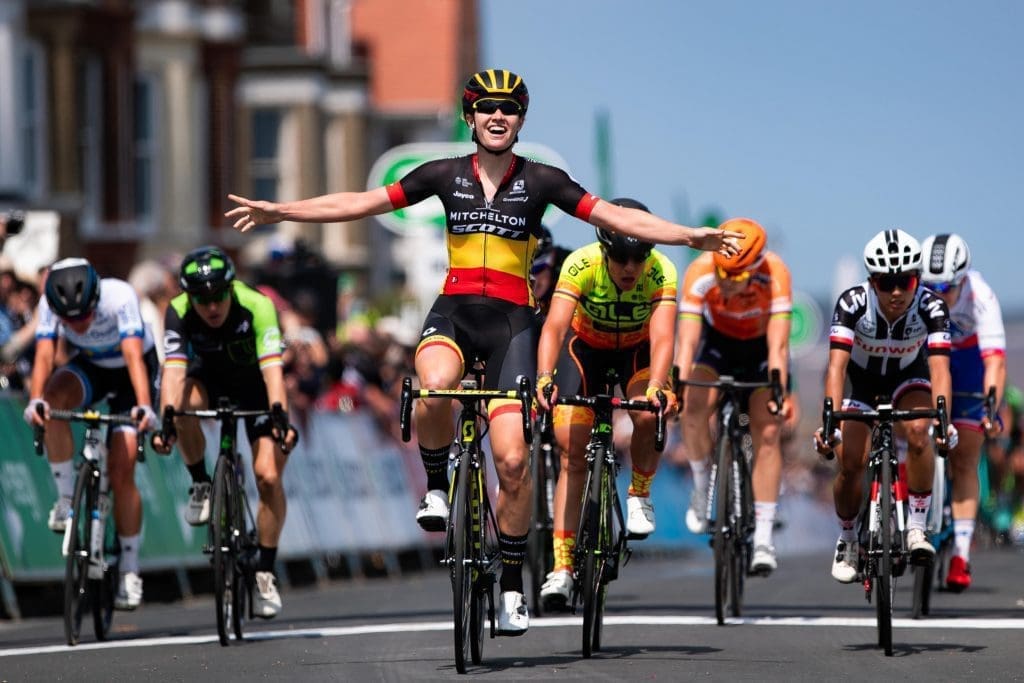
On the road, D’Hoore built a substantial palmarès. One of her biggest victories came at the 2015 RideLondon Classique, where she won the sprint against a high-class field on a day that demanded alertness and efficiency rather than brute force. She also took stage wins in major stage races, including the Giro Rosa, where the pressure of general classification ambitions and sprint opportunities intersected in a way that often exposed riders who were not fully rounded.
She won stages at the Boels Ladies Tour and the Thüringen Rundfahrt, and collected victories in one-day races and smaller stage events across Europe. Her results were not arranged around one signature battlefield. Instead they formed a long line of placings, wins and near-wins that showed a rider with a repeatable level. That is often what separates a good sprinter from one who simply has a few fast afternoons.
Track pedigree
The track added depth to her career. D’Hoore won world titles in the omnium and collected medals in other endurance events, giving her a profile that extended beyond pure road sprinting. Track racing taught her to ride on instinct without losing structure. It also sharpened the sense of when to conserve and when to commit. The better road sprinters often seem to know where the race is going before others have started asking the question. D’Hoore had that quality.
Her track strength was especially valuable in championship racing, where the pace can be awkward and the legs are rarely fresh. The ability to switch between measured effort and explosive finish made her an awkward rival. She was not built for flamboyance. She was built for certainty.
Teams, roles and the professional road
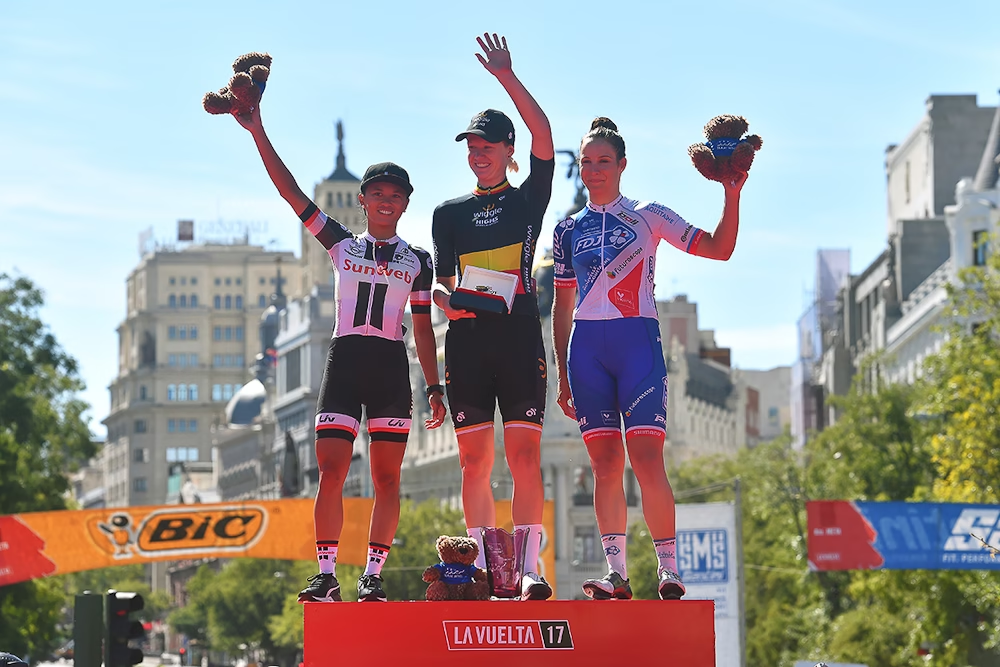
D’Hoore rode for several important teams during a career that covered the period when women’s cycling was becoming more visibly professional. She spent time with Team Lotto-Belisol Ladies, then later became a significant rider for Wiggle High5, where her sprinting was part of a more clearly defined and ambitious race programme. She later joined Boels-Dolmans, one of the strongest structures in the women’s peloton, before ending her career with Movistar Team Women.
Those teams mattered because they asked different things of her. On some rosters she was the protected finisher. On others, she became part of a larger tactical machine with multiple leaders and a heavier race calendar. That adaptability is part of her importance. D’Hoore was not a rider who needed every race to be shaped around her. She could live inside a plan and still deliver the sprint when the team had done the hard work.
Racing style and character
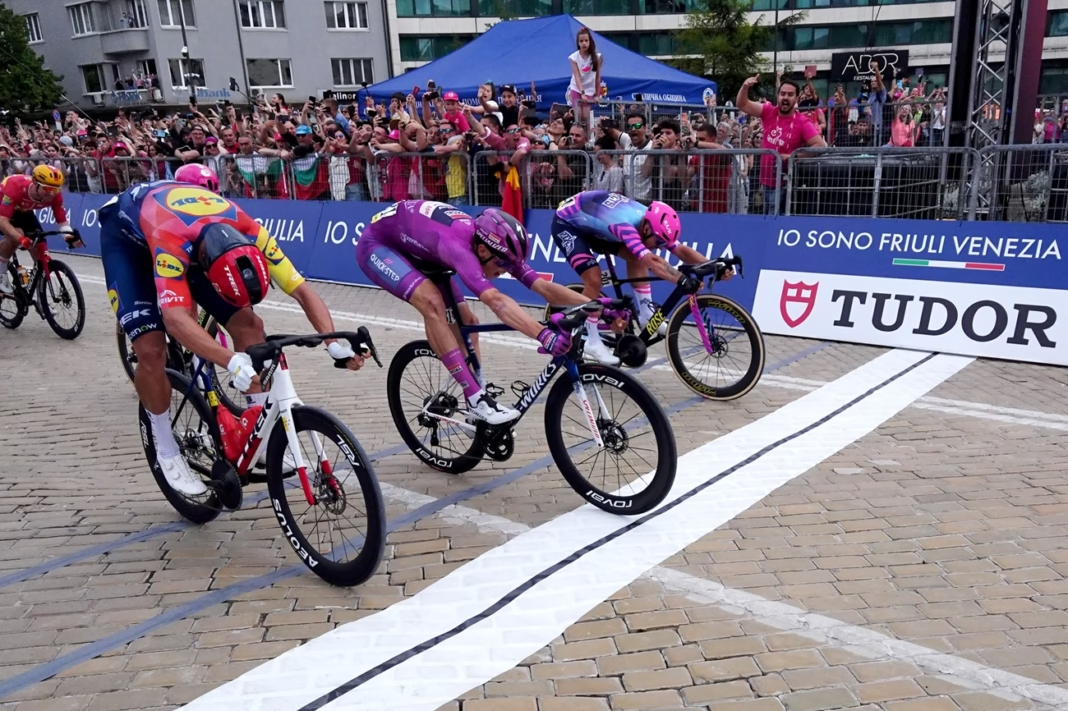
D’Hoore’s sprint was compact, efficient and unusually controlled. There was rarely much theatre in it. She sat low, stayed economical and trusted the timing more than the gesture. In a peloton full of riders seeking to dominate the visual field, she often seemed to emerge from a quieter line, using the last 150 metres with a precision that looked almost understated.
That demeanour featured in how she raced as a whole. She was not a rider known for public drama or flamboyant declarations. Her reputation was built on reliability, and reliability in sprinting is harder than it looks. It requires confidence without impatience, and it requires enough self-knowledge to understand the kind of finish you can win before wasting energy on the kind you cannot. D’Hoore seemed comfortable with those calculations.
She was also one of the riders who understood the value of team work in a sprint finish. A sprinter’s results often mask the labour behind them. The late corner, the hand on the back, the set-up into a headwind, the line of riders trying to hold speed through a roundabout or onto a narrow main road. D’Hoore’s best wins were usually the product of that hidden architecture.
Why Jolien d’Hoore matters in cycling history
D’Hoore is worth noting because she bridged two worlds. She was a highly successful omnivorous racer, comfortable on the track and road, and she did so during a period when women’s cycling was moving into greater visibility, better team structures and a more demanding calendar. She was part of the first real wave of riders whose careers could be followed with the same tactical interest usually reserved for the men’s calendar.
She also gives Belgian cycling a different kind of reference point. Belgium is often associated with cobbles, climbing suffering and one-day aggression, but D’Hoore represented the other side of the tradition: fast, calculating, urban-road sprinting, where the line is found through patience rather than force. She mattered because she broadened what a Belgian champion could look like in the women’s peloton.
-
 Photo Credit: RCS
Major results
- Winner of RideLondon Classique in 2015
- Multiple stage wins in major stage races, including the Giro Rosa and Boels Ladies Tour
- World Champion on the track in the omnium
- Repeated podiums and high finishes in bunch sprints across the European calendar
- Key rider for major teams including Wiggle High5, Boels-Dolmans and Movistar Team Women
After racing: life beyond the bunch
D’Hoore retired from professional racing in 2021. Since then, she has remained connected to the sport and to the practical knowledge that comes with a career spent in elite competition. Like several prominent retirees from the modern women’s peloton, she has moved into a life that keeps her near cycling rather than far from it, carrying forward the understanding of the sport from inside the race rather than from the roadside.
That post-career transition suits her profile. She was never a rider defined only by spectacle. She was defined by craft. Riders like that often make useful guides to a sport that is still learning how to tell its own history clearly. D’Hoore’s career sits in the record as a reminder that a sprint finish is rarely just speed. It is line choice, discipline, anticipation and nerve, all compressed into a few seconds on roads that might be straight, but are never simple.
For Belgium, for the women’s peloton and for the broader story of modern sprinting, Jolien d’Hoore remains a rider worth remembering.