Le Samyn des Dames rarely gives you a quiet afternoon, and the 2026 edition leaned fully into that reputation. Over 133.4 kilometres from Quaregnon to Dour, the race piled repeated cobbled sectors, short climbs and constant position fights on top of an already tired peloton coming out of Opening Weekend.
The key difference this time was not the terrain, it was the timing of the move that finally stuck. Instead of the favourites’ teams allowing the day to drift into a late chase, the decisive breakaway formed with enough distance still left for organisation to matter. Ten riders went clear, the gap grew beyond two minutes, and by the time the peloton realised the race was slipping away, the winner was already up the road.
When the break arrived into Dour intact, the script looked obvious: Lara Gillespie was the quickest finisher in that group. But knowing that did not make it simple, because the last ten kilometres were ridden like a sequence of traps, surges, hesitations, and tiny moments where somebody tried to win without sprinting against her.
In the end, Gillespie had the speed and the positioning to solve all of it.
A fast start, no early freedom, and a peloton waiting for the right moment
The opening hour was restless rather than decisive. Attacks came, were shut down, and came again, but nobody was gifted the kind of early leash that often defines a Belgian one-day race. The course design encourages that nervousness, because the sectors and bumps arrive in clusters and the roads narrow often enough to punish anyone caught too far back.
Teams with a clear sprint option wanted control. Teams without one wanted chaos. The result was a start that looked busy without producing a move that truly mattered, the pace high enough to discourage half-hearted breakaways, and the bunch compact enough that every sector became a positioning battle.
The break that mattered forms late and it is stacked with quality
The race turned when a ten-rider group finally found the right stretch of road and the right level of hesitation behind. Once the gap opened, it grew quickly because the composition made it dangerous in two ways, it was full of riders capable of finishing it off, and it was full of teams with an incentive to let others chase.
The group that emerged contained:
Elynor Bäckstedt and Lara Gillespie, giving UAE Team ADQ two cards.
Kamilla Aasebø and Alessia Vigilia, putting Uno-X Mobility in the same position.
Marthe Truyen for Fenix-Premier Tech, Marta Jaskulska for Human Powered Health, Marthe Goossens for AG Insurance-Soudal, and a mix of strong engines and opportunists including Quinty Ton and Amber van der Hulst, plus Caroline Andersson.
That spread of representation mattered. With so many teams already “present” in the move, there was no natural coalition behind to sacrifice riders and take full responsibility. The gap pushed out, settled above two minutes, and the race flipped from “how do we control this” to “who actually wants to pull it back”.
The chase never finds a clean shape and the break earns its right to stay away
There were moments where the peloton tried to organise, but every time it did, the logic fell apart. If you commit fully to the chase, you burn riders for a sprint you may not win. If you hesitate, you give the front group time to rotate smoothly and keep the advantage.
The break did its part as well. It was organised, it shared the work, and it did not allow the kind of soft-pedalling lull that invites a late return. Even when the gap dipped, it never looked like collapsing, because the riders at the front were still changing turns with purpose and the sectors kept interrupting any rhythm behind.
By the final lap, it was clear the race had narrowed to one fight, the ten in front against the clock, the organisation and the nerves behind them.
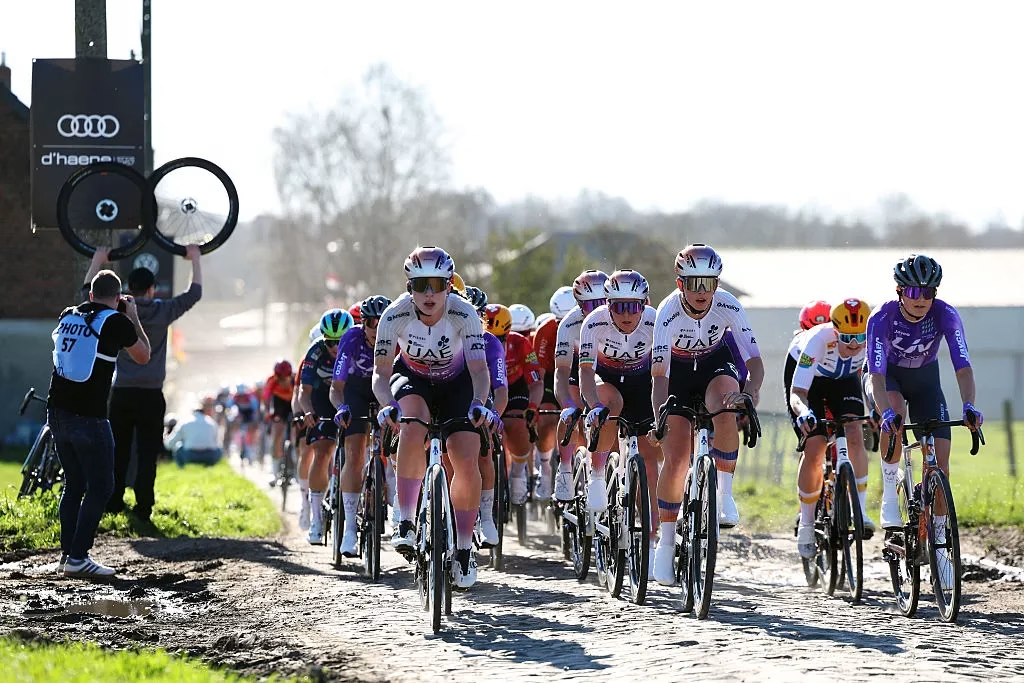 Photo Credit: Getty
The finale becomes a tactical game, and Ton forces the moment
Inside the final ten kilometres, the breakaway began to show its internal tension. The closer they got to Dour, the more riders looked at each other. Nobody wanted to deliver Gillespie to a clean sprint. At the same time, nobody wanted to gamble too early and drag everybody across.
The pace surged and dipped through the final sectors, each acceleration followed by a split second of regrouping. UAE and Liv AlUla Jayco both tried to keep their pairs intact, because having two riders is only an advantage if you reach the finale together and can cover the right moves.
Quinty Ton recognised the moment where the group had started to stall, and she tried to break the pattern. She launched hard, forcing the others to commit and making the finishing sequence messy rather than controlled. It was not a winning solo, but it was the move that made the sprint.
Ton lights the fuse but Gillespie is too fast
The finale was shaped by one obvious reality: if ten riders arrived together into Dour, Gillespie was the fastest on paper. That made it a race of second-guessing, because everybody knew what a straightforward sprint probably looked like.
Ton tried to break that script with a committed acceleration in the closing kilometres, the kind of move that forces a decision rather than an agreement. It did not turn into a full separation, but it did exactly what those moves are meant to do, it opened the elastic, stretched the group, and created a moment where a sprinter could launch with speed and a sliver of space.
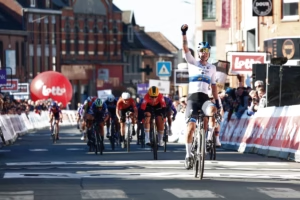
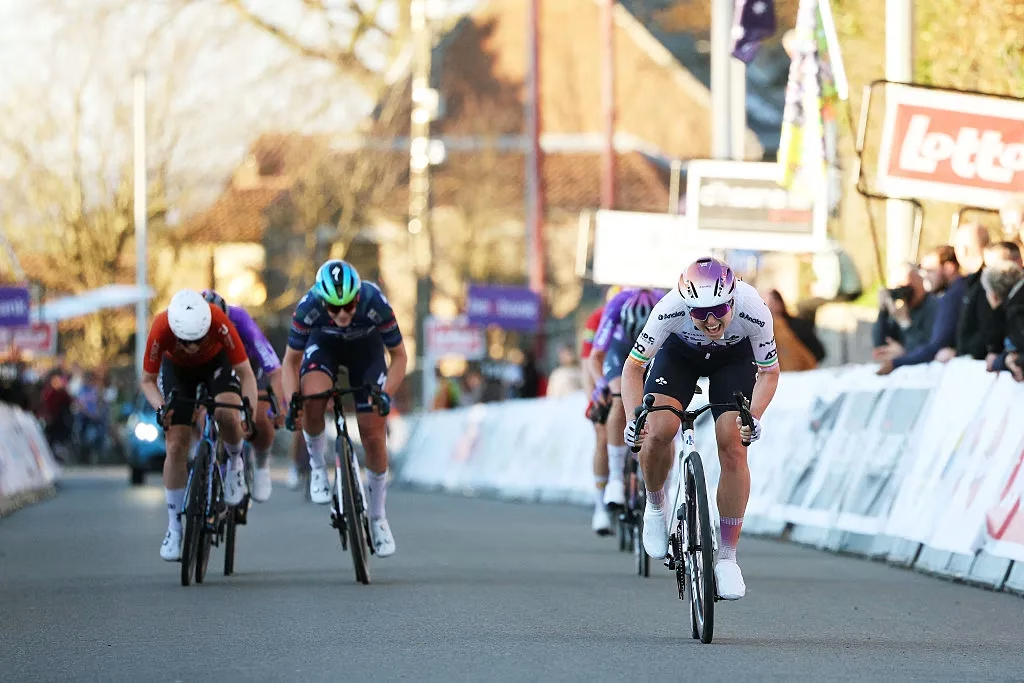
Gillespie reacted immediately. She came off the response with momentum, hit the front in the final couple of hundred metres, and carved out a small gap that proved decisive. Once she was at top speed, nobody could come past. Goossens and Truyen were left sprinting for the remaining places, with Goossens best of the rest behind the winner and Truyen taking third.
It was a win built on reading the danger, responding instantly, and then delivering the one thing that still matters in a reduced Belgian Classic, raw speed at the exact right moment.
2026 Le Samyn des Dames result
Results powered by FirstCycling.com
Main photo credit: Getty