
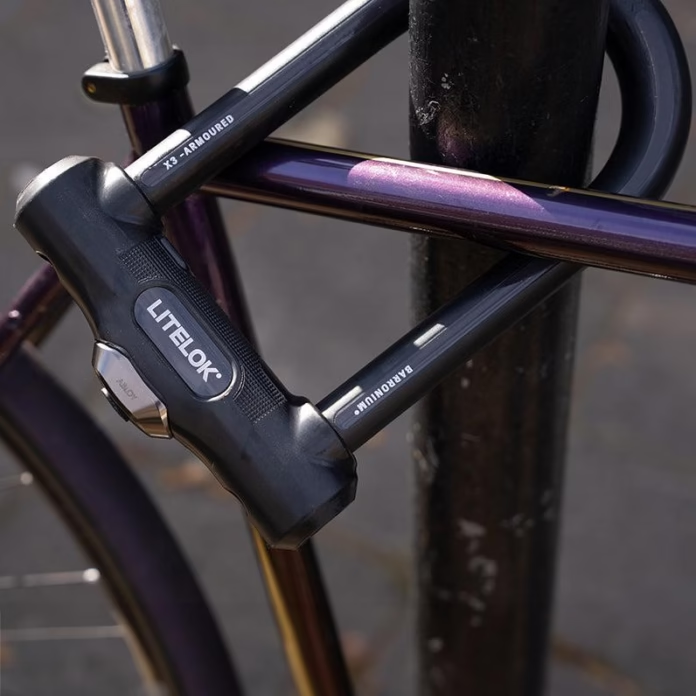
The Litelok X3 is a high-security D-lock built for riders who are no longer reassured by traditional bike locks. At around £249.99 in the UK, it is a serious investment, but it is also aimed at a serious problem: the rise in portable angle-grinder attacks on valuable bikes, e-bikes and commuter machines.
This Litelok X3 review looks at whether the extra cost and 2.1kg weight are justified. The short answer is yes if your bike is regularly left in high-risk areas, or if you own an expensive road bike, gravel bike, cargo bike or e-bike that needs more than a standard Sold Secure Gold lock. For lower-risk stops, it is more lock than many riders need.
Check Litelok X3 availability on Amazon UK
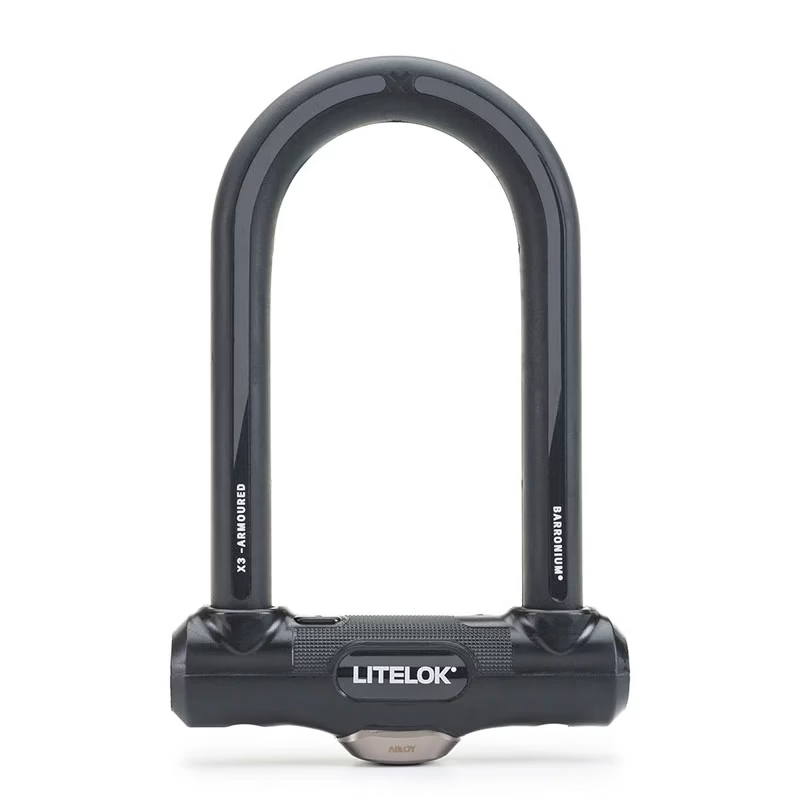
Litelok X3 review
The Litelok X3 sits at the top end of the modern bike-lock market. It is not a lightweight café-stop lock, and it is not intended to be a casual deterrent. It is a full-size, angle-grinder-resistant D-lock designed to make a theft attempt slow, noisy, frustrating and unattractive.
That distinction matters. No portable lock can make a bike impossible to steal. The real aim is to increase the time, effort, tool wear and public attention required to cut through it. The X3 does that better than almost any traditional D-lock, but the weight, price and carrying requirements mean it suits a specific type of rider.
Quick verdict
Overall verdict: The Litelok X3 is one of the most serious portable bike locks available, with exceptional resistance to angle grinder attacks, strong independent security ratings and a usable full-size locking area. It is expensive and heavy, but for high-value bikes in high-risk places, it makes far more sense than a cheaper lock that can be defeated quickly.
Best for: e-bike owners, city commuters, cargo bike riders, riders with expensive bikes, and anyone locking up regularly in high-theft areas.
Not ideal for: riders wanting a lightweight lock, low-risk café stops, budget commuters, or anyone who needs a very wide locking area around large street furniture.
Price: around £249.99 in the UK.
Weight: 2.1kg.
Key specs: Barronium fused composite armour, ABLOY SENTRY lock cylinder, Sold Secure Pedal Cycle Diamond, Sold Secure Powered Cycle Diamond, ART4 rating, 100 x 195mm internal dimensions, 145 x 275mm external dimensions, 24 x 27.5mm shackle dimensions, two ABLOY keys and included neoprene pouch.
Reasons to buy
- Excellent resistance to angle grinder attacks
- Sold Secure Pedal Cycle Diamond and Powered Cycle Diamond ratings
- ART4 rating adds further security credibility
- Full-size internal locking area is more practical than many compact high-security locks
- ABLOY SENTRY lock cylinder feels suitably premium
- Well suited to expensive bikes, e-bikes and high-risk city parking
- Made by a UK brand with a strong focus on bike security
Reasons to avoid
- Very expensive compared with conventional D-locks
- 2.1kg weight is noticeable on every ride
- Tactical Mount is sold separately
- Still not a substitute for locking to a fixed object properly
- Too much lock for low-risk short stops
- Large shackle armour makes some tight locking situations awkward
Product overview
The Litelok X3 is part of the new generation of anti-angle-grinder bike locks. Traditional D-locks are designed to resist bolt croppers, twisting, leverage and picking. The X3 is built around a more modern threat: thieves using cordless angle grinders to cut through locks quickly in public.
Litelok’s answer is Barronium, its fused composite armour designed to resist grinder attacks by wearing down discs and slowing the cutting process. The X3 uses more Barronium than the lighter Litelok X1, making it the more secure option in the range. The trade-off is weight and price.
The Litelok X3 bike lock competes most directly with the Hiplok D1000, Hiplok DX1000, Abus Granit Super Extreme 2500, OnGuard RockSolid 8590, Squire Stronghold D16 Max and Litelok’s own X1. It is not competing with a £40 commuter lock. It is competing with the toughest portable locks currently available.
For UK cyclists, that matters because bike theft risk varies hugely. A lightweight lock may be fine outside a rural café. It is not enough for an e-bike outside a station, a cargo bike in a city, or a high-end road bike locked in public for any meaningful time. The X3 is built for the second scenario, not the first.
Design and construction
The Litelok X3 is a substantial D-lock. At 2.1kg, it has a physical presence before it is even fitted to the bike. The external dimensions are 145 x 275mm, while the internal locking space is 100 x 195mm. That gives it more practical reach than some compact anti-grinder locks, without becoming a huge shackle that invites leverage attacks.
The lock body and shackle are heavily protected by Litelok’s Barronium armour. The finish feels dense and purposeful rather than elegant. This is not a delicate accessory. It looks and feels like a lock built to make an attack unpleasant.
The shackle dimensions are listed at 24 x 27.5mm, although that figure reflects the overall armoured structure rather than a conventional round steel shackle in the usual sense. In practical terms, it means the lock is thick, chunky and not always as easy to thread through tight gaps as a slimmer D-lock.
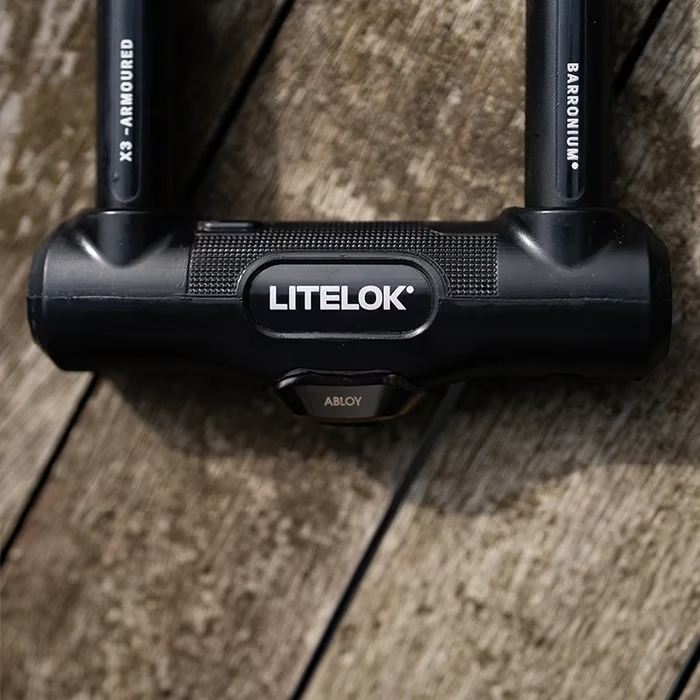
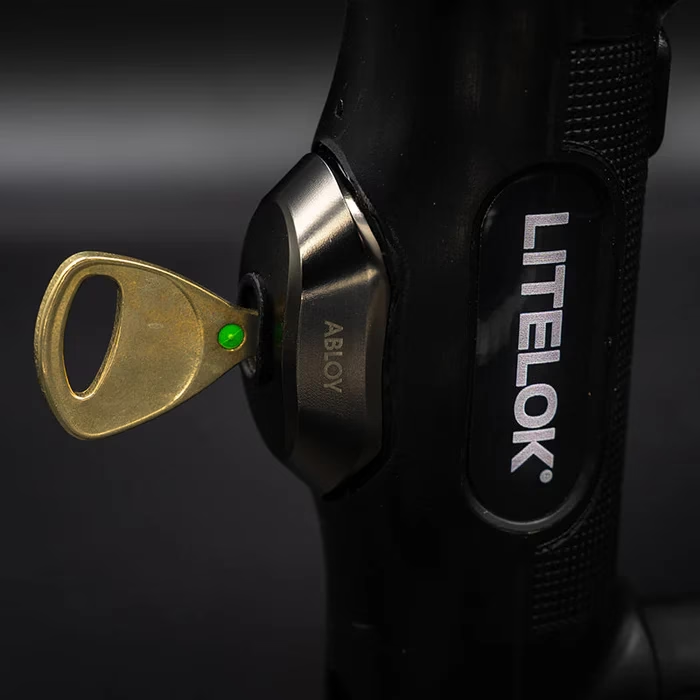
The ABLOY SENTRY cylinder adds reassurance. Picking is not the most common attack against bikes locked in public, but a premium cylinder matters at this price. A lock that resists grinders but uses a weak cylinder would feel unbalanced. The X3 does not have that problem.
Litelok supplies the X3 with two ABLOY keys and a neoprene pouch. The pouch is more useful than it sounds because this is a heavy, hard-edged item to put in a bag. It helps protect both the lock and whatever else it is carried with.
The Tactical Mount is not included as standard, which is frustrating at this price. The mount is the cleanest way to carry the lock on a bike, but it adds more cost to an already expensive product. Riders planning to use the X3 daily should budget for it from the start.
Litelok X3 Setup & ease of use
Using the Litelok X3 is straightforward, but it rewards good locking technique. The best approach is to lock the frame and, where possible, a wheel to a secure fixed object. The internal 100 x 195mm space is usable for most proper cycle stands, but it is not generous enough to make lazy locking easy.
That is a good thing from a security point of view. A tight lock-up leaves less room for leverage tools and makes it harder for a thief to work comfortably. The downside is that awkward street furniture, oversized posts and crowded racks can make positioning more difficult.
The lock mechanism feels solid. The key action is reassuring, and the overall impression is of a premium security product rather than a standard D-lock with extra branding. The shackle can feel stiff compared with simpler locks, but that is not unusual with heavily armoured high-security designs.
Carrying is the main practical challenge. At 2.1kg, the X3 is too heavy to ignore. In a backpack, it is noticeable. In a pannier, it is more manageable. Mounted to the bike using the optional Tactical Mount, it becomes much easier to live with, especially for commuting.
The weight is less of an issue for e-bike and cargo bike riders. It is much more noticeable on a lightweight road bike. This is where the rider has to be honest. If the lock feels like too much hassle, it may not get carried. For lower-risk rides, the lighter Litelok X1 may be a better compromise.
Real-world performance
The Litelok X3 feels best suited to high-value bikes and repeat locking locations where theft risk is not theoretical. Station parking, city-centre railings, university campuses, gyms, office bike racks and e-bike parking are the sorts of places where a normal D-lock can feel underpowered. The X3 brings a different level of reassurance.
The biggest difference compared with a standard D-lock is confidence. A normal lock might be enough to stop an opportunist with hand tools. The X3 is built to resist a much more aggressive attack. That does not mean a thief cannot cut it. It means the attempt becomes slower, louder, more destructive to tools and much less appealing in a public place.
For commuting, the lock works well if the route and bike justify it. On an e-bike, winter commuter or utility bike, the 2.1kg weight is less of a burden. On a lightweight road bike, it feels like a lot to carry unless the locking risk is genuinely high.
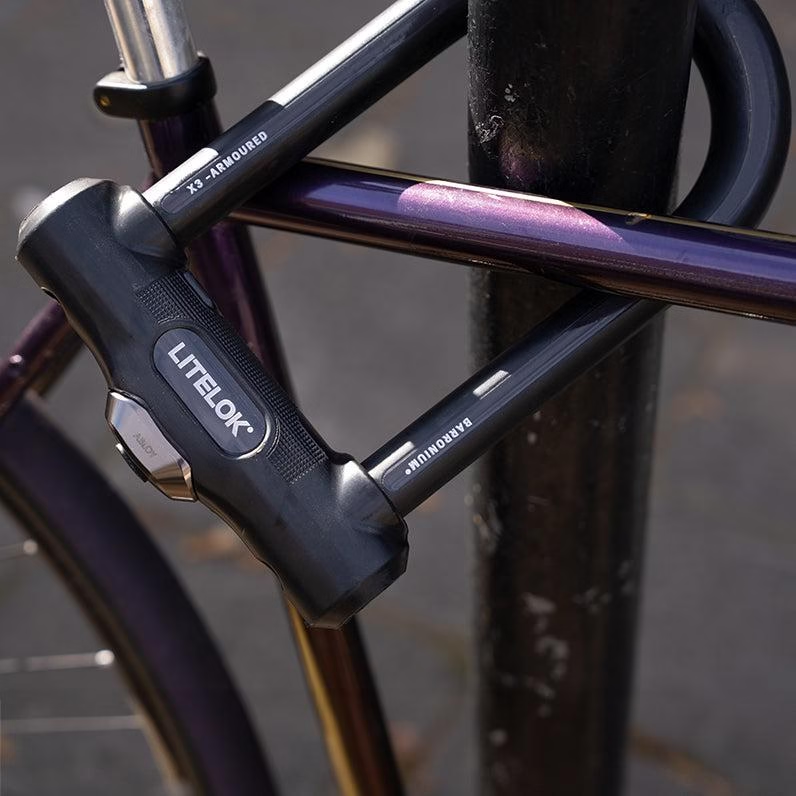
The internal locking area is practical for standard Sheffield stands. Locking the rear triangle and wheel to a stand is usually achievable, although the exact fit depends on frame shape, tyre width and mudguards. The X3 is easier to live with than smaller anti-grinder locks that have tighter internal dimensions, but it still requires deliberate positioning.
Around awkward street furniture, the size can become limiting. Thick posts, wide railings, packed bike racks and cargo bike frames can all test the available space. A chain remains more flexible in those situations. The X3 is stronger and cleaner than most chains for portable use, but it cannot wrap around objects in the same way.
The lock’s weight also changes the way it is used. It feels like a lock to take when security matters, not one to throw in a jersey pocket for a café stop. That is not a criticism, but it does define the product. The X3 is a serious lock for serious locking, not a casual ride accessory.
The included pouch is useful when carrying it in a bag. Without it, the lock can scuff laptops, clothing or other kit. With the pouch, it feels more manageable, although the weight remains obvious. The optional Tactical Mount is a better long-term answer for daily users.
Weather resistance is good, but lock maintenance still matters. Any lock used through British winter rain, road salt and grime needs occasional cleaning, drying and lubrication around the keyway. High-security mechanisms deserve more care than cheap locks. Neglect can make even expensive kit feel rough over time.
The Litelok X3 anti-angle-grinder bike lock is most convincing when paired with sensible locking behaviour. Use it through the frame, lock to something immovable, avoid leaving empty space inside the shackle, keep the bike in visible areas and consider a second lock for the front wheel or an additional security layer. The X3 is strong, but the whole locking setup still matters.
Security performance
The X3’s security argument is built around angle grinder resistance. That is the attack method many riders worry about most, particularly in cities where expensive bikes and e-bikes are left in public. A lock that only performs well against bolt croppers no longer feels enough for every scenario.
Sold Secure Pedal Cycle Diamond and Powered Cycle Diamond ratings are important because they help match the X3 to valuable bikes and e-bikes. Many insurers now specify minimum lock ratings, and Diamond-rated locks sit at the serious end of bicycle security.
The ART4 rating adds another layer of credibility, especially for riders comparing bike and motorcycle security standards. It reinforces the idea that the X3 is not merely a beefed-up commuter lock, but a high-security product intended for determined attack resistance.
The Barronium armour is the key technical feature. In use, what matters is not the material story itself but the result: making grinder attacks slower and more difficult. The aim is to force a thief into a longer, noisier and more conspicuous attack than they want to risk.
The ABLOY SENTRY cylinder gives the lock a suitably high-end feel. Picking is less common than cutting or leverage in most bike-theft scenarios, but a lock at this price should not have an obvious weak point. The X3 feels well balanced in that respect.
How it compares
The Litelok X1 is the most obvious in-house alternative. It is cheaper, lighter and still highly resistant to angle grinder attacks, but it is not as tough as the X3. For many commuters, the X1 may be the better everyday compromise. The X3 is the one to choose when maximum portable protection matters more than weight or price.
The Hiplok D1000 is a direct rival and one of the most recognisable anti-grinder locks. It is compact, extremely tough and easier to carry than some larger locks, but its smaller internal space can make locking less convenient. The Litelok X3 offers a more practical locking area, while the Hiplok remains a very strong compact option.
The Hiplok DX1000 increases reach and security, but it is heavier and often more expensive. It suits riders who want maximum protection and a larger locking area, particularly for e-bikes and motorcycles. The X3 feels like a slightly cleaner balance of portability, reach and extreme protection.
The Abus Granit Super Extreme 2500 is another premium anti-grinder D-lock. Abus has huge lock-making credibility, and the Super Extreme is a serious option. The Litelok’s appeal is its UK-made positioning, Barronium armour and strong independent ratings.
Traditional locks such as the Kryptonite New York Fahgettaboudit remain strong against older attack methods, but they are no longer the obvious answer if angle grinder resistance is the priority. The Litelok X3 alternative discussion now has to include grinder-resistant designs, not just heavy steel D-locks.
-
 Photo Credit: A.S.O./Billy Ceusters

Value
The Litelok X3 is expensive, and there is no useful way to soften that. At around £249.99, it costs more than many good commuter locks and more than some riders spend on an entire used town bike. For low-value bikes or low-risk locking, it is overkill.
The value changes completely when the bike is expensive. A £3,000 e-bike, carbon road bike, cargo bike or custom commuter deserves a different security calculation from a £200 pub bike. In that context, spending more on a lock that significantly slows modern theft tools is easier to justify.
The extra money buys angle grinder resistance, premium construction, high security ratings, a high-end lock cylinder and a more practical locking area than some compact rivals. It does not buy invincibility. It buys time, deterrence and a much better chance that a thief chooses another target.
The optional Tactical Mount complicates value slightly. A lock this heavy benefits from a proper carry solution, and it would be easier to accept the price if the mount were included. Riders buying for daily commuting should treat the mount as part of the real-world cost.
For high-risk users, the Litelok X3 bike lock for UK cyclists is good value in the same way a quality helmet or insurance policy can be good value: expensive until the day it matters.
Verdict
The Litelok X3 is one of the most convincing high-security bike locks available for riders facing real theft risk. It is heavy, expensive and more serious than many cyclists need, but it is built for the world modern bike theft now occupies, where portable angle grinders have changed the standard for premium locks.
It is best for expensive bikes, e-bikes, cargo bikes and commuters who regularly lock in high-risk areas. The Sold Secure Diamond ratings, ART4 certification, Barronium armour and ABLOY SENTRY cylinder all support the same conclusion: this is a lock designed to slow serious thieves, not merely deter casual interference.
It is not the right lock for every ride. If you need something light for café stops, the X3 will feel excessive. If your bike is low value or rarely locked in public, a cheaper Diamond or Gold-rated lock may be enough. If you need more flexibility around awkward street furniture, a chain or second lock may still be needed.
The single biggest reason to buy the Litelok X3 high-security bike lock is its resistance to modern grinder-led theft attempts. The single biggest reason to hesitate is the cost, followed closely by the 2.1kg weight. For riders who genuinely need this level of security, both are compromises worth accepting.
Rating: 5/5

