Liv AlUla Jayco heads into the 2026 season at a crossroads that has been approaching for some time. The Australian squad continue to operate comfortably within the Women’s WorldTour, but their competitive identity remains fluid. Eighth in the 2025 UCI team rankings, they sit just outside the group of teams that consistently shape the biggest races, relying instead on opportunism, stage wins and selective success rather than sustained pressure across the calendar.
The 2025 season illustrated both the team’s strengths and its limitations. Wins arrived at the WorldTour level, but they were scattered rather than systematic. As the roster turns over again for 2026, Liv AlUla Jayco face a familiar challenge: how to convert depth and versatility into a clearer sense of purpose.
A season defined by moments rather than momentum
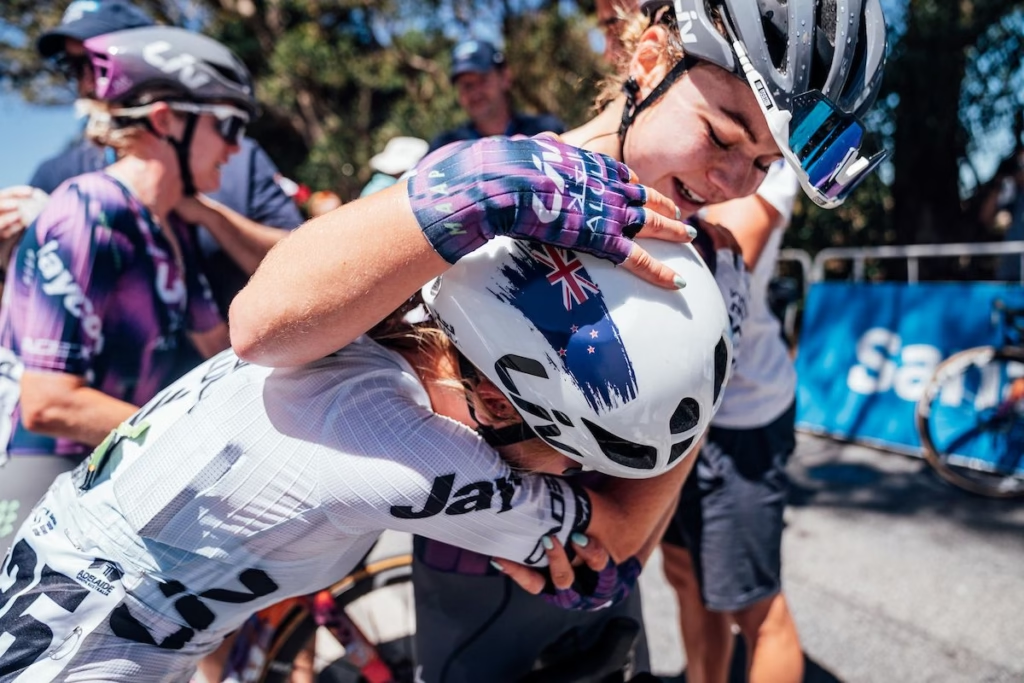
Liv AlUla Jayco’s 2025 victories came in bursts. At the Tour of Chongming Island, Georgia Baker and Josie Talbot secured WorldTour stage wins, reinforcing the team’s ability to execute in sprint and reduced bunch scenarios. Monica Trinca Colonel dominated the Tour Féminin l’Ardèche, winning the overall classification and a stage, providing the team with one of its most complete performances of the year.
At the Tour de France Femmes, Mavi Garcia delivered a standout moment by winning stage two, a result that briefly elevated Liv AlUla Jayco into the global spotlight. Amber Pate added domestic success by taking the Australian criterium title early in the season.
What those results did not provide was continuity. Outside specific race windows, the team struggled to impose itself on the wider calendar, a factor reflected in their final ranking position.
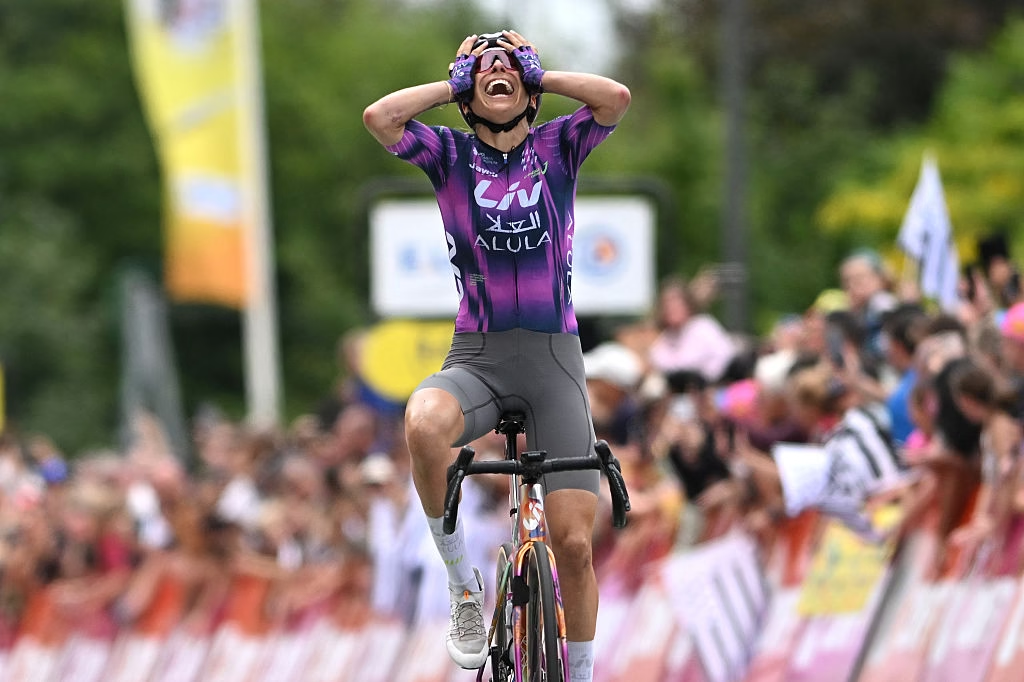 Photo Credit: Getty
The impact of Garcia’s departure
Garcia’s move to UAE Team ADQ is the most consequential change ahead of 2026. Her Tour de France Femmes stage win underlined her ability to influence the biggest races, and her absence removes Liv AlUla Jayco’s most reliable climbing option.
Without Garcia, the team lacks a clear GC reference for stage races. That loss shifts emphasis further towards one-day racing, stage hunting and opportunistic leadership, rather than structured classification ambitions. It also places greater responsibility on riders who have previously operated without GC pressure.
Leadership through experience rather than hierarchy
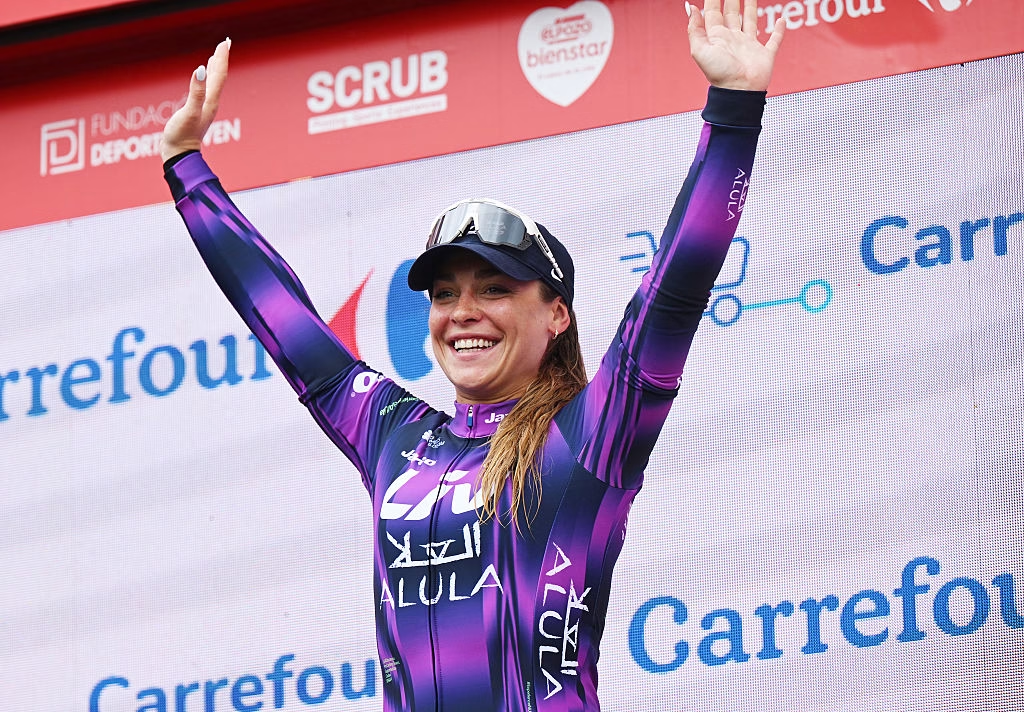
The 2026 roster is notable for its balance rather than its hierarchy. Georgia Baker remains central to the team’s sprint and lead-out operations, offering consistency and race management in fast finishes. Letizia Paternoster adds speed and aggression, particularly on tougher sprint days where positioning and resilience matter as much as raw pace.
Ruby Roseman-Gannon continues to be a key one-day option, especially on rolling terrain and in races that reward tactical awareness. Silke Smulders and Quinty Ton provide versatility across Classics-style events, breakaway scenarios and transitional stages.
Monica Trinca Colonel remains the closest thing Liv AlUla Jayco have to a stage race leader, even if her success in 2025 came at 2.1 level rather than the WorldTour. Her results at the Tour Féminin l’Ardèche demonstrated race control and endurance, but translating that into higher-tier events remains an open question.

Youth development as a strategic pillar
A defining feature of Liv AlUla Jayco’s approach is its integration with the continental programme. Four riders join the WorldTour squad from development or smaller teams, reinforcing the emphasis on internal progression rather than marquee recruitment.
Mackenzie Coupland, Noä Jansen and Matilde Vitillo all step up from the Liv AlUla Jayco Women’s Continental Team, while Nadia Gontova arrives from Winspace Orange Seal. These signings add depth and future potential, but they also underline that Liv AlUla Jayco are prioritising long-term development over immediate transformation.
Ella Wyllie and Josie Talbot continue to bridge the gap between development and leadership. Talbot’s WorldTour stage win at Chongming confirmed her ability to deliver when conditions suit, while Wyllie remains a steady contributor across hilly and rolling races.
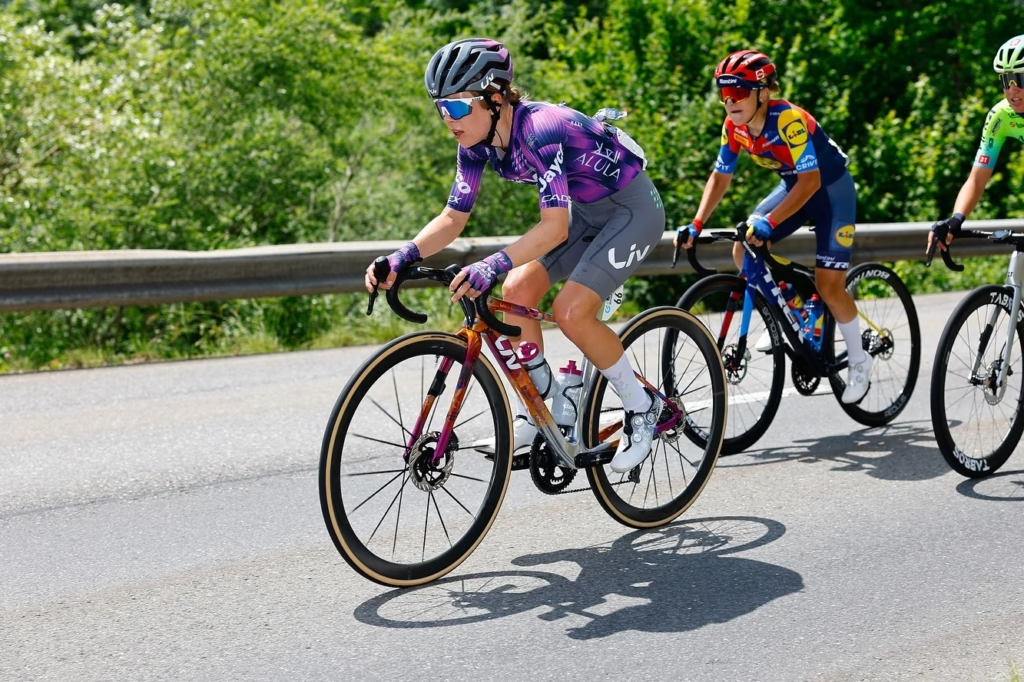 Photo Credit: Sprint Cycling Agency
Where the ceiling currently sits
Liv AlUla Jayco’s roster is deep, experienced and tactically flexible, but it lacks a rider capable of consistently influencing the sport’s biggest outcomes. Without a GC anchor or dominant Classics leader, the team’s success depends heavily on race circumstances rather than strategic control.
That reality is not necessarily a weakness. Liv AlUla Jayco are often most dangerous when races fragment and favourites hesitate. However, it does limit their ability to climb the UCI rankings, where sustained presence in WorldTour stage races carries the greatest reward.

Outlook for 2026
Liv AlUla Jayco enter 2026 as a team still searching for a sharper definition. The blend of experienced racers and developing talent offers resilience, but also uncertainty. Garcia’s departure removes a proven pathway to high-profile success, while incoming riders will require time to settle at the WorldTour level.
If Trinca Colonel can transfer her stage race authority upwards, or if Baker and Paternoster can deliver consistently at the highest level, Liv AlUla Jayco can remain competitive across the calendar. Without that step forward, they are likely to continue operating on the margins of the top tier, capable of memorable wins but not sustained pressure.
2026 Liv AlUla Jayco Roster
- Caroline Andersson
- Georgia Baker
- Mackenzie Coupland
- Nadia Gontova
- Noä Jansen
- Jeanne Korevaar
- Amber Pate
- Letizia Paternoster
- Ruby Roseman-Gannon
- Silke Smulders
- Josie Talbot
- Quinty Ton
- Monica Trinca Colonel
- Matilde Vitillo
- Ella Wyllie