Lorena Wiebes’ 2026 season already feels more interesting than a simple win count. The victories are still there, as you would expect from the most reliable sprinter in the sport, but the shape of her spring has been more revealing than that. She opened the year by dominating the UAE Tour Women again, winning stage 1 and extending a sequence of success that has made that race one of her most familiar hunting grounds. She then won Leeuw-Oetingen in a different way, attacking on the Zavelberg inside the final 3km rather than waiting for a textbook bunch sprint. Those two results, taken together, say a lot about where she is. The speed is still there, but so is the confidence to win outside the most obvious script.
That is what makes Wiebes such a useful rider through whom to read the season. She remains the benchmark in fast finishes, but 2026 is already showing that her year will be about more than simply adding another stack of sprint wins. At Milan-San Remo Women, she accepted a support role while Lotte Kopecky became SD Worx-Protime’s main card and still finished 6th from the chase. At Women’s Ronde van Brugge, she then lost a race that looked ideal on paper because the finale became chaotic and she was boxed in before she could even launch. That combination gives her season a different texture. It is not just about whether she wins, but about when the team is built around her and when the race allows her to use her speed properly.
For ProCyclingUK readers, that makes Wiebes one of the easiest riders to place within the wider spring picture. Her season sits naturally alongside pieces such as What Women’s Ronde van Brugge 2026 means for the season, the Scheldeprijs Women 2026 route guide, and the Demi Vollering 2026 season guide, because all three help explain how the balance of power is shifting across the Women’s WorldTour.
The main story of Lorena Wiebes’ 2026 season
The clearest starting point is still the simplest one. Wiebes remains the sport’s reference sprinter. She came into late March as the top-ranked individual rider in the Women’s WorldTour standings, which tells you the extent to which her 2025 level has carried straight into 2026. That ranking is not built on reputation alone. It reflects a rider who continues to take the races she should be winning and still shapes the ones where the terrain becomes less straightforward.
But the more interesting part of her season lies in the context around those results. Wiebes is still winning, yet she is doing so within a team that is more tactically flexible than the outside narrative often suggests. Milan-San Remo Women was the clearest example. She arrived as defending champion, but SD Worx-Protime decided Kopecky was Plan A because the route and current condition suited her better. Wiebes accepted that role change, raced for the team and then won the sprint from the chasing group for 6th. That does not diminish her season. If anything, it makes it more sophisticated. She is still one of the team’s biggest weapons, but not every major race has to be arranged entirely around her.
That matters because it changes how the year should be judged. Wiebes is no longer simply the rider trying to be fastest in the cleanest sprint. She is operating inside a team with multiple ways to win major races, and that means her season has to be read through both results and role.
 Photo Credit: LaPresse
What Lorena Wiebes has done so far in 2026
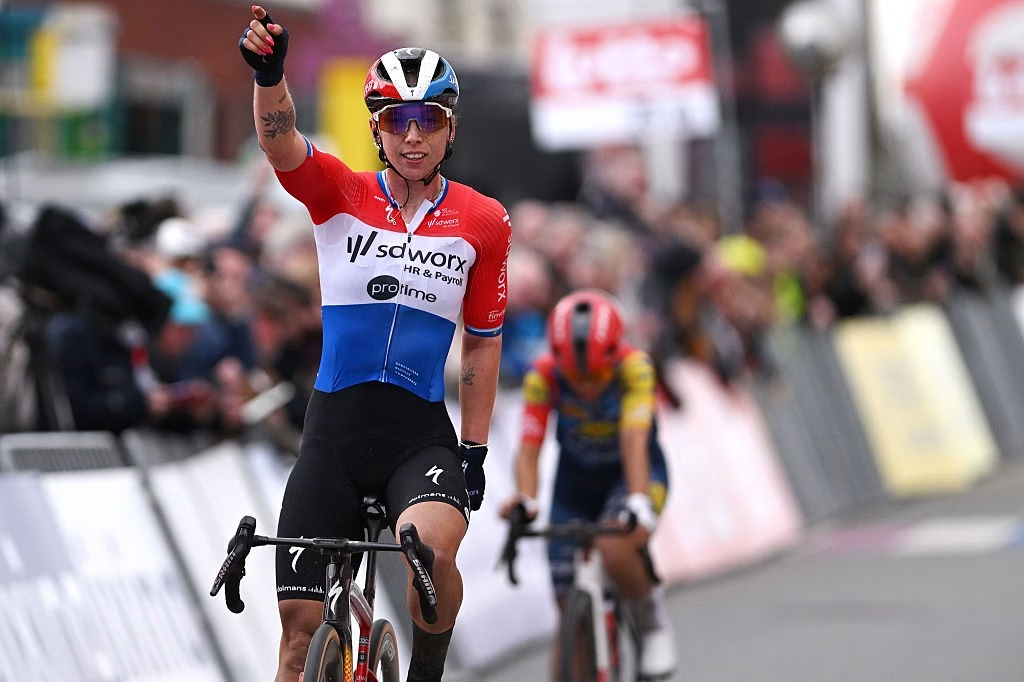
The opening block has still been strong by any normal standard. At the UAE Tour Women she resumed exactly where she left off, winning stage 1 and continuing the streak that has turned that race into one of the clearest indicators of her sprint dominance. The event again posed the same question it has for several years now: if the finish is flat and clean, who is actually going to beat Lorena Wiebes?
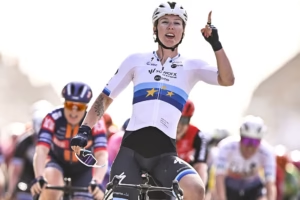
Leeuw-Oetingen may have been an even more revealing win. Wiebes did not just wait for the lead-out and launch in the final 150 metres. She attacked on the Zavelberg and still held on. That is significant because it hinted at a wider range than the one-dimensional label that sprinters sometimes get given. Wiebes does not need to prove she can win a standard sprint. A result like that says more about condition and intent than another routine drag race ever could.
Then the spring started asking different questions. At Milan-San Remo Women she was not the team’s chosen finisher even as defending champion. At Ronde van Brugge she was back in the line-up late, after a roster change, and then ended the day 9th in a finish where she never found clear air. The race itself was messy, with bad weather, repeated pressure and a late crash that disrupted several trains, so the result should not be read as a simple lack of speed. But it was still significant because it showed that in the right kind of chaos, Wiebes can be neutralised without ever being beaten in a straight sprint.
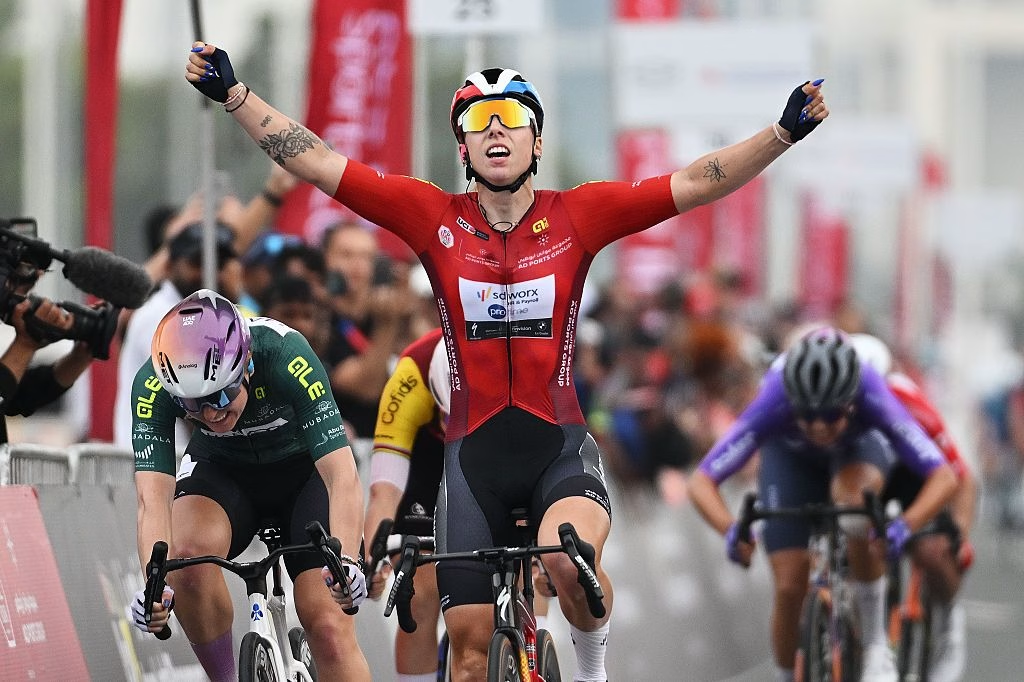 Photo Credit: Getty
Why 2026 matters so much
Wiebes does not enter this season needing to prove that she belongs at the top. That argument was settled a long time ago. She enters it as the rider everyone else measures themselves against when the road flattens out, and that creates a different kind of pressure. It is not just about whether she can win. It is about whether she can keep winning when rival teams now build entire finales around stopping her from ever getting a clean line.
That is why Brugge felt important beyond one missed sprint. It showed that the strongest rival teams no longer have to imagine a scenario where Wiebes is containable. They have now seen one in real time. That should matter in the races that follow because sprint contests are often decided by structure before they are decided by speed. If teams believe SD Worx-Protime can be disrupted, that changes the way they will approach future run-ins.
It also matters because SD Worx-Protime are no longer just a pure sprint-delivery operation built around Wiebes alone. Kopecky’s role in the biggest one-day races changes the interpretation of Wiebes’ year. Her calendar may still produce a large total of victories, but some of the season’s most prestigious days will now be judged through shared leadership rather than automatic priority.
-
 Photo Credit: Getty

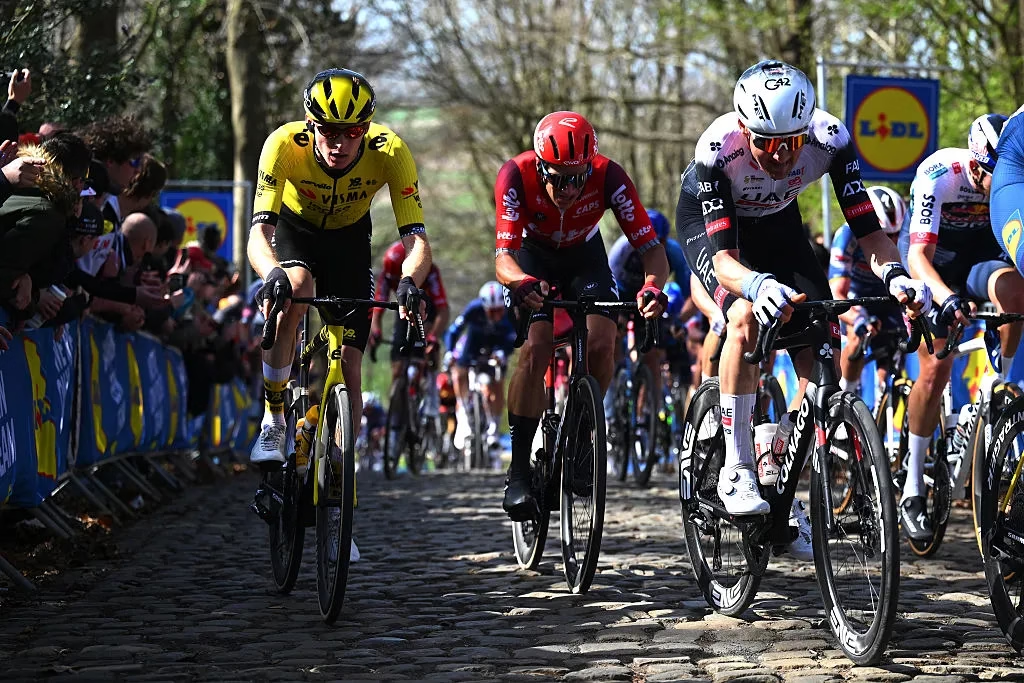
The races that will define her season
The spring sprint races
These are still central because they remain the terrain on which Wiebes is most feared. The UAE Tour Women already confirmed that. Scheldeprijs Women should do the same if the race comes back together in the expected way. That is why ProCyclingUK’s Scheldeprijs Women 2026 route guide and Women’s Ronde van Brugge 2026 live viewing and start time update are useful companion reads. They are exactly the sort of races where Wiebes is supposed to impose order.
Milan-San Remo Women and the major one-day races
San Remo was revealing because it showed where Wiebes now sits within SD Worx-Protime’s larger Classics strategy. She entered as defending champion, yet the team’s strongest card on the day was Kopecky. Wiebes embraced that, raced accordingly and still finished near the front. That may not be one of her standout results on paper, but in terms of reading her season it could prove one of the most important. It showed both maturity and limitation. She is vital to the team, but not every major one-day race will be built around her sprint.
The bigger summer picture
The pattern of her calendar still looks selective rather than overloaded, with the larger summer targets likely to matter more than simply racing everything available. That approach has suited her in recent years, and there is little reason to think 2026 will be any different. The exact balance of her later campaign may become clearer as the spring develops, but the outline already looks familiar: targeted racing, major sprint opportunities, and a team environment strong enough to let her arrive fresh for the races that matter most.
What looks strongest in her current form
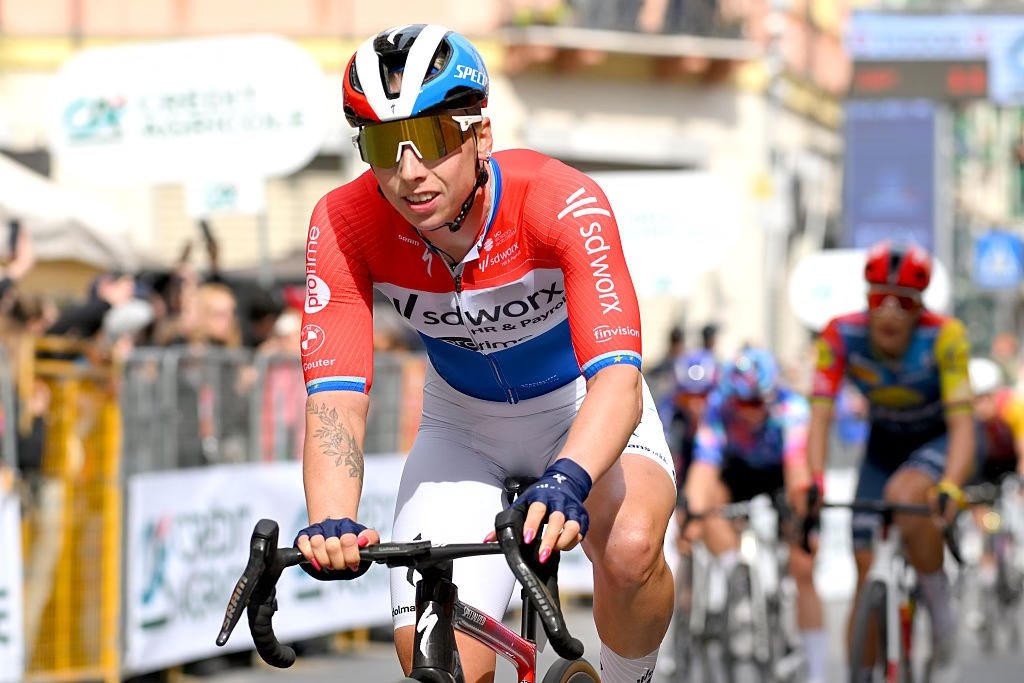
The most obvious positive is that her sprinting level still looks elite. The UAE Tour Women made that plain again. Even the defeat at Brugge does not really challenge it, because she never got the chance to open up cleanly there. If anything, that result strengthens the argument that when Wiebes is actually delivered properly to the line, the burden still falls on everyone else to find something exceptional.
The second positive is that she is showing more than one way to win. Leeuw-Oetingen mattered for that reason. It was not just another procession to a clean sprint. It was a more punchy, aggressive kind of finish, and that matters in a season where many of the biggest one-day races are decided only after the sprinters have already had to survive selective terrain.
The third is team intelligence. Milan-San Remo showed that Wiebes can move between leadership and support without losing focus. That may sound softer than raw speed, but it matters in the biggest races. Riders who can do both are much easier for elite teams to build around across a long season.
The main question for the rest of 2026
The biggest question is not whether Lorena Wiebes will keep winning. She clearly will. The more interesting question is what kind of season this becomes once the easy narrative of sprint dominance no longer explains everything.
Can she remain the benchmark sprinter while thriving inside a team where Kopecky sometimes takes priority in the most prestigious one-day races? Can SD Worx-Protime rebuild that sense of inevitability around her in flat finales after the disorder of Brugge? And can Wiebes keep adding different kinds of victories, rather than simply more versions of the same one? Those are the questions that will define the next phase of her year.
For now, Lorena Wiebes’ 2026 season looks strong, but more layered than a simple sprint tally would suggest. She has opened with wins, reminded everyone that she remains the fastest reference point in the sport, and already shown that her year will be shaped as much by team context and race structure as by pure finishing speed. That is what makes this version of Wiebes so interesting. She is still the standard, but the way that standard is being tested has become more complex.