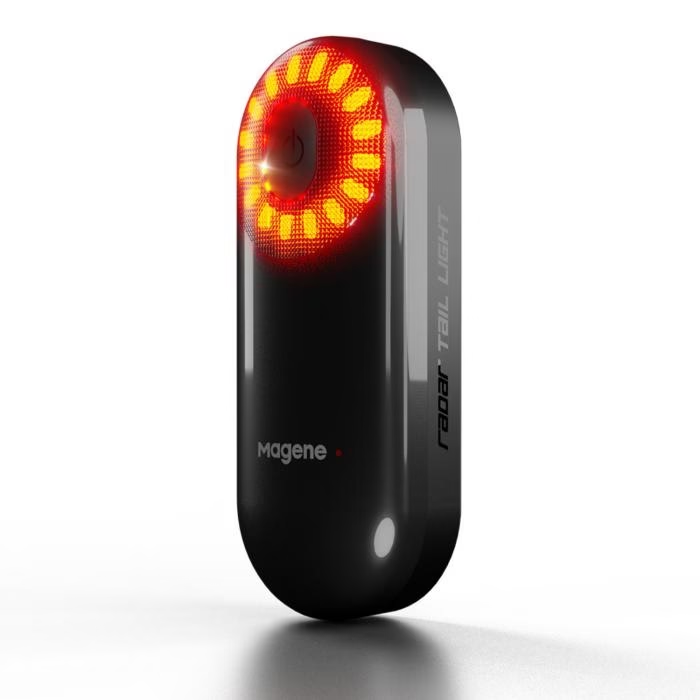
The Magene L508 is a rear radar light that brings one of cycling’s most useful safety technologies down to a more accessible price point. At £99 in the UK, it costs significantly less than premium Garmin options, while still offering rear vehicle detection, ANT+ and Bluetooth connectivity, USB-C charging and a built-in rear light.
This Magene L508 radar light review looks at whether the lower price comes with serious compromises. The short answer is that the L508 is one of the most convincing budget radar lights for cycling, especially now Magene has gained added visibility through its 2026 WorldTour partnership with XDS Astana. It is not as polished as Garmin’s best units, but it gives riders a proper radar experience for much less money.
Check Magene L508 radar light availability on Amazon UK
Magene L508 radar light review
The Magene L508 is a rear radar tail light designed for riders who want approaching vehicle alerts without paying Garmin Varia money. It detects traffic approaching from behind, sends alerts to compatible bike computers and watches, and works as a rear light at the same time.
Its appeal is clear. Radar has gone from niche accessory to one of the most useful bits of road cycling technology, but price remains a barrier. The L508 attacks that problem directly. It gives you the core function of a rear radar light at a price that makes it more realistic for commuters, club riders and everyday road cyclists.
Quick verdict
Overall verdict: The Magene L508 is a strong budget radar light that delivers the main benefit riders want: useful alerts for approaching vehicles. It is not as refined as the best Garmin units, and radar accuracy can feel less polished in complex traffic, but it is a serious option for riders who want radar safety without premium pricing.
Best for: road cyclists, commuters, winter trainers, gravel riders and budget-conscious riders who want rear radar alerts for less than Garmin money.
Not ideal for: riders who want the most polished radar experience, advanced vehicle classification, maximum detection range or deep Garmin ecosystem integration.
Price: £99 in the UK
Weight: 65g unit weight
Key specs: 140m vehicle detection, 40-degree radar beam, 220-degree visibility, up to 1.2km visible range, ANT+ and Bluetooth, USB-C charging, IPX7 water resistance, smart brake sensing and multiple light modes.
Reasons to buy
- Much cheaper than premium Garmin radar lights
- Reliable core vehicle detection in normal road conditions
- ANT+ and Bluetooth support gives broad compatibility
- USB-C charging is practical and modern
- Smart brake sensing adds useful extra visibility
- 65g weight keeps it lighter than many premium radar units
- WorldTour partnership with XDS Astana adds credibility to Magene’s tech range
Reasons to avoid
- Radar tracking is not as refined as Garmin’s best units
- 140m detection range is shorter than some premium rivals
- Rear light output is modest compared with powerful standalone lights
- Mounting and app polish are not quite at top-tier level
- Complex traffic can expose occasional alert inconsistency
Product overview
The Magene L508 sits in the fast-growing category of rear radar lights for road cycling. These devices detect vehicles approaching from behind and send visual or audible alerts to a compatible bike computer, watch or phone. Once you get used to riding with radar, it becomes difficult to go back, especially on fast lanes, open roads and winter training routes where traffic can appear quickly.
At £99, the L508 undercuts the Garmin Varia RTL515, Garmin Varia RearVue 820, Trek CarBack and several newer premium options. It is closer in price to budget radar alternatives from brands such as Bryton, iGPSPORT and Magicshine, but Magene’s execution is one of the more convincing in the lower-cost part of the market.
The headline features are strong for the money: 140m radar detection, 40-degree horizontal coverage, ANT+ and Bluetooth connectivity, smart brake sensing, USB-C charging, IPX7 water resistance and a 220-degree rear light visibility angle. The Magene L508 radar light does not try to out-spec Garmin at the very top, but it covers the essentials well.
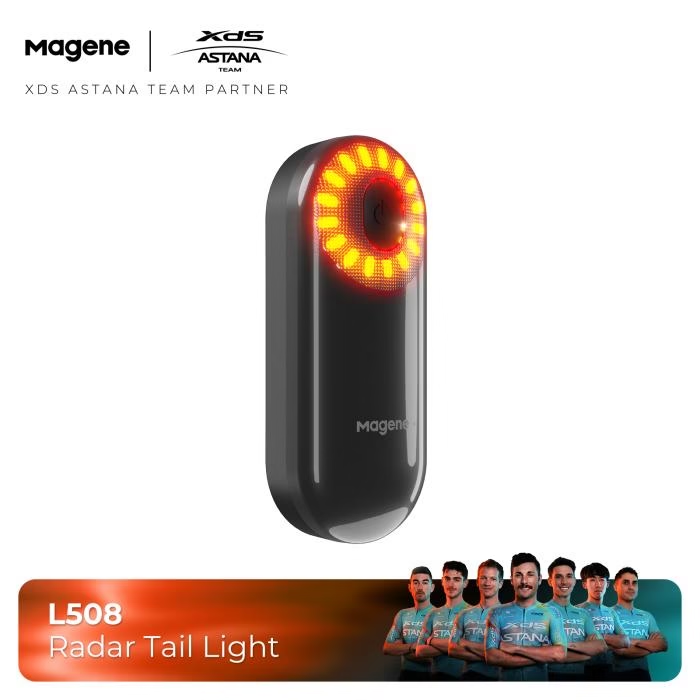
The pro-team credibility angle is also worth mentioning. For 2026, Magene joined XDS Astana as a WorldTour equipment supplier, with the team using Magene cycling computers, smart trainers, heart-rate monitors and the L508 radar tail light. That does not automatically make the L508 the best radar light for cycling, but it does show Magene moving from value-focused challenger brand into the professional peloton’s equipment conversation.
Design and construction
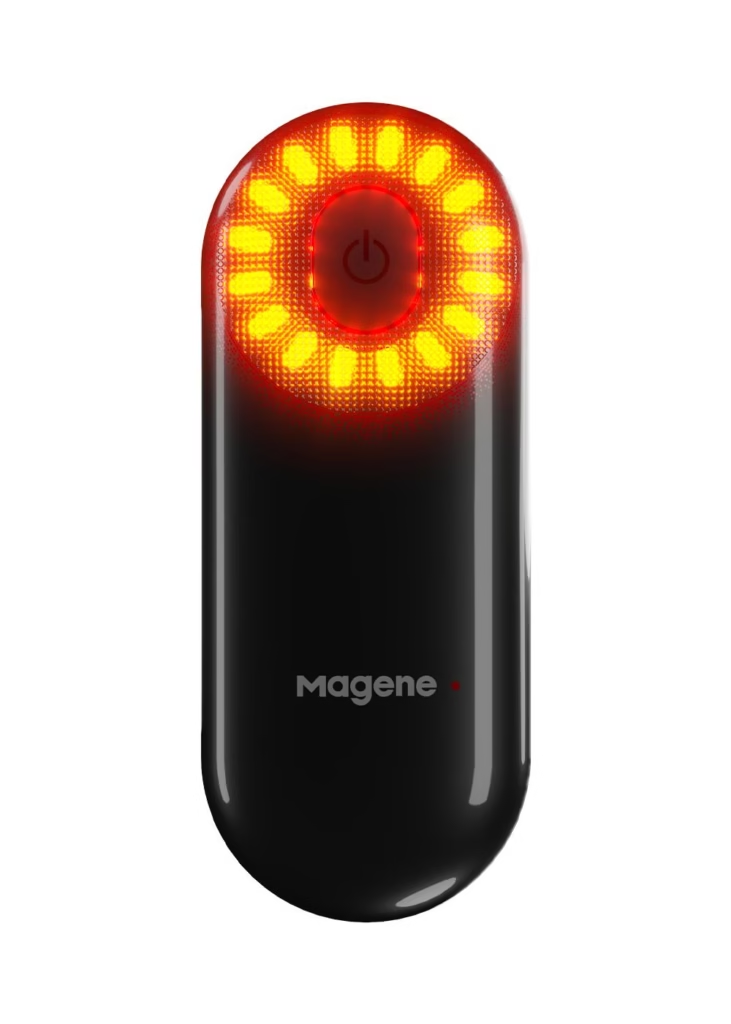
The Magene L508 uses a slim vertical body measuring 38mm x 94mm x 25mm. At 65g for the unit, it is light for a radar tail light and noticeably less bulky than some premium alternatives. That makes it easier to live with on a road bike, gravel bike or commuter where seatpost space is limited.
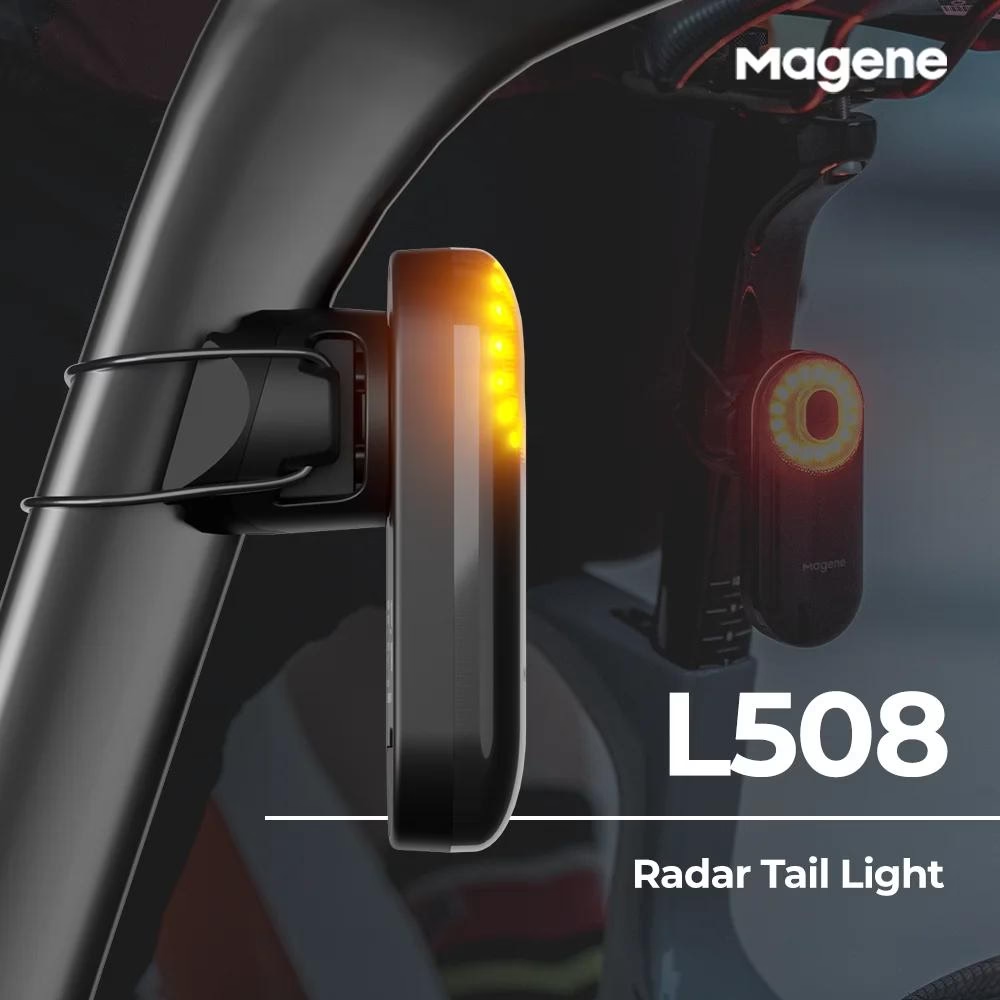
The shape is familiar if you have used a Garmin Varia-style radar before. It sits behind the seatpost and needs a clear rearward view to work properly. That means it should be mounted high enough to avoid being blocked by a saddle bag, rear rack, mudguard or jacket. As with all radar lights, alignment matters more than many riders expect.
The casing feels practical rather than luxurious. It does not have the same premium finish as Garmin’s more expensive units, but it feels solid enough for regular use. The IPX7 water resistance rating is important for UK riding, where a rear light has to survive road spray, winter rain and the gritty mess thrown up by wet lanes.
USB-C charging is a major plus at this price. It keeps the L508 aligned with modern cycling electronics and avoids the frustration of older micro-USB cables. The charging port is protected by a rubber cover, which needs to be closed properly before wet rides.
The rear light itself is functional rather than exceptionally bright. Output varies by mode, with the main modes sitting around 20 lumens, and a lower-output peloton mode for group riding. The 220-degree visibility angle is useful, especially at junctions and on curved roads, but riders looking for a very powerful standalone rear light may still want something brighter.
Setup and ease of use
Setup is straightforward. Fit the mount to the seatpost, attach the L508, pair it with a compatible bike computer or app, then choose a light mode. The unit supports ANT+ and Bluetooth, which means it works with a broad range of cycling computers and watches.
Pairing with Garmin and Wahoo head units is generally simple. The L508 appears as a radar device and then displays approaching vehicles in the usual side-bar format on supported devices. Riders used to Garmin Varia will recognise the basic experience immediately.
The Magene Utility app allows firmware updates and light mode customisation. That gives the L508 more flexibility than a very basic radar light, although the app experience is not as polished as Garmin’s ecosystem. It does the job, but it feels more functional than refined.
Mounting is the area that needs the most care. The radar needs to point straight backwards, and the unit should sit securely enough not to move over rough roads. Aero seatposts, saddle bags and low seatpost exposure can all make positioning more complicated. That is not a Magene-specific problem, but it matters because poor positioning can undermine radar performance.
Once fitted, the L508 is easy to use. The button is large enough to operate with gloves, the light modes are clear, and auto-sleep helps preserve battery life when the bike is not moving. For commuting and regular training, that simplicity is welcome.
Real-world performance
The Magene L508’s core radar performance is good enough to make the product feel genuinely useful rather than like a budget imitation. On normal road rides, it picks up approaching vehicles early, gives enough warning to be useful and works well with compatible head units. That is the main thing it needs to do, and it does it well.
On quiet UK lanes, the benefit is immediate. The L508 gives early warning of cars approaching from behind, which is especially useful when wind, road noise or poor surfaces make it harder to hear traffic. It does not change the need to look over your shoulder or ride with good road awareness, but it reduces the number of surprises.
The 140m detection range is shorter than Garmin’s best claimed figures, but it is still enough for most normal riding. On open roads, it provides time to process approaching traffic before it reaches you. On tighter lanes and bends, the 40-degree beam angle helps the radar pick up vehicles that are not approaching in a perfectly straight line.
The L508 feels most convincing with single vehicles, small groups of cars and normal overtaking traffic. The alerts are clear, timely and useful. That makes it strong for commuting, endurance rides, club runs and solo training, where the primary need is knowing when traffic is building behind.
It is less polished in complex traffic. Multi-lane roads, closely spaced vehicles, roundabouts, riders in a group and urban stop-start conditions can create moments where the radar picture feels less tidy. Occasionally, a vehicle can appear to merge into another alert or disappear briefly in a busy flow of traffic. It does not make the unit unusable, but it does show why Garmin still leads at the premium end.
The rear light is good enough for everyday road use, but it is not the standout feature. Daytime visibility is helped by the wide viewing angle and flash modes, but riders who want a very bright rear light for exposed roads may prefer a more powerful standalone unit or a premium radar with higher light output.
The smart brake sensing is a useful addition. When slowing, the light reacts and gives following riders or drivers a clearer signal. It is particularly helpful on group rides, descents into junctions and commutes with frequent speed changes. It is not essential, but it adds another layer of visibility.
Battery life is reasonable for the price. Magene’s quoted figures depend heavily on mode, with around 6 hours in solid mode, 10 hours in flashing mode, 8 hours in peloton mode and 12 hours in pulse mode. In practice, the L508 is well suited to normal training rides, commutes and weekend road rides. For ultra-distance events or multi-day touring, battery management becomes more important.
The IPX7 water rating is reassuring in poor weather. The L508 handles wet-road spray and rain well, although the lens still needs regular cleaning. A radar tail light sits exactly where winter grime collects, and any rear light will lose effectiveness if it is left coated in road film.
The Magene L508 radar tail light for road cycling is at its best when judged against its price. It does not feel like a £250 premium radar, but it also does not feel like a cheap gadget that cannot be trusted. It lands in a useful middle ground: capable, practical and affordable enough to bring radar to more riders.
Radar light performance
The L508 uses millimetre-wave radar to detect vehicles approaching from behind. Its maximum claimed range is 140m, with a 40-degree horizontal detection angle and a vertical detection angle of -10 to +10 degrees. It is designed to detect vehicles travelling at relative speeds between 10 and 120km/h.
For road cycling, those figures are sensible. A longer detection range is always welcome, but 140m is enough to make alerts useful in most real-world situations. The key is not just detecting a vehicle, but detecting it early enough that the rider can decide what to do calmly.
The alert experience depends partly on the head unit. With a compatible Garmin, Wahoo or other radar-capable device, the L508 shows approaching vehicles in the familiar radar strip. Faster-moving vehicles are highlighted more urgently, while multiple vehicles can appear in a stack.
False positives are not common enough to ruin the experience, but they can happen, particularly in complex traffic environments. False negatives are more important because rider trust depends on the unit not missing vehicles. In normal road use, the L508 gives a reassuringly consistent warning pattern, but it does not have quite the same polished tracking feel as Garmin’s best radar units.
The light modes add useful flexibility. Solid, flashing, pulse, peloton and radar-only style modes allow the rider to match the light to the ride. Peloton mode is useful in a group because it reduces the irritation of a bright rear flash. Radar-only mode helps when you want traffic alerts without the full light output.
The smart brake function is a good feature at this price. It gives the L508 a more modern feel and helps it compete against newer radar lights rather than simply undercutting old Garmin units.
How it compares
The Garmin Varia RTL515 remains the benchmark comparison. It costs more, but it offers a more polished radar experience, excellent compatibility and a long track record. The Magene L508 is cheaper and lighter, with USB-C charging and useful customisation. Garmin still wins on refinement. Magene wins on value.
The Garmin Varia RearVue 820 is a much more advanced product, with richer vehicle information, stronger ecosystem integration and more sophisticated tracking. It is also far more expensive. Riders who want the most complete radar experience should look at Garmin. Riders who want the core safety benefit at a lower price should look closely at the L508.
The Trek CarBack is another strong rival, with a longer claimed detection range and strong rear visibility. It feels more premium than the Magene, but it also costs more. The Trek is better for riders who want a high-quality Garmin alternative without going budget. The Magene is better if price is the main driver.
The Bryton Gardia R300L is probably one of the closest rivals. It sits in a similar value-focused space and also offers rear radar with a built-in light. Choice between the two may come down to pricing, availability and head unit compatibility. The Magene’s growing brand visibility through WorldTour supply gives it an extra credibility point.
Magicshine, iGPSPORT and other budget radar lights make the category more competitive, but not every low-cost radar is equally trustworthy. The Magene L508 alternative conversation should focus on reliability, not just price. Radar is only useful if the rider trusts it.


Value
The Magene L508’s strongest argument is value. At £99, it brings radar technology into the same price range as a good rear light and well below the cost of premium Garmin options. For riders who have been curious about radar but unwilling to spend heavily, this is exactly the sort of product that changes the calculation.
The value is strongest for road cyclists and commuters who ride alone. Radar gives the biggest benefit when there is no rider behind calling out traffic, and when vehicle noise can be masked by wind, poor road surfaces or bad weather. In those conditions, the L508 feels like money well spent.
There are still compromises. The rear light is not exceptionally powerful, the app is not as slick as Garmin’s, and the radar tracking is not quite as polished in complex traffic. Those are the trade-offs that come with the lower price.
Even so, the Magene L508 radar light for UK cyclists offers enough performance to feel like more than a budget experiment. It is a realistic everyday radar option, not just a cheaper name on a product listing.
Verdict
The Magene L508 is one of the most convincing budget radar lights for cycling. It delivers the core benefit riders want, which is early warning of approaching vehicles, while adding USB-C charging, smart brake sensing, broad compatibility and a usable rear light at a much lower price than premium Garmin options.
It is not perfect. Garmin’s best radar lights still feel more refined, particularly in complex traffic, and the L508’s rear light is not as powerful as some standalone options. Riders who want the most advanced traffic information, the longest detection range or the most polished ecosystem should still look higher up the market.
For most riders, though, the Magene L508 does the important thing well enough to recommend. It makes radar technology accessible without feeling flimsy or unreliable, and Magene’s 2026 XDS Astana partnership adds credibility to a brand that is clearly trying to move beyond the budget-tech label.
The single biggest reason to buy the Magene L508 radar tail light is value. It gives cyclists the main safety benefit of rear radar for around £99. The single biggest reason to hesitate is refinement. If you want the smoothest, most trustworthy radar experience in every traffic situation, Garmin still sets the standard.
Rating: 4/5